
Vitamin B2 deficiency: symptoms, causes and treatment
Cracked corners of the mouth, chapped lips, a red tongue? Vitamin B2 keeps your skin and mucous membranes in good shape, and a deficiency rarely comes alone. Which symptoms are proven, which test counts and where you'll find riboflavin.


Aktualisiert 30 September 2026 · 15 Min. Lesezeit · 54 Quellen

The key points in 30 seconds
Recommended intake from the DGE: women 1.0 to 1.1 mg, men 1.3 to 1.4 mg a day. A glass of milk, an egg and a pan of mushrooms already cover that; the EFSA sets it at 1.6 mg.
of women and 20% of men don't reach the recommended intake, according to the National Consumption Study; among women over 65 it's 32%. Less on the plate, but not yet a deficiency in the blood.
is caused by a nutrient deficiency, according to an older analysis: vitamin B2, iron, B12, B6. In the rest, fungi, bacteria, saliva or dentures are behind it.
Neither the EFSA nor the BfR has set an upper limit: your gut absorbs a maximum of around 27 mg from a single dose, and the rest leaves in your urine and turns it bright yellow. Harmless.
Vitamin B2 deficiency symptoms: how to recognise it
Vitamin B2, also known as riboflavin, works in every cell as part of the enzymes that turn carbohydrates, fat and protein into energy. If you go without it for months, it shows first where cells renew themselves quickly: at the corners of the mouth (cracks), on the lips and tongue (red, swollen, burning), on the skin next to the nose (flaky, oily) and, more rarely, in the eyes. A pure B2 deficiency is rare in Germany; usually other B vitamins or iron are missing at the same time.
Vitamin B2 deficiency symptoms: first signs in adults
The first signs are subtle and easy to mix up with other things: a sore throat without an infection, an irritated lining of the mouth, lips that feel rough, and skin next to the nostrils that flakes even though it's oily. Only later do the corners of the mouth crack, the tongue turns magenta-red, and a mild anaemia shows up in the blood count. Tiredness, hair loss or muscle pain appear on many lists, but they aren't proven signs of a B2 deficiency. And it takes time: clinical signs only appear after months on less than 0.5 to 0.6 mg a day.
Cracked corners of the mouth: which deficiency is behind them?
If a deficiency is behind them, it's most likely vitamin B2, iron, vitamin B12, vitamin B6 or folate. But the honest order of likelihood is different: in two studies, nearly everyone affected had yeast or bacteria in the cracks. Add to that saliva pooling in deep folds at the corners of the mouth, dentures that lower the bite, constant lip licking and medicines such as isotretinoin. According to an older analysis of 156 cases, nutrient deficiencies account for about a quarter. The table helps you sort things out, but your doctor has to decide: a swab and a blood count clear up most of it.
Cracked corners of the mouth: what can be behind them
Eight causes, what fits and who can help. It's often a mix of local irritation and infection.
| What fits | What helps | |
|---|---|---|
| Yeast or bacteria | Weeping, crusted cracks; often dentures or lip licking | Swab, antifungal or antibiotic cream from your doctor |
| Saliva and lip licking | Moist corners of the mouth, dry lips; children and older people | Rich, greasy lip care, dexpanthenol or zinc paste |
| Dentures, deep folds | Lowered bite, saliva runs into the fold | Dental check-up, have the denture adjusted |
| Vitamin B2 deficiency | Plus a red tongue, flaky skin next to the nose | Blood test, diet, usually a B-complex |
| Iron deficiency | Paleness, tiredness, brittle nails, heavy periods | Measure ferritin, supplement iron |
| Vitamin B12 or folate | Tingling, forgetfulness, enlarged red blood cells | Check B12 and folate in your blood, supplement |
| Medicines | Isotretinoin, some ointments with antibiotics or cortisone | Talk to your doctor, skincare |
| Underlying condition | Dry mouth, bowel inflammation, Sjögren's syndrome, HIV | Treat the underlying condition |
Based on MSD Manual (lip disorders), Park 2011, Cleveland Clinic Journal of Medicine 2018 (nutrient share around 25% according to Konstantinidis 1984), Ohman 1986, Oza 2017. For guidance only, not a substitute for an examination. As of 30 September 2026.
Lips, tongue and oral mucosa
The medical terms are cheilosis (lips) and glossitis (tongue). First the lips turn pale and soft, then crack; the tongue loses its fine papillae, becomes smooth, burns and turns magenta-red, a shade between red and violet that textbooks describe as typical of B2. Add a sore throat and a reddened, swollen lining of the throat. All of this also occurs with B12, folate or iron deficiency, which is why a red tongue is never checked with just one blood value.

Vitamin B2 deficiency symptoms: skin
Typical is seborrhoeic dermatitis: reddened, oily-looking, flaking skin in the folds between the side of the nose and the cheek, on the ears, eyelids and in the genital area. Biotin deficiency looks similar. It looks like the common eczema that many people have without any deficiency; you only think of B2 when the corners of the mouth and the tongue are affected too. Hair loss appears in overviews as a possible sign, but good evidence is lacking, and a supplement won't help with it unless a deficiency has been proven.
Vitamin B2 deficiency symptoms: eyes
Burning, watering, light sensitivity and fine blood vessels growing from the edge into the cornea have been described in severe deficiency, but are explicitly rare. Dry eyes are a screen-time and vitamin A issue (vitamin A deficiency), not typical of B2. Whether riboflavin protects against cataracts is disputed; as a tablet, it hasn't been shown to prevent them.
Vitamin B2 deficiency symptoms in women
The symptoms are the same in women, but the risks aren't. Women are more likely to fall short of the recommendation (26% compared with 20% of men, and 32% from age 65), because they eat less while the need per calorie stays the same. During pregnancy and breastfeeding, the requirement rises to 1.3 to 1.4 mg, and without dairy that gets tight. Eating disorders and diets low in milk, eggs and meat are the third reason. The pill isn't one of them: early reports of lower B2 levels disappeared once diet was taken into account.
Vitamin B2 deficiency and mental health
There's no proof that a B2 deficiency causes depression. What there is: in observational studies, people who eat a lot of riboflavin have slightly less depression (around a quarter less), but that could be down to many things. A small study with high-dose B1 and B2 made no difference to anxiety. Tiredness is plausible, because B2, like vitamin B5, plays a part in energy metabolism, but it isn't proven as a single symptom. If you have a low mood along with tingling or forgetfulness, B12 and folic acid are the better suspects.
Corners of the mouth that stay cracked, weepy or bleeding for more than two weeks, a burning red tongue, inflammation of the mucous membranes that won't heal, or light sensitivity with vision problems all belong in a GP's or dermatologist's practice. There, a swab, blood count, iron, B12, folic acid and, if needed, vitamin B2 will be tested together.
Causes of vitamin B2 deficiency: who is really at risk
A deficiency develops in four ways: too little intake (few dairy products, eggs or meat, and no replacement), poor absorption in the gut, disrupted conversion into the active forms (thyroid, alcohol, medicines) and increased needs (pregnancy, breastfeeding, growth). Usually two of them come together. First your needs, then the routes.
Diets without dairy: vegan, lactose intolerance, one-sided eating
In Germany, milk, yoghurt and cheese supply roughly one in every four milligrams of riboflavin. If you leave them out without planning a replacement, you're most likely to slip: on a vegan diet, the DGE counts B2 among the potentially critical nutrients; in a Berlin study, 36% of vegans were below the lab reference range, compared with 14% of people on a mixed diet. The same applies to lactose intolerance without alternatives, to eating disorders and to very one-sided diets of white flour, rice and ready meals. In older age, a smaller appetite adds to it.
Gut, thyroid, alcohol: when your body can't use B2
Riboflavin is absorbed in the upper small intestine; chronic diarrhoea, coeliac disease, Crohn's disease and liver conditions slow this down. The thyroid controls the conversion into the active forms FMN and FAD: with an underactive thyroid, less of it arrives, even with normal intake. Alcohol disrupts absorption and utilisation at the same time and, along with medicines, is the most common reason for a true deficiency. Dialysis and long phototherapy in newborns add to the list, because light destroys riboflavin. After stomach surgery, the risk wasn't higher in one study when people took a multivitamin.
Vitamin B robbers: which medicines use up B2
The term fits active ingredients that block the conversion into FAD and FMN or speed up breakdown. The evidence mostly comes from cell and animal studies; how often this turns into a real deficiency is unknown:
- Phenothiazines such as chlorpromazine and tricyclic antidepressants slow down the conversion; the DGE explicitly names psychiatric medication.
- Phenobarbital and other barbiturates speed up breakdown in the liver.
- Doxorubicin (chemotherapy) and the malaria drug quinacrine block the conversion.
- A rare inherited transporter disorder isn't a robber, but it is treated for life with very high doses.
The pill and acid blockers don't belong on the list.
How vitamin B2 works in the body
Three stops from a glass of milk to the cell. Once you know them, you'll understand why the corners of your mouth and your tongue suffer first, why the excess turns your urine yellow and why a B2 deficiency rarely comes alone.
Absorption, hardly any storage
Riboflavin is absorbed in the upper small intestine via transporters that are saturated at around 25 to 30 mg per serving; roughly 60 to 70% of what's in food gets through. The body only keeps small stores in the liver, heart and kidneys. Anything beyond that leaves in your urine within hours and turns it bright yellow.
Conversion to FMN and FAD
In the cell, riboflavin is converted into its working forms, FMN and FAD, controlled by thyroid hormone. As part of flavoproteins, they move hydrogen through the process of getting energy from carbohydrates, fat and protein, and keep the glutathione system running, which protects cells from oxidative stress.
Key to other nutrients
Without FMN, vitamin B6 doesn't become active, without FAD no niacin is made from tryptophan, the folate enzymes work more slowly, and iron is harder to release from its store, ferritin. That's why a B2 deficiency often looks like a B6, folate or iron deficiency, and why it rarely comes alone.
Identifying vitamin B2 deficiency: which test counts
In healthy people, vitamin B2 isn't routinely measured, and the diagnosis is usually clinical: matching signs in the mouth, tongue and skin, a diet or condition that fits, and improvement on riboflavin. If it is measured, this is how.
Vitamin B2 deficiency test: what the blood value shows
The most meaningful test is the EGRAC: it measures how strongly an enzyme in red blood cells (glutathione reductase) reacts to added FAD. A value around 1.0 means saturated; from 1.2 to 1.3 your supply counts as marginal, above 1.4 as deficient, though the limits vary by source. German routine labs usually measure vitamin B2 in EDTA whole blood (as FAD, by HPLC); the reference ranges differ by a factor of three (for example 137 to 370 or 40 to 140 µg/l), so only your own lab's range counts. The sample has to reach the lab protected from light and chilled.

For the 24-hour urine, under 40 µg riboflavin a day counts as deficient and from 120 µg as sufficient, but it mainly reflects the last few days. A serum value is of little use: it fluctuates with your last meal and drops in smokers. If you take a B supplement, you'll show a good value even though your stores were empty before. As a self-pay service, the whole blood measurement costs around 33 euros under the fee schedule plus the blood draw; whether your health insurer pays depends on the reason for testing. Home tests using finger-prick blood or urine have no published validation; for a value this sensitive to light and time of day, they would need one.
If you take a supplement with B vitamins, tell your practice, otherwise the lab measures the tablet instead of your supply. If you have cracked corners of the mouth or a red tongue, ask for a blood count, ferritin, vitamin B12 and folate to be checked at the same time; a single B2 value rarely explains everything.
Fixing a vitamin B2 deficiency: what helps and how fast
The good news: riboflavin is cheap, safe and works fast when you're truly deficient. The honest news: without tackling the cause, the deficiency comes back, and without a deficiency a tablet does nothing, except in your urine.
Vitamin B2 deficiency: what to do?
Three steps. First, diet: milk, yoghurt, cheese, eggs, mushrooms, almonds, green vegetables, and on a vegan diet fortified drinks or yeast flakes (chapter 6). Second, a supplement if a deficiency has been confirmed: the MSD Manual gives 5 to 30 mg riboflavin a day, split into several doses, until recovery, and because B2 is rarely the only thing missing, usually together with the other water-soluble vitamins as a B complex. Third, the cause: alcohol, bowel disease, thyroid, medication. For the corners of your mouth themselves, local care stays important, because fungi or bacteria are usually involved there.
How quickly does it get better?
Biochemically it's fast: your blood value rises within days. Corners of the mouth, lips and tongue heal within days to a few weeks, once the deficiency is covered and any fungal or bacterial infection is treated too. Skin takes longer because it renews itself more slowly. Late changes such as blood vessels growing into the cornea or a cataract don't reverse. If your mouth corners stay cracked despite a supplement, B2 wasn't the cause, so go back to the table in chapter 1.
If you have cracked corners of the mouth, vitamin B2 alone is rarely the answer. I look at iron, B12 and folate first, and at whether there are any dairy products, eggs or a substitute on the plate at all. And I'll be clear: 400 mg riboflavin for migraine is a treatment at a medicinal dose, not nutrition. That belongs with neurology, not on the supermarket shelf.
Joerg Hauke, Nutrition expert, expert review of this article
Vitamin B2 overdose: can you take too much?
Not from food, and from supplements practically not either: neither the EFSA nor the US Institute of Medicine has set an upper limit, and since 2021 the BfR has done without a maximum amount for food supplements, because no harm was observed even far above the recommendation. Your gut absorbs at most about 27 mg from a single dose, and the rest is excreted. Documented side effects at 400 mg over three months: bright yellow urine, occasionally diarrhoea and more frequent urination. But the lack of an upper limit doesn't mean long-term doses have been tested; the BfR doesn't rule out unwanted effects. The B vitamin where too much really does harm is B6.
From daily need to high dose
-
1
Daily need1.0 to 1.4 mg
DGE recommended intake for adults, depending on age and sex. Easy to reach with dairy products, eggs, mushrooms and nuts.
-
2
Typical intake1.5 to 1.9 mg
Median in Germany according to the consumption study (women 1.5, men 1.9 mg). The surplus leaves via the kidneys.
-
3
Treatment5 to 30 mg
For a confirmed deficiency according to the MSD Manual, spread over the day, usually in a B complex, until recovery. Above about 27 mg per dose, your gut absorbs hardly any more.
-
4
Migraine prevention400 mg
Medicinal dose from the guideline, for at least three months. Low evidence, well tolerated, not something for self-medication.
According to the DGE, National Consumption Study II, MSD Manual, DGN/DMKG guideline 2025 and BfR 2021. There is no Tolerable Upper Intake Level for riboflavin. As of 30 September 2026.
When to take it? 60 to 70% is absorbed from food, and about the same from supplements taken with a meal; no particular time of day has a proven advantage. Because the transporters can become saturated, several small doses do more than one large one. Bright yellow urine a few hours later doesn't mean the dose was too high, just that it arrived.
Vitamin B2 foods: where you'll find the most
Riboflavin isn't concentrated in a handful of foods but spread widely, and two groups stand out: dairy and cheese, the main source in Germany, and offal, which beats everything else tenfold. The bars show the top 10 plant-based and animal-based foods per 100 g, as eaten, without liver and without fortified products. Values come from the US USDA database; deviations in the German Federal Food Code (BLS) are listed in the note.
Vitamin B2 per 100 g: top 10 plant-based and animal-based
USDA SR Legacy 2018, nuts and seeds dry, button mushrooms fried, soybeans and spinach cooked. In portions: 30 g almonds 0.34 mg, 125 g button mushrooms 0.58, 100 g tempeh 0.36, 150 g soybeans 0.43, 150 g spinach 0.35; 1 tbsp tahini, wheat germ or hemp seeds only 0.04 to 0.08 mg. The BLS lists tahini at 0.31 and cooked soybeans at 0.14 mg.
Vitamin B2 foods: milk, cheese, eggs, meat
At 0.17 mg per 100 ml, milk isn't a front-runner, but the amount makes the difference: one glass gives you 0.35 mg, a pot of yoghurt 0.21, a slice of Gouda 0.10, an egg 0.31. In the National Consumption Study, about one in four milligrams comes from milk, dairy products and cheese, followed by drinks, meat and bread. For meat, lamb, duck, veal and pork fillet lead the way, while chicken breast only has 0.11 mg. For fish, mackerel, herring and mussels count; farmed salmon and trout give you little. Milk and cheese keep 100% when heated, meat 90 to 100%.
Vegan vitamin B2: the best plant-based sources
On paper, it works: 125 g of fried button mushrooms (0.58 mg), a handful of almonds (0.34), 150 g of cooked spinach (0.35), plus tempeh, soybeans or wheat germ get a day up to 1.2 to 1.4 mg. Without the mushrooms it gets tight, because grains, pulses and fruit only provide small amounts. Fortified plant drinks make up the difference: a glass with added B2 gives you around 0.43 mg, more than a glass of milk; a glass without additives gives you almost nothing. The DGE lists riboflavin as potentially critical on a vegan diet; if you don't use fortified products, make sure mushrooms and nuts are firmly on your menu.
Whole milk, 0.17 mg per 100 ml (USDA). One glass covers around a third of a woman's daily requirement.
0.008 mg per 100 ml (BLS 4.0), one twentieth. With added vitamins, the same drink reaches 0.43 mg.
Fruit and vegetables with vitamin B2
Let's be honest: fruit isn't a riboflavin supplier. Not a single variety reaches the threshold for a “source” (0.21 mg per 100 g); prunes (0.19) and avocado (0.13) do best, while banana, apple and orange sit at 0.03 to 0.07. For vegetables, the mushrooms (button mushrooms 0.40 to 0.49 raw, oyster mushrooms 0.35) and the green leaves carry the load: cooked spinach 0.24, raw kale 0.35, asparagus 0.14, broccoli 0.12. Tomato, cucumber and potato give you almost nothing. The lookup list shows 160 foods with portion sizes.
Light and cooking: how to keep vitamin B2
Riboflavin can handle heat, but not light or cooking water. Light: milk in a clear glass bottle loses up to half its riboflavin in two hours of strong sun. That's why it comes in a carton or a dark bottle and doesn't belong on the windowsill. Water: cooking in plenty of water loses about twice as much as steaming. Drained pasta and pulses keep around 70 to 75 %, vegetables cooked in a little water 90 to 95 %, and meat without its juices 75 to 85 %. Use the cooking water in soups or sauces and almost everything stays in.

Vitamin B2 in everyday life: drinkable meals
On days with a sandwich, pasta and little dairy, you're missing exactly the food group that delivers B2. A drinkable meal is then an easy building block to plan around: depending on the flavour, one bottle of Saturo contains 0.28 to 0.38 mg of riboflavin (20 to 27% of the reference intake), plus 25 other vitamins and minerals, 36 g of protein and 400 kcal. It doesn't replace treatment for a diagnosed deficiency. Approved by the EU: riboflavin contributes to the maintenance of normal mucous membranes, normal skin and normal vision, as well as to normal iron metabolism.

Drinkable meal: a complete meal in a bottle
26 vitamins and minerals, including vitamins B2, B6, B12 and folic acid. Riboflavin contributes to the maintenance of normal mucous membranes and normal skin. Reference intake for vitamin B2: 1.4 mg per day (NRV).
Migraine, pregnancy, older age: who needs to look more closely at vitamin B2
With a healthy mixed diet, riboflavin is rarely a concern. Four situations are different: migraine, for which riboflavin is being studied at medicinal doses, pregnancy and breastfeeding, older age and intense sport on tight energy intake.
Vitamin B2 and migraine: what the studies show
Migraine is not a sign of B2 deficiency, but high-dose riboflavin is used for prevention: 400 mg a day, usually as two doses of 200 mg. The 2025 German guideline lists it among the supplements with some effectiveness, but states plainly: “The scientific evidence is low, however.” In the best-known study (55 patients, three months), 59 % responded to riboflavin compared with 15 % on placebo. Meta-analyses find roughly one attack less per month, with study quality varying widely. The effect takes weeks and is clearest in the third month, and results in children are mixed. Dose and duration belong in a neurologist's practice, never on a shop shelf.
Pregnancy and breastfeeding
Your requirement rises to 1.3 to 1.4 mg (DGE). EFSA calculates 1.9 and 2.0 mg, because the baby is supplied through the placenta and later through breast milk. Dairy, eggs and cheese cover this. Without them, it's worth looking at fortified drinks. In observational data, children of mothers with very low intake (under 1.2 mg) had certain heart defects more often. A link with pre-eclampsia is so far only a hypothesis. Newborns under light therapy use up riboflavin, which is taken into account in hospital.

Older adults, sport and children
Older adults: from 65, 32 % of women and 19 % of men miss the recommendation, because they eat less and absorb less. Yoghurt, cheese, eggs and stews made with their cooking liquid are the simplest building blocks. Sport: your need rises slightly with energy expenditure. It only gets tight if you train hard and cut calories at the same time, especially on a vegan diet. Extra riboflavin doesn't boost performance. Children: 0.7 to 1.1 mg up to age twelve, teenagers 1.2 to 1.6 mg. In the UK, more than half of 11- to 17-year-olds had a marginal lab value; for Germany, no measurements exist.
Common questions about vitamin B2 deficiency
What happens if you don't get enough vitamin B2?
Over months on less than 0.5 to 0.6 mg a day, you get a sore throat, cracked lips, cracked corners of the mouth, a smooth magenta-red tongue, flaky skin beside the nose and mild anaemia. Because B2 is what makes vitamin B6, folate, niacin and iron usable, several nutrients are usually missing at the same time.
How long does it take for a cracked corner of the mouth to heal?
With a local cause and suitable care or an antifungal cream, usually one to two weeks. If a deficiency is behind it, cracks improve within days to a few weeks once it's corrected. Anything that hasn't healed after two weeks or keeps coming back should be checked by a doctor.
Why won't cracked corners of the mouth go away?
Usually because the actual cause remains: yeast or bacteria in the fold, saliva from lip licking or a poorly fitting denture, sometimes iron, B12 or B2 deficiency. A swab and a blood count can clear that up. A greasy cream alone isn't enough then.
Which foods are especially high in vitamin B2?
In liver and kidney (2 to 3.4 mg per 100 g), then in almonds (1.1), feta (0.8), brie, Camembert, eggs, mushrooms, lamb, duck, mackerel and mussels (0.4 to 0.5). By quantity, the most important sources in Germany are milk, yoghurt and cheese: one glass of milk provides 0.35 mg.
How much vitamin B2 should you take per day for migraines?
In the studies and in the German guideline, 400 mg a day for at least three months, usually as two doses of 200 mg. The evidence is considered low, tolerability good. This is a medicinal dose and belongs in neurological treatment, not self-medication.
Why does vitamin B2 turn urine yellow?
Riboflavin is itself a yellow dye. Whatever your body doesn't absorb or need, the kidneys excrete within hours, bright yellow to neon green with high-dose supplements. This is harmless and goes away over the course of the day.
Which B vitamin can you overdose on?
Vitamin B6: long-term doses above the recommendation can damage nerves, which is why there's an upper limit for it. For B1, B2 and B12, EFSA and BfR have set no maximum, because no harm has been observed even far above the recommendation. The excess goes into the urine.
When should you take vitamin B2?
Only with a proven deficiency or on medical advice, ideally with a meal and in several small doses, because your gut absorbs at most about 27 mg per dose. There's no proven benefit to any particular time of day. Without a deficiency, a supplement does nothing.
Sources · 54 sources anzeigen
- German Nutrition Society (DGE): Reference values for nutrient intake, riboflavin (vitamin B2). D-A-CH reference values, derivation 2015.
- EFSA NDA Panel: Dietary Reference Values for riboflavin. EFSA Journal 2017; 15(8): 4919.
- Regulation (EU) No 1169/2011 (Food Information Regulation), Annex XIII: Reference intakes for daily intake (riboflavin 1.4 mg) and significant amount.
- Regulation (EU) No 432/2012 establishing a list of permitted health claims made on foods (riboflavin: mucous membranes, skin, vision, iron metabolism, energy metabolism).
- European Commission: EU Register on nutrition and health claims made on foods.
- Verbraucherzentrale: Vitamin B2 as a dietary supplement: is it worth the money? As of June 2026.
- Verbraucherzentrale: When urine suddenly turns colourful.
- National Institutes of Health, Office of Dietary Supplements: Riboflavin, Fact Sheet for Health Professionals.
- MSD Manual, Professional Edition: Riboflavin deficiency. Full review June 2026.
- MSD Manual, Professional Edition: Lip ulcers and cheilitis (angular cheilitis).
- Institute of Medicine, Food and Nutrition Board: Dietary Reference Intakes for Thiamin, Riboflavin, Niacin, Vitamin B6, Folate, Vitamin B12, Pantothenic Acid, Biotin, and Choline. National Academy Press 1998, Chapter 5 Riboflavin.
- Powers H. J.: Riboflavin (vitamin B-2) and health. American Journal of Clinical Nutrition 2003; 77(6): 1352–1360.
- Mosegaard S. et al.: Riboflavin Deficiency: Implications for General Human Health and Inborn Errors of Metabolism. International Journal of Molecular Sciences 2020; 21(11): 3847.
- Lysne V., Strandler H. S.: Riboflavin: a scoping review for Nordic Nutrition Recommendations 2023. Food and Nutrition Research 2023; 67: 10315.
- Linus Pauling Institute, Oregon State University: Riboflavin. Micronutrient Information Center, as of July 2022.
- Powers H. J. et al.: Correcting a marginal riboflavin deficiency improves hematologic status in young women in the United Kingdom (RIBOFEM). American Journal of Clinical Nutrition 2011; 93(6): 1274–1284.
- Wu Y. et al.: Associations of dietary vitamin B1, vitamin B2, vitamin B6, and vitamin B12 with the risk of depression: a systematic review and meta-analysis. Nutrition Reviews 2022; 80(3): 351–366.
- Tao Y. et al.: Impact of Vitamin B1 and Vitamin B2 Supplementation on Anxiety, Stress, and Sleep Quality: A Randomized, Double-Blind, Placebo-Controlled Trial. Nutrients 2025; 17(11): 1821.
- Almohanna H. M. et al.: The Role of Vitamins and Minerals in Hair Loss: A Review. Dermatology and Therapy 2019; 9(1): 51–70.
- Drake L. et al.: Evaluation of the Safety and Effectiveness of Nutritional Supplements for Treating Hair Loss: A Systematic Review. JAMA Dermatology 2023; 159(1): 79–86.
- Park K. K., Brodell R. T., Helms S. E.: Angular cheilitis, part 1: local etiologies. Cutis 2011; 87(6): 289–295.
- Park K. K., Brodell R. T., Helms S. E.: Angular cheilitis, part 2: nutritional, systemic, and drug-related causes and treatment. Cutis 2011; 88(1): 27–32.
- Angular cheilitis induced by iron deficiency anemia. Cleveland Clinic Journal of Medicine 2018; 85(8): 581.
- Ohman S. C. et al.: Angular cheilitis: a clinical and microbial study. Journal of Oral Pathology 1986; 15(4): 213–217.
- Oza N., Doshi J. J.: Angular cheilitis: A clinical and microbial study. Indian Journal of Dental Research 2017; 28(6): 661–665.
- Cabras M. et al.: Treatment of angular cheilitis: A narrative review and authors' clinical experience. Oral Diseases 2020; 26(6): 1107–1115.
- Jungert A. et al.: Riboflavin Is an Important Determinant of Vitamin B-6 Status in Healthy Adults. Journal of Nutrition 2020; 150(10): 2699–2706.
- Aasheim E. T. et al.: Vitamin status after bariatric surgery: a randomized study of gastric bypass and duodenal switch. American Journal of Clinical Nutrition 2009; 90(1): 15–22.
- Cali E. et al.: Riboflavin Transporter Deficiency. GeneReviews, updated 2021.
- Manore M. M.: Effect of physical activity on thiamine, riboflavin, and vitamin B-6 requirements. American Journal of Clinical Nutrition 2000; 72(2 Suppl): 598S–606S.
- Wacker J. et al.: Riboflavin deficiency and preeclampsia. Obstetrics and Gynecology 2000; 96(1): 38–44.
- Max Rubner-Institut: National Nutrition Survey II, Results Report Part 2 (2008), Chapter 5.6.2 Vitamin B2 and Table A.40.
- McAnena L. et al.: Riboflavin Deficiency Is Highly Prevalent in Females and Children across High and Low/Middle Income Countries Worldwide. Journal of Nutrition 2026; 156(3): 101277.
- Weikert C. et al.: Vitamin and Mineral Status in a Vegan Diet (RBVD Study). Deutsches Ärzteblatt International 2020; 117(35–36): 575–582.
- German Nutrition Society (DGE): Re-evaluation of the DGE position on vegan diets. Ernährungs Umschau 2024; 71(7): 60–84.
- German Nutrition Society (DGE): Selected questions and answers on vitamin A (liver in pregnancy). November 2020.
- DocCheck Flexikon: EGRAC (erythrocyte glutathione reductase activation coefficient).
- Parkington D. A. et al.: Protocol for measuring erythrocyte glutathione reductase activity coefficient to assess riboflavin status. STAR Protocols 2023; 4(4): 102726.
- WD Labor (MTC GmbH, Würmtal Diagnostics): Vitamin B2, service directory (reference range 137 to 370 µg/l, GOÄ 4145).
- Labor Augsburg MVZ: Vitamin B2, service directory (reference range 40 to 140 µg/l).
- Universitätsmedizin Rostock, Institute of Clinical Chemistry and Laboratory Medicine: Vitamin B2 (as FAD), laboratory catalogue.
- Diener H.-C. et al.: Treatment of migraine attacks and prophylaxis of migraine. S1 guideline of the DGN and DMKG, AWMF 030/057, version 7, August 2025.
- Schoenen J., Jacquy J., Lenaerts M.: Effectiveness of high-dose riboflavin in migraine prophylaxis. A randomized controlled trial. Neurology 1998; 50(2): 466–470.
- Chen Y. S. et al.: Effect of Vitamin B2 supplementation on migraine prophylaxis: a systematic review and meta-analysis. Nutritional Neuroscience 2022; 25(9): 1801–1812.
- Talandashti M. K. et al.: Effects of selected dietary supplements on migraine prophylaxis: A systematic review and dose-response meta-analysis of randomized controlled trials. Neurological Sciences 2025; 46(2): 651–670.
- Thompson D. F., Saluja H. S.: Prophylaxis of migraine headaches with riboflavin: A systematic review. Journal of Clinical Pharmacy and Therapeutics 2017; 42(4): 394–403.
- Scientific Committee on Food: Opinion on the Tolerable Upper Intake Level of Vitamin B2. SCF/CS/NUT/UPPLEV/33 final, December 2000.
- German Federal Institute for Risk Assessment (BfR): Proposed maximum levels for vitamin B1, vitamin B2 and pantothenic acid in foods, including food supplements. On opinion 009/2021.
- German Federal Institute for Risk Assessment (BfR): Updated proposed maximum levels for vitamins and minerals in food supplements and fortified foods. Opinion 006/2024.
- U.S. Department of Agriculture, Agricultural Research Service: FoodData Central, SR Legacy Release (2018), riboflavin per 100 g.
- USDA ARS Nutrient Data Laboratory: USDA Table of Nutrient Retention Factors, Release 6 (2007).
- Max Rubner-Institut: Bundeslebensmittelschlüssel (BLS) 4.0, version 2025.
- Chungchunlam S. M. S., Moughan P. J.: Comparative bioavailability of vitamins in human foods sourced from animals and plants. Critical Reviews in Food Science and Nutrition 2024; 64(31): 11590–11625.
- Mock D. M.: Skin manifestations of biotin deficiency. Seminars in Dermatology 1991; 10(4): 296–302.
Has been writing for Saturo since 2019 about nutrition, nutrients and how to get good nutrient intake in practice in everyday life.
Hat diesen Artikel am 30. September 2026 auf fachliche Richtigkeit geprüft. The content is not a substitute for medical advice.
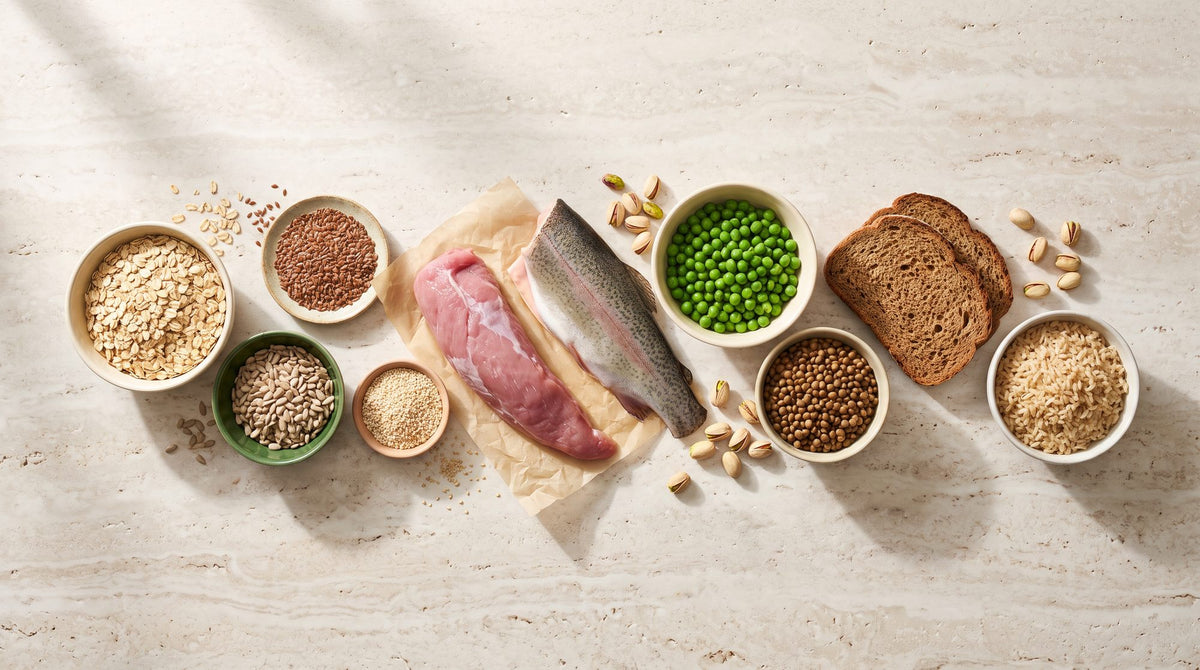
Vitamin B1 deficiency: symptoms, causes and treatment
The sister vitamin with the small store: why a B1 deficiency hits your nerves and heart, what alcohol has to do with it, and whether sweating is part of it.
Weiterlesen · 16 Min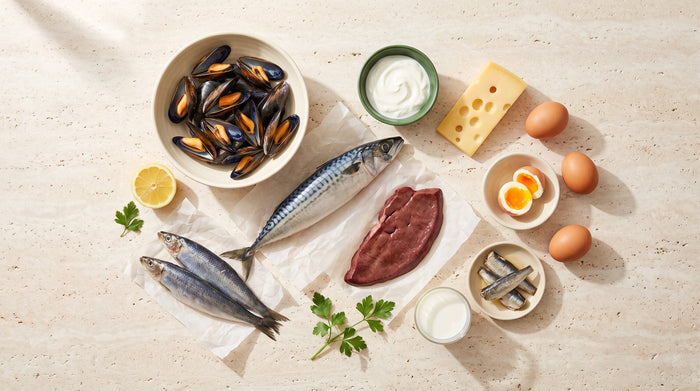

Latest from the guide
New articles, updates and tips straight to your inbox. Easy to understand, expert-reviewed, no spam.
Danke! Bitte bestätige die Anmeldung in deinem Postfach.