
Zinc deficiency: symptoms, causes and treatment
Always catching colds, wounds healing slowly, hair and nails breaking? Zinc works in hundreds of enzymes, but your body has no store of it. Find out how to spot a zinc deficiency, why a blood test tells you little and what belongs on your plate.


Aktualisiert 24 September 2026 · 16 Min. Lesezeit · 48 Quellen

The most important points in 30 seconds
Women 7 to 10, men 11 to 16 mg (DGE 2019). The more wholegrain and pulses you eat, the more you need, because phytate binds some of the zinc.
That's how many men fell short of the recommendation at the time in the National Food Consumption Survey, compared with 21% of women. Older and younger women were affected most often.
On a diet very high in phytate, up to 45% less zinc reaches your blood. Soaking, sprouting and sourdough break down phytate, and animal protein helps.
Your blood level stays normal for a long time because your body tops up zinc from muscle and bone. What counts is symptoms, diet and risk taken together.
Zinc deficiency symptoms: how to spot it
Zinc deficiency has no single telltale symptom. Zinc works in hundreds of enzymes, so a deficiency shows up where cells divide fastest: immune defences, skin, hair, gut lining and taste buds. The typical combination is frequent infections, poor wound healing, skin problems and dulled taste. No single sign is specific, as the German Nutrition Society (DGE) also stresses. The more signs add up, and the more likely a risk factor applies, the more it's worth looking at your diet and blood level.
First signs: infections, wound healing, appetite, taste
The early signs are subtle. Infections become more frequent and drag on longer, because your immune cells need zinc. Small injuries, mouth ulcers or spots heal more slowly, because zinc is a cofactor of the enzymes that build new tissue. Many people notice first that food tastes less good: taste buds renew themselves every few days and need zinc to do it, so appetite often drops as well. In children, diarrhoea is a common early sign.

Zinc deficiency symptoms: skin
A zinc deficiency is most visible on your skin. Typical signs are dry, flaky patches, eczema and redness around the mouth and nose, on the hands and feet, plus cracked corners of the mouth and inflammation around the nail edge. Zinc controls cell division and wound closure, and without it your skin barrier stays leaky. People with acne have lower zinc levels on average, and zinc can ease inflamed spots. But if you're not deficient, zinc tablets won't give you better skin.
If you notice skin changes around your mouth, nose, hands and feet, hair falling out in clumps, diarrhoea lasting weeks, loss of taste or slowed growth in children, get your zinc status checked, especially if you have a bowel condition, drink a lot of alcohol, eat a vegan diet or have had stomach surgery.
Zinc deficiency, hair loss and nails: what's true and what's a myth
Hair roots divide rapidly and react early to a lack of zinc. With a pronounced deficiency, hair falls out diffusely or in clumps, and what's left becomes thin and dull. Without a deficiency, zinc tablets won't give you fuller hair, and the same goes for biotin. The white spots on your fingernails are a myth: the only study on this found no link with zinc, but did find one with minor knocks to the nail root. What's truly typical is brittle nails, horizontal ridges and an inflamed nail edge.
Zinc deficiency symptoms in women
At 7 to 10 mg, women need less zinc than men, and unlike with iron, menstruation doesn't play a role. Even so, they're more often undersupplied: they eat less meat, are more often vegetarian or vegan, diet more often, and during pregnancy and breastfeeding the requirement rises to as much as 14 mg. The signs are the same as in men, but they often show up first in hair, nails and skin. Weight gain isn't one of them.
Zinc deficiency symptoms in men
Men need 11 to 16 mg a day, and that's exactly where it goes wrong: 32% fell below the recommendation in the National Food Consumption Survey. With a pronounced deficiency, testosterone and sperm count drop, and in teenagers puberty is delayed. There's no proof that zinc raises testosterone levels when your supply is normal. The most common risk factor in men is alcohol.
Zinc deficiency symptoms: mental health
Zinc regulates messengers such as glutamate and is involved in making serotonin. With a deficiency, reference works describe lack of drive, irritability, and problems with concentration and memory. People with depression have lower zinc levels on average, but that's a link, not a cause: loss of appetite and inflammation lower the level. No guideline recommends zinc for depression, and there's no proof that it helps you fall asleep in the evening.
The most severe form, acrodermatitis enteropathica, is inherited and very rare: the zinc transporter in the gut is missing, and after weaning, babies develop eczema, diarrhoea, hair loss and infections. In adults, severe deficiency is usually caused by bowel disease or alcohol, and then night blindness, anaemia and a clearly weakened immune system come on top. Muscle pain and heavy sweating don't appear in any reference work.
Zinc deficiency causes: where it comes from
Zinc deficiency develops when, over several weeks, less zinc arrives than your body uses or loses. Because there's no store to bridge the gap, every day counts. Four mechanisms are behind it, often in combination: too little zinc in your food, too little absorption in the gut, too much loss and a higher requirement.
With a mixed diet, intake is usually fine: in the National Nutrition Survey, men averaged 11.6 mg and women 9.1 mg. It gets critical with diets that leave out meat, cheese and pulses, with a small appetite in old age, and with heavy drinking.
Daily zinc requirement: it depends on what else you eat
Since 2019, the German Nutrition Society (DGE) has given not one value but three, depending on how much phytate you get from wholegrains and pulses. If you eat little of it and mostly animal protein, you need the least; if you're vegan and eat a lot of wholegrains, you need the most.
Phytate: the silent zinc thief
Phytate is how plants store phosphate, and it's found in wholegrain cereals, bran, pulses, nuts and seeds. In the gut, it binds zinc into a complex your body can't absorb; on a very phytate-rich diet, absorption drops by up to 45%. Wholegrains are still not bad for you: wholegrain bread provides twice as much zinc as white bread, so there's more left over in the end. Sourdough breaks down around 60% of the phytate, and sprouting works in a similar way.
Impaired absorption: coeliac disease, Crohn's disease, stomach surgery
Some people eat enough zinc and still end up deficient because their gut doesn't absorb it. With Crohn's disease and ulcerative colitis, 15 to 40% of people have a zinc deficiency, and around one in two people with newly diagnosed coeliac disease is undersupplied. After gastric reduction or bypass surgery, there's less surface area for absorption, which is why zinc is part of the standard checks there.
Losses: diarrhoea, alcohol, diabetes, sweating
Your body loses zinc through faeces, urine and sweat. Persistent diarrhoea is the most common cause in children worldwide. Alcohol lowers absorption and increases excretion; in 30 to 50% of people with alcohol dependence, zinc status is low. With type 2 diabetes, more zinc is lost in the urine. Sweating also costs you zinc, but it's not a sign of zinc deficiency the other way round.
Iron can also steal your zinc, but only as a tablet: iron supplements of around 25 mg or more, taken together with zinc on an empty stomach, reduce its absorption. Iron from food doesn't interfere. If you take both supplements, leave a gap of two hours.
Medicines can also upset your zinc balance: diuretics increase excretion, penicillamine (used for rheumatism) binds zinc, and the antibiotic groups tetracyclines and quinolones bind with zinc in the gut. If you take any of these for months, ask your doctor about your zinc status.
Risk groups at a glance:
- People who eat a vegan or vegetarian diet, especially with lots of wholegrains
- Pregnant and breastfeeding women
- Growing children and teenagers, especially with frequent diarrhoea
- People with Crohn's disease, ulcerative colitis, coeliac disease or after stomach surgery
- Older people with a small appetite
- People who drink a lot of alcohol or have liver disease or type 2 diabetes
- People with sickle cell anaemia or chronic kidney disease
- Anyone who takes diuretics or penicillamine long term
How zinc works in your body
Three stops explain why a deficiency creeps up on you, why blood levels stay quiet for so long, and why skin, immune defence and taste are the first to react.
Absorption in the small intestine
Your body absorbs around 30% of the zinc from a mixed meal, up to 50% with a lot of meat, and only 15% with a lot of wholegrain and pulses. Phytate from plants binds zinc in the gut, while animal protein makes it more available. The less zinc arrives, the higher the percentage your gut takes up, but that doesn't make up for big gaps.
No store, just redistribution
Unlike iron or vitamin B12, zinc has no storage organ. Around 2 g is in your body, almost all of it in muscles, bones and cells, and only 0.1% in the blood. If supply runs short, your body keeps the blood level steady by drawing zinc from tissue. That's why a lab often misses a mild deficiency.
Work in the cells
Zinc sits in hundreds of enzymes and in the zinc finger proteins that control how genes are read. Cells that divide constantly notice first: immune cells, skin, hair roots, the gut lining and taste buds. That's exactly where the first symptoms show up.
Zinc deficiency test: how a zinc deficiency is diagnosed
Zinc isn't part of any standard blood count; the value has to be tested separately. And even then, it only tells you so much: just 0.1% of your body's zinc is in your blood, while the rest is held in muscles and bones and topped up when needed. That's why your serum zinc level stays normal for a long time even when your tissues are already running short. Medical societies therefore assess zinc deficiency based on three things: symptoms, risk factors and blood level.
Serum zinc: what the numbers mean
-
1
Normal range80 to 120 µg/dl
Equivalent to 12 to 18 µmol/l. The usual range for healthy people, but it says nothing about the stores in your muscles and bones.
-
2
Too low, fasting in the morning< 70 (women) · < 74 µg/dl (men)
Thresholds from the international zinc expert group for blood taken in the morning after 8 hours without food.
-
3
Too low, in the afternoon< 59 · < 61 µg/dl
After meals and over the course of the day, the level drops on its own. An afternoon reading therefore needs a lower cut-off.
-
4
Not usableCRP high, albumin low
Infection, inflammation or protein deficiency push the level down even when you're not short of zinc. In a clinical study, almost every second low reading was an artefact like this.
Thresholds according to IZiNCG 2012 and BOND 2016 (adults and adolescents aged 10 and over), normal range according to NIH ODS. Conversion: µg/dl divided by 6.54 = µmol/l.
Zinc level in the blood: why it tells you so little
Serum zinc is the only usable lab marker, and even so a weak one: it fluctuates with the time of day, your last meal, infections and protein levels, because almost all the zinc in your blood is bound to albumin. In a British analysis, the low reading was probably down to inflammation or protein deficiency in 48% of cases. To make a reading worth something: have blood taken in the morning on an empty stomach, with no acute infection, get CRP and albumin measured too, and pause any zinc supplement beforehand.

Zinc deficiency test: who should get their level checked
Testing makes sense when symptoms and risk come together: several signs from the checklist plus a vegan diet, bowel disease, stomach surgery, high alcohol consumption, diabetes or long-term medication. In that case, the test is covered by health insurance. Without a suspected deficiency, you pay yourself: usually €20 to €40, plus around €10 for the blood draw.
Which zinc test shows what?
From lab analysis to online questionnaire: what gets measured, how reliable the result is and where you can get it.
| What it measures | How reliable it is | Where to get it | |
|---|---|---|---|
| Serum or plasma zinc | Zinc in the blood fluid, 0.1% of the body's zinc | The only recognised lab marker, but unreliable for individuals; only useful in the morning, fasted, with CRP and albumin | GP surgery; covered by health insurance if a deficiency is suspected, otherwise €20 to €40 |
| Whole blood or cell zinc | Zinc in the blood cells | Not enough data to detect a deficiency (BOND 2016) | Specialist labs, self-paid |
| Hair analysis | Zinc in your hair from the last 4 to 8 weeks | No reference ranges; the same sample varies widely between labs; not recognised | Online providers, self-paid |
| Zinc sulphate taste test | Whether a zinc solution tastes bitter or metallic | Not validated; loss of taste has many other causes | Alternative practitioners, pharmacy |
| Dried blood home test | Serum zinc from a fingertip | Same limits as the lab, plus errors in sampling and time of day, with no medical interpretation | Postal labs, drugstores, self-paid |
| Online questionnaire | Risk factors and symptoms | A rough guide, not proof; mostly run by supplement makers | Free online |
Ratings based on BOND 2016, IZiNCG 2012, Gruner & Arthur 2012 and Verbraucherzentrale (consumer advice centre) 2026. All methods apart from serum zinc are considered unvalidated.
Zinc deficiency self-test: what questionnaires, taste tests and home tests are worth
The best-known self-test is the zinc sulphate taste test: if you can't taste a diluted zinc solution as bitter or metallic, you supposedly have a deficiency. It isn't validated, and a dull sense of taste has many causes. The manufacturers' online questionnaires are our checklist from chapter 1 with a product recommendation at the end. Drugstore home tests have the same limits as the lab, plus errors from sampling and time of day. An honest self-test means: count your symptoms, check your risk, look at your diet, and if you have three signs plus a risk factor, see your doctor.
Book an appointment in the morning, don't eat for 8 hours beforehand, have no acute infection in the week before, pause any zinc supplement and tell the surgery. Ask for CRP and albumin to be measured too, otherwise a low reading can't be interpreted.
Fixing a zinc deficiency: what really helps
Treatment depends on the cause. If you simply don't eat enough zinc, you change your diet, which is usually enough for a mild deficiency. If you absorb poorly or lose a lot, you need a supplement and treatment of the underlying condition. Because your body has no zinc store, it's never about a short course, but about an intake that works every single day.
What helps quickly is whatever is absorbed best: meat, cheese, seafood. Immunity, appetite and taste often return to normal within a few weeks, while skin and hair need two to three months. A supplement makes sense when the level is proven to be low.
Zinc tablets: which form, which dose
What counts is the amount of elemental zinc: 220 mg of zinc sulphate contains around 50 mg of zinc. Zinc citrate and zinc gluconate are absorbed at about 61%, zinc oxide at 50%, and in some people hardly at all. For picolinate, bisglycinate or histidine, there are no comparable measurements. Three markers for dosing: food supplements at most 6.5 mg according to the German Federal Institute for Risk Assessment, medicines with 10 to 25 mg from the pharmacy, and anything above that is prescription-only. With a proven deficiency, your doctor will prescribe a higher dose and monitor your copper level.
Zinc is a nutrient for every day, not a winter stockpile. If you take high doses for months, you lose copper and gain nothing.
Joerg Hauke, Nutrition expert, expert review of this article
Taking zinc properly: time of day, spacing, combinations
Zinc is absorbed best on an empty stomach, but that makes many people feel sick. The compromise: take it with a small meal without wholegrain and without milk, for example with fruit. Morning or evening doesn't matter; the rule “zinc in the evening” has no basis in studies. What matters is spacing: two hours from iron supplements of 25 mg or more and calcium tablets; tetracyclines and quinolones two hours before or four to six hours after zinc, penicillamine one hour apart. Magnesium, vitamin C and D can be combined without any problem.
Zinc tablets: side effects
At a normal dose, zinc is well tolerated. Typical effects are nausea, stomach cramps and a metallic taste, especially on an empty stomach and with lozenges; a small meal or a lower dose helps. A racing heart is not a documented effect of zinc. A different interaction matters more: just 22 mg of zinc a day over six weeks worsened iron levels in young women with low iron stores.
Zinc overdose: when is it too much?
An overdose from food is practically impossible, but from supplements it's easy. Acutely, 150 mg or more causes nausea and vomiting. Duration is more dangerous: from 50 mg a day over a few weeks, zinc blocks the absorption of copper. The result is anaemia that doesn't respond to iron, weaker immunity and nerve damage, often recognised only late.
From requirement to too much: the four markers
-
1
Requirement7 to 16 mg
Recommended daily intake from the DGE, depending on sex and the phytate content of your diet. That covers everything.
-
2
Dietary supplementmax. 6.5 mg extra
The BfR's maximum amount for a single supplement per day. From 3.5 mg, the pack has to carry a warning not to take any other zinc supplements.
-
3
Safe upper limit25 mg in total
The EU's tolerable upper intake level from all sources, including for pregnant women. Anything above that only on a doctor's prescription.
-
4
Risk of copper deficiencyfrom 50 mg over several weeks
Copper status measurably drops after just six weeks. Anaemia, neutropenia and nerve damage have been reported, and are often only spotted late.
Sources: DGE 2019, BfR 2021, SCF 2003 (adopted by EFSA 2024), Fischer et al. 1984, Duncan et al. 2015 and 2023. Children have lower upper limits: 7 mg (1 to 3 years) to 22 mg (15 to 17 years).
Zinc foods: what's high in zinc
Zinc-rich foods exist in both worlds: meat, cheese and seafood on one side, nuts, seeds, oats and pulses on the other. The difference is how much actually reaches your blood: 30 to 50% of animal zinc, but only 15 to 30% of plant zinc because of phytate. Here are the ten most zinc-rich foods on each side, the way you'd put them on your plate:
Zinc content per 100 g: top 10 plant-based and animal-based
Values per 100 g dry, USDA FoodData Central SR Legacy. Only 15 to 30% of plant zinc is absorbed because of phytate. In portions: 30 g pumpkin seeds 2.3 mg, 20 g hemp seeds 2.0 mg, 50 g rolled oats 1.8 mg, 200 g cooked lentils 2.5 mg, 100 g tofu 1.6 mg.
Zinc in food: the lookup table
The top 10 are the peak, but everyday eating happens with cheese, eggs, chicken, pasta, bread and yoghurt. The table has 153 foods with their zinc content, traffic-light rating and portion size. Green means zinc-rich from 3 mg per 100 g, yellow is a zinc source from 1.5 mg, red provides little.
Animal or plant: what really reaches your blood. A beef steak (100 g, 5.7 mg) and 200 g of lentils (2.5 mg) look close together in the table, but the gap opens up in your gut: around 2.3 mg of the steak gets through, while only about 0.5 mg of the lentils does once phytate has done its work. That's why vegans need quantity, variety and the right preparation.
“Zinc thieves” isn't a technical term. It's our word for anything that binds zinc in the gut or increases how much you lose: phytate first and foremost, followed by high-dose mineral supplements and alcohol. The main culprits can be tamed with smart preparation and timing.
- +Animal protein with your meal: meat, fish, egg or cheese also make the plant-based zinc on your plate easier to absorb
- +Sourdough: breaks down around 60% of the phytate in wholemeal bread, yeast dough only just under 40%
- +Sprouting and fermenting: sprouts, tempeh, miso and soaked flours contain less phytate
- +Refined rather than coarse grain products on high-zinc days: less bran, less phytate
- +Citric acid and organic acids from fermented foods keep zinc soluble
- −Phytate: wholegrain, bran, raw pulses, nuts and seeds bind zinc into insoluble complexes
- −High-dose calcium supplements (from 600 mg) with a meal: halve the zinc absorbed from that same meal; calcium from milk and cheese doesn't interfere
- −Iron supplements from 25 mg, taken together with zinc on an empty stomach
- −Alcohol: less absorption in the gut, more lost through the kidneys
- −Coffee right alongside a zinc tablet: weak evidence, but leave an hour's gap with supplements anyway
Sources: Hunt & Beiseigel 2009 (calcium from food, no effect), Wood & Zheng 1997 (calcium supplement), Lopez et al. 2001 (sourdough), Whittaker 1998 (iron), Lönnerdal 2000.
The easiest lever in everyday life is breakfast: 50 g of porridge oats, 20 g of hemp seeds and a tablespoon of baking cocoa together provide 4.5 mg of zinc, and plain yoghurt or soya drink adds another 0.7 to 0.9 mg.

Fortified breakfast cereals in Germany rarely contain added zinc, because the Federal Institute for Risk Assessment advises against it; the nutrition table will tell you.
At 78.6 mg per 100 g cooked, oysters are the most zinc-rich food there is, and two of them cover your day several times over. They're not an everyday food though: eat them daily and you'll quickly go over the upper limit of 25 mg.
If you can't cook every day, you can swap individual meals for complete drinkable meals that contain all the vitamins and minerals, including zinc, in balanced amounts. Zinc contributes to the normal function of the immune system. They don't replace therapy, but they make your intake easy to plan on busy days.
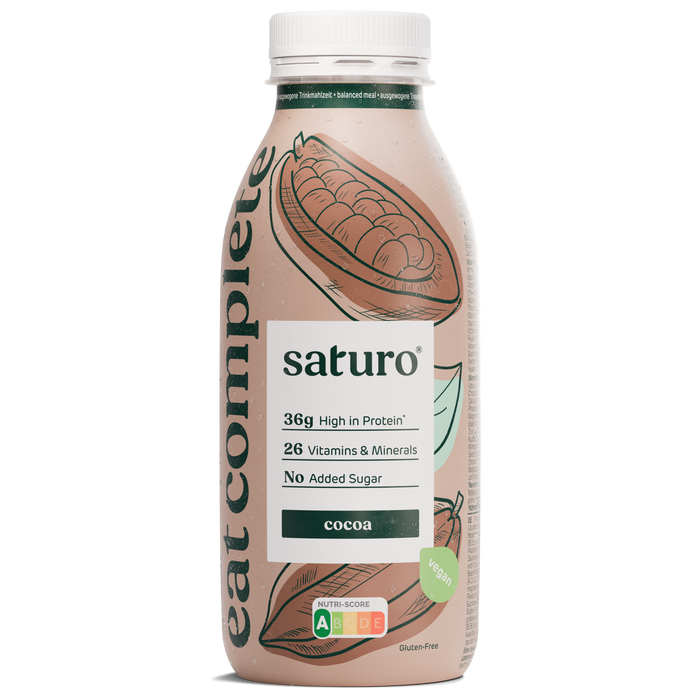
Drinkable meal: a complete meal in a bottle
26 vitamins and minerals, including zinc. Zinc contributes to the normal function of the immune system and to the maintenance of normal skin, hair and nails. Reference value for zinc: 10 mg per day (NRV). For days when cooking isn't on the plan.
Vegan, pregnant, children, colds: who needs to take extra care
Zinc deficiency on a vegan or vegetarian diet
In its 2024 position paper on vegan diets, the DGE (German Nutrition Society) lists zinc as a potentially critical nutrient: the richest sources drop out, and the plant-based ones come with phytate. The DGE calculates with the high phytate level: 10 mg for women, 16 mg for men. To get there, pumpkin seeds, hemp seeds, oats, pulses and tofu need to be on the menu every day, and sourdough bread beats yeast bread. A vegan day can then reach around 13.6 mg: porridge oats with hemp seeds (4.0 mg), wholemeal bread with hummus (2.1 mg), 200 g of lentils (2.5 mg), 150 g of tofu (2.4 mg) and 30 g of pumpkin seeds (2.3 mg). Men add cashews and tahini.

Zinc deficiency in pregnancy and while breastfeeding
Zinc is needed for cell division and your child's growth, so the recommendation rises to 9 to 13 mg in the 2nd and 3rd trimester and to 11 to 14 mg while breastfeeding. A pronounced deficiency is rare on a mixed diet; if you're vegan, eat little because of nausea or have a bowel condition, talk to your doctor or midwife. The upper limit of 25 mg also applies in pregnancy, and many pregnancy supplements already contain zinc.
Zinc deficiency in children
Depending on age, children need 3 to 14 mg a day. Typical signs are frequent diarrhoea, slowed growth, loss of appetite, hair loss and frequent infections; from the sixth month on, breast milk alone is no longer enough. Never give children zinc supplements on your own initiative: the upper limit ranges from 7 mg (ages 1 to 3) to 22 mg (ages 15 to 17).
Zinc for colds and your immune system: what the studies say
Zinc contributes to the normal function of the immune system. That's an approved health claim: without enough zinc, immune cells work less well. It doesn't follow that more zinc means more defence. According to the 2024 Cochrane review, zinc lozenges taken within the first 24 hours can shorten a cold by about two days, but they don't protect you from catching one. The effective doses, at over 75 mg, were far above the safe upper limit: acceptable for a few days, not as a winter-long course.
In Wilson's disease, a rare copper storage disorder, zinc is used deliberately as a medicine to lower copper. That very effect makes high zinc doses risky for everyone else: at 50 mg a day or more over several weeks, copper levels fall.
The body loses more zinc with type 2 diabetes and heavy alcohol consumption; whether zinc supplements improve blood sugar hasn't been proven. Older people eat less meat and cheese, more often take diuretics and more often have gut problems; slow wound healing, loss of taste and fading appetite are often written off as normal with age, but they're typical signs of low zinc.
What happens if the deficiency stays: over months, infections pile up, wounds heal more slowly, skin and hair suffer and your appetite drops. Children grow less well, in men testosterone and fertility can fall, and in older age thinking skills suffer. The good news: zinc deficiency is completely reversible. Taste and immune defence normalise within weeks, while skin and hair need a few months.
Common questions about zinc deficiency
What are the signs of zinc deficiency?
Usually through several subtle signs at once: frequent infections, slow-healing wounds, eczema around the mouth and nose, cracked corners of the mouth, hair loss, brittle nails, reduced appetite and a dulled sense of taste. In children, diarrhoea and slowed growth come on top. Only the combination of symptoms, risk factors and blood level gives you certainty.
What is a zinc blocker?
Anything that binds zinc in the gut or increases how much you lose. The most important is phytate from wholegrain, bran, pulses, nuts and seeds; it can cut absorption by up to 45%. High-dose iron and calcium supplements and alcohol add to that. Sourdough, sprouting and animal protein with your meal help.
What happens if I take zinc every day?
Up to the safe upper limit of 25 mg from all sources, nothing bad happens in healthy people, but without a deficiency it doesn't do anything either, because zinc isn't stored. At 50 mg a day or more over several weeks, zinc blocks copper absorption; anaemia, weakened immunity and nerve damage are the result.
Which illnesses cause zinc deficiency?
Mainly gut conditions: Crohn's disease, ulcerative colitis, coeliac disease, and the state after stomach reduction surgery or bypass. Add to that liver disease and alcohol dependence, type 2 diabetes, chronic kidney disease, sickle cell anaemia, and the very rare inherited condition acrodermatitis enteropathica.
How long does it take to correct a zinc deficiency?
Immune defences, appetite and taste usually improve within a few weeks, while skin and hair need two to three months. After eight to twelve weeks, your level is rechecked. After that, your diet has to cover your needs, because zinc isn't stored in the body.
What shouldn't you take together with zinc?
Keep iron supplements of 25 mg or more and calcium tablets two hours apart. Take tetracyclines and quinolones two hours before or four to six hours after zinc, and penicillamine one hour apart. The time of day doesn't matter; a small meal without wholegrain and dairy works well.
Is zinc good for colds and flu?
According to a 2024 Cochrane review, zinc can't prevent colds. Taken as a lozenge and started within the first 24 hours, it may shorten a cold by about two days. The effective doses of 75 mg and above are only acceptable for a few days. There's no evidence that it works against flu viruses.
Can zinc deficiency cause weight gain?
No, the opposite is documented: zinc deficiency dampens appetite and taste, so people tend to eat less, and children grow more slowly. The claim that "zinc deficiency slows your metabolism" comes from advice websites, not from studies. If you're gaining weight and feel tired, it's better to get your thyroid, blood sugar and iron checked.
Sources · 48 sources anzeigen
- German Nutrition Society (DGE): Reference values for nutrient intake, zinc. Derivation 2019.
- German Nutrition Society (DGE): Selected questions and answers on zinc. Bonn, July 2019.
- Klug A., Richter M., Schäfer A. C. et al.: Reassessment of the DGE position on vegan diets. Ernährungs Umschau 2024; 71(7): 60–84.
- EFSA Panel on Dietetic Products, Nutrition and Allergies: Scientific Opinion on Dietary Reference Values for zinc. EFSA Journal 2014; 12(10): 3844.
- Scientific Committee on Food (SCF): Opinion on the Tolerable Upper Intake Level of Zinc. European Commission, 19 March 2003.
- Federal Institute for Risk Assessment (BfR): Proposed maximum levels for zinc in foods, including food supplements. Opinion 2021.
- Joint Expert Commission BVL/BfArM: Classification of zinc-containing products. Technical notice of 3 July 2023.
- National Institutes of Health, Office of Dietary Supplements: Zinc, Fact Sheet for Health Professionals. As of 6 January 2026.
- Max Rubner-Institut: National Food Consumption Survey II, Results Report Part 2. Karlsruhe 2008.
- Wessells K. R., Brown K. H.: Estimating the Global Prevalence of Zinc Deficiency. PLoS ONE 2012; 7(11): e50568.
- Johnson L. E.: Zinc deficiency. MSD Manual Professional Edition, as of May 2025.
- King J. C., Brown K. H., Gibson R. S. et al.: Biomarkers of Nutrition for Development (BOND), Zinc Review. Journal of Nutrition 2016; 146(4): 858S–885S.
- International Zinc Nutrition Consultative Group (IZiNCG): Assessing population zinc status with serum zinc concentration. Technical Brief No. 2, 2nd Edition 2012.
- Hess S. Y., Peerson J. M., King J. C., Brown K. H.: Use of serum zinc concentration as an indicator of population zinc status. Food and Nutrition Bulletin 2007; 28(3 Suppl): S403–S429.
- Duncan A., Yacoubian C., Watson N., Morrison I.: The risk of copper deficiency in patients prescribed zinc supplements. Journal of Clinical Pathology 2015; 68(9): 723–725.
- Duncan A., Gallacher G., Willox L.: Iatrogenic copper deficiency: Risks and cautions with zinc prescribing. British Journal of Clinical Pharmacology 2023; 89(9): 2825–2829.
- Gruner T., Arthur R.: The accuracy of the Zinc Taste Test method. Journal of Alternative and Complementary Medicine 2012; 18(6): 541–550.
- Morgan A. et al.: Leukonychia on finger nails as a marker of calcium and/or zinc deficiency. Journal of Human Nutrition and Dietetics 2011; 24(3).
- Kil M. S., Kim C. W., Kim S. S.: Analysis of serum zinc and copper concentrations in hair loss. Annals of Dermatology 2013; 25(4): 405–409.
- Almohanna H. M., Ahmed A. A., Tsatalis J. P., Tosti A.: The Role of Vitamins and Minerals in Hair Loss: A Review. Dermatology and Therapy 2019; 9(1): 51–70.
- Swardfager W., Herrmann N., Mazereeuw G. et al.: Zinc in depression: a meta-analysis. Biological Psychiatry 2013; 74(12): 872–878.
- Yee B. E., Richards P., Sui J. Y., Marsch A. F.: Serum zinc levels and efficacy of zinc treatment in acne vulgaris: a systematic review and meta-analysis. Dermatologic Therapy 2020; 33(6): e14252.
- Maverakis E., Fung M. A., Lynch P. J. et al.: Acrodermatitis enteropathica and an overview of zinc metabolism. Journal of the American Academy of Dermatology 2007; 56(1): 116–124.
- Kumbargere Nagraj S., Naresh S., Srinivas K. et al.: Interventions for managing taste disturbances. Cochrane Database of Systematic Reviews 2017; 12: CD010470.
- Nault D., Machingo T. A., Shipper A. G. et al.: Zinc for prevention and treatment of the common cold. Cochrane Database of Systematic Reviews 2024; 5: CD014914.
- Hemilä H., Chalker E.: Shortcomings in the Cochrane review on zinc for the common cold (2024). Frontiers in Medicine 2024; 11: 1470004.
- Wegmüller R., Tay F., Zeder C., Brnic M., Hurrell R. F.: Zinc absorption by young adults from supplemental zinc citrate is comparable with that from zinc gluconate and higher than from zinc oxide. Journal of Nutrition 2014; 144(2): 132–136.
- Fischer P. W., Giroux A., L'Abbé M. R.: Effect of zinc supplementation on copper status in adult man. American Journal of Clinical Nutrition 1984; 40(4): 743–746.
- Donangelo C. M., Woodhouse L. R., King S. M., Viteri F. E., King J. C.: Supplemental zinc lowers measures of iron status in young women with low iron reserves. Journal of Nutrition 2002; 132(7): 1860–1864.
- Whittaker P.: Iron and zinc interactions in humans. American Journal of Clinical Nutrition 1998; 68(2 Suppl): 442S–446S.
- Hunt J. R., Beiseigel J. M.: Dietary calcium does not exacerbate phytate inhibition of zinc absorption by women from conventional diets. American Journal of Clinical Nutrition 2009; 89(3): 839–843.
- Wood R. J., Zheng J. J.: High dietary calcium intakes reduce zinc absorption and balance in humans. American Journal of Clinical Nutrition 1997; 65(6): 1803–1809.
- Lönnerdal B.: Dietary factors influencing zinc absorption. Journal of Nutrition 2000; 130(5S): 1378S–1383S.
- Hambidge K. M., Miller L. V., Westcott J. E., Sheng X., Krebs N. F.: Zinc bioavailability and homeostasis. American Journal of Clinical Nutrition 2010; 91(5): 1478S–1483S.
- Lopez H. W., Krespine V., Guy C. et al.: Prolonged fermentation of whole wheat sourdough reduces phytate level and increases soluble magnesium. Journal of Agricultural and Food Chemistry 2001; 49(5): 2657–2662.
- Shi L., Arntfield S. D., Nickerson M.: Changes in levels of phytic acid, lectins and oxalates during soaking and cooking of Canadian pulses. Food Research International 2018; 107: 660–668.
- Foster M., Chu A., Petocz P., Samman S.: Effect of vegetarian diets on zinc status: a systematic review and meta-analysis of studies in humans. Journal of the Science of Food and Agriculture 2013; 93(10): 2362–2371.
- Chu A., Petocz P., Samman S.: Lower Serum Zinc Concentration Despite Higher Dietary Zinc Intake in Athletes: A Systematic Review and Meta-analysis. Sports Medicine 2018; 48(2): 327–336.
- Carducci B., Keats E. C., Bhutta Z. A.: Zinc supplementation for improving pregnancy and infant outcome. Cochrane Database of Systematic Reviews 2021; 3: CD000230.
- Lazzerini M., Wanzira H.: Oral zinc for treating diarrhoea in children. Cochrane Database of Systematic Reviews 2016; 12: CD005436.
- Wang X., Wu W., Zheng W. et al.: Zinc supplementation improves glycemic control for diabetes prevention and management: a systematic review and meta-analysis of randomized controlled trials. American Journal of Clinical Nutrition 2019; 110(1): 76–90.
- Verbraucherzentrale: More zinc for colds? Klartext Nahrungsergänzung, accessed 22 September 2026.
- Verbraucherzentrale: Which vitamin deficiency tests are worthwhile? As at 6 January 2026.
- MVZ Labor Ravensburg Dr. Gärtner: Price list for individual health services, as at January 2026 (serum zinc, GOÄ 4135).
- Commission Regulation (EU) No 432/2012 establishing a list of permitted health claims made on foods, Annex (zinc).
- Regulation (EU) No 1169/2011 (Food Information Regulation), Annex XIII: nutrient reference value for zinc 10 mg.
- U.S. Department of Agriculture, Agricultural Research Service: FoodData Central, SR Legacy Release (2018). Zinc content per 100 g.
- Patel D. P., Swink S. M., Castelo-Soccio L.: A Review of the Use of Biotin for Hair Loss. Skin Appendage Disorders 2017; 3(3): 166–169.
Has been writing for Saturo since 2019 about nutrition, nutrients and how to get good nutrition to work in everyday life.
Hat diesen Artikel am 23. September 2026 auf fachliche Richtigkeit geprüft. This content is no substitute for medical advice.
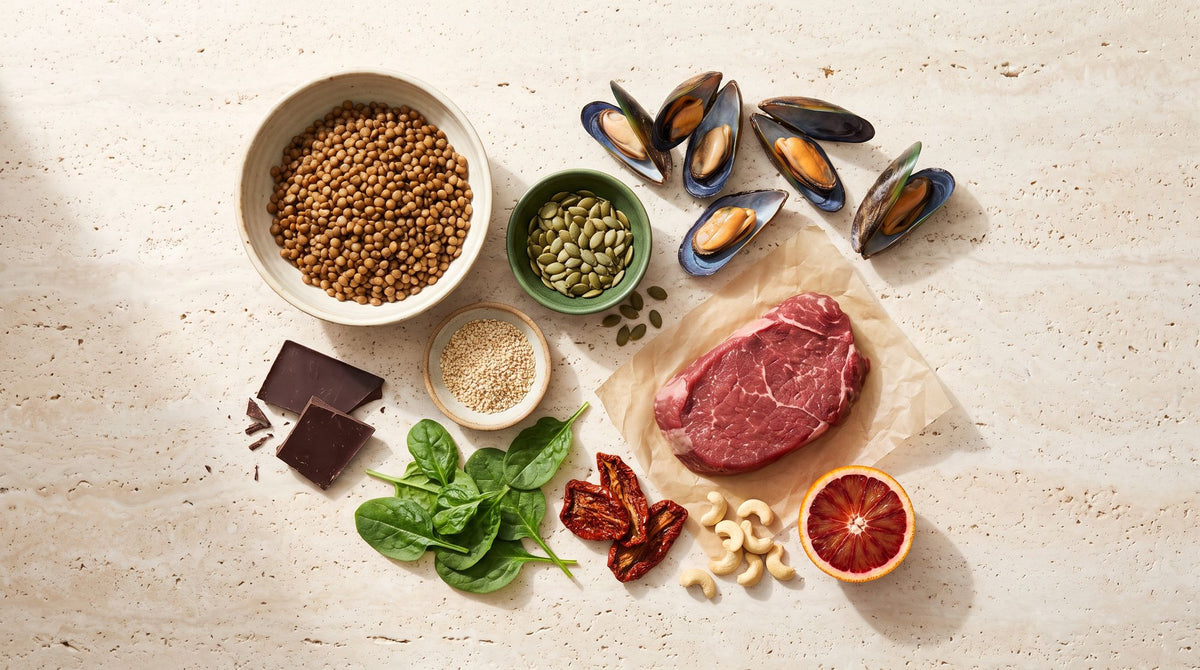
Iron deficiency: symptoms, causes and treatment
Tired, pale, hair falling out: the most common nutrient deficiency in the world, which blood value matters and what really helps.
Weiterlesen · 13 Min

Latest from our advice hub
New articles, updates and tips straight to your inbox. Easy to understand, expert-checked, no spam.
Danke! Bitte bestätige die Anmeldung in deinem Postfach.