
Phosphate deficiency: symptoms, causes and treatment
Muscle weakness, bone pain, shortness of breath? Phosphate deficiency almost never comes from what you eat. It comes from illness, medication, an iron infusion or eating again after a period of starvation. Find out which symptoms go with it, what your blood level means and what helps.


Aktualisiert 24 September 2026 · 16 Min. Lesezeit · 43 Quellen

The key points in 30 seconds
Reference range for adults: 0.81 to 1.45 mmol/l (2.5 to 4.5 mg/dl). Below that, phosphate deficiency begins. You usually only notice it below 0.32 mmol/l.
of the phosphorus in your body is in your bones and teeth, around 700 g in total. Less than one per cent circulates in the blood, so the blood level only shows the tip of the iceberg.
DGE estimated value for adults since 2024, previously 700 mg. On average, women take in 1,023 mg and men 1,339 mg. Eating too little is almost never the cause.
It's illness or medication: eating again after a period of starvation, alcohol, iron infusions, the parathyroid gland, antacids, diuretics. Your blood level shows what's behind it.
Phosphate deficiency symptoms: how to spot it
Phosphate is the raw material for ATP, the energy currency of every muscle and nerve cell. If it's missing from your blood, the fuel is missing. The catch: a mild deficiency usually causes nothing at all and is a chance finding in the lab. Symptoms generally only appear below 0.32 mmol/l, or when your level stays low for months and your bones suffer.
Phosphorus deficiency in humans: the first signs
The most common sign is general muscle weakness, often with tiredness: stairs, shopping bags and getting up take more effort than usual. The DGE names exhaustion, weakness and heart rhythm disorders as possible consequences, but stresses that a deficiency caused by diet is “very rare”. Phosphorus and phosphate mean the same thing here: phosphorus is the element, phosphate is the form in which it occurs in the body and in food. If you search for “phosphorus deficiency”, you mostly end up with plants and fertiliser; this article is about humans.
Phosphate deficiency and muscle pain: when your muscles run out of fuel
Muscle pain is part of the picture, but as a sign of a severe deficiency. Without phosphate, the muscle cell can't replenish its ATP, and in extreme cases tissue breaks down: rhabdomyolysis, with severe pain, high creatine kinase and dark, cola-coloured urine that can damage the kidney. People with a chronic deficiency and an alcohol use disorder are at particular risk. If you have muscle pain without a risk factor, phosphate is rarely the reason; more often it's a vitamin D deficiency, a magnesium or potassium deficiency, statins or overexertion.
Bone pain and osteomalacia: when the deficiency lasts for months
Alongside calcium, phosphate is the second building block of bone mineral. If your level stays low for a long time, new bone doesn't harden properly: osteomalacia, or “soft bone”. Typical signs are dull pain in the pelvis, hip, ribs and spine that gets worse when you walk, a waddling gait and, on X-ray, fine cracks called pseudofractures. In children, the same disorder is called rickets. Both are rare and almost always the result of a cause that makes you lose phosphate through the kidney: phosphate diabetes, repeated iron infusions or a severe vitamin D deficiency.

Breathing, heart and nerves: signs of a severe deficiency
When the level drops low, the energy shortage also hits the muscles nobody controls consciously: the diaphragm weakens, and intensive care patients with low phosphate take longer on the ventilator. The heart muscle becomes irritable, red blood cells release oxygen less readily, and the brain reacts with tingling and confusion, and in severe cases seizures. By severity: mild (0.65 to 0.81 mmol/l) is usually silent, moderate (0.32 to 0.65) brings weakness and tiredness, severe (below 0.32) is a hospital emergency, and chronic deficiency causes bone pain.
Often mentioned, but not backed up by studies: loss of appetite doesn't appear in the specialist sources as a symptom in its own right, and joint pain, anxiety, low mood and hair loss aren't documented anywhere.
If you have breathlessness at rest, palpitations with dizziness, confusion, severe muscle pain with dark urine, or if weakness and bone pain suddenly appear after an iron infusion, an operation or eating again after a long period of starvation.
Phosphate deficiency causes: why your level drops
Your phosphate level can fall in exactly three ways: too little comes in (gut), too much goes out (kidneys), or phosphate shifts from the blood into the cells. The third is the fastest and most dangerous. In healthy people, food is practically never the only culprit; if your level is low, start by going through medications, infusions, illnesses and the last few weeks.
Refeeding syndrome: phosphate deficiency when you eat again after a period of starvation
If you've gone hungry for a long time, through an eating disorder, cancer, alcohol or weeks without appetite, your phosphate stores are used up, even if the blood level may still look normal. When food suddenly returns, insulin drives glucose, potassium, magnesium and phosphate into the cells; within one to five days the level falls, sometimes to a life-threatening point. The NICE guideline counts a BMI below 16, more than 15 per cent weight loss in six months, or almost no food for ten days as high risk: feeding is built up with at most 10 kcal per kilogram a day, plus thiamine and daily electrolyte checks. So after a long period of starvation, never go for “as much as possible, as fast as possible”, not even with drinkable nutrition.
Phosphate deficiency after an iron infusion
The most common cause that affects healthy people. In the PHOSPHARE trials (JAMA 2020, 245 adults with iron deficiency), after two infusions of ferric carboxymaltose, 75.0 and 73.7 per cent respectively developed a level below 2.0 mg/dl, compared with 7.9 and 8.1 per cent after ferric derisomaltose; a severe deficiency below 1.0 mg/dl affected 11.3 per cent, and only with carboxymaltose. The active ingredient makes the hormone FGF23 rise, which makes the kidneys excrete phosphate: the low point comes around day 14, with recovery usually by week 12. Since 2020, “hypophosphataemic osteomalacia” has been listed in the prescribing information, with the advice to seek medical advice if you have increasing exhaustion, muscle or bone pain, and to check phosphate if you have repeated doses.
Phosphate after an iron infusion with ferric carboxymaltose
-
Day 0
First infusion
In the PHOSPHARE trial, 750 mg, with the second dose on day 7. Within 24 hours the hormone FGF23 rises from 46 to 151 pg/ml and the kidneys start excreting phosphate.
-
Day 8
FGF23 at its highest
On average 344 pg/ml, seven times the starting value. The phosphate level keeps falling and most people notice nothing; if you feel tired or have muscle pain, get it measured.
-
Day 14
Lowest point of phosphate level
One week after the second dose, the share of people with phosphate below 2.0 mg/dl was at its largest. For a single course, this is the best time for a check.
-
Week 12
Usually back to the starting value
According to the prescribing information, levels return to normal in most cases by week 12. With repeated infusions or risk factors, phosphate belongs in your regular blood tests.
Phosphate deficiency and the thyroid: it's the parathyroid that matters
The proven link runs through the four parathyroid glands and their parathyroid hormone (PTH), which raises calcium and makes the kidneys excrete phosphate. A benign nodule producing too much PTH (primary hyperparathyroidism) gives the pattern of high calcium, low phosphate, often with kidney stones and bone loss; it's detected through calcium and PTH in the blood. The thyroid itself only plays a minor role; if you're having your thyroid levels checked, ask for calcium and PTH too.
Phosphate deficiency from medication, alcohol and vitamin D deficiency
Antacids containing aluminium and magnesium and phosphate binders hold phosphate back in the gut. Diuretics flush it out, tenofovir and ifosfamide damage the kidney tubules (Fanconi syndrome), cortisone reduces reabsorption, and insulin shifts it into the cells. Alcohol affects all three routes, and up to 10 per cent of those affected arrive at hospital with a low level. Severe vitamin D deficiency, chronic diarrhoea, coeliac disease, Crohn's disease or gastrointestinal surgery reduce absorption. Don't stop anything on your own; take the list to your GP.
Phosphate diabetes (XLH): the rare inherited cause
Not a sugar disease, but X-linked hypophosphataemia: a fault in the PHEX gene produces too much FGF23, the kidneys lose phosphate permanently, and the bones don't harden. At around 3.9 cases per 100,000 births, it's the most common inherited form. Children show bowed legs or knock knees and short stature, and adults have bone pain. It's treated in specialist centres with phosphate plus active vitamin D, and since 2018 also with the FGF23 antibody burosumab.
How the body controls its phosphate
Three stations from plate to bone explain the three ways your blood level can fall. Phosphorus is the element, phosphate is the form found in food and in the body.
Absorption in the gut
From natural foods, the small intestine absorbs only 40 to 60 per cent of the phosphate, because it is bound to protein. From wholegrains, pulses and nuts it absorbs less than half, because there it is present as phytate. Phosphate additives from cola, sausage or processed cheese are absorbed almost completely. Active vitamin D opens the door; antacids and phosphate binders close it.
The kidney decides what stays
The kidney filters phosphate and normally takes 70 to 80 per cent of it back. Two hormones turn the dial: parathyroid hormone from the parathyroid glands and FGF23 from the bone make you excrete more. If either one rises, whether from a parathyroid nodule, after an iron infusion or in phosphate diabetes, the blood level drops even though your plate is full.
Bone as the store, cells as the consumers
Around 85 per cent of the roughly 700 grams of phosphorus sits in the bone, 14 per cent in the cells and less than 1 per cent in the blood. In the cells, phosphate builds ATP and 2,3-DPG, which helps red blood cells release oxygen. Insulin pushes phosphate into the cells along with glucose, which is why the level crashes when you start eating again. The blood level only shows the tip of the iceberg.
Low phosphate: what your blood value means
On your lab report, the value is called phosphate, inorganic phosphate, PO4 or phosphorus, in mmol/l or mg/dl; the conversion factor is roughly 3.1. Depending on the lab, the reference range for adults is 0.81 to 1.45 mmol/l (2.5 to 4.5 mg/dl); children's levels are higher. Anything below that is called hypophosphataemia. Because the blood level reflects less than one per cent of the body's phosphate, it isn't a measure of your stores but an early warning system.
Low inorganic phosphate: what the lab name means
“Inorganic” isn't a warning word, it's the measuring method: the test measures the free phosphate in your serum that isn't bound to protein, which is immediately available to your muscles and nerves. The value doesn't tell you whether your body as a whole is short of phosphate: with refeeding syndrome it can be normal despite empty stores, and after an iron infusion it can be low while your bones are full. So the second question is “Where is it going?”: if your kidneys excrete a lot of phosphate despite a low blood value (over 100 mg per 24 hours or a fractional excretion above 5 per cent), they're losing it; if they excrete little, the cause lies in your gut or your cells.
Which other values your doctor checks alongside phosphate
A single phosphate value explains nothing; only the values around it show the way to the cause.
| What it shows | Patterns in phosphate deficiency | |
|---|---|---|
| Calcium | Counterpart and partner in the bone | High: parathyroid gland. Low: vitamin D deficiency or absorption disorder |
| Parathyroid hormone (PTH) | Hormone from the parathyroid glands, makes the kidneys excrete phosphate | High with high calcium: primary hyperparathyroidism |
| 25-OH vitamin D | Your vitamin D store, key to absorption in the gut | Low: gut absorbs calcium and phosphate poorly, PTH rises |
| Creatinine, eGFR | Kidney function | Weak kidneys tend to cause too much phosphate; after a transplant, too little |
| Phosphate in urine | Are the kidneys losing phosphate? As 24-hour urine or fractional excretion (FEPO4, TmP/GFR) | High despite a low blood value: kidney loss (PTH, FGF23, Fanconi). Low: gut or shift |
| FGF23 | Hormone from the bone, slows phosphate reabsorption | High: phosphate diabetes, tumour, after ferric carboxymaltose |
| Potassium, magnesium | Drop together with phosphate during refeeding | All three low after refeeding: refeeding syndrome |
| Creatine kinase (CK) | Muscle breakdown | Sharply raised with muscle pain: rhabdomyolysis, emergency |
According to StatPearls (2024) and the MSD Manual. What actually gets tested is decided by your doctor based on your history.
When is a low phosphate value dangerous?
It's less the number that's dangerous than the speed. A value of 0.6 mmol/l that has developed over months often causes nothing worse than bone pain at some point; the same value after two days of refeeding or alcohol withdrawal can hit your heart and breathing. Rule of thumb: below 0.32 mmol/l (1.0 mg/dl) the value belongs in hospital, between 0.32 and 0.65 symptoms and cause decide, above that watching and waiting is usually enough. According to StatPearls, severe hypophosphataemia comes with almost four times the mortality, because it tends to hit people who are already seriously ill.
Measurement errors: time of day, fasting, blood sample
Phosphate is lowest in the morning and highest in the evening, and it's temporarily lower after a meal and when you breathe fast, so two values should be compared fasting in the morning. If red blood cells break down in the tube (haemolysis), the value looks falsely high, so an unexpected value is repeated first. And don't mix them up: hypophosphataemia is a low phosphate value, while hypophosphatasia is a rare inherited bone metabolism disorder with low alkaline phosphatase, a different diagnosis. Bring your medication list and the date of your last iron infusion to your blood test, and if your value is low, ask for calcium, parathyroid hormone, vitamin D, potassium, magnesium, kidney values and a urine test to be added.

Low phosphate: what to do?
Treatment has three levels: food for mild deficiency without symptoms, supplements you swallow for moderate deficiency, and a drip in hospital for severe deficiency with symptoms. The cause comes first: surgery for a parathyroid nodule, vitamin D for vitamin D deficiency, a different remedy instead of antacids, patience after an iron infusion. Topping up phosphate while your kidneys keep excreting it is like pouring water into a leaky bucket.
Eating phosphate-rich foods for mild deficiency: milk, cheese, pulses
For mild deficiency without symptoms, the MSD Manual recommends low-fat or skimmed milk: one litre contains around one gram of phosphate (1,010 mg phosphorus according to USDA) and is “much better tolerated” than phosphate salts, which often cause diarrhoea. Yoghurt, quark, cheese, eggs, fish, pulses and oats also easily add another half to one gram a day; the table in the next chapter shows the portions. Nobody needs phosphorus supplements for this, and the BfR (German Federal Institute for Risk Assessment) explicitly advises against them.
phosphorus, spread across the day. According to the MSD Manual, better tolerated than phosphate salts for mild deficiency: no diarrhoea, no extra potassium
phosphorus per tablet of a prescription potassium-sodium phosphate product (6.4 mmol according to the prescribing information, our own conversion). Daily dose 5 to 8 tablets, only under medical supervision
Phosphate tablets: when they make sense and why they belong in a doctor's hands
When food isn't enough, with a moderate deficiency, ongoing kidney loss or if someone can hardly eat, the doctor prescribes phosphate salts to swallow made from potassium and sodium phosphate. One tablet provides around 6.4 mmol phosphate, just under 200 mg phosphorus. According to the prescribing information, treatment starts with five to eight tablets a day under ongoing monitoring. There's a good reason they aren't sold over the counter: every tablet also brings potassium and sodium, too much phosphate at once makes calcium drop, and diarrhoea is the most common side effect. Take them with meals, not with antacids or calcium supplements.
With a low phosphate level, the most important question isn't which supplement, but why. If you miss the cause, you're filling a leaky barrel. For mild cases, what's in your fridge is often enough: milk, yoghurt, cheese. Tablets belong in a doctor's hands because they bring potassium and sodium with them and the level has to be monitored closely.
Joerg Hauke, Nutrition expert, expert review of this article
Hospital infusion: for severe deficiency with symptoms
Below 0.32 mmol/l (1.0 mg/dl), or with weak breathing, heart rhythm problems, confusion or muscle breakdown, phosphate is given into a vein: slowly, over at least six hours, with checks of phosphate and calcium, because a rise that's too fast makes calcium plummet. Above about 0.65 mmol/l, treatment continues with tablets or food. We deliberately don't give doses, as they depend on weight, kidney function and starting level.
How quickly does the level rise again? There's no one-size-fits-all figure. During an infusion, the check value after six hours shows the direction; normalising takes days. After an iron infusion, you'll need patience for up to week 12, and with phosphate diabetes it stays a long-term treatment. Muscle weakness usually improves within a few days, while bones take months.
No phosphate tablets or “phosphorus capsules” without a prescription, no double dose if your level doesn't rise fast enough, and don't stop antacids or phosphate binders yourself. If your kidneys are weak, talk to your kidney specialist about any extra phosphate intake, including through milk and cheese.
Phosphate in food: where you'll find the most
Phosphorus follows protein: lots in cheese, milk, eggs, meat, fish, pulses, nuts and seeds, little in fruit, vegetables, rice, sugar and oil. That's why almost nobody has to think about their supply, and why most search results are aimed at people with kidney disease who need to avoid phosphate. This chapter is for the other side: for everyone who wants to get back to a good level after an iron infusion, an illness or a spell of low appetite.
Foods rich in phosphate: the top 10, plant-based and animal
The bars show phosphorus per 100 g as it lands on your plate: pulses boiled, meat and fish cooked, seeds and rolled oats dry. Seeds lead, but the portion is small: 30 g pumpkin seeds gives 370 mg. With cheese and fish, the amount comes from the portion size: 100 g sardines 490 mg, 150 g chicken breast 387 mg.
Phosphorus per 100 g: top 10, plant-based and animal
USDA SR Legacy, mg phosphorus per 100 g. Portions: 30 g pumpkin seeds 370 mg, 30 g sunflower seeds 347 mg, 40 g rolled oats 209 mg, 30 g almonds 144 mg, 150 g lentils 270 mg. Pumpkin seeds: BLS lists only 516 mg, discrepancy unexplained. Less than half of the phosphorus from plants is absorbed.
Animal or plant-based: how much phosphorus actually arrives
From animal foods, your gut absorbs 40 to 60 per cent of the phosphorus. From wholegrains, pulses, nuts and seeds it's less than half, because it's bound there as phytate; soaking, sprouting and sourdough help. A vegan diet still covers your needs: tofu, lentils, rolled oats, wholemeal bread, almonds and fortified soya milk bring around 1,250 mg on a sample day, more than double the estimated value. What tends to run shorter there is vitamin B12, vitamin D and calcium.
Phosphate additives: how to spot E 338 to E 452
Phosphoric acid (E 338) gives cola its tang. Sodium, potassium and calcium phosphates (E 339 to E 341) keep processed cheese creamy and raising agents active. Di-, tri- and polyphosphates (E 450 to E 452) keep boiled sausage juicy and bind water in ready meals. This phosphate is free and is absorbed almost completely. That's why processed cheese with 641 mg per 100 g plus melting salts delivers more usable phosphate than Emmental with 574 mg. In 2019, the EFSA set a safety limit of 40 mg per kilogram of body weight per day, and children who eat lots of cola, ready-made products and sausage go over it.
What people are searching for: Coffee contains hardly any phosphorus, around 12 mg per cup. Oats lead the way with 523 mg per 100 g, and 40 g of porridge oats provides 209 mg. Fruit is low in phosphorus, a banana has 26 mg. Quark clearly beats yoghurt: 200 g of low-fat quark has around 470 mg. Hard cheese is the most concentrated everyday source.

Drinkable meal as a phosphorus-rich supplement when you've lost your appetite
Phosphorus runs short not on a full plate, but on an empty one: after an illness, in older age, with chewing problems or in weeks when nothing tastes good. Depending on the flavour, a bottle of drinkable meal provides 216 to 280 mg phosphorus, 31 to 40 per cent of the reference value of 700 mg. With kidney disease, every phosphate source counts and should be discussed with your kidney specialist. After a long period of starvation, even with liquid nutrition, build up slowly and under medical supervision.
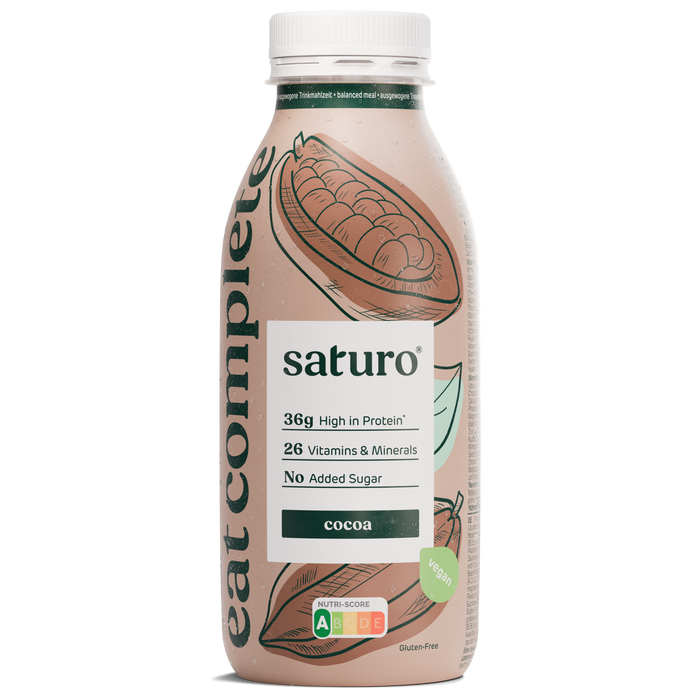
Drinkable meal: a complete meal in a bottle
26 vitamins and minerals, including phosphorus, calcium and vitamin D. Phosphorus contributes to normal energy-yielding metabolism and to the maintenance of normal bones. Reference value for phosphorus: 700 mg per day (NRV). If you have kidney disease, discuss your phosphate intake with your doctor; after a long period of starvation, rebuild your diet under medical supervision.
Older people, alcohol, intensive care, children: who needs to watch phosphate more closely
In healthy adults with a good appetite, phosphate never becomes an issue. The exceptions are people for whom several pathways tip at once: little food, plus loss, plus shifting. And finally, the group for whom this article applies the other way round.
Older people and malnutrition
In older age, a lot comes together: small appetite, chewing problems, diuretics or antacids, vitamin D deficiency, hospital stays without a proper meal. Together they push the level down, and when someone starts eating again after an infection or surgery, the refeeding pattern is a risk. NICE names a BMI below 18.5 with more than 10 per cent weight loss in six months, or a BMI below 16, as warning signs. You'll find more in our article on malnutrition. Before building up your intake, get your electrolytes tested, phosphate included.
Alcohol and diabetes are the classic cases: alcohol hits every pathway, and combined with ketoacidosis or sepsis, up to 80 per cent have a low level according to StatPearls. Rhabdomyolysis is the feared complication; in withdrawal, phosphate, potassium, magnesium and thiamine all come into play. With diabetes, ketoacidosis is what counts: along with the sugar, the kidneys excrete phosphate, and once insulin treatment starts it moves into the cells, which is why hospitals check the level during recovery.
Intensive care, major surgery, children
In intensive care, all the triggers come together: sepsis, ventilation, insulin, diuretics, then the start of feeding via tube or vein. The German guideline on clinical nutrition in intensive care medicine from 2018 makes phosphate a control value: below 0.65 mmol/l, calorie intake is reduced and phosphate is replaced. When someone is “built up slowly” after major surgery, that's protection. In children, the normal value is higher (4.0 to 7.0 mg/dl); the most important cause is inherited phosphate diabetes. According to the DGE, pregnant and breastfeeding women don't need more phosphorus than other adults.

Too much phosphate in the body: symptoms and causes
Hyperphosphataemia above 1.45 mmol/l (4.5 mg/dl) is rare with healthy kidneys, and usually a lab artefact or the result of cell breakdown. With reduced kidney function it's the rule, affecting 50 to 74 per cent of people on dialysis. A high level causes no symptoms for a long time; it binds calcium (cramps, tingling) and builds up over the years in blood vessel walls and skin: calcification, heart risk, and itching on dialysis. In that case: follow a low-phosphate diet as set out by your nephrology team, check ingredient lists for E 338 to E 452, and take phosphate binders with meals; since 2017, KDIGO has recommended lowering only raised levels.
If you have chronic kidney disease or are on dialysis, you don't need a phosphorus-rich diet, you need to follow your nephrology team's guidance. The tables and tips here are aimed at people whose level is too low. If your phosphate is raised, ask your doctor first, even before using nutrition drinks.
Frequently asked questions about phosphate deficiency
How do you notice a phosphate deficiency?
Mostly you don't; a mild deficiency is a chance finding. If it gets worse: muscle weakness, tiredness, muscle pain, tingling; below 0.32 mmol/l, shallow breathing, irregular heartbeat, confusion. If the level stays low for months, your bones hurt. Loss of appetite, joint pain or hair loss are not proven symptoms.
What can you do about a phosphate deficiency?
First find the cause: iron infusion, refeeding, antacids, diuretics, alcohol, parathyroid gland, vitamin D deficiency. For a mild deficiency, time, monitoring and phosphorus-rich food are enough, such as a litre of low-fat milk a day. For a moderate deficiency, your doctor prescribes phosphate salts; for a severe one, the hospital gives phosphate through a vein.
Where does a phosphate deficiency come from?
From one of three pathways: too little absorbed in the gut (vitamin D deficiency, diarrhoea, antacids), too much lost via the kidneys (parathyroid gland, ferric carboxymaltose, diuretics, tenofovir, phosphate diabetes) or a shift into the cells (refeeding, insulin, alcohol withdrawal). In healthy people, food alone is almost never the cause.
What's the difference between phosphorus and phosphate?
Phosphorus is the chemical element (P, atomic number 15), and phosphate is the compound with oxygen in which it occurs in food and in the body. Reference values are given in milligrams of phosphorus, while lab results measure phosphate in the blood. In humans, both words mean the same thing.
Which foods are high in phosphate? Which fruits contain a lot of phosphorus?
Seeds (pumpkin seeds 1,233 mg, sunflower seeds 1,155 mg per 100 g), hard cheese (Parmesan 694, Emmental 574 mg), sardines with bones (490 mg), oats (523 mg), meat and fish (250 to 500 mg), cooked pulses (140 to 180 mg), milk (84 to 101 mg per 100 ml). Fruit is low in phosphorus: banana 22 mg, avocado 52 mg.
Does coffee contain phosphate? Are oats high in phosphorus?
Coffee hardly any: around 6 mg per 100 ml, 12 mg per cup. Oats, on the other hand, a lot: 523 mg per 100 g, and 40 g of porridge oats provides 209 mg, or around 380 mg with 200 ml of milk, two thirds of the estimated daily requirement. Soaking overnight makes the phytate phosphorus more available.
Is cheese high in phosphate? Does quark contain a lot of phosphate?
Yes, both. Parmesan 694 mg, Emmental 574, Gouda 546, mozzarella 463, feta 337, cream cheese just 107 mg per 100 g. Quark beats yoghurt because it has more protein: low-fat quark around 237 mg per 100 g, whole milk yoghurt 95 mg. Processed cheese also contains added melting salts.
Is phosphate bad for the kidneys? What removes phosphate from the body?
With healthy kidneys, no; up to 3,000 mg a day is considered safe. With reduced kidney function, phosphate builds up and harms blood vessels and bones. Things that can drain phosphate: antacids, phosphate binders, diuretics, cortisone, tenofovir, heavy drinking, diarrhoea, parathyroid hormone, FGF23 after an iron infusion, and insulin.
Sources · 43 sources anzeigen
- German Nutrition Society (DGE): Reference values for nutrient intake, phosphorus. 3rd edition 2025 (revised 2024).
- German Nutrition Society (DGE): DGE publishes revised reference values for iron, phosphorus and fluoride. Press release 2024.
- German Nutrition Society (DGE): FAQ on phosphorus (intake according to the National Nutrition Survey II: women 1,023 mg, men 1,339 mg per day).
- German Federal Institute for Risk Assessment (BfR): Proposed maximum levels for phosphorus/phosphate in foods, including food supplements. As of 2021.
- EFSA NDA Panel: Scientific Opinion on Dietary Reference Values for phosphorus. EFSA Journal 2015; 13(7): 4185.
- EFSA FAF Panel: Re-evaluation of phosphoric acid-phosphates, di-, tri- and polyphosphates (E 338–341, E 343, E 450–452) as food additives. EFSA Journal 2019; 17(6): 5674.
- Regulation (EU) No 1169/2011 (Food Information Regulation), Annex XIII: Reference intakes for daily intake (phosphorus 700 mg).
- European Commission: EU Register on nutrition and health claims made on foods (phosphorus: normal energy-yielding metabolism, cell membranes, maintenance of normal bones and teeth).
- Calvo M. S., Uribarri J.: Phosphorus. Advances in Nutrition 2025.
- Calvo M. S., Uribarri J.: Public health impact of dietary phosphorus excess on bone and cardiovascular health in the general population. American Journal of Clinical Nutrition 2013; 98(1): 6–15.
- MSD Manual, Professional Version: Overview of disorders of phosphate concentration.
- MSD Manual, Professional Version: Hypophosphataemia. Full review June 2025, updated December 2025.
- MSD Manual, Professional Version: Hyperphosphataemia.
- MSD Manual, Professional Version: Hyperparathyroidism. Reviewed October 2024.
- Kaur J., Castro D.: Hypophosphatemia. StatPearls, updated 12 February 2024.
- Rout P., Jialal I.: Hyperphosphatemia. StatPearls, updated 12 June 2023.
- Ulm University Hospital, Clinical Chemistry: Test catalogue entry for phosphate (reference range, daily rhythm, interfering factors). Revision 2022.
- Labor Dr. Klein Dr. Schmitt: Tubular phosphate reabsorption (TRP) and TmP/GFR, calculator.
- Wozniak H. et al.: Hypophosphatemia on ICU Admission Is Associated with an Increased Length of Stay in the ICU and Time under Mechanical Ventilation. Journal of Clinical Medicine 2022.
- Wolf M. et al.: Effects of Iron Isomaltoside vs Ferric Carboxymaltose on Hypophosphatemia in Iron-Deficiency Anemia: Two Randomized Clinical Trials (PHOSPHARE-IDA). JAMA 2020; 323(5): 432–443.
- European Medicines Agency (EMA) / CMDh: Scientific conclusions and grounds for the variation to the terms of the marketing authorisation, parenteral iron preparations (hypophosphataemic osteomalacia). PSUSA 2020.
- Vifor Pharma: Summary of Product Characteristics for Ferinject 50 mg iron/ml (ferric carboxymaltose), as of March 2025.
- Swissmedic: Parenteral iron preparations and hypophosphataemia. Vigilance news with case report.
- Haffner D. et al.: Clinical practice recommendations for the diagnosis and management of X-linked hypophosphataemia. Nature Reviews Nephrology 2019; 15: 435–455.
- Orphanet: X-linked hypophosphatemia (ORPHA:89936).
- Orphanet: Hypophosphatasia (ORPHA:436).
- NICE Clinical Guideline CG32: Nutrition support for adults (refeeding risk, calorie start, thiamine).
- Elke G. et al., DGEM: S2k guideline on clinical nutrition in intensive care medicine. AWMF register 073-004, Aktuelle Ernährungsmedizin 2018; 43: 341–408.
- Doig G. S. et al.: Restricted versus continued standard caloric intake during the management of refeeding syndrome in critically ill adults: a randomised, parallel-group, multicentre, single-blind controlled trial. Lancet Respiratory Medicine 2015; 3(12): 943–952.
- Nguyen P. et al.: Refeeding syndrome: Pathophysiology, treatment and which rheumatic patients are particularly at risk. Zeitschrift für Rheumatologie 2020; 80(3): 263–269.
- Prescribing information for Reducto-spezial (potassium dihydrogen phosphate/disodium hydrogen phosphate), as of February 2018.
- Prescribing information for Maaloxan 25 mVal (antacid containing aluminium and magnesium), as of 2022.
- Prescribing information for tenofovir disoproxil (kidney function, serum phosphate, proximal tubulopathy).
- Ritz E. et al.: Health risk from phosphate additives in food. Deutsches Ärzteblatt International 2012; 109(4): 49–55.
- Kalantar-Zadeh K. et al.: Understanding Sources of Dietary Phosphorus in the Treatment of Patients with Chronic Kidney Disease. Clinical Journal of the American Society of Nephrology 2010; 5(3): 519–530.
- Cupisti A., Kalantar-Zadeh K.: Management of Natural and Added Dietary Phosphorus Burden in Kidney Disease. Seminars in Nephrology 2013; 33(2): 180–190.
- Moe S. M. et al.: Vegetarian Compared with Meat Dietary Protein Source and Phosphorus Homeostasis in Chronic Kidney Disease. Clinical Journal of the American Society of Nephrology 2011; 6(2): 257–264.
- St-Jules D. E. et al.: Examining the Proportion of Dietary Phosphorus From Plants, Animals, and Food Additives Excreted in Urine. Journal of Renal Nutrition 2017; 27(2): 78–83.
- Ketteler M. et al.: Diagnosis, Evaluation, Prevention, and Treatment of Chronic Kidney Disease–Mineral and Bone Disorder: Synopsis of the KDIGO 2017 Clinical Practice Guideline Update. Annals of Internal Medicine 2018.
- Verbraucherzentrale: Is phosphorus not available as a dietary supplement? (phosphate additives E 338 to E 452).
- Stiftung Warentest: Phosphates in food: too much is bad for the kidneys.
- Max Rubner-Institut: German Nutrient Database (Bundeslebensmittelschlüssel, BLS) 4.0, version 2025 (phosphorus).
- U.S. Department of Agriculture, Agricultural Research Service: FoodData Central, SR Legacy Release (2018). Phosphorus per 100 g.
Has been writing for Saturo since 2019 about nutrition, nutrients and how to get good nutrition to work in everyday life.
Hat diesen Artikel am 23. September 2026 auf fachliche Richtigkeit geprüft. This content is not a substitute for medical advice.
Iron deficiency: symptoms, causes and treatment
The deficiency whose treatment by infusion can push down phosphate levels: why iron deficiency is the most common nutrient deficiency in the world, which blood value matters and what helps quickly.
Weiterlesen · 13 Min

Latest from the guide
New articles, updates and tips straight to your inbox. Easy to understand, expert-checked, no spam.
Danke! Bitte bestätige die Anmeldung in deinem Postfach.