
Vitamin B3 deficiency: symptoms, causes and treatment
Skin that burns in sunny spots, a sore tongue, irritable mood? Vitamin B3 works in every cell. A true deficiency is rare; too much niacin from tablets is the more common problem. Which symptoms are proven, what pellagra is, and how much is too much.


Aktualisiert 1 October 2026 · 16 Min. Lesezeit · 72 Quellen

The key points in 30 seconds
DGE recommended intake in niacin equivalents: women 11 to 13 mg, men 14 to 16 mg a day. 100 g of chicken breast, or a handful of peanuts with two slices of wholemeal bread, covers that.
This much nicotinic acid from supplements is considered safe long term in the EU. It's a third of the dose at which skin occasionally turns red. For nicotinamide the limit is 900 mg.
of men and women in the National Nutrition Survey didn't reach the recommended intake; the median was two to three times higher. Niacin is the best-supplied vitamin in Germany.
Red, hot skin after a niacin capsule doesn't mean it's working. It means the dose is too high. From around 30 to 50 mg of nicotinic acid this happens regularly; nicotinamide never causes it.
Vitamin B3 deficiency symptoms: how to recognise them
Vitamin B3, also called niacin, is the building block of NAD, a helper in over 400 reactions in every cell. If it's missing for months, it hits your skin, mouth and gut as well as your nerves and mind; the full picture is called pellagra (chapter 2). In Germany that's rare and almost always has a cause from chapter 4.
Vitamin B3 deficiency symptoms in adults: the first signs
The first signs are unspectacular and come before any skin changes: loss of appetite, weakness, weight loss, digestive complaints ranging from burning in the upper abdomen to constipation or diarrhoea, plus irritability, anxiety and trouble concentrating. That's how the WHO and DGE describe it. These early signs are only documented as a precursor to a true deficiency; no study has shown that someone with a marginal intake is tired because of it. So tiredness alone points first to iron, sleep, thyroid and vitamin B12.

Vitamin B3 deficiency in skin, mouth and gut: redness in sunny spots
The key symptom is a symmetrical redness on sun-exposed skin: backs of the hands and forearms up to the sleeve line, feet and shins, nose and cheeks, a band around the neck along the collar (Casal necklace). At first it looks like sunburn, then the skin turns brown, rough and scaly, with a sharp border to healthy skin, and every new bout of sun makes it worse; why is unknown. Added to that are a red, swollen, painful tongue, a sore mouth, burning in the gullet and upper abdomen, bloating, constipation or, later, diarrhoea. Without sun, the skin signs can be absent.
Vitamin B3 deficiency and mental health: irritability, anxiety, confusion
In pellagra, depression, anxiety and apathy are common, along with headaches, dizziness and tremors. Later come confusion, memory gaps, hallucinations and delirium, which in people with alcohol dependence looks like withdrawal. According to the WHO, the classic fourth D, dementia, is rare. Delirium is more common, and it can be the only sign. This evidence applies to full-blown pellagra. No study shows that a marginal supply changes mood or sleep in healthy people. If you feel restless inside, a doctor will usually check your thyroid, B12 and folate first.
What really fits vitamin B3 deficiency and pellagra
Eleven complaints from search queries and textbooks, and what the WHO, MSD Manual and studies actually say about them.
| What the sources say | Assessment | |
|---|---|---|
| Redness on sun-exposed skin, Casal necklace | Key symptom per WHO, MSD Manual, NIH; takes months of severe undersupply | Evidenced |
| Red tongue, sore mouth | Around 60% of pellagra cases in Malawi; also seen with B2 deficiency | Evidenced |
| Diarrhoea | Only 19% of cases in Malawi; constipation equally common | Evidenced, not always |
| Loss of appetite, heartburn, weight loss | Early signs per WHO and DGE | Evidenced |
| Depression, anxiety, apathy | Common in pellagra; unproven in healthy people without pellagra | Evidenced in pellagra |
| Delirium, psychosis, dementia | Late stage; delirium more common than dementia (4 to 10% of chronic cases) | Evidenced, late stage |
| Tiredness, weakness, irritability | Non-specific early signs, no study on marginal supply | Possible |
| Tingling, muscle weakness | More likely other B vitamins; niacin alone didn't help | Possible |
| Sleep problems, hair loss | No study; sleep data only on NAD boosters | Unproven |
| Weight gain | WHO describes the opposite, weight loss | Unproven |
| High blood pressure, high cholesterol | MSD Manual: link “uncertain”; cholesterol only as a drug effect | Unproven |
Based on WHO 2000, MSD Manual 2026, NIH ODS 2022, DGE 2025, StatPearls 2023, Oldham 2012 and a keyword search in Europe PMC. As of 1 October 2026.
Vitamin B3 deficiency symptoms in women
Three things are different. In pregnancy, the requirement rises to 14 mg from the second trimester and 16 mg in the third. At the same time, the body converts tryptophan to niacin more efficiently. A deficiency from diet alone hasn't been described in Germany. Eating disorders mostly affect women, and anorexia is one of the few causes of pellagra in Europe, even without visible underweight. And the skin signs are more likely to be mistaken for acne, rosacea or sun allergy in women. The difference is the sharp border with healthy skin and the exact location on sun-exposed areas. PMS and the menopause have nothing to do with niacin.
Blood pressure, sleep problems, hair loss: what doesn't fit with B3 deficiency
The three most-searched complaints aren't listed as deficiency signs in any specialist source. On blood pressure, the MSD Manual says a link with niacin status is uncertain; what nicotinic acid does to blood pressure at high doses is covered in chapter 8. Sleep problems have only been studied with NAD boosters, not in niacin deficiency. Hair loss appears in a single list of complications without any evidence.
Redness on the backs of your hands, forearms or neck that feels like sunburn and turns sharply defined brown, plus a sore mouth or diarrhoea: see your GP, especially if you drink alcohol, have an eating disorder or are on tuberculosis therapy. Sudden confusion is an emergency.
Pellagra: the disease behind severe vitamin B3 deficiency
Pellagra isn't a separate condition alongside the deficiency, it's the full-blown version: skin, gut and brain all at once. A hundred years ago it killed tens of thousands in the USA and southern Europe. Today it affects the odd individual in Europe, almost always with a history behind it.
What is pellagra?
The name comes from Italian, pelle agra, meaning rough skin, and describes the key symptom: a brown, rough, sharply bordered dermatitis on sun-exposed skin. Textbooks sum the disease up as the four Ds: dermatitis, diarrhoea, dementia, death. The WHO considers the formula misleading, because diarrhoea is often absent and dementia is rare. In one case series, only 3 of 16 people with alcohol dependence and pellagra had the full triad. Untreated, it is fatal. In the early 20th century, 39% of those affected in the US Deep South died. With nicotinamide, it improves within days.
Does pellagra still exist today?
Yes, in risk groups. In 105 case reports from 1957 to 2014, alcohol was the main factor in 35%, medication in 26%, too little food in 16% and absorption disorders in 13%. More recent European cases involve anorexia, gastric bypass plus alcohol, Crohn's disease, HIV and homelessness. There are no figures for Germany. Historically, pellagra was a maize disease: in maize, niacin is tightly bound to sugars and protein, and its protein is low in tryptophan. People who ate maize porridge fell ill. People who soaked maize in limewater, as in Central America, didn't, because the alkali releases the niacin. That's why tortillas never caused pellagra.
How vitamin B3 works in the body
Three stops from plate to cell. Once you know them, you'll see why eggs and milk count even though they contain hardly any niacin, why alcohol and maize cause deficiency, and why your body rarely runs completely empty.
Plate and tryptophan
Niacin from meat, fish, peanuts, mushrooms and coffee is absorbed almost completely in the small intestine. On top of that, the liver makes niacin itself from the amino acid tryptophan: 60 mg of tryptophan yields about 1 mg. That's why eggs, milk, cheese and soy count too, and why the DGE calculates in niacin equivalents. The conversion needs vitamin B2, B6 and iron.
NAD and NADP in every cell
Both sources produce NAD, the electron carrier for over 400 reactions, and NADP for building and protection. There's no real store: a small reserve sits in the red blood cells, and the rest is methylated in the liver and excreted in the urine. These breakdown products are exactly what the deficiency test measures.
Energy, DNA, skin and nerves
NAD extracts energy from sugar, fat and protein, repairs DNA and controls enzymes that switch genes on and off. Cells with a high turnover suffer first: skin in sunlight, the gut lining, nerve cells. That gives you the three fronts of deficiency.
Vitamin B3 deficiency causes: who is really at risk
Too little on your plate is almost never the reason in Germany: men take in a median of 36 mg niacin equivalents a day, women 27 mg, two to three times what they need. A deficiency arises when alcohol, an illness or a medication gets in the way.
How much vitamin B3 do you need per day?
The DGE recommends 11 to 13 mg niacin equivalents for women and 14 to 16 mg for men, graded by age, because the requirement depends on energy intake: 6.6 mg per 1,000 kcal. It drops slightly with age and rises to 14 to 16 mg during pregnancy and breastfeeding. Niacin equivalents count preformed niacin plus one sixtieth of the tryptophan from protein. On labels, the reference value is 16 mg. 100 g of chicken breast, or a handful of peanuts with two slices of wholemeal bread, is enough.
What is a vitamin B3 depleter?
This means substances that use up niacin or block its build-up from tryptophan. The best-documented are the tuberculosis drugs isoniazid, pyrazinamide and ethionamide: they are chemically similar to nicotinamide and displace it; taking nicotinamide alongside them prevents a deficiency. Then there are the chemotherapy drugs 5-fluorouracil and azathioprine, each with isolated cases. Two conditions act like depleters: in carcinoid syndrome the tumour uses up tryptophan to make serotonin, and in the hereditary Hartnup disease the transporter that takes tryptophan up from the gut and kidney is missing.
B3 depleters: medicines and conditions that lower your levels
Documented triggers of niacin deficiency and what follows from them.
| Used for / what it is | What happens to niacin | What to do | |
|---|---|---|---|
| Isoniazid, pyrazinamide, ethionamide | Tuberculosis | Displace nicotinamide, block its build-up from tryptophan | Add nicotinamide or B complex, under medical guidance |
| 5-Fluorouracil | Chemotherapy | Blocks the conversion of tryptophan; isolated cases | Watch your skin and mouth during treatment |
| Azathioprine | Autoimmune conditions | Blocks the conversion; two case reports | Think of niacin if skin signs appear |
| Alcohol | Most common cause in Europe | Poor diet, gut damage, blocked conversion | Withdrawal, nicotinamide plus B complex under medical guidance |
| Carcinoid syndrome | Serotonin-producing tumour | Tryptophan goes into serotonin; 45% are deficient | Niacin is part of tumour treatment |
| Hartnup disease | Hereditary, rare | Tryptophan is not absorbed | Nicotinamide for life, under medical guidance |
| Crohn's disease, chronic diarrhoea, cirrhosis | Absorption and metabolism | Less absorption, more loss | Treat the underlying condition, check vitamins |
| Anti-epileptics (phenytoin, valproate) | Epilepsy | Only old isolated cases with additional factors | No supplement without a diagnosis |
Based on NIH ODS 2022, MSD Manual 2026, StatPearls 2023, Li 2016, Shah 2005, Bouma 2016 and case reports. Not a dosage recommendation; only change medication with your doctor's guidance.
Alcohol: the most common cause in Europe
Alcohol acts on every route at once: people who drink a lot eat little and eat a narrow range of foods, the gut absorbs less, and the conversion of tryptophan to niacin is blocked. In the case reports, alcohol was the main factor in 35%, and pellagra often shows up there only as delirium that looks like withdrawal. The catch: treating people with alcohol dependence with just vitamin B1 and B6 can make the confusion worse, which is why niacin belongs in every vitamin treatment for alcohol dependence (the related condition Wernicke's is covered in the vitamin B1 article).
Gut, stomach surgery, eating disorders: who else is at risk
The DGE (German Nutrition Society) names alcoholism, anorexia, chronic diarrhoea, liver cirrhosis and Hartnup disease as causes in Germany. With Crohn's disease, coeliac disease and after bowel surgery, absorption is the problem; with anorexia, it's intake. After obesity surgery there are only isolated cases, mostly together with alcohol; dialysis is not a documented cause. Two bits of good news: eating vegan is not a risk, as a large cohort shows vegans take in almost the same amount of niacin as people who eat meat, because peanuts, wholegrains, pulses, mushrooms and the tryptophan in soya cover it. And coffee supplies part of your requirement on the side.
Identifying and fixing a vitamin B3 deficiency
There's no routine niacin value in a blood count. Diagnosis is clinical: typical skin signs, medical history, response to nicotinamide. Here's what blood and urine tests show, what the test costs and how fast treatment works.
If you take supplements with niacin, a B complex or energy drinks, tell your doctor's office: they distort the urine value. If your tongue is sore, ask for vitamin B2, B12, folic acid and iron to be tested too, as these are the more common causes.
Vitamin B3 deficiency test: what blood and urine show
The most reliable marker is the breakdown products in 24-hour urine, N1-methylnicotinamide and 2-pyridone: below 5.8 µmol a day counts as deficient, 5.8 to 17.5 as low, and above that as sufficient. According to the NIH, blood values are unreliable; some labs measure nicotinamide in serum, but it isn't established as a deficiency test. That's why the MSD Manual says: diagnosis is clinical, confirmed by improvement on nicotinamide. If you pay for it yourself, a serum test at a Berlin lab costs around 60 euros, not including doctor's fees; home tests have no validation.

Fixing a vitamin B3 deficiency: food, tablet or cause?
The order is always the same: cause first, otherwise the deficiency comes back, then food, and for pellagra a medicine. The WHO recommends 300 mg of nicotinamide daily in divided doses over three to four weeks, plus a B complex, because other B vitamins are almost always missing too. Nicotinamide rather than nicotinic acid, because it doesn't cause a flush; these are medical doses, not a food supplement. How long does it take? Mouth and diarrhoea improve within a few days, skin and mood usually within the first week, and chronic cases take longer; in case reports, people were symptom-free after two to four weeks. Until then: avoid the sun, no alcohol.
Niacin side effects and overdose: when vitamin B3 does harm
In Germany, too much niacin is a more common problem than too little, and it only comes from supplements: you can't reach a harmful amount through food. Whether a dose is bothersome or dangerous depends on the chemical form.
Nicotinic acid, nicotinamide, niacin: what's the difference?
Niacin is the collective name for two substances that do the same job in the body but act completely differently as supplements. Nicotinic acid widens the blood vessels in your skin from around 30 to 50 mg (the flush) and, in gram doses, lowers blood fats, with risks to the liver and blood sugar; the EU upper limit is 10 mg. Nicotinamide causes no flush, is in most multivitamins and is rated safe up to 900 mg. Inositol hexanicotinate is sold as “flush free”, but releases on average 30% less niacin.
Four forms of vitamin B3 in supplements
What it says on the pack, and what it means for flush, upper limit and risk.
| Nicotinic acid | Nicotinamide | Inositol hexanicotinate | NR and NMN | |
|---|---|---|---|---|
| Also called | Niacin, vitamin B3 | Niacinamide, nicotinic acid amide | “Flush-free niacin” | NAD booster |
| Flush | Yes, from around 30 to 50 mg | No | Barely | No |
| EU upper limit (SCF) | 10 mg a day | 900 mg a day | None of its own | None; NMN assessed up to 300 mg |
| BfR proposal per supplement | 4 mg | 160 mg | 4.4 mg | No proposal |
| Typical use | Formerly a cholesterol-lowering drug | Multivitamins, pellagra treatment | Food supplements | Anti-ageing supplements |
| Risk at high doses | Liver, blood sugar, uric acid, eyes | Nausea; liver only from around 3 g | Like nicotinic acid, but less absorbed | Clinical benefit unproven |
According to SCF 2002, BfR 2021, NIH ODS 2022, EFSA 2021 and 2026, MacKay 2012. Upper limits do not apply during pregnancy and breastfeeding or to medical treatment.
Niacin flush: why your skin goes red and whether it's dangerous
Nicotinic acid binds to a receptor in the skin, skin cells release prostaglandins and the small blood vessels widen: your face, arms and chest turn red and hot, and it burns, tingles and itches, usually within 30 minutes. At a single dose of 50 mg this happens to one in twenty people, at 100 mg to one in two. According to the NIH, the flush is unpleasant but not toxic, though it can come with headache, dizziness and a drop in blood pressure; the EU upper limit is based on this. For the Verbraucherzentrale (German consumer advice centre), it's not a sign that it's working but a warning signal to stop taking it. Nicotinamide doesn't trigger it at all.

Niacin overdose: at what dose does it become dangerous?
Never from food. Since 2002, the EU upper limit for nicotinic acid from supplements has been 10 mg a day: a third of the dose at which a flush occasionally appears, as a safety margin. The BfR proposes just 4 mg for food supplements, and 160 mg for nicotinamide. One meta-analysis considers 10 mg very cautious, with severe side effects in healthy people only appearing below 1,000 mg a day; in Europe, though, the 10 mg limit still stands. The scale shows where your dose sits, in milligrams of nicotinic acid from all supplements combined.
Symptoms of a vitamin B3 overdose are graded by dose: flush, headache and dizziness from 30 to 50 mg of nicotinic acid; nausea, heartburn and abdominal pain from several hundred milligrams; from around one gram, liver values up to liver failure, especially with slow-release supplements, plus rising blood sugar, uric acid up to a gout attack and a mostly reversible macular oedema with blurred vision; two isolated cases at just 7 and 18 mg have been described. Nicotinamide is more forgiving: nausea and signs of liver strain only from around 3 g a day.
With niacin, I almost never see anyone getting too little, but I regularly see people getting too much: a B-complex, an energy drink, a sports product, and suddenly it's 50 milligrams a day. When your skin then goes hot, a lot of people think, “Now it's working.” It's the opposite. My advice: add up your packs, stop if you flush, and if you have questions about your levels, test first, then supplement.
Joerg Hauke, Nutrition expert, subject-matter review of this article
Hidden sources add up: according to the label, energy drinks contain around 8 mg per 100 ml, so one can has about 20 mg, mostly as nicotinamide; B complexes and multivitamins come in around 16 mg, and pure niacin supplements at 500 mg and more. Even chromium supplements exist as chromium nicotinate, bound to niacin. There are interactions with blood sugar-lowering drugs and anticoagulants; if you take such medication, discuss any niacin supplement with your doctor.
Yellow skin or eyes, dark urine, severe abdominal pain, vision problems or persistent nausea while taking high-dose niacin: stop taking it and get medical advice straight away, as these could be liver or eye damage. A flush on its own isn't an emergency, but it is a reason to stop the dose.
Vitamin B3 foods: where to find the most
Niacin is found in meat, fish, peanuts and mushrooms, as well as in coffee and bread; thanks to their tryptophan, eggs, milk, cheese and soy count too. The bars show the top 10 per 100 g in niacin equivalents, as eaten, according to the USDA.
Vitamin B3 per 100 g: top 10 plant-based and animal-based
USDA SR Legacy 2018 in niacin equivalents (niacin plus tryptophan/60, our own calculation), seeds dry. Portions: 30 g peanuts 5.5 mg, 30 g pumpkin seeds 4.4, 100 g button mushrooms 4.9, 150 g tofu 6.5, 200 g wholemeal pasta 8.8, 180 g brown rice 5.6 mg. Hemp seeds and wheat germ are in the lookup.
Vitamin B3 foods: meat, fish, peanuts, mushrooms and tryptophan
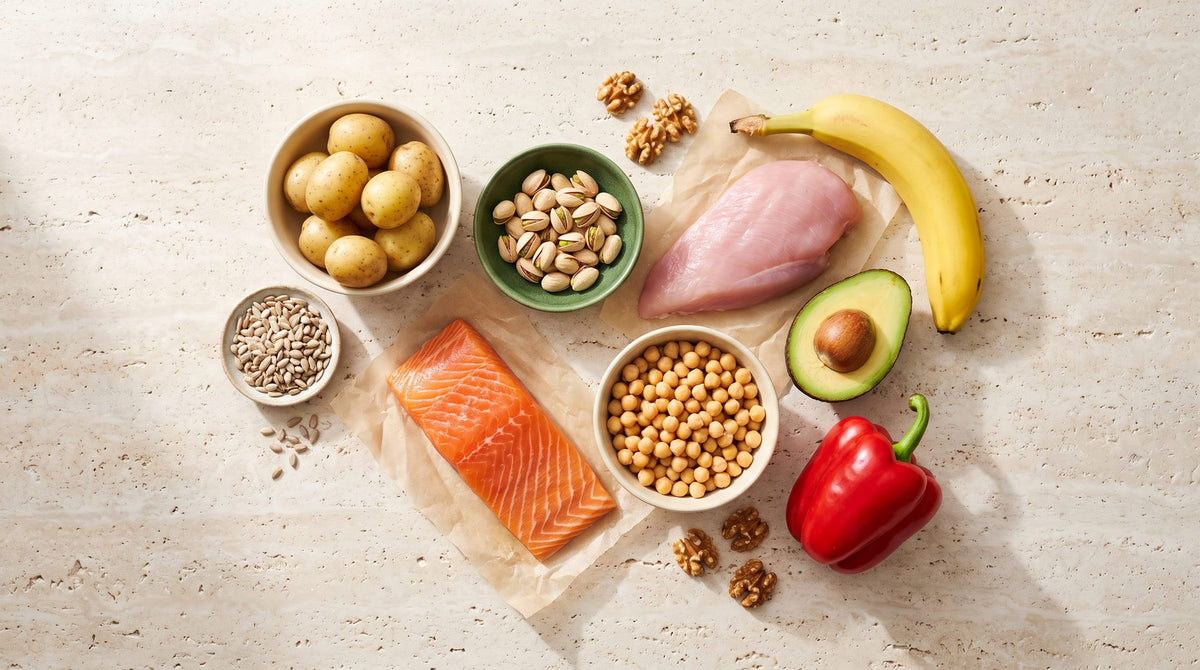
With meat or fish, one portion is enough: 100 g of chicken breast gives you 20 mg of niacin equivalents, more than the daily requirement, 125 g of salmon 15 mg, 80 g of tinned tuna 11 mg. If you eat purely plant-based, you need three to five portions from peanuts, wholemeal pasta, brown rice, tofu, button mushrooms and lentils; an example vegan day comes to 30 mg. The twist: eggs, milk, cheese and soya contain almost no niacin, but they still count thanks to their tryptophan, with 30 g of Gouda giving about 1.8 mg. And fruit isn't a source: half an avocado covers around 8%, a banana 5%.
Coffee, maize and grains: hidden and bound niacin
Raw coffee beans contain hardly any niacin, but roasting creates it from the alkaloid trigonelline, up to 25 times over. The DGE names coffee alongside meat and bread as a main source in Germany; a cup provides roughly 0.3 to 1.4 mg, depending on the roast and the table. It's the other way round with grains and maize: most of their niacin is bound to sugars and protein, and only around 30% is available. So table values for wholegrain, rolled oats and bran overestimate what your body actually gets.
Cooking barely destroys niacin. It's heat-stable but water-soluble: fish, potatoes in their skins, rice, eggs and milk keep 95 to 100%, meat cooked in a pan or oven keeps 75 to 90%. Losses come from leaching: pulses are down to just 55% after two hours in water, drained pasta to 65%, boiled chicken without the broth to 60%. If you eat the cooking liquid, sauce or soup too, you're back to 90 to 100%.

Vitamin B3 in everyday life: drinkable meals
On sandwich-and-canteen days, the very food group that supplies niacin is missing. A drinkable meal then gives you a plannable contribution without the overdose question: depending on the flavour, one bottle of Saturo contains 4.8 to 5.5 mg of niacin, 30 to 34% of the reference intake, plus 25 other vitamins and minerals, 36 g of protein and 400 kcal. That's far below any upper limit, doesn't replace treatment for a confirmed deficiency and isn't a remedy for any illness. If you add up your niacin supplements, count the bottle in too.
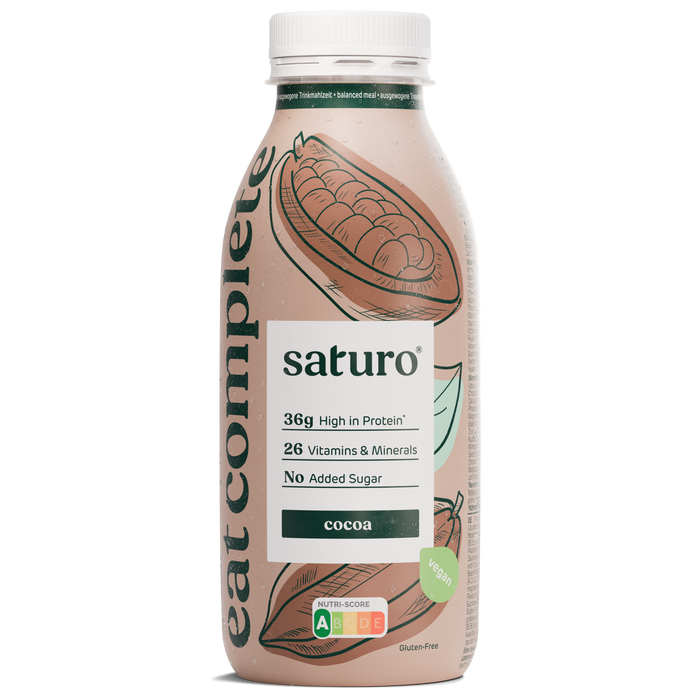
Drinkable meal: a complete meal in a bottle
26 vitamins and minerals, including niacin and vitamins B2, B6 and B12. One bottle provides 4.8 to 5.5 mg of niacin, which is 30 to 34% of the reference intake of 16 mg per day (NRV).
Vitamin B3 and blood pressure, cholesterol, skin: what's true
Three promises and one worry circulate around niacin: that it lowers blood pressure and cholesterol, that it protects your skin, and that too much of it harms your heart. Here's what the big studies say.
Vitamin B3 and blood pressure: what's true
A deficiency doesn't cause high blood pressure, and a supplement doesn't lower it; the MSD Manual calls any link between niacin status and hypertension uncertain. What does exist is the brief drop in blood pressure during the flush, because nicotinic acid widens the blood vessels; even so, in a small study with 1 g a day, 24-hour blood pressure didn't change. At very high doses the drop can get so strong that older people fall. What helps against high blood pressure is less salt, exercise, weight loss and medication, not vitamin B3.
Niacin for cholesterol: why it disappeared from treatment
Nicotinic acid in gram doses raises HDL and lowers LDL and triglycerides, which is why it was a cholesterol-lowering drug for decades. Then the outcome studies came: AIM-HIGH was stopped in 2011 for lack of effect, and HPS2-THRIVE found in 2014, among 25,673 patients, no fewer vascular events but more loss of blood sugar control in diabetes, more infections and more bleeding; the EU suspended the product in 2013. In 2024 a signal came from the other direction: high blood levels of the breakdown product 4PY were linked to more vascular events in heart patients, and in mice it promotes inflammation; an observation, not proof. The old question "Is niacin good for the heart?" gets a no from the research.
Nicotinamide against non-melanoma skin cancer?
In the Australian ONTRAC study, 386 people with at least two non-melanoma skin cancers in five years took 500 mg of nicotinamide twice a day; after one year they had 23% fewer new tumours, and once they stopped, the benefit was gone. In organ transplant recipients, the follow-up study in 2023 found no benefit. This is a medical therapy for high-risk patients, not prevention for everyone, and no substitute for sun protection. On the hype: NMN and NR, the NAD boosters, are well tolerated, but in meta-analyses they improved neither metabolism nor tiredness nor sleep. And niacinamide in creams is a cosmetics question; it tells you nothing about your supply.
Common questions about vitamin B3 deficiency
How do you notice a vitamin B3 deficiency?
First with loss of appetite, weakness, digestive problems and irritability, then with a sunburn-like redness on the backs of your hands, forearms, neck and face, a sore tongue, diarrhoea and, in severe deficiency, confusion. The full-blown condition is called pellagra. In Germany it's rare and almost always has a cause: alcohol, an eating disorder, bowel disease or medication.
What happens if you take too much vitamin B3?
From food, nothing. From supplements, nicotinic acid causes a flush from around 30 to 50 mg: red, hot, itchy skin, sometimes dizziness. From several hundred milligrams come stomach problems, and from around one gram liver damage, rises in blood sugar and uric acid, and vision problems. Nicotinamide only causes trouble from around 3 g.
When should you take vitamin B3?
With a normal diet, not at all: 98 to 99% of people in Germany get enough from food. Niacin only makes sense with a confirmed deficiency, while taking tuberculosis drugs, or with alcohol dependence or Hartnup disease, under medical supervision and usually as nicotinamide. There's no proven role for time of day; taking it with a meal makes a flush milder.
How does vitamin B3 affect your mind?
As NAD, niacin supplies the energy of your nerve cells; the EU permits the claim that it contributes to normal psychological function. In pellagra, depression, anxiety and confusion are common and go away with nicotinamide. In healthy people, a supplement doesn't improve mood or sleep, and mega-doses against schizophrenia had no effect.
Which B vitamin shouldn't you overdose on?
Two: nicotinic acid (vitamin B3), whose EU upper limit of 10 mg is only just above your requirement, and vitamin B6, where from 12 mg permanent nerve damage is a risk (vitamin B6 article). Nicotinamide, B1, B2, B12 and folic acid are much more forgiving. With B-complex products, what counts is the total of all your packs.
Are vitamin B3 and niacin the same thing?
Yes. Niacin is the umbrella name for vitamin B3 and covers two substances: nicotinic acid and nicotinamide (niacinamide). In your body, both become NAD. As supplements they differ a lot: only nicotinic acid causes the flush and lowers blood fats in gram doses, while nicotinamide is found in multivitamins and skin creams.
Can alcoholism cause pellagra?
Yes, alcohol is the most common cause in Europe, and in case reports it was the main factor in 35% of cases. It displaces food, damages the gut and inhibits the conversion of tryptophan into niacin. Pellagra then often shows up only as confusion, similar to withdrawal, and improves quickly with nicotinamide.
How much does a vitamin B3 test cost at the GP?
There's no test covered by statutory health insurance, because there's no routine value for this. If you pay for it yourself, measuring nicotinamide in serum costs around 60 euros at a Berlin lab, plus the doctor's fee, but it isn't an established deficiency test. The breakdown products in 24-hour urine are more informative; with typical symptoms, what counts is how you respond to nicotinamide.
Sources · 72 sources anzeigen
- German Nutrition Society (DGE): Reference values for nutrient intake, niacin. D-A-CH reference values, derivation 2015.
- German Nutrition Society (DGE): Selected questions and answers on niacin (as of 10 September 2025).
- EFSA NDA Panel: Scientific Opinion on Dietary Reference Values for niacin. EFSA Journal 2014; 12(7): 3759.
- Regulation (EU) No 1169/2011 (Food Information Regulation), Annex XIII: Reference intakes for daily intake (niacin 16 mg) and significant amount.
- Max Rubner-Institut: National Nutrition Survey II, results report part 2 (2008), chapter 5.6.3 Niacin, 5.8.6 Supplements and table A.41.
- National Institutes of Health, Office of Dietary Supplements: Niacin, Fact Sheet for Health Professionals (as of 18 November 2022).
- World Health Organization: Pellagra and its prevention and control in major emergencies. WHO/NHD/00.10, Geneva 2000.
- Kirkland J. B.: Niacin requirements for genomic stability. Mutation Research 2012; 733(1–2): 14–20.
- Kirkland J. B., Meyer-Ficca M. L.: Niacin. Advances in Food and Nutrition Research 2018; 83: 83–149.
- Fukuwatari T., Shibata K.: Nutritional aspect of tryptophan metabolism. International Journal of Tryptophan Research 2013; 6(Suppl 1): 3–8.
- MacKay D., Hathcock J., Guarneri E.: Niacin: chemical forms, bioavailability, and health effects. Nutrition Reviews 2012; 70(6): 357–366.
- MSD Manual, Professional Version: Niacin Deficiency (as of June 2026).
- Redzic S., Hashmi M. F., Gupta V.: Niacin Deficiency. StatPearls, NCBI Bookshelf NBK557728 (as of 25 July 2023).
- Hegyi J., Schwartz R. A., Hegyi V.: Pellagra: dermatitis, dementia, and diarrhea. International Journal of Dermatology 2004; 43(1): 1–5.
- Wan P., Moat S., Anstey A.: Pellagra: a review with emphasis on photosensitivity. British Journal of Dermatology 2011; 164(6): 1188–1200.
- Oldham M. A., Ivkovic A.: Pellagrous encephalopathy presenting as alcohol withdrawal delirium. Addiction Science & Clinical Practice 2012; 7: 12.
- Chen X., Yang C., Du C., Jiang G.: Alcoholic pellagra, case series of 16 patients from 2002 to 2019. Journal of Cosmetic Dermatology 2022; 21(9): 4707–4713.
- Weiss C.: Vitamin B3 Ameliorates Sleep Duration and Quality. Nutrients 2025; 17(12): 1982.
- Badawy A. A.: Pellagra and alcoholism: a biochemical perspective. Alcohol and Alcoholism 2014; 49(3): 238–250.
- Li R. et al.: Pellagra Secondary to Medication and Alcoholism: A Case Report and Review of the Literature (105 case reports from 1957 to 2014). Nutrition in Clinical Practice 2016; 31(6): 785–789.
- Seow H. F. et al.: Hartnup disorder is caused by mutations in the gene encoding the neutral amino acid transporter SLC6A19. Nature Genetics 2004; 36(9): 1003–1007.
- Bouma G. et al.: Niacin (Vitamin B3) Supplementation in Patients with Serotonin-Producing Neuroendocrine Tumor. Neuroendocrinology 2016; 103(5): 489–494.
- Shah G. M. et al.: Biochemical assessment of niacin deficiency among carcinoid cancer patients. American Journal of Gastroenterology 2005; 100(10): 2307–2314.
- Kipsang J. K. et al.: Pellagra in isoniazid preventive and antiretroviral therapy. IDCases 2019; 17: e00550.
- Stevens H. P. et al.: Pellagra secondary to 5-fluorouracil. British Journal of Dermatology 1993; 128(5): 578–580.
- Zhao C. et al.: Pellagra during azathioprine treatment in neuromyelitis optica, case report. Multiple Sclerosis and Related Disorders 2018.
- Portale S. et al.: Pellagra and anorexia nervosa: a case report. Eating and Weight Disorders 2020.
- Yamada A. et al.: Fatal pellagra in anorexia nervosa, case report with Casal's necklace. Forensic Science, Medicine and Pathology 2026.
- Lotharius K. C. et al.: Pellagra in Complex Clinical Settings: Bariatric Surgery, Whipple Procedure, and Alcohol Use Disorder. Cureus 2025; 17: e90935.
- Rosmaninho A. et al.: Pellagra as the initial presentation of Crohn disease. Dermatology Online Journal 2012; 18(4): 12.
- Malfait P. et al.: An outbreak of pellagra related to changes in dietary niacin among Mozambican refugees in Malawi. International Journal of Epidemiology 1993; 22(3): 504–511.
- Jacob R. A. et al.: Biochemical markers for assessment of niacin status in young men: urinary and blood levels of niacin metabolites. Journal of Nutrition 1989; 119(4): 591–598.
- Creeke P. I. et al.: Whole blood NAD and NADP concentrations are not depressed in subjects with clinical pellagra. Journal of Nutrition 2007; 137(9): 2013–2017.
- Deen C. P. J. et al.: Urinary Excretion of N1-Methylnicotinamide, as a Biomarker of Niacin Status. Journal of Clinical Medicine 2019; 8(11): 1948.
- MVZ Dr. Eberhard & Partner Dortmund: Test programme, vitamin B3 as nicotinamide (serum, LC-MS/MS).
- MDI Limbach Berlin: Price list for laboratory tests, valid from 1 April 2024 (vitamin B3 nicotinamide €60.33).
- Scientific Committee on Food (SCF): Opinion on the Tolerable Upper Intake Levels of Nicotinic Acid and Nicotinamide (Niacin). SCF/CS/NUT/UPPLEV/39 Final, 6 May 2002.
- Bundesinstitut für Risikobewertung (BfR): Maximum level proposals for niacin in foods, including food supplements. Chapter of Opinion No. 009/2021 of 15 March 2021.
- Bundesinstitut für Risikobewertung (BfR): Updated maximum level proposals for vitamins and minerals in food supplements and fortified foods. Opinion No. 006/2024 of 22 February 2024.
- EFSA NDA Panel: Scientific Opinion on the extension of use of nicotinamide riboside chloride as a novel food. EFSA Journal 2021; 19(11): 6843.
- EFSA NDA Panel: Safety of β-nicotinamide mononucleotide (β-NMN) as a novel food. EFSA Journal 2026; 24: 10007.
- Verbraucherzentrale: Niacin, why supplement it? (as of 19 August 2026).
- Verbraucherzentrale Hessen: Teaching material on energy drinks (2021), label examples with niacin content.
- Benyó Z. et al.: GPR109A (PUMA-G/HM74A) mediates nicotinic acid-induced flushing. Journal of Clinical Investigation 2005; 115(12): 3634–3640.
- Hanson J. et al.: Nicotinic acid- and monomethyl fumarate-induced flushing involves GPR109A expressed by keratinocytes and COX-2-dependent prostanoid formation in mice. Journal of Clinical Investigation 2010; 120(8): 2910–2919.
- McKenney J. M. et al.: A comparison of the efficacy and toxic effects of sustained- vs immediate-release niacin in hypercholesterolemic patients. JAMA 1994; 271(9): 672–677.
- Minto C., Vecchio M. G., Lamprecht M., Gregori D.: Definition of a tolerable upper intake level of niacin: a systematic review and meta-analysis of the dose-dependent effects of nicotinamide and nicotinic acid supplementation. Nutrition Reviews 2017; 75(6): 471–490.
- Vietmeier F. E., Weich C., Eter N., Clemens C. R.: Niacin-associated macular oedema after taking food supplements. Die Ophthalmologie 2024; 121: 223–226.
- Domanico D. et al.: Cystoid macular edema induced by low doses of nicotinic acid. Case Reports in Ophthalmological Medicine 2013; 713061.
- AIM-HIGH Investigators: Niacin in Patients with Low HDL Cholesterol Levels Receiving Intensive Statin Therapy. New England Journal of Medicine 2011; 365(24): 2255–2267.
- HPS2-THRIVE Collaborative Group: Effects of Extended-Release Niacin with Laropiprant in High-Risk Patients. New England Journal of Medicine 2014; 371(3): 203–212.
- Schandelmaier S. et al.: Niacin for primary and secondary prevention of cardiovascular events. Cochrane Database of Systematic Reviews 2017; CD009744.
- European Medicines Agency (EMA): European Medicines Agency confirms recommendation to suspend Tredaptive, Pelzont and Trevaclyn (18 January 2013).
- Chen A. C. et al.: A Phase 3 Randomized Trial of Nicotinamide for Skin-Cancer Chemoprevention (ONTRAC). New England Journal of Medicine 2015; 373(17): 1618–1626.
- Allen N. C. et al.: Nicotinamide for Skin-Cancer Chemoprevention in Transplant Recipients (ONTRANS). New England Journal of Medicine 2023; 388(9): 804–812.
- Ferrell M. et al.: A terminal metabolite of niacin promotes vascular inflammation and contributes to cardiovascular disease risk. Nature Medicine 2024; 30(2): 424–434.
- Yang W. et al.: Safety and metabolic effects of oral nicotinamide mononucleotide, systematic review and meta-analysis of 15 trials. Nutrients 2026; 18(14): 2251.
- Gao Y. et al.: NAD+ precursors and fatigue, sleep, performance: network meta-analysis (27 studies). Frontiers in Nutrition 2026; 1890335.
- Kelly J. J. et al.: Effects of nicotinic acid on ambulatory blood pressure in healthy volunteers. Journal of Human Hypertension 2000; 14(9): 567–572.
- Vaughan K., McConaghy N.: Megavitamin and dietary treatment in schizophrenia: a randomised, controlled trial. Australian and New Zealand Journal of Psychiatry 1999; 33(1): 84–88.
- Kremer J. I. et al.: Urinary Excretion of Niacin Metabolites in Humans After Coffee Consumption. Molecular Nutrition & Food Research 2018; 62(9): e1700735.
- Adrian J., Frangne R.: Synthesis and availability of niacin in roasted coffee. Progress in Clinical and Biological Research 1991; 289: 49–59.
- Regulation (EU) No 432/2012: List of permitted health claims made on foods (niacin: six claims).
- Regulation (EC) No 1924/2006 on nutrition and health claims, Annex: “source of” and “high content” (consolidated version, as of 13 December 2014).
- U.S. Department of Agriculture, Agricultural Research Service: FoodData Central, SR Legacy Release (2018), niacin and tryptophan per 100 g.
- Max Rubner-Institut: German Nutrient Database (Bundeslebensmittelschlüssel, BLS) 4.0, version 2025, niacin and niacin equivalent.
- USDA ARS Nutrient Data Laboratory: USDA Table of Nutrient Retention Factors, Release 6 (2007).
- Carter E. G., Carpenter K. J.: The bioavailability for humans of bound niacin from wheat bran. American Journal of Clinical Nutrition 1982; 36(5): 855–861.
- Institute of Medicine (IOM): Dietary Reference Intakes for Thiamin, Riboflavin, Niacin, Vitamin B6, Folate, Vitamin B12, Pantothenic Acid, Biotin, and Choline (1998), niacin chapter.
- Neufingerl N., Eilander A.: Nutrient Intake and Status in Adults Consuming Plant-Based Diets Compared to Meat-Eaters: A Systematic Review. Nutrients 2022; 14(1): 29.
- Davey G. K. et al.: EPIC-Oxford: lifestyle characteristics and nutrient intakes in a cohort of 33 883 meat-eaters and 31 546 non meat-eaters in the UK. Public Health Nutrition 2003; 6(3): 259–268.
- National Institutes of Health, Office of Dietary Supplements: Chromium, Fact Sheet for Health Professionals (supplement forms, including chromium nicotinate).
Has been writing for Saturo since 2019 about nutrition, nutrients and how good nutrient supply works in practice in everyday life.
Hat diesen Artikel am 1. Oktober 2026 auf fachliche Richtigkeit geprüft. The content is not a substitute for medical advice.
Vitamin B6 deficiency: symptoms, causes and treatment
The second B vitamin where too much does harm faster than too little: which symptoms are documented, what the PLP level shows, and at how many milligrams your nerves start to suffer.
Weiterlesen · 16 Min

Latest from the guide
New articles, updates and tips straight to your inbox. Easy to understand, expert-checked, no spam.
Danke! Bitte bestätige die Anmeldung in deinem Postfach.