Sport, sleep & everyday lifeOne of 11 articles on this topic

Eating after exercise: what, when and how much?

Shake straight away or shower first? After training, protein and carbohydrates matter, and timing is more relaxed than its reputation suggests. How much you need, what goes on your plate and what applies in the evening and when losing weight.

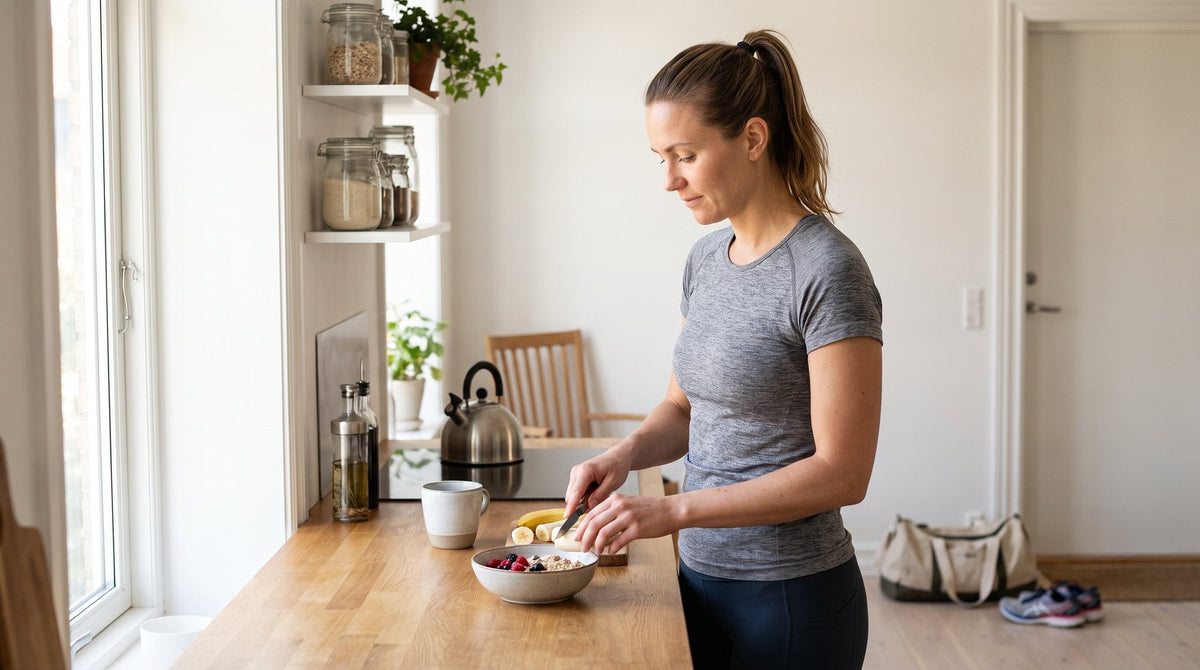
Frau isst nach dem Training eine Skyr-Bowl mit Banane in einer modernen Küche
After training, a proper kitchen meal is fine: skyr with banana and oats gives you protein and carbohydrates, without any window closing.

The key points in 30 seconds

Protein per meal
0.3g per kg

At 70 kg that's around 20 g, and up to 40 g after a hard full-body session. In studies, more than 40 g gave the muscles nothing extra.

How long the window stays open
24hours

Your muscles respond more strongly to protein for at least this long after training. There's no 30-minute window; the daily total is what counts.

Only with two sessions
1.2g per kg per hour

You only need this many carbohydrates if you're training hard again in under 8 hours. Otherwise the next normal meal is enough.

Drinking after exercise
150%

of the weight you lost while exercising, so 1.25 to 1.5 litres per kilo. Have it with a little salt or some food, otherwise the water goes straight back out.

01 Understand

Eating after exercise: what your body needs now

The short answer: a meal with around 0.3 g of protein per kilo of body weight, plus carbohydrates to match your session, within the next one to two hours. Everything else, from the shake in the changing room to the anabolic window, is fine-tuning. This article gives you the numbers: how much, when, which foods, and what differs for strength training, running and losing weight.

What is post workout?

Post workout simply means "after training". A post-workout meal is therefore the first meal afterwards, whether that's a shake, a skyr bowl or dinner. The counterpart is the pre-workout meal, the meal before exercise, which gives you energy for the session. These terms come from the fitness scene; your body doesn't know them. After every workout it deals with the same thing: protein to repair the muscle fibres and carbohydrates to refill the energy stores.

Should you eat after exercise?

Yes, but without the rush. After training, your muscles are more receptive to protein for at least 24 hours, and the glycogen stores refill at around 5% per hour. A skipped meal is no drama, but over time it costs you recovery and training quality. If you ate before exercise, you have until your next normal meal; if you trained fasted, you should eat something within an hour. So eating or not eating is the wrong question. The right one is: what and how much.

02 Timing

When to eat after exercise?

Snack within 30 to 60 minutes, meal within one to two hours: that rule of thumb works for most people. It's only really urgent in two cases: if you've trained fasted or you're training hard again later the same day. The timeline shows what matters when.

The hours after training

  1. Straight afterwards Drink, then shower in peace

    Fluids first: 1.25 to 1.5 litres per kilo lost over the next few hours, with a little salt. A snack makes sense now if you trained fasted or your next session is less than 8 hours away; otherwise you can shower first.

  2. 1 to 2 hours The actual meal

    Protein plus carbohydrates; the amounts are in the calculator in chapter 4. This is the most important meal after training, not because a window is closing, but because this is where your daily total comes together.

  3. Evening, before bed A portion of protein as a top-up

    If you train late, just have dinner afterwards. 30 to 40 g of protein before bed, such as quark or skyr, is digested overnight too and supports muscle protein synthesis.

  4. The next day Stores full again

    On a normal diet, your glycogen stores are full again after 24 hours. The timing of your carbohydrates no longer matters then, only the total for the day.

Eat before or after exercise?

Both, and one depends on the other. If you ate a meal with protein two to three hours before training, you're still living off it during and after the session, so your next meal can wait one to two hours. If you train on an empty stomach, you have no buffer and should eat soon. A rule of thumb from research: keep your pre- and post-workout meals no more than three to four hours apart. What belongs on your plate before training is covered in our article on eating before exercise.

Anabolic window: myth or real?

The window is real, but it's a barn door. Muscle protein synthesis stays elevated for at least 24 hours after training, not 30 minutes. A meta-analysis with over 500 participants found no benefit from protein right around training once daily intake was the same; daily intake was the strongest factor for muscle gain. The DGE (German Nutrition Society) also states that a short window of around two hours is “no longer supported by all authors”. What's left: if you trained on an empty stomach or have a second session, the first hour counts.

Two sessions a day

If there are less than 8 hours between two demanding sessions, speed matters: 1 to 1.2 g of carbohydrates per kilo of body weight per hour for the first 4 hours, plus 20 to 25 g of protein. At 70 kg, that's 70 to 85 g of carbohydrates per hour, for example rice with chicken or oats with milk and banana.

How long should you wait to eat after exercise?

You don't have to wait at all. The idea of not eating for two hours after training so your body "keeps burning fat" has no study behind it. Fat burning depends on your energy balance over the whole day, not on the hour after exercise. On the other hand, delaying food slows down the refilling of your stores: in a study with cyclists, glycogen storage in the first two hours ran three times as fast when the carbohydrates came straight away instead of after two hours. That only matters if you're training again soon.

03 Understand

What happens in your body after training

Three jobs your body works through after every session. Once you know them, you'll see why protein and carbohydrates belong on the plate together and why drinking alone isn't enough.

1

Refill the stores

Your muscles have burned through glycogen, their carbohydrate reserve. It refills at around 5% per hour, fastest in the first few hours with about 1 g of carbohydrate per kilo of body weight. After 24 hours of normal eating the store is full again, no matter exactly when you ate.

2

Repair muscles

Training creates tiny tears in the muscle fibres. Repair runs through muscle protein synthesis, which stays ramped up for at least 24 hours after the session. It needs amino acids from food: 0.25 to 0.4 g of protein per kilo per meal, three to four times a day.

3

Replace water and salt

A litre of sweat takes roughly 1 g of sodium with it. Large amounts of plain water therefore pass quickly through the kidneys again; salt in your food or drink helps keep it in the body. Aim to drink 125 to 150% of the weight you lost, spread over a few hours.

04 Amount

How much protein and carbs after training?

The amounts depend on three things: your body weight, the type of session and your goal. The calculator converts the values from the professional bodies (ACSM, ISSN, DGE) into grams and suggests a plate that roughly fits. The figures are guidelines for healthy adults, not rules.

Interactive

Your post-workout plate

Tap your weight, workout and goal. You'll get the protein and carbs for your first meal after training, the right timing and an example plate.

Weight
Workout
Goal
20g protein in the meal
70g carbohydrates in the meal
When
No time pressure: within 1 to 2 hours, your next session is tomorrow. Your daily total counts more than the clock.
Example

Maintain fitness: 0.3 g protein per kilo, which is the 15 to 25 g that ACSM and DGE recommend for the meal after training. Carbs to match the session.

Protein after training

0.25 to 0.4 g per kilo of body weight per meal, so 20 to 40 g, according to the range from ACSM, DGE and ISSN. The lower end is enough for most people; the upper end suits a full-body workout, people over 65 and muscle building. Two eggs give you 13 g, which is only enough for lightweights. The day matters more than the portion: 1.2 to 2.0 g per kilo, spread over three to four meals. How much protein per day makes sense is explained in its own article.

Carbohydrates after training

Around 1 g per kilo in your first meal refills your stores fastest. How many carbohydrates your whole day needs depends on volume: 3 to 5 g per kilo for light training, 5 to 7 g for about an hour a day, 6 to 10 g for one to three hours of endurance. Adding protein only speeds up refilling when carbohydrates are scarce. If your next session is more than 24 hours away, only the daily total counts.

Post-workout plate from above: chicken breast, rice and broccoli provide protein and carbs after training
The standard plate after training: a protein source, a carb source and veg. 90 g of chicken with 250 g of rice gives you 38 g of protein and 81 g of carbs.

Protein shake after training: worth it?

Handy, but not a must. A shake gives you 20 to 25 g of protein, quickly and without cooking; the same amount is in 250 g of low-fat quark or 100 g of chicken breast. Mixed with milk instead of water, you get around 9 g more protein plus carbohydrates and fluid, and milk holds fluid in your body better than water itself. If you reach your daily amount through meals, you don't need a shake; if you won't eat for another two hours after the gym, use it as a bridge.

05 Foods

What to eat after exercise? The best foods

There are no post-workout foods, only combinations that bring protein and carbs together. The list shows what around 60 foods give you per portion and what to pair them with. Green works on its own, yellow needs a partner, red slows your recovery.

Interactive

Is it good after exercise?

Type in a food or filter by group. Protein and carbs per typical portion, cooked or as on the packet.

  • Skyr plain skyr, Icelandic yoghurt 15 g protein, 5 g carbsPot (150 g): lots of protein, hardly any fat; fruit or oats bring the carbs.
  • Low-fat quark quark, low-fat 29 g protein, 10 g carbsPack (250 g): very high in protein, hardly any fat; combine with fruit or bread.
  • Banana 1 g protein, 27 g carbsOne medium banana (118 g): easily digestible carbs; add protein with yoghurt, quark or a shake.
  • Scrambled eggs scrambled eggs from 2 to 3 eggs 16 g protein, 1 g carbsPortion (120 g): good protein; bread brings the carbs, cooking fat adds energy.
  • Eggs boiled eggs, breakfast egg 13 g protein, 1 g carbsTwo eggs (size L): good protein, but not enough for most people; add bread or fruit.
  • Avocado 1 g protein, 6 g carbsHalf an avocado (68 g): lots of fat, little protein and carbs; more of a side.
  • Nuts mixed nuts, dry roasted, unsalted 6 g protein, 7 g carbsHandful (30 g): lots of fat, little protein and carbs; only as an add-on.
  • Protein shake whey shake, protein powder in water or milk 20 g protein, 5 g carbsScoop (30 g) in water: fast-available protein; add carbs with a banana or oats. Example product: USDA.
  • Chicken breast poultry breast 47 g protein, 0 g carbsPortion (150 g, cooked): lots of protein, little fat; rice or potatoes bring the carbs.
  • Pizza cheese pizza, frozen pizza 44 g protein, 78 g carbsSmall pizza (300 g): has protein and carbs, but it's high in fat and heavy.
  • Quark quark 20% fat in dry matter, reduced fat 31 g protein, 8 g carbsPack (250 g): high in protein, a bit more fat; berries or banana add carbs.
  • Cottage cheese grainy fresh cheese 27 g protein, 7 g carbsTub (200 g): lots of protein, few carbs; add bread or fruit.
  • Greek yoghurt Greek-style yoghurt, plain 14 g protein, 6 g carbsPot (150 g): good protein, a bit higher in fat; add fruit or oats.
  • Milk cow's milk 1.5%, semi-skimmed milk 9 g protein, 10 g carbsGlass (250 ml): some protein and milk sugar, helps your body hold on to fluid; not enough on its own for a meal.
  • Chocolate milk cocoa, flavoured milk drink 9 g protein, 21 g carbsGlass (250 ml): protein plus carbs in a sensible ratio, easy to drink; not a miracle cure.
  • Drinkable meal Saturo, liquid nutrition 36 g protein, 19 g carbsBottle (400 ml): a complete meal, ready to drink; add carbs with a banana or bread.
  • Turkey breast 45 g protein, 0 g carbsPortion (150 g, cooked): lots of protein, very little fat; add a side with carbs.
  • Beef lean steak, rump steak 45 g protein, 0 g carbsSteak (150 g, cooked): lots of protein; plan a side with carbs.
  • Salmon salmon fillet, farmed salmon 33 g protein, 0 g carbsFillet (150 g, cooked): protein plus fish fat; combine with rice or potatoes.
  • Tuna canned tuna in its own juice 33 g protein, 0 g carbsTin (130 g drained): lots of protein, hardly any fat; bread or rice add carbs.
  • Cod Baltic cod 34 g protein, 0 g carbsFillet (150 g, cooked): lots of protein, very low in fat; goes well with potatoes or rice.
  • Prawns shrimp 23 g protein, 2 g carbsPortion (100 g, cooked): lots of protein for little energy; get your carbs from a side.
  • Sushi salmon sushi, maki, nigiri 15 g protein, 33 g carbsPortion (8 pieces, 200 g): rice and fish, carbs plus protein, easy to digest.
  • Tofu plain tofu 26 g protein, 4 g carbsPortion (150 g): plant-based protein, few carbs; serve with rice or noodles.
  • Lentils cooked lentils 18 g protein, 40 g carbsPortion (200 g, cooked): protein and carbs in one; high in fibre, heavier to digest.
  • Chickpeas cooked chickpeas 13 g protein, 41 g carbsPortion (150 g, cooked): protein and carbs in one; as a side or in a bowl.
  • Edamame green soya beans 18 g protein, 13 g carbsPortion (150 g, prepared): lots of plant-based protein, moderate carbs; great as a snack.
  • Tempeh 20 g protein, 8 g carbsPortion (100 g): very high in protein, plant-based; rice or potatoes add carbs.
  • Kidney beans red beans, cooked 13 g protein, 34 g carbsPortion (150 g, cooked): protein and carbs in one; high in fibre.
  • Quinoa cooked 8 g protein, 39 g carbsPortion (185 g, cooked): a carb source with some protein; add tofu or quark.
  • Peanut butter 7 g protein, 7 g carbs2 tbsp (32 g): high in fat, little protein per portion; combine with bread or banana.
  • Hummus 5 g protein, 9 g carbsPortion (60 g): some plant-based protein, small portion; combine with bread.
  • Salad leafy salad, romaine, iceberg lettuce, green salad 1 g protein, 3 g carbsBowl (100 g): hardly any protein or carbs; only as a side, never as a meal after sport.
  • Raw veg carrot, cucumber, pepper 1 g protein, 10 g carbsPortion (100 g carrot): some carbs and fibre, hardly any protein; have it with a dip or cottage cheese.
  • Oats instant oats, porridge, fine rolled oats 8 g protein, 32 g carbs60 g oats (dry): carbs plus some protein; add milk, skyr or quark for more protein.
  • Rice cakes puffed rice cakes 2 g protein, 21 g carbs3 cakes (27 g): fast carbs, hardly any protein; combine with quark or skyr.
  • Rice cooked rice, basmati, jasmine, white rice 5 g protein, 56 g carbsPortion (200 g, cooked): easily digestible carbs; get your protein from meat, fish or tofu.
  • Potatoes jacket potatoes, boiled potatoes 4 g protein, 50 g carbsPortion (250 g, cooked): carbs that are easy on the stomach; add quark or egg as a protein source.
  • Sweet potato 4 g protein, 41 g carbsPortion (200 g, baked): carbs with fibre; add protein with your side dish.
  • Pasta noodles, spaghetti 12 g protein, 62 g carbsPortion (200 g, cooked): lots of carbs, some protein; top up with a sauce containing meat, fish or cheese.
  • Wholemeal bread bread, 2 slices 7 g protein, 38 g carbs2 slices (100 g): carbs plus a bit of protein; top with cheese, quark or egg.
  • Pretzel lye pretzel, lye pastry 9 g protein, 50 g carbsOne pretzel (100 g): fast carbs, salty, low in protein; pair with cheese or quark.
  • Berries blueberries, bilberries, raspberries 1 g protein, 22 g carbsBowl (150 g): fairly low in carbs per portion, hardly any protein; goes well with quark or yoghurt.
  • Apple 1 g protein, 25 g carbsOne medium apple (182 g): moderate carbs, hardly any protein; combine with nuts or quark.
  • Dates Medjool 1 g protein, 54 g carbs3 dates (72 g): concentrated fast carbs; add protein with quark or a shake.
  • Dried fruit raisins, dried fruits 1 g protein, 32 g carbsHandful (40 g): fast carbs in a small amount; no protein, concentrated sugar.
  • Muesli bar cereal bar, granola bar 3 g protein, 16 g carbsOne bar (25 g): some carbs, hardly any protein; handy, but not enough on its own.
  • Protein bar 16 g protein, 20 g carbsOne bar (53 g): protein plus carbs in one snack; example product, brands vary a lot.
  • Chocolate milk chocolate 2 g protein, 13 g carbs2 to 3 squares (25 g): lots of fat and sugar, little protein; fine in small amounts.
  • Döner döner kebab with veal or beef 39 g protein, 70 g carbsOne döner (350 g): lots of protein and carbs, but high in fat and salt.
  • Burger cheeseburger, hamburger 13 g protein, 22 g carbsOne cheeseburger (120 g): protein plus carbs, but high in fat; on its own it's fairly small.
  • Chips French fries 5 g protein, 47 g carbsPortion (150 g): some carbs, hardly any protein, high in fat and heavy.
  • Frozen ready meal lasagne, frozen dish 19 g protein, 39 g carbsOne piece of lasagne (255 g): protein and carbs, but often high in fat and salt.
  • Beer pilsner, lager 2 g protein, 11 g carbsOne half-litre (0.5 l): alcohol slows down your recovery; hardly any protein. Eat and drink first, then raise a glass.
  • Alcohol-free beer alcohol-free wheat beer 2 g protein, 19 g carbsBottle (0.5 l): fluids and carbs, but practically no protein.
  • Alcohol wine, sparkling wine, spirits 0 g protein, 4 g carbsGlass of red wine (150 ml): alcohol slows down your recovery; not a useful source of nutrients.
  • Cola soft drinks, lemonade 0 g protein, 35 g carbsTin (0.33 l): carbs from sugar only, no protein; quickly available.
  • Isotonic drink sports drink, iso drink 0 g protein, 40 g carbsBottle (500 ml): fluids and carbs, no protein; better suited to during exercise.
  • Coffee filter coffee, espresso 0 g protein, 0 g carbsCup (150 ml): contains practically no nutrients; doesn't dehydrate you any more than water, but doesn't replace a meal.
  • Smoothie fruit smoothie 2 g protein, 24 g carbsGlass (250 ml): carbs from fruit, hardly any protein; blend with yoghurt, skyr or quark.
  • Water mineral water, tap water 0 g protein, 0 g carbsFirst choice for drinking: 1.25 to 1.5 litres per kilo lost, plus a bit of salt in your food.

Banana after exercise

Yes, as a carbohydrate source: a medium banana provides 27 g of fast-acting carbohydrates, but only 1 g of protein. On its own, it's a snack for a short session; with skyr, quark or a shake, it becomes a proper post-workout meal. Ripe bananas contain more sugar and less starch, so they work faster. They also bring around 420 mg of potassium, one of the electrolytes you lose through sweat.

Skyr, low-fat quark and eggs after training

Skyr and low-fat quark are the most efficient protein sources in the chilled aisle: 150 g of skyr provides around 15 g of protein for 90 kcal, and 250 g of low-fat quark provides 29 g. Both contain hardly any carbohydrates, so add fruit, oats or bread. Scrambled eggs are good, but smaller than you'd think: two eggs provide 13 g of protein, and three as scrambled eggs about 16 g. If you need 25 g, add cottage cheese or have a glass of milk. Greek yoghurt gives 9 g per 100 g, plain yoghurt only 3 to 4 g.

The best post-workout meal is the one you were going to eat anyway, just with a decent portion of protein in it. No shake beats a plate of lentils with rice.

Joerg Hauke, Nutrition expert, technical review of this article

Plant-based: tofu, lentils, oats

Plant-based post-workout plates work as long as you build them around a protein source: 150 g of tofu gives 26 g, 100 g of tempeh 20 g, 200 g of cooked lentils 18 g plus 40 g of carbohydrates, and 150 g of edamame 18 g. Oats are mainly a carbohydrate source (32 g per 60 g) with 8 g of protein on top. The bars show which portions deliver the most protein, plant-based and animal-based; the values come from the USDA database and the German Federal Food Code, cooked as they'd be on your plate.

Protein per portion: top 10 plant-based and animal-based

  1. Soybeans (150 g, cooked): 27.3 g
  2. Tofu (150 g): 25.9 g
  3. Tempeh (100 g): 20.3 g
  4. Lentils (200 g, cooked): 18.0 g
  5. Edamame (150 g): 17.9 g
  6. Chickpeas (150 g, cooked): 13.3 g
  7. Kidney beans (150 g, cooked): 13.0 g
  8. Hemp seeds (30 g): 9.5 g
  9. Pumpkin seeds (30 g): 9.1 g
  10. Quinoa (185 g, cooked): 8.1 g

Protein per typical portion, pulses and quinoa cooked, seeds and kernels dry; USDA FoodData Central SR Legacy. Pulses also bring 30 to 40 g of carbohydrates, so they're almost a whole plate on their own. Next places: oats (60 g) 7.9 g, peanut butter (2 tbsp) 7.1 g, nuts (30 g) 5.8 g.

06 Depending on your goal

Food after strength training, endurance sessions and for weight loss

Professional bodies no longer split athletes into strength and endurance types, but by session: what you trained today and what's coming tomorrow decides what goes on your plate. Priorities still shift, though, and when you're losing weight, energy balance comes into play too.

After strength training and for building muscle

Protein first: 0.3 to 0.4 g per kilo in the meal afterwards, closer to 40 g after a full-body workout. Carbohydrates follow your daily needs, 5 to 7 g per kilo for an hour of training; they don't have to come straight away, because your next session is usually 24 hours away. What really counts for building muscle is the daily amount of around 1.6 g of protein per kilo, spread across four meals. A plate of chicken, rice and veg, or lentils with tofu, covers both.

After running and endurance sport

Carbohydrates and fluids first, protein as an add-on. After a run of up to 60 minutes, your next normal meal is enough. After long sessions of over 90 minutes, or if you run twice a day, speed matters: 1 to 1.2 g of carbohydrates per kilo in the first hour, then 6 to 10 g per kilo across the day. Add 15 to 25 g of protein and salt, because a litre of sweat takes about 1 g of sodium with it; if you sweat a lot, read up on sodium deficiency. Runners should also keep an eye on their iron levels.

At a glance

What counts after strength training, endurance sport and when losing weight

Guideline values per kilo of body weight for the meal after training, examples for 70 kg.

Strength trainingEnduranceWeight loss
First priorityProtein portion and daily amountCarbohydrates and fluidsHigh protein, energy balance
Protein per meal0.3 to 0.4 g per kg (20 to 30 g)0.25 to 0.3 g per kg (15 to 25 g)0.4 g per kg (around 30 g)
Carbohydratesaccording to daily needs, 5 to 7 g per kg1 to 1.2 g per kg in the first hour, 6 to 10 g per kg a dayhalf a portion, the daily budget counts
Timingwithin 1 to 2 hours, no rushfirst hour after long sessionsyour next planned meal
Example plateChicken, rice, broccoliPasta with tuna, bananaCottage cheese with berries and wholegrain bread
DrinkWater or milkWater with salt, chocolate milkWater or milk

Guideline values according to ACSM/AND/DC 2016, ISSN 2017 and DGE 2019/2020 for healthy adults; example plates calculated with USDA/BLS.

What to eat after exercise to lose weight?

The same as usual, just with more protein and without skipping the meal. Weight loss is decided by the day's energy balance, not the hour after exercise; studies show that people don't eat more than usual after training on average, so your deficit stays intact. Keeping protein high (0.4 g per kilo in the meal, 2 g or more across the day) protects your muscles while you're in a deficit. In practice: make your next planned meal your post-workout meal, for example skyr with berries. If you want to replace a meal, you can do that with a meal replacement like the Shape Shake (203 kcal, 17 g protein); find out more in our article on losing weight.

Don't starve yourself after exercise

If you skip eating after training to burn more fat, you're not saving anything: fat burning depends on the whole day, not on the hour. What you miss out on is the protein for your muscles, and they're the first thing you lose in a deficit.

Dinner after exercise

A late workout means a late dinner, not no dinner. In one study, men trained at 8 pm, ate 20 g of protein with 60 g of carbohydrates at 9 pm and then got another 40 g of casein at 11:30 pm: everything was digested, and their protein balance overnight was positive. Whether food makes you put on weight is decided by the day's balance, not the time on the clock. Quick dinners after exercise: salmon with potatoes, the chicken and rice pan, or the lentil bowl from chapter 7; if you're not very hungry, have quark with fruit or a drinkable meal.

Runner drinking a Saturo drinkable meal on a park bench after a run
After your run, drink first, then eat. If you're on the go, have a drinkable meal and catch up on carbs at dinner.
07 Everyday

Recipes, snacks and drinks after training

Three recipes with calculated nutritional values, snacks for your gym bag, the honest answer on kebabs and frozen pizza, and what to drink. All of it works after training without any planning.

Three post-workout meals

1
Quark and oat bowlcold · 5 minutes · vegetarian
  • 34 g protein
  • 84 g carbohydrates
  • 607 kcal
Zutaten
  • 200 g quark (20% fat in dry matter)
  • 60 g fine oat flakes
  • 1 banana (118 g)
  • 75 g blueberries
  • 1 tsp honey
Zubereitung

Put the quark in a bowl and stir in the oats. Slice the banana and arrange it on top with the blueberries, then drizzle with honey. If you like it softer, let the bowl sit for 2 minutes. With low-fat quark, the calories drop to around 550.

2
Chicken and rice skillet with broccoliwarm · 20 minutes · dinner
  • 38 g protein
  • 81 g carbohydrates
  • 570 kcal
Zutaten
  • 90 g chicken breast (weighed cooked)
  • 250 g cooked rice
  • 150 g broccoli
  • 1 tsp olive oil
  • Salt, pepper, paprika
Zubereitung

Cook the rice according to the packet instructions. Fry the chicken breast strips in the olive oil for 6 to 8 minutes until cooked through, adding the broccoli florets for the last 4 minutes. Mix everything with the rice and season to taste. Vegetarian with 150 g tofu instead of chicken: 36 g protein.

3
Lentil and sweet potato bowl with tofuwarm · 25 minutes · vegan
  • 38 g protein
  • 78 g carbohydrates
  • 565 kcal
Zutaten
  • 150 g cooked lentils (jar or tin)
  • 200 g sweet potato
  • 100 g plain tofu
  • 100 g spinach
  • 1 tsp olive oil, lemon juice, spices
Zubereitung

Cut the sweet potato into wedges and bake at 200 °C for about 25 minutes, or cook it in the microwave for 8 minutes. Cube the tofu and fry it in the oil for 6 minutes until crispy, adding the spinach briefly at the end. Heat the lentils, plate everything up and season with lemon juice and spices.

Nutritional values per serving, calculated with USDA FoodData Central SR Legacy and Bundeslebensmittelschlüssel 4.0; ingredients weighed cooked, spices and lemon juice not included.

Snacks after sport: quick and on the go

A snack tides you over when your meal is still more than an hour away or your session was short. Rule of thumb: something with protein plus something with carbohydrates. Skyr with a banana (17 g protein, 32 g carbohydrates), cottage cheese on wholegrain bread (34 g, 45 g), chocolate milk with a pretzel (18 g, 71 g), a protein bar with an apple, frozen edamame, a drinkable meal from your gym bag. Nuts and avocado mainly provide fat and are only a supplement; cereal bars bring carbohydrates but hardly any protein.

Man eating skyr from a tub on a bench after the gym, with a banana
The snack after the gym: a tub of skyr and a banana give you 17 g protein and 32 g carbohydrates until your proper meal.

On the way home from the gym: fast food and ready meals

Better than nothing, and often better than their reputation. A kebab delivers around 39 g protein and 70 g carbohydrates, a frozen lasagne 19 g and 39 g, a small cheese pizza 44 g and 78 g; you also get plenty of fat and salt, though the salt is actually welcome after sweating. Once a week is no problem, but as a default, the quality is missing. Chips and a single cheeseburger are too low in protein. If you want something ready to drink, a drinkable meal puts 36 g protein and a complete meal in your bag.

Ready-to-Drink 6 x 400 ml
From the Saturo range

Drinkable meal: a complete meal for your gym bag

400 kcal, 36 g protein and 26 vitamins and minerals in one bottle, ready to drink without a fridge. Protein contributes to a growth in muscle mass. For the days when there's an hour between the gym and your kitchen; add carbohydrates with a banana or a slice of bread.

36 gProtein
400kcal
26Vitamins & minerals
36 gProtein per bottle72% of the reference intake
Choose a flavour
CHF 5.15per meal
Drinkable meal · CocoaCHF 5.15 per meal ·

Water, electrolytes, milk: what should you drink after sport?

Weigh yourself instead of guessing: every kilo you lose on the scales is roughly a litre of sweat, and you should drink 1.25 to 1.5 litres of it back over the next few hours. Plain water in large amounts quickly passes straight through, so add salt: in your food, as broth or in an electrolyte drink. In studies, milk does better than water and sports drinks because sodium, protein and energy help the body hold on to the water. Chocolate milk also provides carbohydrates, but it's no miracle cure; coffee doesn't dehydrate you any more than water does. If you get cramps often after sport, take a look at your fluids, salt and magnesium.

Alcohol after sport

An after-work beer following your run is no drama; a binge after the match is. In a study of eight men, an amount of around twelve standard drinks reduced muscle protein synthesis after training by 24 to 37%, even with protein on top. A dose of about 0.5 g of alcohol per kilo of body weight, so two to three drinks, probably barely affects recovery. Beer dehydrates you less than you'd think, but it still won't become a recovery drink. Eat and drink first, then clink glasses.

Sore muscles: what food does (and doesn't) do

Not much. According to a Cochrane review of 50 studies, antioxidant supplements such as high-dose vitamin C and E don't noticeably ease sore muscles, and protein shakes don't measurably reduce them in review papers, however useful they are for building muscle. The best evidence is for tart cherry juice and beetroot around tough competitions, not in everyday training. What helps is time, gentle movement and a normal, high-protein diet so your body has the material for repairs. Sore muscles are no reason to make your meal bigger.

Man pouring himself a glass of milk after training
Milk after sport: sodium, protein and energy help the body hold on to water, which is why it does better than water in studies.
08 Look it up

Frequently asked questions about eating after exercise

Is it good to eat straight after exercise?

Yes, if you're hungry; it's only necessary after fasted training or before a second session. Otherwise, your next meal within one to two hours is enough. Drink first, then eat: after intense sport, your appetite usually comes back within 30 to 60 minutes.

How long should you wait to eat after training?

Not at all, there's no waiting period. The idea that going hungry after sport burns more fat isn't backed by evidence. If you delay carbohydrates by two hours, your stores refill more slowly; that only matters if you train again the same day.

Do I burn more fat if I don't eat after exercise?

No. Fat loss depends on your energy balance across the whole day, not on the hour after training. Studies on fasted training show the same body composition as training with a meal. What you lose by skipping food is the protein your muscles need.

Should you eat after exercise if you want to lose weight?

Yes, have your next planned meal with plenty of protein, around 0.4 g per kilo. After exercise, people on average don't eat more than usual, so your deficit stays. If you want to replace a meal, go for a meal replacement with around 200 kcal rather than nothing at all.

What shouldn't you do after training?

Going a long time without drinking, raising a glass with lots of alcohol, skipping the meal altogether or eating only salad. The opposite mistake costs you too: eating double after training because you've "earned it". A normal meal with protein and carbs is enough.

Are 2 eggs enough protein after training?

For most people, no. Two eggs have 13 g of protein, while the recommendation is 0.25 to 0.4 g per kilo, so 18 to 28 g at 70 kg. Two eggs plus 150 g of skyr or a glass of milk get you there; add some bread and the carbs are covered too.

Does a protein shake after training make sense?

Handy, not essential. 20 to 25 g of protein from a shake works no better than the same amount from quark, fish or pulses. It makes sense when your next meal is more than an hour away. Mixed with milk, it also gives you carbs and fluid.

Why do I put on 2 kg after exercise?

That's water, not fat. Every gram of glycogen your muscles store again after training binds at least 3 g of water; on top of that come what you've drunk and what's in your gut. That's why the scales swing by one to two kilos a day. Fat only shows over weeks.

Sources · 35 sources anzeigen
  1. Thomas D. T., Erdman K. A., Burke L. M.: American College of Sports Medicine Joint Position Statement. Nutrition and Athletic Performance. Medicine & Science in Sports & Exercise 2016; 48(3): 543–568.
  2. Kerksick C. M. et al.: International Society of Sports Nutrition position stand: nutrient timing. Journal of the International Society of Sports Nutrition 2017; 14: 33.
  3. Jäger R. et al.: International Society of Sports Nutrition Position Stand: protein and exercise. Journal of the International Society of Sports Nutrition 2017; 14: 20.
  4. Sawka M. N. et al.: American College of Sports Medicine position stand. Exercise and fluid replacement. Medicine & Science in Sports & Exercise 2007; 39(2): 377–390.
  5. König D. et al.: Kohlenhydrate in der Sporternährung. Position der Arbeitsgruppe Sporternährung der Deutschen Gesellschaft für Ernährung e. V. (DGE). Ernährungs Umschau 2019; 66(11): M660–M667.
  6. König D. et al.: Proteinzufuhr im Sport. Position der Arbeitsgruppe Sporternährung der Deutschen Gesellschaft für Ernährung e. V. (DGE). Ernährungs Umschau 2020; 67(7): M406–M413.
  7. Schoenfeld B. J., Aragon A. A., Krieger J. W.: The effect of protein timing on muscle strength and hypertrophy: a meta-analysis. Journal of the International Society of Sports Nutrition 2013; 10: 53.
  8. Aragon A. A., Schoenfeld B. J.: Nutrient timing revisited: is there a post-exercise anabolic window? Journal of the International Society of Sports Nutrition 2013; 10: 5.
  9. Schoenfeld B. J., Aragon A. A.: How much protein can the body use in a single meal for muscle-building? Implications for daily protein distribution. Journal of the International Society of Sports Nutrition 2018; 15: 10.
  10. Morton R. W. et al.: A systematic review, meta-analysis and meta-regression of the effect of protein supplementation on resistance training-induced gains in muscle mass and strength in healthy adults. British Journal of Sports Medicine 2018; 52(6): 376–384.
  11. Moore D. R. et al.: Protein ingestion to stimulate myofibrillar protein synthesis requires greater relative protein intakes in healthy older versus younger men. Journals of Gerontology Series A 2015; 70(1): 57–62.
  12. Witard O. C. et al.: Myofibrillar muscle protein synthesis rates subsequent to a meal in response to increasing doses of whey protein at rest and after resistance exercise. American Journal of Clinical Nutrition 2014; 99(1): 86–95.
  13. Macnaughton L. S. et al.: The response of muscle protein synthesis following whole-body resistance exercise is greater following 40 g than 20 g of ingested whey protein. Physiological Reports 2016; 4(15): e12893.
  14. Ivy J. L. et al.: Muscle glycogen synthesis after exercise: effect of time of carbohydrate ingestion. Journal of Applied Physiology 1988; 64(4): 1480–1485.
  15. Jentjens R., Jeukendrup A.: Determinants of post-exercise glycogen synthesis during short-term recovery. Sports Medicine 2003; 33(2): 117–144.
  16. Burke L. M., van Loon L. J. C., Hawley J. A.: Postexercise muscle glycogen resynthesis in humans. Journal of Applied Physiology 2017; 122(5): 1055–1067.
  17. Shirreffs S. M., Taylor A. J., Leiper J. B., Maughan R. J.: Post-exercise rehydration in man: effects of volume consumed and drink sodium content. Medicine & Science in Sports & Exercise 1996; 28(10): 1260–1271.
  18. Evans G. H., James L. J., Shirreffs S. M., Maughan R. J.: Optimizing the restoration and maintenance of fluid balance after exercise-induced dehydration. Journal of Applied Physiology 2017; 122(4): 945–951.
  19. Shirreffs S. M., Watson P., Maughan R. J.: Milk as an effective post-exercise rehydration drink. British Journal of Nutrition 2007; 98(1): 173–180.
  20. Maughan R. J. et al.: A randomized trial to assess the potential of different beverages to affect hydration status: development of a beverage hydration index. American Journal of Clinical Nutrition 2016; 103(3): 717–723.
  21. Parr E. B. et al.: Alcohol ingestion impairs maximal post-exercise rates of myofibrillar protein synthesis following a single bout of concurrent training. PLoS ONE 2014; 9(2): e88384.
  22. Barnes M. J.: Alcohol: impact on sports performance and recovery in male athletes. Sports Medicine 2014; 44(7): 909–919.
  23. Shirreffs S. M., Maughan R. J.: Restoration of fluid balance after exercise-induced dehydration: effects of alcohol consumption. Journal of Applied Physiology 1997; 83(4): 1152–1158.
  24. Amiri M. et al.: Chocolate milk for recovery from exercise: a systematic review and meta-analysis of controlled clinical trials. European Journal of Clinical Nutrition 2019; 73(6): 835–849.
  25. Res P. T. et al.: Protein ingestion before sleep improves postexercise overnight recovery. Medicine & Science in Sports & Exercise 2012; 44(8): 1560–1569.
  26. Trommelen J., van Loon L. J. C.: Pre-sleep protein ingestion to improve the skeletal muscle adaptive response to exercise training. Nutrients 2016; 8(12): 763.
  27. Schoenfeld B. J. et al.: Body composition changes associated with fasted versus non-fasted aerobic exercise. Journal of the International Society of Sports Nutrition 2014; 11: 54.
  28. Fernández-Elías V. E. et al.: Relationship between muscle water and glycogen recovery after prolonged exercise in the heat in humans. European Journal of Applied Physiology 2015; 115(9): 1919–1926.
  29. Ranchordas M. K. et al.: Antioxidants for preventing and reducing muscle soreness after exercise. Cochrane Database of Systematic Reviews 2017; 12: CD009789.
  30. Pasiakos S. M., Lieberman H. R., McLellan T. M.: Effects of protein supplements on muscle damage, soreness and recovery of muscle function and physical performance: a systematic review. Sports Medicine 2014; 44(5): 655–670.
  31. Bongiovanni T. et al.: Nutritional interventions for reducing the signs and symptoms of exercise-induced muscle damage and accelerate recovery in athletes: current knowledge, practical application and future perspectives. European Journal of Applied Physiology 2020; 120(9): 1965–1996.
  32. Dorling J. et al.: Acute and chronic effects of exercise on appetite, energy intake, and appetite-related hormones: the modulating effect of adiposity, sex, and habitual physical activity. Nutrients 2018; 10(9): 1140.
  33. Schubert M. M., Desbrow B., Sabapathy S., Leveritt M.: Acute exercise and subsequent energy intake. A meta-analysis. Appetite 2013; 63: 92–104.
  34. U.S. Department of Agriculture, Agricultural Research Service: FoodData Central, SR Legacy Release (2018). Protein and carbohydrate content per 100 g and per serving.
  35. Max Rubner-Institut: Bundeslebensmittelschlüssel (BLS) 4.0. Nutritional values of German foods, accessed 14 October 2026.
Gregor Aßlaber
Gregor AßlaberAuthor · Editor, Saturo

Has been writing for Saturo since 2019 about nutrition, nutrients and how to get good nourishment into everyday life.

Joerg Hauke
Joerg HaukeFachliche Prüfung · Nutrition expert

Hat diesen Artikel am 14. Oktober 2026 auf fachliche Richtigkeit geprüft. This content is not a substitute for medical advice.