
Vitamin A deficiency: symptoms, causes and treatment
Seeing worse at dusk, dry eyes? The eye is the first to notice a vitamin A deficiency, though it's rare in healthy people. Which symptoms go with it, how much you need, when it becomes too much and where you'll find it.


Aktualisiert 30 September 2026 · 16 Min. Lesezeit · 50 Quellen

The most important points in 30 seconds
Women 700, men 850 micrograms of retinol equivalent a day according to the DGE. One cooked carrot or 100 g of sweet potato already covers that, and 100 g of calf's liver covers it thirty times over.
The body turns twelve micrograms of beta-carotene into one microgram of vitamin A. Carrot, pumpkin and spinach still deliver plenty, but only if there's a bit of fat on your plate.
That's how long well-filled liver stores last, even if hardly any vitamin A comes in. That's why the blood level only drops late, and why deficiency is so rare in healthy people.
Poor vision at dusk is the earliest and best-documented symptom, followed by dry eyes and infections. Hair loss and muscle pain aren't part of it: they're signs of too much.
Vitamin A deficiency symptoms: how to spot it
Vitamin A is a building block of the visual purple in the retina, keeps skin and mucous membranes in shape and controls the maturation of immune cells. If it's missing, the eye reports first: poor vision at dusk at the start, then dry eyes, then skin and infections. A genuine deficiency is rare in Germany; anyone who gets one almost always has a reason why fat doesn't reach the gut (chapter 2).
First sign: night blindness
Night blindness is the earliest sign of deficiency: the rods of the retina need fresh vitamin A for their visual purple with every light stimulus. If there's no supply, adapting to darkness takes minutes instead of seconds: you step out of the bright supermarket into the dark car park and can hardly see anything. According to the WHO, this sign is sensitive and specific for low retinol, usually below 0.7 µmol/l, and it disappears with vitamin A within one to two days. In Germany, other causes are usually behind it: retinitis pigmentosa, cataracts, short-sightedness. So see an eye doctor first.
Vitamin A deficiency symptoms in the eyes: from dry eyes to xerophthalmia
If the deficiency continues, the conjunctiva becomes keratinised, the tear film breaks up, and the white of the eye turns dull and wrinkled. Medicine calls this xerophthalmia, and the WHO divides it into stages (chapter 4): the dry conjunctiva is followed by Bitot's spots, whitish foamy deposits next to the cornea, then the cornea turns cloudy and can melt away within days. Everything up to the dry cornea is reversible. The most important distinction: the gritty feeling after eight hours at a screen is dry eye syndrome with an unstable tear film and has nothing to do with vitamin A.
Vitamin A deficiency symptoms: skin, mucous membranes and infections
Skin becomes dry, rough and flaky, and hardened bumps can form around the hair follicles on the upper arms and thighs ("chicken skin"). To put it honestly: chicken skin is not a specific sign of vitamin A deficiency. A dermatological review found several causes, with the strongest link being general malnutrition, and harmless keratosis pilaris is far more common. The same hardening happens unseen in the airways and gut: less mucus, fewer immune cells, more frequent infections and diarrhoea. In children with severe deficiency, stunted growth and anaemia are added, which isn't iron deficiency anaemia but a disorder of iron distribution.

Vitamin A deficiency symptoms in women
There are no symptoms that only women get; what is female-specific is the requirement. In pregnancy, the reference value rises to 800 µg from the fourth month, and to 1,300 µg while breastfeeding, because the baby gets its vitamin A through breast milk. In Germany, the issue is more often too much retinol in early pregnancy, and after the menopause a lower upper limit applies because of bone health (chapter 7). Menstrual irregularities, menopausal complaints and hair loss are not proven signs of deficiency.
What really fits with vitamin A deficiency
The most searched-for complaints and what the research shows: proven (WHO, DGE, reference work), possible (observational studies with no proven cause), unproven (no primary source) and, for vitamin A only, signs of too much.
| What the studies say | Rating | |
|---|---|---|
| Night blindness | Earliest sign, sensitive and specific for low retinol (WHO) | Proven |
| Dry eyes, Bitot's spots | Xerophthalmia in WHO stages, corneal damage in severe deficiency | Proven |
| Frequent infections | Hardened mucous membranes, fewer immune cells; measles takes a more severe course | Proven |
| Growth in children | Growth retardation is listed in the DGE-FAQ and reference works | Proven |
| Anaemia | Disorder of iron distribution, not iron deficiency anaemia; mainly in severe deficiency | Proven |
| Dry, rough skin | Hardening is plausible, but chicken skin is non-specific (Maronn 2005) | Possible |
| Mental health, depression | One cross-sectional study on intake, none on deficiency, no cause and effect | Possible |
| Weight gain | Correlation only: more belly fat goes with lower retinol, direction unclear | Possible |
| Tiredness | Not listed as a sign of deficiency in any primary source | Unproven |
| Acne | Retinoids treat acne, a deficiency doesn't cause it | Unproven |
| Thyroid | No primary source found, websites mention it without evidence | Unproven |
| Hair loss | DGE-FAQ lists it as a symptom of vitamin A overdose | Sign of too much |
| Muscle pain | DGE-FAQ lists it as a symptom of overdose, in deficiency only non-specific weakness | Sign of too much |
Rating based on the sources in chapter 8 (WHO-VMNIS, DGE-FAQ 2020, Merck Manual, Maronn 2005, Frontiers in Nutrition 2025). As of 24 September 2026.
Vitamin A deficiency and mental health, weight gain, hair: what's true?
Mental health: A 2025 cross-sectional study found more depressive symptoms with low vitamin A intake, a snapshot with no proof of deficiency and no cause and effect. If you're feeling low, you're more likely to think of vitamin D, B12 and folate. Weight gain: In 200 women, more belly fat went with lower retinol; it's more likely that vitamin A is distributed differently with more body fat than that the deficiency makes you put on weight. Hair: Hair loss appears in the DGE-FAQ among the signs of vitamin A poisoning. If you're losing hair and taking supplements or cod liver oil, stop them and have your iron, zinc and thyroid checked.
Worsening vision at dusk that gets worse over weeks should be seen by an eye doctor, regardless of the vitamin. Go straight to an eye clinic if your vision suddenly worsens, if you have pain or a cloudy spot on the cornea. With a bowel, liver or pancreatic condition, also have your vitamin A level checked.
Causes of vitamin A deficiency: who is really at risk
Vitamin A is fat-soluble: it needs fat in the meal, bile acids and enzymes from the pancreas, then travels to the liver and is released from there into the blood, bound to a transport protein. A deficiency develops in four ways, and the first is the rarest here: too little intake. According to the national consumption survey, men take in an average of 1.8 mg and women 1.5 mg of retinol equivalents, well above the recommendation. More common are impaired absorption, an empty store and blocked transport.
Gut, bile, pancreas: when fat doesn't get through
The most common cause in Germany is fat malabsorption: the DGE names chronic inflammatory bowel diseases such as Crohn's disease, liver diseases and pancreatic disorders; coeliac disease, cystic fibrosis, bile duct obstruction and a shortened small intestine are also on the list. Two medicines act at the same point: orlistat blocks fat digestion, and according to the product information, absorption of vitamins A, D, E, K and beta-carotene can suffer; bile acid binders such as colestyramine trap the bile acids. Where fat doesn't get through, all four fat-soluble vitamins run short together: vitamin D, vitamin E and vitamin K are therefore checked as well.
Vitamin A deficiency after stomach surgery
After a gastric bypass or sleeve gastrectomy, vitamin A becomes a real concern: portions are small, fat is tolerated less well, and with a bypass, the section of gut where bile and fat meet is bypassed. In a US analysis, 35% of patients were deficient six weeks after a bypass, and 18% still were after a year. A two-year study found the peak at 33% after six months. Unlike iron, B12 and vitamin D, vitamin A isn't measured everywhere in follow-up care. If you see worse in the dark after surgery, ask for it at your next lab appointment.
Liver, alcohol, zinc: when the store doesn't deliver
Depending on the source, the liver holds 40 to 90% of your vitamin A. Alcohol switches on enzymes there (mainly CYP2E1) that break vitamin A down faster. With chronic consumption, stores drop long before cirrhosis sets in. To make retinol-binding protein, the liver needs zinc. Without it, vitamin A stays stuck in storage and your blood level falls even though the liver is full (see zinc deficiency). The kidney doesn't belong on this list: in chronic kidney failure, retinol levels tend to be raised, because the kidney no longer breaks down the transport complex.
Too little in your diet: low-fat, one-sided, vegan
Three patterns can lead to deficiency through diet alone. Low-fat eating over months: without fat, beta-carotene passes through the gut unused (chapter 6). A one-sided diet without vegetables, eggs and dairy. And a vegan diet that only supplies beta-carotene (conversion 12:1). That's enough if you eat plenty of colourful vegetables, but studies suggest that a large part of the population carries enzyme variants that cut the yield by up to two thirds. In the BfR study, vegans had lower vitamin A blood levels than people eating a mixed diet, but no deficiency.
How vitamin A works in the body
Three stops from the plate to the retina. Once you know them, you'll understand why carrots need fat, why the blood level only drops late, and why liver is both the best and the most dangerous source.
Absorption: retinol and beta-carotene
Animal foods supply ready-made retinol (liver, egg yolk, butter, cheese, oily fish), while plants supply beta-carotene, which the intestinal wall converts into retinol. Both are fat-soluble: in the small intestine they are packed with bile acids and fat into tiny droplets and carried into the blood via the lymph. A large share of retinol is absorbed, but only a fraction of beta-carotene, and that depends on fat. That's why the DGE calculates with 12 : 1, and why a salad without dressing does almost nothing.
Storage: the liver as a pantry
The liver stores vitamin A in its stellate cells, depending on the source 40 to 90% of the body's total. With good supply, the store lasts several months; the reference values are set so that the stores are still sufficient after four months with almost no intake. When needed, the liver releases retinol into the blood bound to retinol-binding protein, which needs zinc to do this. As long as the store delivers, the blood level stays normal. Alcohol drains it faster, while a portion of liver fills it up for weeks.
Effect: vision, mucous membranes, immune defence
In the retina, vitamin A combines with a protein to form the visual purple of the rods; every light stimulus uses up one molecule. Everywhere else it acts as retinoic acid in the cell nucleus and controls the reading of more than 500 genes: how skin and mucous membrane cells renew themselves, how immune cells mature, how iron is released from the stores. This very control is what makes high doses dangerous: too much retinoic acid alters the development of the embryo.
Detecting vitamin A deficiency: blood values and tests
The standard measure is retinol in your blood serum. The WHO sets the threshold at 0.70 µmol/l (20 µg/dl): below that, you're not getting enough, and below 0.35 µmol/l it's a severe deficiency. Watch out with your lab report: many labs print a normal range of roughly 0.35 to 3.5 µmol/l. That's the spread for healthy adults, not a deficiency threshold. If you're at 0.5, you're "within the normal range" and still undersupplied by WHO standards.
Why your blood level only drops late
Your body regulates vitamin A in the blood like a thermostat: the liver releases enough retinol to keep the level steady. Only when the store is almost empty does the value fall, so a normal serum retinol doesn't rule out a deficiency that's just starting. The second trap is inflammation: with an infection, surgery or a flare-up, the liver throttles the transport protein and retinol drops without any deficiency. The BRINDA project found 12 to 18 percentage points fewer cases of "deficiency" in children once inflammation was factored out. Borderline values with raised CRP are repeated after four weeks.
Vitamin A deficiency test: GP or home test?
At the doctor's, serum retinol is measured, ideally together with CRP, vitamins D, E and K, zinc and liver values, because a vitamin A deficiency almost never comes alone. Mail-order tests measure the same trans-retinol from a few drops of dried blood, but without an inflammation marker and without answering the question of the cause. If you have a reason (gut, liver, stomach surgery, alcohol, night blindness), get tested at the doctor's. If you don't, you don't need the test. Whether your health insurance pays depends on the suspected cause; we haven't found a general rule.
Don't test in the middle of a cold. Tell your doctor about any supplements, cod liver oil and multivitamins from the last few days, as they push the result up. And the question "Do I see worse at dusk than a year ago?" matters as much to your doctor as the value.
At the eye doctor: the stages of xerophthalmia
An ophthalmologist can see an advanced deficiency at the slit lamp, without a blood test. In 1982 the WHO put the signs into an order that shows what can still be reversed. The abbreviations appear in reports: XN night blindness, X1A and X1B dry conjunctiva and Bitot's spots, X2 dry cornea, X3 corneal ulcer, XS scar. In Germany, ophthalmologists see these pictures almost only with severe bowel disease, after stomach surgery or with alcohol dependence.
From night blindness to corneal damage: the WHO stages
-
1
Stage XNNight blindness
The rods don't get a fresh supply of visual purple. Improves within one to two days on vitamin A. Fully reversible.
-
2
Stage X1Dry conjunctiva, Bitot's spots
The conjunctiva hardens, turns dull and wrinkled, and foamy patches appear next to the cornea. Clears up over a few weeks with treatment.
-
3
Stage X2Dry cornea
The cornea loses its shine and becomes rough and cloudy. According to the WHO, your sight can still be fully saved up to this point if treated in time.
-
4
Stage X3 and XSUlcer, scar
The cornea breaks down, and blindness can follow within days. What heals leaves a scar. No longer reversible.
WHO classification of xerophthalmia (WHO/UNICEF/IVACG 1982, WHO/NMH/NHD/EPG/14.4). X3A and X3B differ only in the size of the ulcer.
With vision problems, what counts is an eye doctor's appointment in the same week, not a blood value in four weeks: any ulcers the cornea has had heal with a scar.

Fixing a vitamin A deficiency: treatment and duration
A confirmed deficiency is very treatable, and your eyes show the improvement faster than any lab. Treatment works on two levels: topping up vitamin A with a dose set by your doctor, far above what a food supplement is allowed to contain, and fixing the cause, otherwise the deficiency will be back once you've topped up. If you don't have a deficiency but have dry eyes or rough skin, you don't need any of this: the upper limit is only around four times your requirement.
Medical treatment: dose, duration, how quickly things improve
For xerophthalmia, the WHO sets a fixed schedule: 200,000 International Units (around 60,000 µg) on days 1, 2 and 14 for everyone aged one year and over, and half or a quarter of that for infants. For adults without eye damage, the Merck Manual gives 60,000 IU daily for two days, then 4,500 IU as maintenance; if absorption is impaired, it's given by injection. Night blindness disappears within one to two days, Bitot's spots heal over weeks, your stores refill over months, and corneal scars remain. The dose is lowered once your stores are full; high doses are off limits during pregnancy.
With vitamin A, the order matters more than with any other vitamin: first the blood level and the question of why it's low, then the dose, then the follow-up check. If you take a high dose without a diagnosis just because your eyes are dry, you keep topping up a store that's already full. And for most people who land here, the right answer is a carrot with a spoonful of oil, not a capsule.
Joerg Hauke, Nutrition expert, expert review of this article
Treating the cause: gut, liver, stomach surgery
With coeliac disease, the gut lining heals on a gluten-free diet; with Crohn's disease, your level is re-measured after a flare-up, because the inflammation pushes it down. With cystic fibrosis and pancreatitis, pancreatic enzymes are given and the fat-soluble vitamins are replaced long term; after a gastric bypass, vitamin A belongs in lifelong aftercare with an annual check. With alcohol use disorder, replacement is only cautious, because alcohol and high-dose vitamin A together damage the liver even more. If you're also low in zinc or protein, you get both alongside it, otherwise your liver can't get the vitamin into your blood.
From requirement to too much: vitamin A in numbers
-
1
Reference value700–850 µg
Daily requirement according to the DGE: 700 µg retinol equivalents for women, 850 µg for men. One cooked carrot covers that; one bottle of drinkable meal provides around 240 µg.
-
2
Maximum per supplement200 µg
BfR recommendation for the daily dose of a food supplement, because intake from food is already high. For beta-carotene, 3.5 mg applies.
-
3
Upper limit3,000 µg
EFSA's Tolerable Upper Intake Level, confirmed in 2024 and derived from the risk of birth defects. For women after the menopause, the BfR gives 1,500 µg.
-
4
One portion of liver21,000 µg
100 g of pan-fried veal liver according to USDA: thirty times a woman's daily requirement and seven times the upper limit. So eat it rarely, and not at all during pregnancy.
DGE 2020; BfR proposed maximum levels for vitamin A and beta-carotene (2024); EFSA 2024 (UL 3,000 µg RE/day); USDA SR Legacy.
Too much vitamin A: symptoms of an overdose
Through food, an overdose practically only happens with liver and cod liver oil; through supplements, it happens when several are combined. According to the DGE, the signs are non-specific: headaches, nausea, flaking skin, hair loss, brittle nails, muscle and bone pain, raised liver values. Over the years, the risk of hip fractures goes up, and in early pregnancy so does the risk of birth defects (chapter 7). You can't speed up the breakdown of an excess: stop the supplement, leave out the liver, and the store empties over months. Retinol creams count towards your total intake too; since 2014, the BfR has recommended limiting intake through cosmetics.
Foods high in vitamin A: where you'll find the most
Vitamin A comes in two colours. Orange and dark green stand for beta-carotene: sweet potato, carrot, pumpkin, spinach, apricot. Animal stands for ready-made retinol: egg yolk, butter, cheese, oily fish and, by a huge margin, liver. The bars show the top 10 of both groups per 100 g, as eaten, in micrograms of retinol equivalents (12 µg of beta-carotene count as 1 µg), with values from the USDA database. Liver and cod liver oil are missing from the chart: at 21,000 µg, veal liver would be twenty times longer than the longest bar.
Vitamin A per 100 g: top 10 plant and animal sources (without liver)
µg retinol equivalents per 100 g, USDA SR Legacy 2018. In portions: 150 g sweet potato 1,442 µg, one raw carrot 668 µg, 150 g spinach 786 µg, 6 dried apricots 54 µg. Lamb's lettuce 267 µg according to the German Federal Food Code (BLS). All values only apply with a little fat in the meal.
Liver and liver sausage: how often is OK?
Liver is the only source that can give you an overdose through food. Citing food monitoring data, the BfR gives 17 to 29 mg per 100 g of liver from slaughtered animals, twenty to forty times the daily requirement, and warns of “considerable exceedances” of the upper limit among the roughly 40% of people who eat liver. EFSA calculates that your intake stays below it if liver is on the table once a month or less; pregnant women avoid it entirely in the first trimester. German liver sausage comes in at around 4,050 µg per 100 g according to the Federal Food Code, so two slices are about 1,200 µg.
Carrots raw or cooked? Fat is what counts
Raw or cooked hardly matters (835 vs 852 µg), though cooking and puréeing improve absorption by 18% up to sixfold. What really matters is the fat: in a study by Ohio State University, participants ate salad with a fat-free dressing, or with 6 g or 28 g of rapeseed oil; with zero fat, practically no beta-carotene was detectable in the blood. A second study added 150 g of avocado or 24 g of avocado oil to the salad and measured up to 15 times higher beta-carotene levels; plant sterol margarines halve absorption. A spoonful of oil, half an egg or a piece of cheese is enough.
Vitamin A deficiency: what to eat? Mixed diet, vegan, drinkable meal
Mixed diet: a raw carrot (668 µg), an egg (75 µg), 30 g of Cheddar (79 µg) and a portion of melon (254 µg) add up to around 1,080 µg, 1.5 times a woman's requirement. Vegan: 100 g of cooked pumpkin (558 µg), 80 g of kale (193 µg) and a carrot (668 µg) add up to around 1,420 µg, and with a spoonful of oil your body absorbs it better too. On days without vegetables, eggs or cheese, a drinkable meal is a reliable contribution: one bottle of Saturo provides 239 to 245 µg of vitamin A, 30 to 31% of the reference intake. It doesn't replace treatment for a confirmed deficiency.

Approved EU claims: vitamin A contributes to the maintenance of normal vision, the maintenance of normal skin and the normal function of the immune system. The amount per bottle is well below the upper limit. If you take extra supplements during pregnancy, check the total with your doctor.
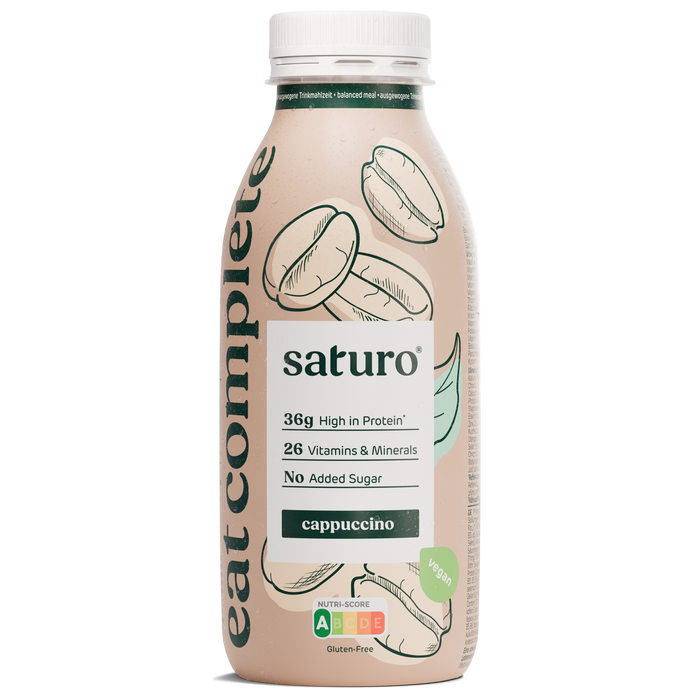
Drinkable meal: a complete meal in a bottle
26 vitamins and minerals, including vitamin A, vitamin D and zinc. Vitamin A contributes to the maintenance of normal vision and normal skin, and to the normal function of the immune system. Reference intake for vitamin A: 800 µg per day. If you're pregnant, talk to your doctor about the total from all your vitamin A sources.
Pregnancy, smoking, children: who needs to look more closely at vitamin A
In healthy adults, vitamin A is a non-issue. Four groups are the exception, and for three of them it's about too much: pregnant women, smokers and women after the menopause. Only for children in poor countries does vitamin A save lives.
Vitamin A in pregnancy and breastfeeding: how much is good, what is too much?
From the fourth month, the requirement rises to 800 µg, and to 1,300 µg while breastfeeding, because the baby fills up its stores through breast milk. Vegetables, eggs and dairy cover that without any risk. The danger is preformed retinol in high doses in the first trimester: retinoic acid controls the development of the embryo, and too much raises the risk of malformations of the head, heart and nervous system. Three rules: skip liver in the first trimester, only take supplements after talking to your doctor, and pause retinoid creams.
No liver or liver sausage in the first trimester, and after that only rarely at most. No supplements containing retinol, retinyl acetate or retinyl palmitate and no cod liver oil without talking to your doctor first; beta-carotene from vegetables is fine. Isotretinoin for acne must be stopped beforehand.
Vitamin A and smoking: why beta-carotene supplements are off the table
Vitamin A and beta-carotene from food are as safe for smokers as for everyone else. Beta-carotene from a capsule is not: the Finnish ATBC study with 29,000 smokers and the American CARET study with 18,000 smokers and asbestos workers found more lung cancer and more deaths with 20 to 30 mg a day over several years than with a placebo, and CARET was stopped early. The BfR (German Federal Institute for Risk Assessment) classes 20 mg as the lowest harmful dose and recommends a maximum of 3.5 mg in food supplements. If you smoke, don't take beta-carotene supplements or tanning capsules; carrots and pumpkin can stay on your plate.
Children worldwide: measles, blindness and the 12 per cent
Worldwide, vitamin A deficiency is a major health problem: a 2023 review estimates that 14.7% of children in low- and middle-income countries are affected, around 334 million. Two Cochrane reviews show the effect: regular supplementation for children from six months to five years lowers overall mortality by 12%, and in measles, two high doses lower mortality in hospitalised children under two. In Germany, the DGE (German Nutrition Society) calculates that only girls between 7 and 12 fall below the reference value; children here need vegetables and eggs, not drops.

Older people, bones and the menopause
In older age, the reference value stays at 700 and 850 µg; the risk is at the top end. A Swedish study found in 1998 that the risk of hip fracture in women rose by 68% with every additional milligram of retinol a day. The BfR calls the evidence contradictory, but still holds to an upper limit of 1,500 µg for women after the menopause. According to the national food consumption survey, the 5% with the highest intake are already at 1.7 to 2.0 mg from food alone, mostly through liver. For them the advice is: liver only rarely, no supplements without a reason, and support your bones with calcium and vitamin D instead.
Common questions about vitamin A deficiency
What does a vitamin A deficiency look like?
It shows in the eyes first: poorer vision in the twilight, then dry eyes, and with a longer deficiency Bitot's spots and a cloudy cornea, plus rough skin and infections. It's rare in Germany and almost only affects people with bowel, liver or pancreatic disease, after stomach surgery or with heavy alcohol use.
Which vitamin is lacking in night blindness?
If a vitamin is the cause, it's vitamin A, the building block of visual purple in the rods. Night blindness is the earliest sign of deficiency and improves within one to two days of taking vitamin A. Usually, though, retinal disease, cataracts or short-sightedness are behind it, so see an ophthalmologist first.
How does vitamin A affect your mental health?
None that are proven. A 2025 cross-sectional study found more depressive symptoms with a low vitamin A intake, but that's a snapshot without cause and effect. There's no study in which vitamin A improves mood. If you're feeling low, think about sleep, vitamin D, B12 and folic acid first.
Is vitamin A suitable for smokers?
From food, yes; from supplements, not without limits. High-dose beta-carotene from a capsule (20 to 30 mg a day over several years) raised the risk of lung cancer in smokers in the ATBC and CARET studies. If you smoke, skip beta-carotene supplements and tanning capsules; the BfR recommends a maximum of 3.5 mg.
What is the maximum amount of vitamin A allowed per day?
The European upper limit for retinol is 3,000 µg a day, including for pregnant women; for women after the menopause, the BfR gives 1,500 µg. Supplements should contain no more than 200 µg; 100 g of calf's liver provides around 21,000 µg. There is no upper limit for beta-carotene from vegetables.
How can you tell if you're getting too much vitamin A?
Non-specific signs that are often mistaken for a deficiency: headaches, nausea, flaky skin, hair loss, brittle nails, muscle and bone pain, raised liver values. The cause is almost always supplements, cod liver oil or frequently liver. Yellow palms after lots of carrots are just harmless beta-carotene in the skin.
Why no vitamin A during pregnancy?
This refers to retinol in high doses; from the fourth month, the requirement even rises to 800 µg. Too much retinoic acid in the first third of pregnancy increases the risk of malformations of the head, heart and nervous system. That's why: no liver in the first trimester, and supplements only after talking to your doctor; beta-carotene from vegetables is safe.
Are carrots healthier raw or cooked, and why with oil?
For vitamin A it hardly matters: raw 835, cooked 852 µg per 100 g; cooking and puréeing improve absorption by 18% up to sixfold. What really matters is fat: without fat, beta-carotene is practically undetectable in the blood, while with avocado or oil, absorption rose up to 15-fold. A spoonful of oil in your dressing is enough.
Sources · 50 sources anzeigen
- German Nutrition Society (DGE): Reference values for nutrient intake, vitamin A. D-A-CH reference values, 2020 reassessment.
- German Nutrition Society (DGE): New D-A-CH reference values for vitamin A intake. Press release 2020.
- German Nutrition Society (DGE): Selected questions and answers on vitamin A. November 2020.
- EFSA NDA Panel: Scientific opinion on the tolerable upper intake level for preformed vitamin A and β-carotene. EFSA Journal 2024; 22(6): e8814.
- Regulation (EU) No 1169/2011 (Food Information Regulation), Annex XIII: Reference intakes for daily intake (vitamin A 800 µg).
- Regulation (EU) No 432/2012, Annex: List of permitted health claims (vitamin A: vision, skin, mucous membranes, immune system, iron metabolism, cell specialisation).
- Bechthold A., Albrecht V., Leschik-Bonnet E., Heseker H. (DGE): Assessment of vitamin supply in Germany, part 1: Data on vitamin intake. Ernährungs Umschau 2012; 59(6): 324–336.
- Max Rubner-Institut: National Nutrition Survey II, results report part 2 (vitamin A, beta-carotene). 2008.
- World Health Organization: Vitamin A deficiency. Nutrition Landscape Information System (NLIS).
- World Health Organization: Xerophthalmia and night blindness for the assessment of clinical vitamin A deficiency in individuals and populations. WHO/NMH/NHD/EPG/14.4, 2014.
- World Health Organization: Measles. Fact sheet.
- Song P., Adeloye D. et al.: The prevalence of vitamin A deficiency and its public health significance in children in low- and middle-income countries: A systematic review and modelling analysis. Journal of Global Health 2023; 13: 04084.
- Merck Manual, Professional Version: Vitamin A Deficiency.
- Merck Manual, Professional Version: Vitamin A Toxicity.
- Maronn M., Allen D. M., Esterly N. B.: Phrynoderma: A Manifestation of Vitamin A Deficiency? … The Rest of the Story. Pediatric Dermatology 2005; 22(1): 60–63.
- Mejia L. A. et al.: Impact of Vitamin A Deficiency on Iron Metabolism and Anemia: A Historical Perspective and Research Advances. Nutrition Reviews 2025; 83(3): 577–585.
- Dietary magnesium intake affects the association between dietary vitamin A and depression: a cross-sectional study. Frontiers in Nutrition 2025.
- Vitamin A Deficiency and Its Association with Visceral Adiposity in Women. 2023 (cross-sectional study, 200 women).
- Jalilvand A. et al.: Vitamin A Deficiency in Patients Undergoing Sleeve Gastrectomy and Gastric Bypass: A 2-Year, Single-Center Review. Journal of Laparoendoscopic & Advanced Surgical Techniques 2020.
- Zalesin K. C. et al.: Vitamin A deficiency after gastric bypass surgery: an underreported postoperative complication. Journal of Obesity 2011.
- AWMF: S3 guideline on surgery for obesity and metabolic diseases. Register 088-001, as of 02/2018, expired, under revision.
- Smith J. C. Jr.: The vitamin A-zinc connection: a review. Annals of the New York Academy of Sciences 1980; 355: 62–75.
- Liposoluble vitamins A and E in kidney disease. World Journal of Nephrology 2022.
- Alcohol induced hepatic retinoid depletion is associated with the induction of multiple retinoid catabolizing cytochrome P450 enzymes. 2022.
- Clugston R. D., Blaner W. S.: The Adverse Effects of Alcohol on Vitamin A Metabolism. Nutrients 2012; 4(5): 356–371.
- Zumaraga M. P. P. et al.: Genotype Effects on β-Carotene Conversion to Vitamin A: Implications on Reducing Vitamin A Deficiency in the Philippines. Food and Nutrition Bulletin 2022.
- Weikert C. et al.: Vitamin and Mineral Status in a Vegan Diet. Deutsches Ärzteblatt International 2020; 117(35–36): 575–582.
- ratiopharm GmbH: Prescribing information for Orlistat-ratiopharm 60 mg hard capsules.
- Larson L. M. et al.: Adjusting retinol-binding protein concentrations for inflammation: Biomarkers Reflecting Inflammation and Nutritional Determinants of Anemia (BRINDA) project. American Journal of Clinical Nutrition 2017; 106(Suppl 1): 390S–401S.
- Austrian Health Portal (gesundheit.gv.at): Lab values, vitamin A (retinol), reference range.
- Gilbert C.: How to manage children with the eye signs of vitamin A deficiency. Community Eye Health 2013; 26(84): 68 (WHO dosing schedule).
- Imdad A. et al.: Vitamin A supplementation for preventing morbidity and mortality in children from six months to five years of age. Cochrane Database of Systematic Reviews 2022; CD008524.
- Yang H. M., Mao M., Wan C.: Vitamin A for treating measles in children. Cochrane Database of Systematic Reviews 2005; CD001479.
- German Federal Institute for Risk Assessment (BfR): Proposed maximum levels for vitamin A in foods, including food supplements. On Opinion 006/2024.
- German Federal Institute for Risk Assessment (BfR): Proposed maximum levels for beta-carotene in foods, including food supplements. On Opinion 006/2024.
- German Federal Institute for Risk Assessment (BfR): Updated proposed maximum levels for vitamins and minerals in food supplements and fortified foods. Opinion 006/2024.
- German Federal Institute for Risk Assessment (BfR): Vitamin A: Intake via cosmetic products should be limited. Opinion 005/2014.
- Netzwerk Gesund ins Leben (BZfE): Diet and drinks during pregnancy. Recommendations for professionals, as of 6 July 2026.
- Melhus H., Michaëlsson K. et al.: Excessive Dietary Intake of Vitamin A Is Associated with Reduced Bone Mineral Density and Increased Risk for Hip Fracture. Annals of Internal Medicine 1998; 129(10): 770–778.
- Isotretinoin, Vitamin A Supplements, and Unintended Pregnancies in Post Roe v. Wade America. 2022.
- Overview of Nutrients in Human Milk. Advances in Nutrition 2018 (vitamin A in colostrum and mature milk).
- Linus Pauling Institute, Oregon State University: Micronutrient Information Center, Vitamin A.
- Green M. H., Green J. B., Ford J. L.: Vitamin A Absorption Efficiency Determined by Compartmental Analysis of Postprandial Plasma Retinyl Ester Kinetics in Theoretical Humans. Journal of Nutrition 2020; 150(8): 2223–2229.
- Institute of Medicine: Dietary Reference Intakes for Vitamin A, Vitamin K, Arsenic, Boron, Chromium, Copper, Iodine, Iron, Manganese, Molybdenum, Nickel, Silicon, Vanadium, and Zinc. National Academies Press 2001 (retinol activity equivalents).
- Brown M. J. et al.: Carotenoid bioavailability is higher from salads ingested with full-fat than with fat-reduced salad dressings as measured with electrochemical detection. American Journal of Clinical Nutrition 2004; 80(2): 396–403.
- Unlu N. Z., Bohn T., Clinton S. K., Schwartz S. J.: Carotenoid absorption from salad and salsa by humans is enhanced by the addition of avocado or avocado oil. Journal of Nutrition 2005; 135(3): 431–436.
- van het Hof K. H., West C. E., Weststrate J. A., Hautvast J. G.: Dietary factors that affect the bioavailability of carotenoids. Journal of Nutrition 2000; 130(3): 503–506.
- Richelle M. et al.: Both free and esterified plant sterols reduce cholesterol absorption and the bioavailability of beta-carotene and alpha-tocopherol in normocholesterolemic humans. American Journal of Clinical Nutrition 2004; 80(1): 171–177.
- Max Rubner-Institut: Bundeslebensmittelschlüssel (German Federal Food Code, BLS) 4.0, version 2025 (lamb's lettuce, kale, liver sausage, sea buckthorn, rose hip).
- U.S. Department of Agriculture, Agricultural Research Service: FoodData Central, SR Legacy Release (2018). Vitamin A (RAE), retinol, beta-carotene per 100 g.
Has been writing for Saturo since 2019 about nutrition, nutrients and how to get good nutrient supply to work in everyday life.
Hat diesen Artikel am 24. September 2026 auf fachliche Richtigkeit geprüft. This content does not replace medical advice.

Vitamin D deficiency: symptoms, causes and treatment
The second fat-soluble vitamin, which takes the same route through the gut: why almost everyone is short of vitamin D in winter, which symptoms to look out for and how much you really need.
Weiterlesen · 15 Min

New from our guide
New articles, updates and tips straight to your inbox. Easy to understand, expert-reviewed, no spam.
Danke! Bitte bestätige die Anmeldung in deinem Postfach.