
Vitamin B5 deficiency: symptoms, causes and foods
Tired, irritable, tingling in your feet? A genuine vitamin B5 deficiency is almost impossible, because pantothenic acid is in almost every food. Find out which symptoms are documented, what's behind them instead, and what vitamin B5 can really do for your skin and hair.


Aktualisiert 1 October 2026 · 16 Min. Lesezeit · 45 Quellen

The key points in 30 seconds
This is the daily amount of pantothenic acid that has applied since 2021 to everyone aged 10 and over, including pregnant women; for breastfeeding women it's 7 mg. The 6 mg you'll see online is the old value, and also the label value.
men took part in the most important deficiency study in 1958, and four in 1959. Almost everything known about symptoms comes from these trials, which used tube feeding and an antagonist.
Diarrhoea and water retention were only observed at 10 to 20 g a day from supplements, which is two thousand times the estimated value. There is no upper limit.
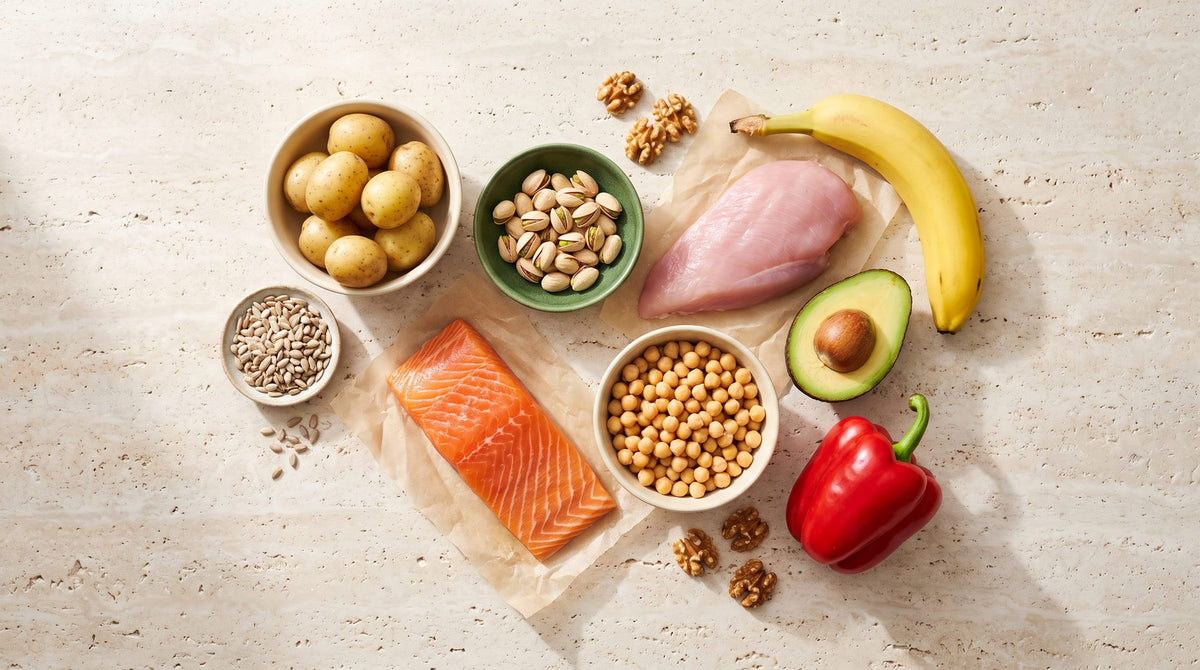
Pantothen means “from everywhere” in Greek. Meat, fish, eggs, mushrooms, wholegrains, pulses, avocado: almost every food provides some, so it's practically never lacking.
Vitamin B5 deficiency symptoms: how you'd recognise it
Pantothenic acid is the building block of coenzyme A, and without that, no cell can produce energy. Even so, hardly any vitamin is lacking as rarely: the DGE has not yet observed a deficiency on a normal mixed diet. What we know about symptoms comes from a few experiments with tube feeding and an antagonist. That's exactly why it's worth knowing what's behind it when you feel tired, irritable or tingly.
Tiredness, headaches, irritability: the non-specific signs
The documented symptoms come from two trials in the 1950s: six, and later four, healthy men were given tube feeding with practically no pantothenic acid, partly with an added antagonist of the vitamin. After around four weeks with the antagonist and roughly twelve weeks without, they developed what the authors called the most constant triad: tiredness, headaches and weakness. They also had irritability, restlessness, quarrelsomeness, alternating drowsiness and insomnia, nausea and stomach cramps. A later study with a pure deficiency diet over nine weeks found hardly any clinical signs, only listlessness. In everyday life, this triad fits a hundred things, first and foremost iron deficiency, lack of sleep and infections.
Vitamin B5 and tingling: burning feet syndrome
Tingling and numbness in the hands and feet occurred in the experiment, and one participant also had burning soles of the feet, which went away on their own after a few days. That's where the link to burning feet syndrome comes from, which was described in prisoners of war and in southern India. The catch: a placebo-controlled study from 1957 found no difference. On placebo, 8 of 18 affected people became symptom-free, on pantothenol 5 of 19. The likely cause was malnutrition involving several B vitamins. Burning feet today have other suspects: vitamin B12, vitamin B1, diabetes and an overdose of vitamin B6.
Tingling, burning or numbness in your feet, plus exhaustion that lasts longer than a few weeks, belong in a doctor's surgery. They'll check your blood count, iron, vitamin B12, thyroid and blood sugar first. Pantothenic acid comes right at the end of that list.
Vitamin B5 deficiency symptoms on the skin
Dry, cracked skin and poor wound healing appear on almost every list online. In the human deficiency studies they don't appear at all: neither the American reference work nor EFSA lists any skin signs, and only rats and mice showed hair loss and dry skin. The effect of vitamin B5 on the skin is real, but it comes from the outside: dexpanthenol in creams improves the skin's barrier and moisture, more on that in chapter 7. If your skin is dry or heals badly, central heating air, eczema, zinc or vitamin B2 are more likely culprits than pantothenic acid.

Vitamin B5 deficiency symptoms in women and during the menopause
There are no female-specific symptoms. EFSA sees no sign that requirements differ by sex. The estimated value is the same for women, men and pregnant women, and only breastfeeding women need 7 mg, because around 2 mg a day goes into breast milk. The pill doesn't increase your requirement, and in one study high-dose supplements didn't change blood or urine values. There isn't a single intervention study for the menopause, and a higher requirement is not proven. Hot flushes, exhaustion and thinning hair during this time have hormonal causes or an iron deficiency, not too little pantothenic acid.
What really fits a vitamin B5 deficiency
Fifteen complaints that are linked to vitamin B5, and what the sources say: established (observed in human deficiency studies), possible (inconsistent or only individual cases), unproven (no human study, or disproven).
| What the studies show | Rating | |
|---|---|---|
| Tiredness, headache, weakness | "Most consistent triad" in the experiment, in all deficiency participants | Established (experiment) |
| Irritability, restlessness, sleep problems | Personality changes and disturbed sleep in both Hodges studies | Established (experiment) |
| Tingling, numbness, burning | Paraesthesia in hands and feet, burning soles in one participant | Established (experiment) |
| Muscle cramps, unsteady gait | All four deficiency participants walked unsteadily, cramps were frequent | Established (experiment) |
| Nausea, stomach cramps | Gastrointestinal complaints in all reference works | Established (experiment) |
| Burning feet syndrome | Historically linked, placebo-controlled study in 1957 with no difference | Possible |
| Racing heart, circulation | Only individual participants, authors themselves unsure of the cause | Possible |
| Depression | Not in the reference works; a single participant was low in mood | Unproven |
| Susceptibility to infections | In the experiment, infections were no more frequent than in the control group | Unproven |
| Hair loss, grey hair | Animal studies only; a 2019 review doesn't name B5 as a cause | Unproven |
| Dry skin, wound healing | No skin signs in the deficiency studies; effect only topical as dexpanthenol | Unproven |
| Acne | One small supplement study with 2.2 g, no link to deficiency | Unproven (as a deficiency sign) |
| Weight gain | No human study | Unproven |
| Menopause symptoms | No human study, no increased requirement | Unproven |
| "Adrenal fatigue", stress | Not a recognised medical condition; the study authors ruled out adrenal insufficiency | Unproven |
Rating based on the sources in chapter 8 (Hodges 1958 and 1959, Fry 1976, Bibile 1957, IOM 1998, NIH, EFSA, Almohanna 2019, Cadegiani 2016). All established signs come from experiments with 4 to 6 men. As of 1 October 2026.
Vitamin B5 deficiency causes: why it almost never happens
A vitamin B5 deficiency takes an exceptional situation: starvation with a simultaneous lack of many nutrients, artificial feeding without vitamins, or a rare genetic defect. Too little in your food isn't the reason on a normal mixed diet. According to the DGE, even a diet low in pantothenic acid usually doesn't cause deficiency symptoms. Here's what pantothenic acid is, how much you need and who is actually at risk.
What is pantothenic acid?
Pantothenic acid is vitamin B5, a water-soluble vitamin that your body can't make itself. The name comes from the Greek "pantothen", meaning from everywhere, because it's found in almost all foods: meat, fish, eggs, milk, mushrooms, wholegrain, pulses and avocado. Its one big job: it's the building block of coenzyme A, the molecule that turns fat, carbohydrates and protein into energy in every cell and builds fatty acids, cholesterol and hormones. In supplements it's usually called calcium D-pantothenate, in creams dexpanthenol or panthenol. Chapter 3 shows how it works.
Pantothenic acid daily requirement: how much vitamin B5 a day?
5 mg for everyone aged 10 and over, pregnant women included, 7 mg for breastfeeding women, 4 mg for children up to 9 years, 2 to 3 mg for infants. EFSA arrives at the same values, and so does the US. It's an estimated value, not a requirement: the DGE says openly that there are no robust balance studies and no meaningful biomarkers, and the value reflects the typical intake of healthy people. 5 mg is easy to reach. The DGE even works it out: 150 g of trout, 250 g of potatoes, 60 g of oats, a glass of milk and two slices of wholemeal bread add up to 5.2 mg, and a vegan day with button mushrooms and soy products gives 6.3 mg.
What is a vitamin B robber? What's actually proven for B5
“Vitamin B robbers” is marketing talk for medicines and habits that supposedly increase your need. For pantothenic acid, not a single medicine is proven: the US authority knows of no clinically relevant interactions, a high-dose contraceptive pill didn't change blood or urine values, and there's no data for antibiotics, coffee, levodopa or metformin. The only weak hint: in a small 1976 study, people with acute alcohol dependence excreted less pantothenic acid, probably because they ate less. Real robbers exist for other B vitamins, such as metformin and acid blockers for vitamin B12.
Who's really at risk
The authorities name exactly one group: people with severe malnutrition, for example with eating disorders, starvation, or tube or intravenous feeding without added vitamins. Even there, pantothenic acid is never missing on its own, only together with other nutrients. Alcohol dependence is a weak hint, dialysis is explicitly not a risk, and there's no study on chronic bowel disease or diabetes. Two rare genetic disorders (PKAN, a defect in the SLC5A6 transporter) disrupt how the body handles the vitamin, but can't be treated with food. Vegan diet, age, sport, pregnancy: no proven risk, and mushrooms and pulses provide more than enough from plants.
Pantothenic acid effects: what vitamin B5 does in the body
Three stages from plate to cell. Once you know them, you'll understand why vitamin B5 is needed everywhere, why it still almost never runs short, and what the body actually uses it for.
Absorption: from coenzyme A back to the vitamin
Around 85% of the pantothenic acid in food is bound in coenzyme A, because every animal and plant cell needs it. Digestive enzymes split it in the small intestine into free acid, which enters the gut cells via the SMVT transporter. Vitamin B5 shares this transporter with biotin and lipoic acid. About half of it arrives from a mixed diet: 40 to 61% in the only study on this. Gut bacteria also produce pantothenic acid, but whether any of it reaches humans hasn't been measured.
Conversion: five steps to coenzyme A
In the cell, the body converts pantothenic acid back into coenzyme A in five steps. The first step is carried out by the enzyme pantothenate kinase, and it puts the brakes on itself as soon as enough coenzyme A is available: more vitamin doesn't mean more coenzyme A. This very enzyme is disrupted in the hereditary disease PKAN. A second target is the acyl carrier protein, which assembles fatty acids. There's no store like there is for vitamin B12; any excess leaves unchanged via the kidneys in your urine.
Effects: energy, fats, hormones, messenger substances
What does the body need vitamin B5 for? Coenzyme A takes fat, carbohydrates and protein into the citric acid cycle as an acetyl group, which is where the energy for every cell is produced. It builds fatty acids, cholesterol, steroid hormones such as cortisol, vitamin D, the messenger substance acetylcholine and the haem in red blood cells, and it helps the liver break down foreign substances and alcohol. The EU recognises four claims: normal energy-yielding metabolism, synthesis of steroid hormones, vitamin D and neurotransmitters, reduction of tiredness, and normal mental performance.
Detecting a vitamin B5 deficiency: why there's hardly a test
There is no validated status marker for pantothenic acid. The DGE and EFSA say so explicitly, which is why the estimated value is based on typical intake rather than blood levels. Here's what labs offer anyway, what the numbers mean, and what should actually be tested for the typical symptoms.
Vitamin B5 test: urine, blood, home test
The most useful option is excretion in 24-hour urine: healthy people excrete 2 to 4 mg a day, and under 1 mg counts as low. In whole blood, 1.6 to 2.7 µmol/l counts as normal and under 1 µmol/l as low, though neither has an official cut-off. German labs, however, mostly offer serum pantothenic acid, reference range 25 to 80 µg/l, as a self-pay service for around €33 to €52, and even list hair loss and skin conditions as reasons to test. According to the reference works, serum reflects your supply poorly, because the value barely responds to intake. Home tests with finger-prick blood aren't validated for vitamin B5. In short: the test tells you little, and without a risk factor the result is almost certainly normal.

What's more often behind these symptoms
If you're thinking of vitamin B5 because of tiredness, tingling or irritability, get the common causes ruled out first. Iron deficiency is the most common nutrient-related cause of exhaustion, especially in women; vitamin B12 explains tingling and numbness, particularly on a vegan diet, with metformin or with acid blockers; the thyroid controls energy and mood, and iodine is part of that; blood sugar and diabetes are behind burning feet; vitamin D in winter is behind a lack of drive. Add sleep, stress and infections. A blood count with ferritin, B12, TSH and fasting glucose answers more than any pantothenic acid value.
Correct a vitamin B5 deficiency and avoid overdosing
With pantothenic acid, the problem is rarely a deficiency, but rather the expectations placed on supplements. Here's what happens with a proven deficiency, why you can practically never overdose on vitamin B5, which side effects are known, and what pantethine has to do with cholesterol.
Treating a vitamin B5 deficiency: food or supplement?
A proven deficiency is treated by tackling the cause: malnutrition, alcohol dependence or artificial feeding without vitamins. Pantothenic acid is then given in doses set by a doctor; there's no guideline for this because the case is so rare. In an experiment, participants received 4 g a day: tingling and muscle weakness improved quickly, while tiredness and irritability lingered for a while. Supplements contain vitamin B5 as calcium D-pantothenate, sodium D-pantothenate, panthenol or pantethine, and daily doses on the market range from 5.4 to 1,000 mg. There's no evidence for any particular time of day to take it; if you take a B-complex supplement, it's best to take it with a meal. According to the DGE, healthy people eating a normal mixed diet don't need one.
In practice, I've never seen a genuine vitamin B5 deficiency. What I have seen is plenty of people reaching for pantothenic acid capsules because of tiredness or tingling and missing the real cause. Get your iron, B12, thyroid and blood sugar checked first. And if you eat mushrooms, eggs, pulses or fish, you've had your vitamin B5 covered all along.
Joerg Hauke, Nutrition expert, expert review of this article
Vitamin B5 overdose: can you take too much?
Not from food, and from supplements only in absurd amounts. There is no upper limit: in 2002, the European Scientific Committee on Food couldn't derive a tolerable upper level because no poisoning in humans is known, and since 2021 the German Federal Institute for Risk Assessment has not set a maximum amount for food supplements. Only at 10 to 20 g a day, which is 2,000 to 4,000 times the estimated value, did studies occasionally report diarrhoea and water retention. The excess leaves through the kidneys in your urine. That sets vitamin B5 apart from vitamin B6, whose upper limit is 12 mg and which can damage nerves with long-term high doses.
Four orders of magnitude lie between the estimated value and the dose at which your gut reacts. The steps show where each number comes from.
From requirement to too much: vitamin B5 in numbers
-
1
Estimated value5 mg
DGE since 2021 for everyone aged 10 and over, breastfeeding women 7 mg. Easily reached with trout, potatoes, oats, milk and wholemeal bread, even without offal.
-
2
Reference amount6 mg
The value on labels (NRV), which the percentages are based on. One bottle of drinkable meal provides 1.8 to 2.1 mg, so 30 to 35% of it.
-
3
Supplementsup to 1,000 mg
Daily doses on the market range from 5.4 mg in multivitamins to 1,000 mg in single supplements. If you're not deficient, there's no benefit, but no known danger either.
-
4
Gut reacts10 to 20 g
Only at this level have diarrhoea and water retention occasionally been observed. It's not a set limit, just the dose from old studies on stress and grey hair.
DGE/ÖGE reference values 2021, Regulation (EU) 1169/2011, Verbraucherzentrale 2026, SCF 2002, BfR 2021 and 2024. There is no tolerable upper intake level (UL) and no BfR maximum amount for pantothenic acid.
Vitamin B5 side effects and interactions
Clinically relevant interactions with medicines are not known. The much-cited competition with biotin is real, as both use the same transporter in the gut, but it's only been shown in the test tube. No consequences have been described at normal doses. A single case report describes inflammation of the pericardium and pleura during high-dose vitamin B5 plus biotin, which disappeared after stopping. A 2023 mouse study shows that certain breast cancer cells use pantothenic acid. No recommendation can be drawn from that, but if you have cancer, supplements belong in your doctor's hands. Some lists say vitamin B5 interferes with iron absorption or antibiotics, but this isn't proven.
Pantethine: what vitamin B5 has to do with cholesterol
Pantethine is a precursor of coenzyme A and is promoted at doses of 600 to 900 mg a day for high blood fats. Two controlled studies with 120 and 32 participants found small effects: LDL cholesterol was 4 mg/dl and around 11% lower respectively than with placebo, over 16 weeks. Nobody has studied whether this prevents heart attacks, and the American expert panel calls the benefit unproven. Ordinary pantothenic acid doesn't lower blood fats. If your levels are raised, talk to your doctor about pantethine. It doesn't replace a statin or a change of diet.
Vitamin B5 foods: where to find the most pantothenic acid
Pantothenic acid is in almost everything, but not in equal amounts. The richest everyday sources are mushrooms, fish, meat, eggs and avocado, and the record holder is liver at 7 to 8 mg per 100 g. The bars show the top 10 plant-based foods (including mushrooms) and animal-based foods (without offal), with all values as the food sits on your plate.
Vitamin B5 per 100 g: top 10 plant-based and top 10 animal-based
Values per 100 g, USDA FoodData Central SR Legacy 2018; mushrooms cooked and drained, seeds and nuts dry. The jump from raw to cooked mushrooms is down to water loss. In portions: 100 g cooked button mushrooms 2.2 mg, half an avocado 1.1 mg, 200 g sweet potato 1.8 mg, 30 g seeds or nuts 0.3 to 0.4 mg, 40 g rolled oats 0.45 mg, 200 g cooked lentils 1.3 mg.
Foods with pantothenic acid: plant-based and animal-based
The portion matters more than the value per 100 g. A handful of nuts gives you 0.3 mg, a portion of boiled potatoes in their skins 1.0 mg, 200 g of cooked lentils 1.3 mg, and a plate of button mushrooms 2.2 mg. On the animal side, 150 g of fish or meat gives you 1.5 to 3 mg, an egg 0.84 mg (almost all of it in the yolk), and a glass of milk 0.75 mg. Chicken breast has less than thigh, and wholemeal bread has three times as much as white bread. When you compare, you'll notice that databases often differ by one and a half to three times for pantothenic acid. Prawns, tuna and chicken breast are examples. That's why we give orders of magnitude here, not figures precise to the last digit.

Which fruit contains vitamin B5?
Practically only avocado: 1.4 mg per 100 g, and half a fruit delivers a good fifth of the estimated value. All other fruit is low in pantothenic acid: banana, raspberries, orange, pomegranate and blackcurrants come in at 0.25 to 0.4 mg per 100 g, and apple, pear and grapes at under 0.1 mg. If you eat fruit for its vitamin B5, you're eating it for the wrong reason. One figure that haunts many tables online is melon at 1.6 mg. It doesn't match any nutrition database, and watermelon has 0.2 mg. Fresh dates (0.8 mg) are the only exception besides avocado, and even they only appear in the American dataset.
How to keep vitamin B5 when you cook
The biggest documented loss doesn't happen in the frying pan, but in the mill. Milling into white flour loses anywhere from half to four fifths, depending on the type: according to the Bundeslebensmittelschlüssel, type 405 wheat flour contains only a sixth of the pantothenic acid of the whole grain, and cooked polished rice only a third of brown rice. When you cook meat, around half is retained whether it's boiled, grilled or fried, according to a measurement on goose breast; what's lost ends up in the cooking liquid, so use the stock and the sauce. Frozen and tinned vegetables are usually lower in the databases than freshly cooked ones. Wholegrain instead of white flour does more than any cooking technique.
is what two slices of white bread with butter and jam provide; in the German database it's only 0.25 mg
is what the same breakfast provides with wholegrain bread, a boiled egg and half an avocado: around 2 mg more, in both databases
Vitamin B5 in everyday life: mixed diet, vegan, drinkable meal
An ordinary day on a mixed diet, without fish or offal but with porridge oats, milk, pasta with mince, yoghurt, wholegrain bread and egg, comes to 5.4 to 5.7 mg. A vegan day with porridge oats, lentils, potatoes, wholegrain bread and avocado lands at 4.7 to 5.7 mg, and at 6.4 to 7.9 mg with a plate of button mushrooms: mushrooms are the plant-based lever. On days when a meal falls through, a drinkable meal with defined nutrient amounts is easy to plan around: depending on the flavour, one bottle of Saturo (400 ml) contains 1.8 to 2.1 mg of pantothenic acid, which is 30 to 35% of the 6 mg reference amount, as much as two to three eggs or a portion of mushrooms, plus the other 25 vitamins and minerals. It's no substitute for treatment, and you don't need a deficiency as a reason to have one.

Drinkable meal: a complete meal in a bottle
26 vitamins and minerals, including pantothenic acid, biotin and all the other B vitamins, plus 36 g protein and 7.3 to 7.7 g fibre per bottle. Reference intake for pantothenic acid: 6 mg per day (NRV).
Vitamin B5 for skin, hair and weight loss: what's true?
Most searches about vitamin B5 aren't about deficiency, but about promises: clear skin, fuller hair, less weight, less stress. Here's what the studies say on each one, with no sales pitch, and why panthenol in a cream is something different from pantothenic acid in a capsule.
Vitamin B5 for your skin and against acne
For acne there is exactly one controlled study: 41 evaluable participants took 2.2 g of pantothenic acid a day for twelve weeks in a combination product, around 440 times the estimated adequate intake, and ended up with fewer spots than the placebo group. The study was small, paid for by the manufacturer, and the groups started with different levels of acne; the authors themselves call for larger studies. It has nothing to do with deficiency, as acne isn't a deficiency symptom. What is proven, though, is the effect from the outside: dexpanthenol strengthens the skin barrier and holds moisture, more on that below. If you have blemished skin, a dermatologist will get you further than gram doses; when it comes to nutrients, zinc is the better-researched topic.
Vitamin B5 as a supplement: what studies show
Eleven claims used to sell pantothenic acid, and the best available evidence on each. Unlike the symptom table in chapter 1, this is about effects in healthy people, not signs of deficiency.
| Evidence | Verdict | |
|---|---|---|
| Acne (capsules) | One small, manufacturer-funded study with 2.2 g a day | Possible, weak |
| Hair loss | No human studies; a 2019 review names only B2, biotin, folate, B12 | Unproven |
| Grey hair | Fur greying reversed only in rats and mice; very weak evidence in humans | Unproven |
| Weight loss | Not a single intervention study | Unproven |
| Cholesterol (pantethine) | Small studies with 600 to 900 mg, LDL slightly lowered, no clinical endpoints | Possible, discuss with your doctor |
| Skin barrier, minor wounds (cream) | Dexpanthenol applied topically effective in several controlled studies | Proven (topical only) |
| Tiredness | EU claim confirms normal function; benefit of supplements in healthy people not proven | Unproven |
| Joints, inflammation | Only small studies from 1953 to 1971; expert panel: unproven | Unproven |
| Menopause | No studies | Unproven |
| Stress, “adrenals” | “Adrenal fatigue” is not a recognised diagnosis; 10 to 20 g in old studies showed no benefit | Unproven |
| Sport, performance | 14 cyclists, 6 g a day, 16 weeks: no effect on muscle or performance | Unproven |
Sources in chapter 8 (Yang 2014, Almohanna 2019, Yale 2020, Rumberger 2011, Evans 2014, Gorski 2020, DGE-FAQ, MSD Manual, Cadegiani 2016, SCF 2002, Whitfield 2021). As of 1 October 2026.
Vitamin B5 for your hair: does it help against hair loss?
No, at least not as a capsule. A 2019 review on vitamins and hair loss found a link only for vitamin B2, biotin, folic acid and vitamin B12; pantothenic acid doesn't appear in it. Greying hair turning dark again was shown in rats and mice; in humans, a systematic review rates the evidence as very weak. Panthenol in shampoo is care: it binds moisture to the hair and gives it more grip, but it won't make anything grow. If your hair is falling out, it's worth looking at iron, zinc, biotin, thyroid and hormones, in that order.

Vitamin B5 and weight loss: what's behind it
Nothing proven. There is no study in which pantothenic acid helped people lose weight. The approved claim “contributes to normal energy-yielding metabolism” describes how coenzyme A turns fat and carbohydrates into energy; it doesn't mean that more vitamin burns more fat. The cell slows down making coenzyme A as soon as there's enough, and excretes the rest. Even in athletes, 6 g a day over 16 weeks brought neither more coenzyme A in the muscle nor better performance. Losing weight remains a question of energy balance; a meal replacement can help with that, a vitamin can't.
Panthenol and dexpanthenol: vitamin B5 from the outside
Dexpanthenol is the alcohol form of pantothenic acid. On the skin it's converted into the vitamin and works locally: several controlled studies show a better skin barrier, more moisture and faster healing of superficial wounds, for example after tattoos or laser treatments; for deeper wounds, an independent institute calls the evidence unclear. That's why it's in wound ointments, lip care, serums and shampoos, and why a search for “vitamin B5 skin” is really about skincare. The cream has nothing to do with supplying your body: it doesn't replace a vitamin and doesn't treat a deficiency. Rarely, it triggers a contact allergy; if it does, stop using it.
Common questions about vitamin B5 deficiency
Which foods contain the most vitamin B5?
Per 100 g, it's in liver (7 to 8 mg), dried shiitake and yeast. In everyday life, portions are what count: 150 g of trout or salmon provide 2 to 3 mg, a plate of cooked mushrooms 2 mg, 150 g of chicken thigh 2 mg, one egg 0.84 mg. Eat liver only rarely, because of the vitamin A.
Which fruit contains vitamin B5?
Almost only in avocado, with 1.4 mg per 100 g. Half a fruit covers a good fifth of the estimated intake. Banana, raspberries, orange and blackcurrants come in at 0.25 to 0.4 mg, apple, pear and grapes under 0.1 mg. The often-quoted melon with 1.6 mg is an error in the tables.
Can you take too much vitamin B5?
Not through food, and practically not through supplements. There's no upper limit and no BfR maximum level, because no poisoning is known. Only at 10 to 20 g a day, two thousand times the estimated intake, did diarrhoea and water retention occasionally occur. The excess leaves your body in your urine.
Which B vitamin shouldn't you overdose on?
Vitamin B6: from around 50 mg a day over several months it can damage nerves, and EFSA sets the upper limit at 12 mg. Niacin has a limit too. Vitamin B5 isn't one of them, as no harmful dose is known. More in our article on vitamin B6 deficiency.
When should you take vitamin B5?
There's no evidence for a particular time of day. Pantothenic acid is water-soluble, is absorbed with a meal and the excess is excreted; in practice, it makes sense to take it with food. More important than timing is whether you need a supplement at all: with a normal mixed diet, you don't.
Which two vitamins shouldn't be taken together?
There's no such rule for vitamin B5. Pantothenic acid and biotin use the same transporter in the gut, but competition has only been shown in the test tube and has no effect at normal doses. B-complex supplements contain both together. Be more careful with high-dose combinations taken over several months.
What is pantothenic acid good for?
It's the building block of coenzyme A, which in every cell turns fat, carbohydrates and protein into energy, and builds fatty acids, cholesterol, steroid hormones, vitamin D and the messenger substance acetylcholine. The EU recognises four claims: energy metabolism, hormone synthesis, reduced tiredness and normal mental performance.
Which vitamin is missing when your feet hurt?
If your feet burn or tingle, think first of vitamin B12 and vitamin B1, then of diabetes and an overdose of vitamin B6. The historical burning feet syndrome was attributed to vitamin B5, but a placebo-controlled study found no effect. Get persistent symptoms checked by a doctor.
Sources · 45 sources anzeigen
- German Nutrition Society (DGE): Reference values for nutrient intake, pantothenic acid. Estimated values for adequate intake, derivation as of 2021 (5 mg adults, 7 mg breastfeeding women).
- DGE: Selected questions and answers on pantothenic acid (deficiency not observed on a mixed diet, no biomarkers, example calculations, dexpanthenol, health claims), as of 10 September 2025.
- Deutsches Ärzteblatt: Reference values for fibre, pantothenic acid and magnesium updated, 30 December 2021.
- EFSA NDA Panel: Scientific Opinion on Dietary Reference Values for pantothenic acid. EFSA Journal 2014; 12(2): 3581 (AI 5 mg, breastfeeding women 7 mg, no differences between the sexes, no biomarkers).
- EFSA: Dietary Reference Values for the EU, Summary of Dietary Reference Values, vitamin tables (as of January 2017).
- National Institutes of Health, Office of Dietary Supplements: Pantothenic Acid, Fact Sheet for Health Professionals, as of 1 May 2026 (deficiency only in severe malnutrition, biomarkers, no interactions).
- Institute of Medicine, Food and Nutrition Board: Dietary Reference Intakes for Thiamin, Riboflavin, Niacin, Vitamin B6, Folate, Vitamin B12, Pantothenic Acid, Biotin, and Choline. Chapter 10 Pantothenic Acid. National Academies Press 1998.
- Hodges R. E., Ohlson M. A., Bean W. B.: Pantothenic acid deficiency in man. Journal of Clinical Investigation 1958; 37(11): 1642–1657 (6 participants, triad of tiredness, headache, weakness).
- Hodges R. E., Bean W. B., Ohlson M. A., Bleiler R.: Human pantothenic acid deficiency produced by omega-methyl pantothenic acid. Journal of Clinical Investigation 1959; 38(8): 1421–1425 (4 participants).
- Fry P. C., Fox H. M., Tao H. G.: Metabolic response to a pantothenic acid deficient diet in humans. Journal of Nutritional Science and Vitaminology 1976; 22(4): 339–346.
- Bibile S. W. et al.: Pantothenol and the burning feet syndrome. British Journal of Nutrition 1957; 11(4): 434–439 (placebo-controlled, no difference).
- Hrubša M. et al.: Biological Properties of Vitamins of the B-Complex, Part 1: Vitamins B1, B2, B3, and B5. Nutrients 2022; 14(3): 484.
- Freese R., Aarsland T. E., Bjørkevoll M.: Pantothenic acid, a scoping review for Nordic Nutrition Recommendations 2023. Food & Nutrition Research 2023; 67: 10255 (name, SMVT transporter, biomarkers, EU intake).
- Linus Pauling Institute, Micronutrient Information Center: Pantothenic Acid (functions, deficiency, dexpanthenol and wound healing).
- MSD Manual, Professional Edition: Biotin and Pantothenic Acid, reviewed June 2026 (benefit for lipid metabolism, arthritis and sport unproven).
- Almohanna H. M. et al.: The Role of Vitamins and Minerals in Hair Loss: A Review. Dermatology and Therapy 2019; 9(1): 51–70.
- Yale K., Juhasz M., Atanaskova Mesinkovska N.: Medication-Induced Repigmentation of Gray Hair: A Systematic Review. Skin Appendage Disorders 2020; 6(1): 1–10.
- Yang M. et al.: A randomized, double-blind, placebo-controlled study of a novel pantothenic acid-based dietary supplement in subjects with mild to moderate facial acne. Dermatology and Therapy 2014; 4(1): 93–101.
- Cadegiani F. A., Kater C. E.: Adrenal fatigue does not exist: a systematic review. BMC Endocrine Disorders 2016; 16: 48.
- Tao H. G., Fox H. M.: Measurements of urinary pantothenic acid excretions of alcoholic patients. Journal of Nutritional Science and Vitaminology 1976; 22(4): 333–337.
- Kędzierska-Kapuza K. et al.: Demand for Water-Soluble Vitamins in a Group of Patients with CKD versus Interventions and Supplementation, A Systematic Review. Nutrients 2023; 15(4): 860 (no B5 syndromes in dialysis).
- Klopstock T. et al.: Fosmetpantotenate Randomized Controlled Trial in Pantothenate Kinase-Associated Neurodegeneration. Movement Disorders 2021; 36(6): 1342–1352.
- Riley L. G. et al.: Genome sequencing enables diagnosis and treatment of SLC5A6 neuropathy. European Journal of Human Genetics 2024; 32: 947–953.
- Song W. O., Wyse B. W., Hansen R. G.: Pantothenic acid status of pregnant and lactating women. Journal of the American Dietetic Association 1985; 85(2): 192–198.
- Whitfield J. et al.: Chronic pantothenic acid supplementation does not affect muscle coenzyme A content or cycling performance. Applied Physiology, Nutrition, and Metabolism 2021; 46(3): 280–283.
- Scientific Committee on Food (SCF): Opinion on the Tolerable Upper Intake Level of Pantothenic Acid, 17 April 2002 (no UL could be derived, diarrhoea at 10 to 20 g).
- German Federal Institute for Risk Assessment (BfR): Maximum level proposals for vitamin B1, vitamin B2 and pantothenic acid in foods including food supplements, 15 March 2021 (no maximum level, NVS II intake).
- BfR: Updated maximum level proposals for vitamins and minerals in food supplements and fortified foods. Opinion 006/2024 of 22 February 2024.
- Debourdeau P. M. et al.: Life-threatening eosinophilic pleuropericardial effusion related to vitamins B5 and H. Annals of Pharmacotherapy 2001; 35(4): 424–426.
- Kreuzaler P. et al.: Vitamin B5 supports MYC oncogenic metabolism and tumor progression in breast cancer. Nature Metabolism 2023; 5: 1870–1886 (mouse model).
- Rumberger J. A. et al.: Pantethine, a derivative of vitamin B5 used as a nutritional supplement, favorably alters low-density lipoprotein cholesterol metabolism. Nutrition Research 2011; 31(8): 608–615.
- Evans M. et al.: Pantethine, a derivative of vitamin B5, favorably alters total, LDL and non-HDL cholesterol in low to moderate cardiovascular risk subjects eligible for statin therapy. Vascular Health and Risk Management 2014; 10: 89–100.
- Gorski J. et al.: Dexpanthenol in Wound Healing after Medical and Cosmetic Interventions. Pharmaceuticals 2020; 13(7): 138.
- Proksch E. et al.: Topical use of dexpanthenol: a 70th anniversary article. Journal of Dermatological Treatment 2017; 28(8): 766–773.
- Verbraucherzentrale (consumer advice centre), Klartext Nahrungsergänzung: Are vitamin B5 products worthwhile or unnecessary? As of 26 June 2026 (doses 5.4 to 1,000 mg, approved forms).
- Regulation (EU) No 1169/2011 (Food Information Regulation), Annex XIII: nutrient reference value for pantothenic acid 6 mg, significant amount 15% or 7.5% for drinks.
- Commission Regulation (EU) No 432/2012: authorised health claims on pantothenic acid (energy metabolism, steroid hormones, vitamin D and neurotransmitters, tiredness, mental performance).
- synlab Labor München Zentrum: Individual health services in the laboratory, price list as of 01/2024 (vitamin B5 serum €52.46).
- IMD Institute for Medical Diagnostics Berlin-Potsdam: Special laboratory and immune diagnostics, self-pay (pantothenic acid €33.22).
- LADR Laborverbund Dr. Kramer & Kollegen: Vitamin B5 (pantothenic acid), serum, as of 12 February 2025 (reference range, indications).
- Tarr J. B., Tamura T., Stokstad E. L. R.: Availability of vitamin B6 and pantothenate in an average American diet in man. American Journal of Clinical Nutrition 1981; 34(7): 1328–1337 (absorption 40 to 61%).
- Walsh J. H., Wyse B. W., Hansen R. G.: Pantothenic acid content of 75 processed and cooked foods. Journal of the American Dietetic Association 1981; 78(2): 140–144 (processing losses 37 to 74%).
- Goluch Z. et al.: Impact of various types of heat treatment on B vitamins in goose breast meat. Poultry Science 2026; article 106728 (retention around 50%, no difference between methods).
- U.S. Department of Agriculture, Agricultural Research Service: FoodData Central, SR Legacy Release (2018), pantothenic acid per 100 g.
- Max Rubner-Institut: German Nutrient Database (Bundeslebensmittelschlüssel, BLS) 4.0, version 2025, pantothenic acid.
Has been writing for Saturo since 2019 about nutrition, nutrients and how to get good nutrition into everyday life in a practical way.
Hat diesen Artikel am 1. Oktober 2026 auf fachliche Richtigkeit geprüft. The content is not a substitute for medical advice.
Vitamin B6 deficiency: symptoms, causes and treatment
The B vitamin where too much is the bigger problem: which symptoms a deficiency causes, at what dose supplements damage nerves and where you'll find vitamin B6.
Weiterlesen · 16 Min

Latest from the guide
New articles, updates and tips straight to your inbox. Easy to understand, expert-checked, no spam.
Danke! Bitte bestätige die Anmeldung in deinem Postfach.