
Chloride deficiency: symptoms, causes and blood level
Muscle cramps, weakness, and your blood test shows low chloride? A chloride deficiency almost never comes from food, but from losses like vomiting or diuretic tablets. Which symptoms fit, what a normal level looks like, and what helps.


Aktualisiert 2 October 2026 · 16 Min. Lesezeit · 60 Quellen

The key facts in 30 seconds
This much chloride per day is considered adequate for adults, pregnant and breastfeeding women, derived in 2016 and unchanged in the 2025 edition. That's in just under 4 g of table salt, less than a teaspoon.
This is how much chloride women and men here consume daily, more than double the estimated value. 70 to 75% of it comes from processed foods like bread, sausage and cheese, not from the salt shaker.
Depending on the lab, the reference range is 95 to 105 or 98 to 107 mmol/l, with reference works citing up to 110. There's no single standard value, what matters is the range on your own test result.
Vomiting, diuretic tablets and very salty sweat cost you chloride, food practically never does. The only major dietary case was 141 infants with faulty formula milk in the US in 1978/79.
Chloride deficiency symptoms: how to recognise it
A chloride deficiency (hypochloraemia) means: there's too little chloride in the blood, the negatively charged ion from table salt. It almost always arises from losses, through vomiting, diuretic tablets or very salty sweat, practically never from too little salt in your food. A slightly lowered level usually causes no symptoms. It only becomes noticeable once the acid-base balance tips and potassium is lost along with it. Here's which signs fit and which don't.
Chloride too low: these symptoms are typical
A low chloride value alone usually causes nothing. The symptoms come from two companions: metabolic alkalosis, where the blood becomes too alkaline, and the potassium deficiency that almost always comes with it. Documented effects include muscle weakness and twitching, cramps up to tetany, tingling and numbness, headache, confusion, heart rhythm disturbances and shallow breathing, with which the body tries to counteract. The DGE lists low blood pressure, a fast heartbeat and an elevated blood pH. Dizziness, thirst and a fast pulse are signs of the fluid loss behind it, not of chloride itself.

Muscle cramps and tingling: when chloride is behind it
Only when there's alkalosis at the same time. When the blood becomes alkaline, more calcium binds to protein, free calcium drops, and nerves fire more easily: tingling, twitching, cramps, in extreme cases tetany and seizures. On top of that comes the potassium deficiency that weakens the muscles. If you get calf cramps at night and are otherwise healthy, you don't need a chloride test: magnesium, calcium and potassium are the more likely candidates, and often it's none of them.
Sodium and chloride too low: what this means
If both values drop together, the most common cause isn't a lack of salt but too much water in the body: with heart failure, liver cirrhosis or a hormone disorder (SIADH), the body retains water and dilutes sodium and chloride equally. If both drop after vomiting or while taking water tablets, there's genuine salt loss behind it. The difference determines the treatment, which is why a value is never assessed on its own. What a low sodium level means and why salt tablets are often the wrong approach is covered in the article sodium deficiency.
Persistent vomiting with weakness, cramps, confusion or heart palpitations needs immediate medical attention or a visit to A&E, without hesitation for infants, older people and pregnant women. Anyone taking water tablets who notices such signs should have chloride, sodium, potassium and bicarbonate measured rather than stopping the tablets.
When a chloride deficiency becomes dangerous
When the alkalosis becomes severe, with a blood pH above 7.6 or with seizures, heart rhythm disturbances and paralysis caused by the accompanying potassium deficiency. This happens with persistent vomiting, in infants with diarrhoea and vomiting, in cystic fibrosis in hot weather, and in people who combine water tablets with laxatives. In heart failure and in intensive care units, low chloride is a marker of a more severe course: around 14% of patients have it, and mortality is higher among them. This is an observation in severely ill patients, not a statement about healthy people. The table sorts the search terms.
Which symptoms really fit a chloride deficiency
Eleven complaints people search for, and what the sources say: signs of alkalosis (proven), signs of fluid loss (accompanying) or unproven.
| What's behind it | Classification | |
|---|---|---|
| Muscle weakness, twitching | Alkalosis and potassium deficiency weaken the muscle | Sign of alkalosis |
| Cramps, tetany | Free calcium drops in alkaline blood, nerves fire more easily | Sign of alkalosis |
| Tingling, numbness | Over-excitable nerves in alkalosis | Sign of alkalosis |
| Confusion, apathy, headache | Severe alkalosis, up to delirium | Sign of alkalosis |
| Heart rhythm disturbances | DGE explicitly mentions these, usually with potassium deficiency | Sign of alkalosis |
| Shallow breathing | The body's counter-regulation, those affected barely notice | Sign of alkalosis |
| Low blood pressure | Salt and volume loss, DGE mentions hypotension | Fluid loss |
| Dizziness, thirst, rapid pulse | Dehydration from vomiting or sweating | Fluid loss |
| Failure to thrive in infants | Formula cases 1978/79: growth stunting, loss of appetite, lethargy | Proven (infants) |
| Fatigue alone | Not listed as a chloride symptom by DGE, EFSA, MSD or IQWiG | Unproven |
| Hair loss, skin, mood | No source mentions these | Unproven |
Classification based on the sources in chapter 8 (DGE 2025, EFSA 2019, MSD Manual 2025, AJKD Core Curriculum 2022, IQWiG 2024, IOM 2005). As of 2 October 2026.
Chloride deficiency causes: how the body loses chloride
Chloride is lost in three ways: through the stomach, through the kidneys and through the skin. On top of that comes dilution from too much water. What's almost never the reason: too little salt in food. Here are the causes in the order they occur in practice.
Vomiting and nasogastric tube
The most common reason. Stomach acid is hydrochloric acid, that is, hydrogen plus chloride, and anyone who vomits for days or has a nasogastric tube with suction loses chloride and acid together with every surge. The blood becomes alkaline, the kidneys retain bicarbonate and release even more chloride: hypochloraemic alkalosis. Typical with gastrointestinal infections involving a lot of vomiting, with hyperemesis in pregnancy and with eating disorders. Diarrhoea isn't one of these causes: it usually makes the chloride level rise, because bicarbonate is lost (chapter 4); exceptions are laxative abuse and congenital chloride diarrhoea.
Water tablets (diuretics)
Loop and thiazide diuretics, prescribed for heart failure, high blood pressure and water retention, drive sodium and chloride out through the kidneys, with loop diuretics removing even more chloride than sodium. In older people with heart failure, low chloride is therefore common, with reviews citing 25 to 29%. There, it counts as a marker of more severe illness. Stopping the tablets on your own would be wrong; the dose and accompanying values are checked by your doctor.

Heavy sweating
In healthy people, sweat contains 20 to 40 mmol chloride per litre, which is 0.7 to 1.4 g, equivalent to 1.2 to 2.3 g of table salt. With a normal day involving half a litre of sweat, that's around 0.5 g of chloride, easily replaced by food. Sweating only becomes a cause with hours of heat exposure at work or competitive sport involving several litres of sweat, when only water is drunk to replace it, and with cystic fibrosis, where sweat is three to six times saltier (chapter 7). US reference values therefore explicitly exclude competitive athletes and people working in heat.
Can you develop a chloride deficiency through diet?
Practically not. Even freshly cooked food with no added salt whatsoever and no bread still comes to around 1,600 mg of chloride a day according to the German Federal Food Code, with a mixed diet including bread and cheese reaching 5,700 mg. All documented cases involved people who lived exclusively on a faulty special product: the 141 infants from 1978/79, two breastfed babies with chloride-poor breast milk, and 59 severely disabled patients in Japan in 2009 with incorrectly formulated tube feed. Eating low-salt won't give you a chloride deficiency; if you eat low-salt while on diuretics, have your levels checked.
How much chloride does the body need per day?
The DGE states an estimated value of 2,300 mg for everyone aged 15 and over, including pregnant and breastfeeding women, derived in 2016 from the sodium value and confirmed unchanged in 2025. The EFSA arrives at 3.1 g, because it assumes a higher sodium value; both figures are estimates, not a requirement in the strict sense, since there's no biomarker for chloride status. Children need 600 to 2,150 mg, infants 300 to 450 mg. Labels show the reference intake of 800 mg, a labelling figure, not a requirement. In terms of salt: 2,300 mg of chloride is contained in 3.8 g of table salt, less than one teaspoon.
What is chloride and what does it do in the body?
Chloride is the negatively charged ion of chlorine, Cl⁻, and it sits in table salt alongside sodium. It's not the chlorine from the swimming pool. An adult body contains 85 to 115 g of it, with 88% outside the cells, where it's the most important anion. Three stages explain why a loss shifts the whole balance.
Stomach: building block of hydrochloric acid
The parietal cells of the stomach lining pump chloride into the stomach and use it to build hydrochloric acid, which breaks down protein and kills germs. Normally, the chloride is almost completely reabsorbed in the gut, leaving just a few millimoles in the stool. Vomiting interrupts this cycle: acid and chloride are lost before the gut can reclaim them. That's exactly why vomiting is the most common cause of low chloride levels, not diet.
Water balance: sodium's partner
Outside the cells, chloride works together with sodium to maintain osmotic pressure and thus the distribution of water between blood, tissue and cells. The kidneys filter large amounts every day and reclaim over 99%; whatever ends up in urine follows salt intake almost exactly. Sodium and chloride are regulated together via aldosterone and usually move in step: if one falls, the other often falls too, and too much water dilutes both. That's why you should never read a chloride value without checking sodium alongside it.
Acid-base balance: bicarbonate's counterpart
Blood has to stay electrically neutral. If chloride is missing, the body fills the gap with other negative ions, mainly bicarbonate, which is a base: the blood becomes alkaline, causing metabolic alkalosis. Conversely, chloride rises when bicarbonate is lost, for example during diarrhoea, and the blood becomes acidic. Inside red blood cells, chloride and bicarbonate constantly swap places so that carbon dioxide can be transported away. Once you know this principle, you can understand any chloride result: too low usually means alkalosis, too high usually means acidosis.
Chloride in the blood: normal value, too low, too high
The chloride value appears on almost every blood test, abbreviated Cl, measured in mmol/l. On its own it says little; together with sodium, potassium, bicarbonate and blood pH, it reveals whether the body has lost acid or base. Here's what's normal, what a value that's too low or too high means, and what the urine value is good for.
Normal chloride value: which value is normal?
Depending on the lab, roughly 95 to 107 mmol/l; there's no single standard value. The central labs at MHH Hannover and IMD Berlin, along with the IQWiG, list 95 to 105, labs in Hamburg and Krefeld 98 to 107, the EFSA 97 to 107, reference works like DocCheck and Onmeda 96 to 110. The differences come from the measurement method (direct or indirect ion-selective electrode) and the reference group. In children, the range is somewhat higher, up to 109 or 111. What matters is always the range stated on your own test results. The scale shows where your value falls within the common ranges.
Chloride too low in the blood: what the value means
Slightly below the lab range with no symptoms: usually harmless, context matters. Clearly below it almost always means the body has lost chloride or is retaining water. Clinicians then look at three things: sodium (if it drops too, dilution is often the cause), potassium (almost always low as well), and bicarbonate with blood pH (elevated in alkalosis). On top of that come creatinine for kidney function and the anion gap (sodium minus chloride and bicarbonate, normally around 12 mmol/l). Low chloride is never the diagnosis itself, just a clue to the cause.
Hypochloraemia and alkalosis: why the blood becomes alkaline
Because the blood must stay electrically neutral. When chloride is lost, bicarbonate takes its place, and bicarbonate is a base: pH rises above 7.45, bicarbonate above 28 mmol/l. With vomiting, acid loss adds directly to this; with diuretics, it's the volume deficit that makes the kidneys conserve bicarbonate. Alkalosis pulls potassium into the cells and out through the kidneys, which is why potassium deficiency and chloride deficiency go together. Treatment is with chloride, in hospital as saline solution, because only then can the kidneys excrete the excess bicarbonate again. More on potassium in the article potassium deficiency.
Chloride in urine: what the additional value reveals
Where the loss is coming from. With vomiting or in the late phase after diuretics, the kidneys conserve chloride, so urine levels come in under 20 mmol/l; the alkalosis is chloride-sensitive and improves with saline and potassium solution. If the urine value is above 20 mmol/l, chloride is being lost through the kidneys, for example with excess aldosterone, with the rare congenital salt-wasting disorders Bartter and Gitelman syndrome, or while on diuretics; in that case, salt alone doesn't help. The often-cited threshold of 40 mmol/l doesn't appear in any of the checked specialist sources.

Chloride elevated: what a value that's too high means
Elevated chloride (hyperchloraemia) usually indicates acidosis: the blood is too acidic because bicarbonate has been lost. The most common reasons are persistent diarrhoea, dehydration from fever or heat, kidney disease and renal tubular acidosis, as well as large volumes of saline infusion in hospital and medications like acetazolamide. The value practically never rises from eating salty food. The value itself causes no symptoms; with severe acidosis, nausea, deep rapid breathing and circulatory problems occur. Chloride can only be lowered by addressing the cause, not through water or diet. The table puts both directions side by side.
Chloride too low or too high
Hypochloraemia and hyperchloraemia are mirror images: one usually indicates alkalosis, the other acidosis. Both are treated by addressing the cause.
| Too low (hypochloraemia) | Too high (hyperchloraemia) | |
|---|---|---|
| Common causes | Vomiting, nasogastric tube, diuretics, salty sweat, water excess | Diarrhoea, dehydration, kidney disease, saline infusions |
| Acid-base status | Alkalosis: blood alkaline, bicarbonate high | Acidosis: blood acidic, bicarbonate low |
| Typical symptoms | Cramps, tingling, weakness, confusion, heart palpitations | Often none; with acidosis, nausea, deep rapid breathing |
| Accompanying values | Potassium low, sodium often low, urine chloride clarifies the source | Sodium often high, anion gap normal, check kidney values |
| From diet? | Practically never, only faulty special formula | Practically never, EFSA: unusual through food |
| What helps | Treat the cause, clinic: saline and potassium solution | Treat the cause, fluids, eat less salt if persistent |
EFSA 2019, MSD Manual (Metabolic Alkalosis and Acidosis, 2025), IQWiG 2024, Pfortmueller 2018, AJKD 2022. Thresholds vary by lab: low under 95 to 98, high over 105 to 110 mmol/l.
Fixing chloride deficiency: what really helps
It's never the value that's treated, but the cause. The IQWiG sums it up in one sentence: a mild chloride deficiency can be corrected with a bit more table salt, while more significant deviations always belong in medical hands. What this means day to day depends on the situation, and the tool below helps clarify that.
Chloride too low: what to do?
First find the cause, then act. With acute vomiting or a gastrointestinal infection: replace fluid with salt and potassium, ideally as an electrolyte solution from the pharmacy, and see a doctor if warning signs appear. On water tablets: don't stop them on your own and don't add extra salt, but have the dose and values checked; often an adjustment is enough. With heavy sweating from heat, sport or cystic fibrosis: replace salt and water together. With an incidental finding just below the range and no symptoms: check sodium, potassium and bicarbonate; usually nothing needs to be done.
Electrolyte solution instead of cola and pretzel sticks
With vomiting and diarrhoea, oral rehydration solution is the standard, not a home remedy. The WHO formula contains per litre 75 mmol sodium, 65 mmol chloride, 20 mmol potassium, 10 mmol citrate and 75 mmol glucose; the sugar isn't there to sweeten, it's the transporter that pulls sodium and water through the gut wall. One litre delivers around 2.3 g of chloride, as much as the daily estimated value. Cola is ruled out according to the 2024 paediatric guideline: too little sodium, far too much sugar, too high osmolarity. For adults with a mild course, the gastroenterology guideline considers diluted juices with pretzel sticks or broth acceptable; anyone who's dehydrated needs the electrolyte solution.
Chloride is the value readers send me questions about most often: should I eat more salt now? The answer is almost always no. If you eat normally in Germany, you're getting double the estimated value, and a low reading tells the story of recent vomiting or a water tablet, not the salt shaker. What really helps is finding the cause, and with a stomach bug, a proper electrolyte solution instead of cola.
Joerg Hauke, Nutrition expert, technical review of this article
When an infusion is needed
If the alkalosis is chloride-sensitive and the fluid deficit is severe: then in hospital the body receives 0.9% saline solution, containing 154 mmol of chloride per litre, until urine chloride rises back above 25 mmol/l, plus potassium. With heart failure and fluid retention this isn't possible; in that case acetazolamide may be used, which lets the kidney excrete bicarbonate; the evidence here is thin, seven studies with 111 patients. The infants from 1979 simply recovered with chloride in their food, sodium or potassium chloride was enough. In all cases: the decision on infusion and dosage is made by the care team, never the salt shaker.
Vomiting lasting more than a day is always a reason to see a doctor for infants, young children, older adults, pregnant women and anyone on water tablets: chloride, sodium and potassium tip over faster there, and the signs (sunken eyes, dry mouth, skin folds that stay in place, listlessness) are easily missed.
Chloride in foods: where it's found
Chloride is in salt, and salt is in bread, sausage, cheese, ready meals and snacks. The bars therefore honestly show a salt list: almost everything in it is added sodium chloride, with 70 to 75% of intake coming from processed foods. The data source is the Bundeslebensmittelschlüssel 4.0, the only German database with chloride values; the USDA database doesn't list chloride at all. For context: a teaspoon of table salt (5 g) contains around 2,900 mg of chloride, more than the daily estimated value, a tablespoon of soy sauce around 1,200 mg.
Chloride per 100 g: top 10 plant-based and top 10 animal-based
Bundeslebensmittelschlüssel 4.0 (2025), rounded. Per serving: 30 g pretzel sticks 680 mg, 30 g crisps 495 mg, one wheat roll (50 g) 550 mg, one slice of white bread (50 g) 500 mg, one slice of mixed rye bread (50 g) 425 mg. Almost all of this is added salt; olives and sauerkraut are missing because the database doesn't list a chloride value for them.
Salt provides almost all the chloride
One gram of table salt consists of 607 mg chloride and 393 mg sodium. If you eat the German average of 8.4 to 10 g of salt a day, that means 5 to 6 g of chloride. According to the National Nutrition Survey, the biggest contributors are bread and rolls with 27 to 28% of salt intake, meat and sausage with 15 to 21%, dairy products and cheese with 10 to 11%. Bread tops the list not because of its value per 100 g, but because of the quantity: four slices of mixed bread bring around 1,700 mg of chloride, three quarters of the estimated value, before anything's even on top. A mixed diet with bread, cheese and sausage comes to around 5,700 mg a day according to the Bundeslebensmittelschlüssel.

Chloride without salt: vegetables, milk, fish
Naturally, foods contain little chloride: fruit and vegetables are usually under 100 mg per 100 g, unprocessed meat and fish 100 to 250 mg. The natural front-runners are mussels with 463 mg, anchovies with 270 mg, mackerel with 250 mg, then celery, fennel and dates with 210 mg each, egg with 180 mg and milk with 95 mg per 100 g. A whole fennel bulb brings a good 300 mg, a glass of milk 190 mg, an egg 100 mg. Even a freshly cooked diet with no salt and no bread comes to around 1,600 mg a day this way, 70% of the estimated value. That's enough to show: a deficiency from food isn't a realistic scenario, even on a low-salt diet. On days without a proper meal, a drinkable meal can step in; one bottle of Saturo Cocoa (400 ml) contains 178 mg of chloride, 22% of the reference intake, plus 25 other vitamins and minerals, 36 g of protein and 400 kcal. A nutritional fact, not a promise.
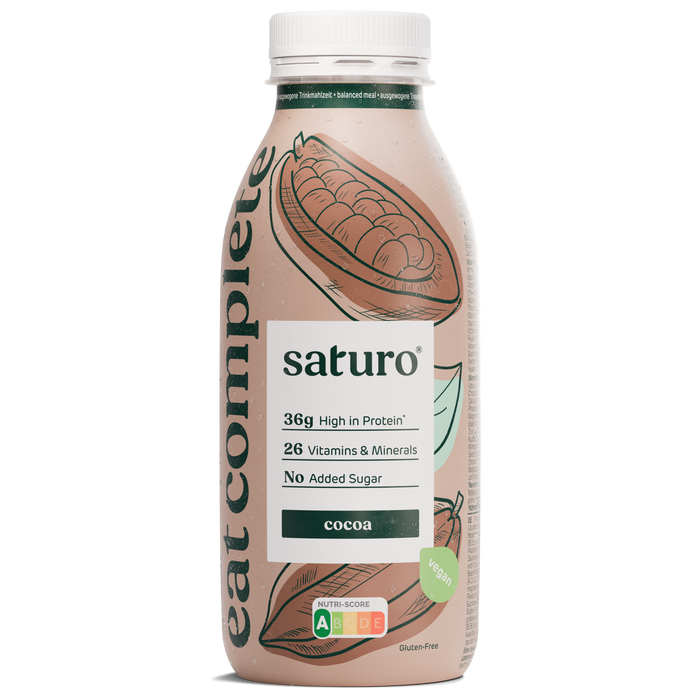
Drinkable meal: a complete meal from the bottle
26 vitamins and minerals, including chloride, potassium, magnesium and zinc, plus 36 g protein and 400 kcal per bottle. Reference intake chloride: 800 mg per day (NRV).
Chloride in water: is a lot of chloride in mineral water good?
Neither good nor harmful, it's a matter of taste. Tap water usually contains under 50 mg per litre; the Drinking Water Ordinance's limit of 250 mg/l is an indicator parameter for taste and corrosion, not a health value, and the WHO sets no health-based guideline value for chloride. Mineral water may call itself "containing chloride" from 200 mg/l, with the range running from a few milligrams up to over 500 mg per litre. Even one and a half litres of it brings at most 750 mg, a third of the estimated value. If you're watching your salt, check the sodium line on mineral water instead. And chlorine in drinking water is a disinfectant that has nothing to do with the chloride ion (FAQ).
Cystic fibrosis, infants, older adults: who really loses chloride
Three groups fall outside the rule that "chloride is never missing", and for them the value really is a matter of salt and water. Here's why sweat is the diagnostic test for cystic fibrosis, and when infants and older adults are at risk.
Cystic fibrosis: why sweat is too salty
In cystic fibrosis, the CFTR chloride channel that normally reclaims salt in the sweat glands is faulty. As a result, sweat contains an average of around 104 mmol chloride per litre instead of 16 in healthy people, and this is exactly what the sweat test measures: above 60 mmol/l, cystic fibrosis is very likely, 30 to 59 is borderline, and below 30 it's unlikely. In heat, fever or during exercise, those affected lose so much salt that sodium and chloride in the blood drop and alkalosis develops – known as pseudo-Bartter syndrome, especially in infants and young children. That's why salt replacement is part of the treatment plan; the cystic fibrosis team decides on the amount.
Infants, older adults and pregnant women
Infants need 300 to 450 mg of chloride a day, and breast milk and today's formula milk reliably provide this; the minimum content has been legally regulated since the 1979 case. Babies are at risk from gastrointestinal infections with vomiting, because their reserves are small: poor feeding, sunken eyes and listlessness are reasons for a same-day appointment. Older people lose chloride mainly when taking diuretics for heart failure; declining kidney function and multiple medications make levels more vulnerable. Pregnant women don't have a higher chloride requirement, but with severe pregnancy sickness (hyperemesis), electrolytes can tip quickly, requiring correction in hospital. Chloride deficiency from food doesn't occur in any of these three groups.
Frequently asked questions about chloride deficiency
What's the difference between chlorine and chloride?
Chlorine (Cl₂) is a gas used as a disinfectant in swimming pools and water treatment. Chloride (Cl⁻) is the negatively charged ion of the same element; bonded to sodium, it forms table salt. Your body needs chloride – it has nothing to do with chlorine.
Are salt and chloride the same thing?
No. Table salt is sodium chloride: 1 g consists of 607 mg chloride and 393 mg sodium. The chloride in food comes almost entirely from salt, which is why a normal diet in Germany provides 5 to 6 g of chloride a day – more than double the estimated value of 2,300 mg.
Is a chloride level of 108 normal?
It depends on the lab. With a reference range up to 110 mmol/l, 108 is normal; with ranges up to 105 or 107, it's slightly elevated. Without symptoms and with normal sodium and bicarbonate, this is usually not significant; the most common reason for slightly elevated chloride is fluid deficiency. What matters is the range stated on your results.
What happens if you have too much chloride in your body?
Through eating, practically nothing happens. The EFSA says that a chloride excess from food is unusual and sets no upper limit. A raised blood level (hyperchloraemia) usually indicates acidosis caused by diarrhoea, dehydration, or kidney disease. Too much salt is a sodium and blood pressure issue, not a chloride one.
How can you lower chloride in the blood?
Only by treating the cause. If diarrhoea or dehydration is behind it, the level normalises with fluids and electrolytes; for kidney disease or acidosis, your doctor treats the underlying condition. According to the IQWiG, eating less salt can make sense if the level stays raised long-term. Drinking water alone won't lower it.
What does it mean if the chloride level in urine is elevated?
Mostly just that you've eaten a lot of salt: the kidneys excrete 110 to 250 mmol of chloride daily, almost exactly matching intake. In cases of alkalosis, the urine value separates the causes: below 20 mmol/l, the body retains chloride (vomiting), above that it's lost via the kidneys (diuretics, hormone disorder).
Is chloride harmful to the body?
No, it's essential for life and the second most common electrolyte in the blood after sodium; according to the DGE, no toxic effects of chloride itself are known. Only salt as a whole is harmful, and that's through sodium: according to the WHO, the blood pressure effect of table salt is linked to sodium, not chloride.
What strips the body of sodium and chloride?
Vomiting, water tablets, laxatives and litres of sweat in heat or with cystic fibrosis. Then there's dilution: anyone who retains water or drinks extreme amounts due to heart failure or a hormone disorder has low values in both, without actually lacking salt. Food is practically never the reason.
Sources · 60 sources anzeigen
- German Nutrition Society (DGE): Reference values for nutrient intake, chloride. Estimated value for adequate intake 2,300 mg/day for adults, pregnant and breastfeeding women (derivation status 2016, 3rd edition 2025).
- DGE: Selected questions and answers on chloride (status 10 September 2025): intake in Germany 5 and 6 g/day, 70 to 75% from processed foods, chloride deficiency generally not expected in Germany, no toxic effects known.
- DGE: Selected questions and answers on table salt (status 1 October 2023): average table salt intake 8.4 g (women) and 10.0 g (men), guideline value 6 g, 6 g corresponds to about one teaspoon.
- DGE: Press release 01/2017, DGE updates reference values for sodium, chloride and potassium (estimated values for adequate rather than minimum intake).
- EFSA NDA Panel: Dietary reference values for chloride. EFSA Journal 2019; 17(9): 5779 (3.1 g/day safe and adequate, no UL, physiology, sweat 20 to 40 mmol/l, hypo- and hyperchloraemia, deficiency rare).
- Institute of Medicine: Dietary Reference Intakes for Water, Potassium, Sodium, Chloride, and Sulfate. National Academies Press 2005, Chapter 6 Sodium and Chloride (AI 2.3 g, UL 3.6 g, formula cases 1978/79, cystic fibrosis sweat 104 vs. 16 mmol/l).
- Regulation (EU) No. 1169/2011 (Food Information Regulation), Annex XIII: reference amount chloride 800 mg, significant amount 7.5% per 100 ml for beverages.
- Commission Regulation (EU) No. 432/2012: approved health claim for chloride (stomach acid), not for chloride from sodium chloride.
- Institute for Quality and Efficiency in Health Care (IQWiG), gesundheitsinformation.de: Chloride (reference range 95 to 105 mmol/l, causes, alkalosis, diarrhoea raises the value, mild deficiency through a bit more table salt, larger deviations require medical attention).
- Central Laboratory of Hannover Medical School: Service directory reference ranges, Version 1.0 (chloride 95 to 105 mmol/l, anion gap 8 to 16).
- IMD Berlin: Reference ranges Potsdam location (chloride 95 to 105 mmol/l, children 96 to 111, urine 54 to 158 mmol/l, 24-hour urine 95 to 237 mmol/d).
- Endokrinologikum Aesculabor Hamburg: Service directory chloride (adults 98.0 to 107 mmol/l, children by age, elevated values with dehydration, kidney failure, acidosis, salicylates).
- MVZ Labormedizin Krefeld: Chloride in serum/urine (98 to 107 mmol/l according to Tietz 1999, indirect potentiometry, 24-hour urine 170 to 250 mmol).
- DocCheck Flexikon: Serum chloride (reference range 96 to 110 mmol/l, reference work).
- Onmeda: Chloride in blood (normal values 96 to 110 mmol/l, depending on laboratory).
- Pfortmueller C. A. et al.: Serum chloride levels in critical illness, the hidden story. Intensive Care Medicine Experimental 2018; 6: 10 (physiology, hypochloraemia below 96 to 101, hyperchloraemia above 106 to 111 depending on laboratory, 0.9% NaCl 154 mmol/l).
- Berend K., van Hulsteijn L. H., Gans R. O.: Chloride: the queen of electrolytes? European Journal of Internal Medicine 2012; 23(3): 203–211.
- Aletras G. et al.: The Role of Chloride in Cardiorenal Syndrome: A Practical Review. Journal of Clinical Medicine 2025; 14(15): 5230 (dilution vs. genuine loss, loop diuretics).
- MSD Manual Professional: Metabolic Alkalosis (Lewis J. L., reviewed March 2025): causes, chloride-sensitive vs. chloride-resistant, urine chloride 20 mmol/l, symptoms, treatment with 0.9% NaCl and potassium, acetazolamide.
- MSD Manual Professional: Metabolic Acidosis (reviewed March 2025): hyperchloraemic acidosis, bicarbonate loss in diarrhoea, renal tubular acidosis, NaCl infusion.
- MSD Manual Professional: Acid-Base Disorders (alkalaemia pH above 7.45, bicarbonate above 28 mmol/l, anion gap 12, clinical consequences).
- MSD Manual Professional: Hypokalemia (muscle weakness, cramps, tetany, arrhythmias with potassium deficiency).
- MSD Manual Professional Edition: Hyperemesis gravidarum (dehydration, electrolyte abnormalities, correction in hospital).
- Do C., Vasquez P. C., Soleimani M.: Metabolic Alkalosis Pathogenesis, Diagnosis, and Treatment: Core Curriculum 2022. American Journal of Kidney Diseases 2022 (consequences of alkalosis, urine chloride 20 mmol/l, potassium correction).
- Malloy M. H. et al.: Hypochloremic metabolic alkalosis from ingestion of a chloride-deficient infant formula: outcome 9 and 10 years later. Pediatrics 1991; 87(6): 811–822 (141 reported children).
- Grossman H. et al.: The dietary chloride deficiency syndrome. Pediatrics 1980; 66(3): 366–374 (loss of appetite, failure to thrive, muscle weakness, lethargy, improvement with sodium or potassium chloride).
- Roy S., Arant B. S.: Hypokalemic metabolic alkalosis in normotensive infants with elevated plasma renin activity and hyperaldosteronism: role of dietary chloride deficiency. Pediatrics 1981; 67(3): 423–429.
- Willoughby A. et al.: Developmental outcome in children exposed to chloride-deficient formula. Pediatrics 1990; 85(4): 485–490 (small effect on cognition index).
- Congressional Research Service (Porter D.): Infant Formula: National Problems. Mini Brief MB82244, 27 April 1984 (Syntex removed the salt in 1978, around 20,000 children, recall 1 August 1979, Infant Formula Act).
- U.S. Food and Drug Administration, Federal Register Vol. 61 No. 132 (9 July 1996): Infant Formula Requirements (reformulation 1978, Infant Formula Act 26 September 1980).
- Miyahara J., Aramaki S., Yokochi K.: Dietary chloride deficiency due to new liquid nutritional products. Pediatrics International 2009; 51(2): 197–200 (59 patients, Japan).
- Vilotijević-Dautović G., Stojanović V.: Pseudo-Bartter's Syndrome in Patients with Cystic Fibrosis: A Case Series and Review of the Literature. Srpski arhiv za celokupno lekarstvo 2015; 143(11–12): 748–751.
- Di Meglio L. et al.: Congenital chloride diarrhea clinical features and management: a systematic review. Pediatric Research 2021; 90(1): 23–29.
- Puckett L.: Renal and electrolyte complications in eating disorders: a comprehensive review. Journal of Eating Disorders 2023; 11: 26 (vomiting, laxatives, urine chloride).
- Chen X. et al.: Prevalence of Hypochloremia in Patients With Heart Failure: A Systematic Review and Meta-Analysis. Nursing Open 2025 (14.0% among 29,807 patients).
- Wan X. et al.: Dysregulated serum chloride and clinical outcomes in critically ill adults: A systematic review and meta-analysis. PLoS One 2025; 20(12): e0337560 (hypochloraemia 14%, hyperchloraemia 34%, increased mortality).
- Fabbri E. et al.: Hypochloremia in Older Adults with Heart Failure: From Pathophysiology to Prognosis. Journal of Clinical Medicine 2026; 15(14): 5750 (25 to 29% among older patients).
- Grodin J. L. et al.: Prognostic Role of Serum Chloride Levels in Acute Decompensated Heart Failure. Journal of the American College of Cardiology 2015; 66(6): 659–666.
- Alkhuzaee A. et al.: Acetazolamide for metabolic alkalosis: systematic review. Journal of Clinical Medicine 2025; 14(4): 1041 (7 studies, 111 patients).
- Binder H. J. et al.: Oral rehydration therapy in the second decade of the twenty-first century. Current Gastroenterology Reports 2014; 16: 376 (WHO-ORS: glucose 75, sodium 75, chloride 65, potassium 20, citrate 10 mmol/l, 245 mOsm/l).
- German Society for Paediatric Gastroenterology and Nutrition et al.: S2k Guideline Acute Infectious Gastroenteritis in Infants, Children and Adolescents, AWMF 068-003, Version 4.1 (June 2024): glucose-electrolyte solution as standard, cola and apple juice unsuitable.
- German Society for Gastroenterology, Digestive and Metabolic Diseases (DGVS): S2k Guideline Gastrointestinal Infections, AWMF 021-024 (2023): WHO-ORS, for mild cases diluted juices with pretzel sticks or chicken broth.
- Cystic Fibrosis Foundation (Ren C. L. et al.): Evidence-Based Guideline for the Management of CRMS/CFSPID. Pediatrics 2024; 153 (sweat chloride from 60 mmol/l).
- Farrell P. M. et al.: Diagnosis of Cystic Fibrosis: Consensus Guidelines from the Cystic Fibrosis Foundation. Journal of Pediatrics 2017; 181S: S4–S15 (sweat test as standard).
- Diagnosing cystic fibrosis in low- and middle-income countries: challenges and strategies. Orphanet Journal of Rare Diseases 2024 (sweat chloride above 60 very likely, 30 to 59 borderline, below 30 unlikely).
- Baker L. B. et al.: Normative data for regional sweat sodium concentration and whole-body sweating rate in athletes. Journal of Sports Sciences 2016; 34(4): 358–368 (sweat rates 0.3 to 5.7 l/h among 506 athletes).
- Johner S. A., Thamm M., Schmitz R., Remer T.: Current daily salt intake in Germany: biomarker-based analysis of the representative DEGS study. European Journal of Nutrition 2015; 54(7): 1109–1115 (median 10.0 g men, 8.4 g women, over 75% and 70% respectively above 6 g).
- Robert Koch Institute: Journal of Health Monitoring 2016; 1(2), sodium intake (median 3.7 g/day, DEGS1).
- Max Rubner Institute: Table salt intake of the German population (NVS II), press release 26 March 2013: bread and rolls 27 to 28%, meat and sausage products 15 to 21%, milk and cheese 10 to 11% of salt intake.
- Max Rubner Institute: Reformulation of processed foods, topic salt (17 October 2016): almost 60% of salt intake from bread, sausage and cheese; WHO 5 g, DGE 6 g.
- Max Rubner Institute: Product monitoring 2025, results report (April 2026): bread and small baked goods averaging 1.20 g salt per 100 g.
- World Health Organization: Sodium reduction, Fact Sheet (1 g salt = 400 mg sodium, recommendation below 5 g salt/day).
- World Health Organization: Chloride in Drinking-water, Background document WHO/SDE/WSH/03.04/03 (no health-based guideline value, taste from 250 mg/l, blood pressure effect linked to sodium).
- World Health Organization: Chemical fact sheets Chloride and Chlorine (chloride not of health concern, chlorine as disinfectant).
- German Drinking Water Ordinance 2023 (TrinkwV), Annex 3 Part I indicator parameters: chloride 250 mg/l; § 8(3) corrosion.
- German Mineral and Table Water Ordinance (MinTafWV), Annex 6 to § 9(3): label "contains chloride" from more than 200 mg/l.
- German Federal Institute for Drugs and Medical Devices (BfArM): ICD-10-GM Version 2026, E87.8 Other disorders of water and electrolyte balance (including hypo- and hyperchloraemia).
- Kashani K. B. et al.: Falsely elevated chloride values in salicylate poisoning. Nephron 2018; 138: 186–191 (measurement artefact caused by salicylate).
- Vasuyattakul S. et al.: Negative anion gap and elevated serum chloride due to bromide intoxication. Nephron 1995; 69: 311–313.
- Max Rubner Institute: German Food Code (BLS), Version 4.0, German Nutrient Database, Karlsruhe 2025, chloride (mg per 100 g), documentation January 2026.
Writing for Saturo since 2019 about nutrition, nutrients, and how good nourishment actually works in everyday life.
Hat diesen Artikel am 2. Oktober 2026 auf fachliche Richtigkeit geprüft. This content doesn't replace medical advice.

Sodium deficiency: symptoms, causes and what helps
Chloride's closest relative: why low sodium is almost never caused by too little salt, but by too much water, which blood value actually matters, and why salt tablets are often the wrong fix.
Weiterlesen · 16 Min
New from the guide
New articles, updates and tips straight to your inbox. Easy to understand, expert-reviewed, no spam.
Danke! Bitte bestätige die Anmeldung in deinem Postfach.