
Folic acid deficiency: symptoms, causes and treatment
Constantly tired, pale, tongue burning? Folate is the vitamin of cell division, and it's more commonly lacking in Germany than many people think. Which symptoms are typical, why weight gain isn't one of them, which blood value counts, and what helps.


Aktualisiert 24 September 2026 · 16 Min. Lesezeit · 25 Quellen

The essentials in 30 seconds
The German Nutrition Society (DGE) recommends 300 µg of folate equivalents per day from age 13, 550 µg for pregnant women, 450 µg for breastfeeding women. The National Nutrition Survey found a median of 283 µg in men and 252 µg in women.
Your body only stores 12 to 28 mg of folate, half of it in the liver. If you take in too little over weeks, you slide into a deficiency; with vitamin B12, that takes years.
Below this, there's a folate deficiency in the serum; between 3 and 4.4 ng/ml the value is borderline. Always measure it together with a blood count and vitamin B12.
High-dose folic acid can also fix the blood count even when the real problem is a B12 deficiency; the nerve damage then continues unnoticed. So: check B12 first, then take folic acid.
Folic acid deficiency symptoms: how to recognise it
Folate, also known as vitamin B9, supplies the building blocks for new DNA. When it's missing, the cells that renew themselves fastest can't keep up: first the red blood cells, then the mucous membranes in the mouth and gut, and, with a delay, the nervous system. The symptoms show up in that order: tiredness and paleness, a burning tongue, diarrhoea, and later concentration problems and a low mood. The list helps you make sense of it, and the overview of vitamin deficiency covers the other vitamins.
Early signs: tiredness, pallor, burning tongue
It's almost always the blood that shows the first signs. Without DNA building blocks, the precursors of red blood cells keep growing but stop dividing properly: too few, too large cells, known as megaloblastic anaemia. Reduced oxygen transport feels like leaden tiredness, plus pallor, heart palpitations and shortness of breath on exertion. Next come the mucous membranes: the tongue burns, becomes smooth and red, taste changes, the corners of the mouth crack, and in the gut, the same mechanism shows up as diarrhoea and loss of appetite. If you're losing weight now, it's because of your appetite. A blood test clears this up within a day.

Neurological symptoms of folic acid deficiency
Folic acid deficiency affects the nerves rarely and late. Neurologist Edward Reynolds lists: problems with concentration and memory, confusion up to dementia in older people, depression, irritability, sleep problems, and much more rarely, polyneuropathy. Nerve symptoms and anaemia often don't occur together: the blood count can be normal while the mind is already affected. A Japanese study of 18 patients describes the neuropathy: it starts in the legs, mainly affecting the sense of position and vibration, and only seven had enlarged blood cells. So tingling in the hands and feet is possible, but it should first raise suspicion of vitamin B12 deficiency, and both are measured before anyone takes folic acid.
Folate deficiency or vitamin B12 deficiency?
- +Blood count first: tiredness, pallor, shortness of breath, enlarged red blood cells
- +Tongue burns, corners of the mouth crack, diarrhoea, appetite gone
- +Mood and concentration suffer, tingling is usually absent
- +Develops over weeks to months: little veg, alcohol, methotrexate, the pill, coeliac disease
- +If you otherwise eat healthily and aren't vegan, this is more likely to be your issue
- −Nerves first: tingling and numbness in feet and hands, unsteady gait, memory gaps
- −Blood count can still be normal at this stage
- −Develops over years: stores last a long time
- −Vegan, stomach acid blockers, metformin, over 60, gastrointestinal surgery
- −Folic acid alone would improve the blood count here while nerve damage keeps getting worse
Both values are always measured together, because the blood counts look similar but the treatment differs (Devalia 2014, Reynolds 2014, Koike 2015). If there's tingling, think of B12 first.
Folic acid deficiency symptoms in women
The symptoms are the same for women and men, but the risks differ. Women of childbearing age in Germany actually have slightly higher folate levels than men, but for a possible pregnancy they need a level that hardly anyone reaches (chapter 7).
The pill measurably lowers folate levels, as shown by a meta-analysis of 2,831 women; if you stop taking it because you want to conceive, start taking folic acid straight away. During pregnancy, your need almost doubles. Hair loss is possible with a pronounced deficiency, but the evidence is thin; diffuse hair loss in women is far more often linked to iron, the thyroid, or the end of a pregnancy.
If you have persistent tiredness with pallor, a burning tongue, shortness of breath or hair loss, see a doctor soon and get your blood count, folate, vitamin B12, ferritin and thyroid checked. Call emergency services (112) for shortness of breath at rest, chest pain, confusion or sudden paralysis. Mention any methotrexate, anti-epileptic drugs or sulfasalazine at your appointment.
Folic acid deficiency and weight gain
Weight gain is not a symptom of folic acid deficiency, in any guideline. If a deficiency affects weight at all, it's downwards, through loss of appetite and diarrhoea. If you're exhausted for weeks, you move less and eat differently, and your weight can go up without the vitamin having anything to do with it. Many people also look for side effects of folic acid tablets: the patient information for a 5 mg preparation lists gastrointestinal issues at very high doses, allergic reactions and sleep problems, but not weight gain. If you're gaining weight and feeling tired, get your thyroid, vitamin B12 and ferritin checked along with folate in one blood test; these three explain the combination far more often.
Folic acid deficiency in men
Same symptoms, different risks. According to the National Nutrition Survey, men eat slightly more folate than women, but drink alcohol regularly more often, which is the number one cause in men. The second big question for men is fertility: folic acid is in almost every supplement "for men". The largest study on this tested 5 mg of folic acid plus 30 mg of zinc over six months against placebo in 2,370 couples undergoing fertility treatment: no better sperm quality, no higher birth rate. A genuine deficiency should be corrected, but folic acid as a fertility booster without an actual deficiency has no basis.
Causes of folic acid deficiency: where the deficiency comes from
There are four routes to a folic acid deficiency: too little intake, too little absorption, too much usage, or a medication that blocks folate metabolism. The first is the most common. The National Nutrition Survey found a median intake of 283 µg a day for men and 252 µg for women, below today's recommendation of 300 µg. To clarify the terms: folate is the natural vitamin found in food, folic acid is the synthetic form found in tablets; in everyday language, folic acid deficiency means folate deficiency.
Too few vegetables, cooked too long: the most common cause
Folate is sensitive: water-soluble, and sensitive to heat and light. A measurement from Ulster University shows what the cooking pot costs you: after boiling in water, spinach retained 49% of its folate, broccoli 44%; steaming caused no loss at all. If you boil vegetables until soft, pour away the water and reheat the leftovers, you end up absorbing only half of what's listed in the table. Then there's the quantity factor: the main folate sources in the nutrition survey weren't spinach and lentils but fortified drinks, followed by bread, vegetables, dairy products and fruit.
actually reaches the body from spinach, lentils or salad: the gut first has to break down the long folate chain, and part of it is lost during cooking and storage
is absorbed from tablets and fortified products, which is why 1 µg folic acid counts as 2 µg dietary folate (DGE folate equivalents)
Folic acid deficiency caused by medication
Some medications interfere directly with folate metabolism. Methotrexate, used for rheumatism, psoriasis and cancer treatment, blocks the enzyme that activates folic acid; that's why rheumatism patients routinely receive folic acid alongside it, on a different day of the week. Sulfasalazine and the antibiotic trimethoprim work in a similar way. Anti-epileptic drugs lower levels over years; here the neurologist sets the dose, because folic acid weakens some active substances. Then there's the pill, triamterene and metformin, which also disrupts B12 absorption. And alcohol disrupts absorption, storage and utilisation all at once: of 211 people starting withdrawal treatment, 23% had a folate deficiency in their serum.
Coeliac disease, bowel conditions, increased need
Folate is absorbed in the upper small intestine; anything that damages this section lowers the level. In coeliac disease, folate deficiency is the classic lab finding; even on a gluten-free diet, 7% still had a deficiency in a study of 825 patients. Crohn's disease, small bowel surgery and gastric reduction surgery have a similar effect. On the other side is consumption: pregnancy, growth, chronic haemolysis, psoriasis, dialysis; folic acid is given routinely in these cases. The MTHFR gene variant only slows activation slightly; the American Society of Human Genetics advises against testing for it, because it doesn't change treatment.
How folate works in the body
Three stops from plate to cell. Understanding them explains why deficiency develops so quickly, why blood counts react first, and why folic acid can become dangerous without vitamin B12.
Absorption
Dietary folate exists as a long chain that the small intestine first has to break down; only about half of it actually gets absorbed. Synthetic folic acid from tablets is almost completely absorbed and activated in the liver. The active form is called 5-methyltetrahydrofolate, and it's this form that circulates in the blood. A store of 12 to 28 mg, half of it in the liver, lasts for two to four months.
Cell division
Folate carries carbon building blocks to wherever new DNA is being built. Every cell that divides needs it. The cells that divide most are the precursors of red blood cells in the bone marrow, the mucosal cells in the mouth and gut, and, in early pregnancy, the cells of the embryo. Without enough folate, cells grow but can't divide: large, immature, too few.
The B12 cycle
Folate only releases its methyl group when vitamin B12 is on hand as a partner. This converts homocysteine into methionine and frees up folate again for DNA synthesis. Without B12, folate stays trapped in its methyl form: your folate level can look normal, yet it's still missing where DNA is being built. High-dose folic acid bypasses this trap for the blood, but not for the nerves.
Folate value: how a folic acid deficiency is diagnosed
Folate is measured in blood serum, in nanograms per millilitre or nanomoles per litre (1 ng/ml = 2.27 nmol/l). The British guideline for blood disorders recommends the serum value as the first-choice test. It reacts quickly: it drops as early as one to three weeks after starting a low-folate diet and rises briefly after a folate-rich meal, so have blood drawn in the morning on an empty stomach.
The three stages of folate deficiency
-
1
Borderline3–4.4 ng/ml
Stores are shrinking, but the blood count is usually still normal. Clarify the cause, adjust your diet, and take a low-dose supplement if risk factors are present. Check again after two to three months.
-
2
Deficiency< 3 ng/ml
The body is in negative folate balance. Check blood count and vitamin B12; homocysteine is usually elevated. Treatment with milligram-dose folic acid once a B12 deficiency has been ruled out.
-
3
Deficiency with anaemia< 3 ng/ml + MCV > 100 fl
Red blood cells are enlarged, haemoglobin has dropped, and white blood cells and platelets are often reduced too. Requires medical treatment, finding the cause, and a follow-up blood count after four to eight weeks.
Limits according to the US Institute of Medicine (serum folate below 3 ng/ml = negative balance, red blood cell folate below 140 ng/ml = empty stores) and the WHO threshold of 10 nmol/l, i.e. 4.4 ng/ml, for sufficient supply. Some laboratories use their own reference ranges, in which case those apply. If you have symptoms, the symptom matters, not the stage.
What else the lab checks: blood count, vitamin B12, homocysteine
A low folate value is a finding, not a diagnosis. In the blood count, mean cell volume (MCV) rises above 100 femtolitres and haemoglobin falls. A B12 deficiency produces the same picture, which is why vitamin B12 should always be checked too, ideally as holotranscobalamin. Homocysteine is elevated in both deficiencies, while methylmalonic acid is only elevated in B12 deficiency; this is what distinguishes the two. Red blood cell folate shows supply over the last three to four months and is the value the WHO uses to define protection against neural tube defects. If the cause remains unclear, ferritin, coeliac antibodies and the medication list are checked next.

Folic acid deficiency test: who should get tested
Screening without reason isn't very useful, since most people in Germany get enough. Testing makes sense when symptoms coincide with a risk situation; in that case, health insurance covers it. There's no quick home test; self-tests simply send the sample to a lab.
Who should know their level:
- Trying to conceive and pregnancy, especially after stopping the pill
- Little vegetables, salad and pulses, for example during diets or reduced appetite in old age
- Regular high alcohol intake
- Coeliac disease, Crohn's disease, ulcerative colitis, stomach or bowel surgery
- Methotrexate, sulfasalazine, trimethoprim, anti-epileptic drugs, triamterene, metformin
- Dialysis, chronic haemolysis, psoriasis
- Older people with forgetfulness or low mood, together with B12
Go in the morning on an empty stomach, since a folate-rich meal briefly raises the serum value. Take folic acid supplements and multivitamins only after the blood draw, as they falsely inflate the result. Bring your medication list, including the pill and any supplements. Have vitamin B12 checked at the same time.
Fixing folic acid deficiency: What actually helps
Treatment has two parts: addressing the cause and refilling the stores. For a borderline finding without anaemia, dietary changes are often enough: salad or steamed green vegetables daily, pulses two to three times a week, less alcohol. For a confirmed deficiency, doctors prescribe milligram-dose folic acid, usually 5 mg tablets, available at pharmacies without a prescription. This is where the risk lies: for anaemia with enlarged cells, folic acid is contraindicated without ruling out B12 deficiency first, according to the patient information leaflet.
Folic acid tablets: dose, duration, combination with B12
The dose depends on the reason. To refill stores, 5 mg a day is common, twelve times the pre-conception dose. This is taken for several months, until a whole new generation of red blood cells has formed under good supply. With methotrexate, folic acid is given long-term, usually 5 mg once a week, the day after; it reduces side effects without interfering with the drug's effect. With anti-epileptic drugs, the neurologist sets the dose. If you have both B12 and folate issues, B12 comes first, then folic acid. 400 µg from the drugstore is too weak for treating a deficiency, but exactly right for prevention when trying to conceive.
Before anyone takes milligram doses of folic acid, I want to see the vitamin B12 value. Folic acid can correct the blood count even with a B12 deficiency present, and the nerve damage then continues unnoticed. That's the one mistake you must not make with this vitamin.
Joerg Hauke, Nutrition expert, technical review of this article
How long does it take to fix a folic acid deficiency?
Blood is quick, the head is slow. The serum value rises within days of taking folic acid, and the first new blood cells appear after about a week. Tiredness and paleness improve over four to eight weeks, the time haemoglobin needs; the tongue recovers sooner. Stores are full again after a few months. The nervous system takes longest: mood and concentration recover over weeks to months. A pure folate deficiency is fully curable. If the underlying cause continues, such as a medication or bowel condition, folic acid remains a permanent companion.
Folic acid side effects: too much folic acid and what happens
You can't overdose on natural folate from food, as the body excretes the excess. For synthetic folic acid, an upper limit of 1,000 µg a day applies; the German Federal Institute for Risk Assessment plays it safe with 200 µg as the maximum amount for food supplements.
The problem above this limit isn't poisoning, but masking: folic acid corrects the anaemia caused by a B12 deficiency, which can then go undetected for years until tingling, gait problems and memory issues appear. On top of that, unmetabolised folic acid circulates in the blood at high doses, and its significance is still being researched. Weight gain doesn't appear in any patient information leaflet or study.
If you have anaemia with enlarged cells, feel tingling, live vegan or take stomach acid blockers, get your vitamin B12 checked first. Under anti-epileptics, methotrexate or during cancer therapy, every folic acid dose belongs in a doctor's hands. Above 1,000 µg it's therapy, not a food supplement.
Folic acid foods: What contains a lot of folate
Folate comes from the Latin folium, meaning leaf: leafy greens, lettuce, cabbage, asparagus, pulses, seeds and wheat germ are the densest sources, plus liver. The ranking shows values per 100 g as eaten: pulses, asparagus and spinach cooked, liver cooked through, lettuce and seeds raw (USDA). If the numbers seem lower than elsewhere: many tables calculate with raw produce, around 340 µg for dry chickpeas; cooked, it's 172 µg.
Folate per 100 g: top 10 plant-based and animal sources
Per 100 g cooked or raw, USDA FoodData Central SR Legacy, folate equivalents. In servings: 200 g cooked lentils 362 µg, 150 g cooked spinach 219 µg, a bowl of romaine lettuce (80 g) 109 µg, 30 g sunflower seeds 68 µg, half an avocado 81 µg, an orange 45 µg. For comparison: 200 g pasta 14 µg, a slice of wholemeal bread 17 µg.
Daily folic acid requirement: How to reach 300 µg
A day without a tablet: wholemeal bread with egg in the morning, 40 µg. A lentil soup for lunch with 200 g cooked lentils, 362 µg, and the day's requirement is covered. If you eat pasta instead (14 µg), you need the rest of the day: a salad of romaine, rocket and tomatoes (about 130 µg), 150 g steamed broccoli (160 µg), an orange (45 µg), sunflower seeds on your muesli (68 µg).

Two patterns: pulses are the lever, one serving covers the day. Without them you need salad or green vegetables daily, steamed or raw, not overcooked.
If you boil spinach in water instead of steaming it, you lose half of it (192 down to 94 µg per 100 g). Keeping food warm and reheating also cost folate every time, as does long storage: buy fresh, store cool and dark, use quickly. During pregnancy with 550 µg, even this is tight, which is why the supplement belongs there too. If you like liver, it's easy: 100 g of chicken liver covers your requirement almost twice over, except during pregnancy.
Folic acid in everyday life: Fortified foods and drinkable meals
In Germany, flour isn't fortified with folic acid, unlike in the US, where every fortified cereal product has contained 140 µg per 100 g since 1998, and neural tube defects have dropped by around 1,300 cases per year since then. The Federal Institute for Risk Assessment decided against this in 2017, fearing the upper limit for people who already take supplements. There are individual fortified products here: folic acid salt with 100 µg per gram, juices, breakfast cereals and dairy products.
Folic acid salt is the cheapest way to lift your baseline intake: one gram of iodised salt with folic acid contains 100 µg, a third of your daily requirement in a pinch. If you're trying for a baby, it doesn't replace the 400 µg supplement.
Drinkable meals with defined nutrient amounts are part of it too: one bottle of Saturo delivers 60 to 61 µg of folic acid depending on the flavour, around 30% of the reference intake of 200 µg, plus vitamin B12. It's no substitute for treating a diagnosed deficiency, but it's a reliable contribution on days without lentils and salad.
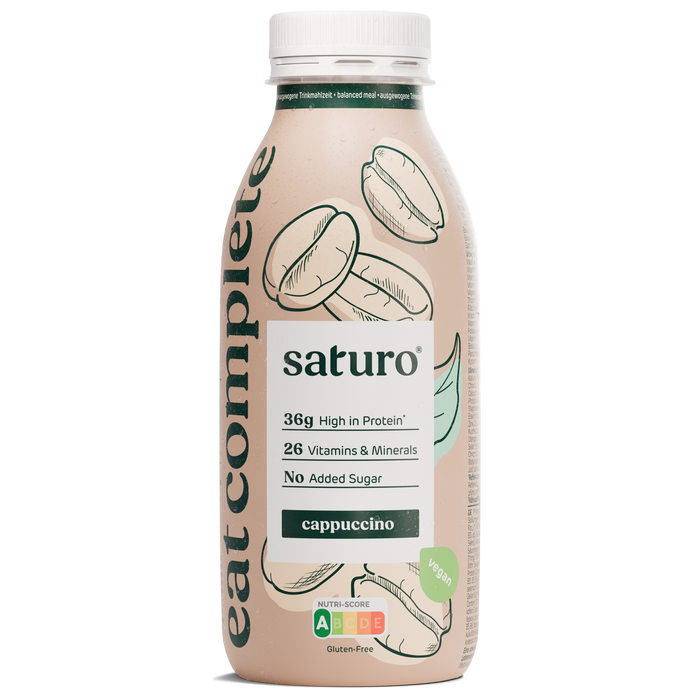
Drinkable meal: a complete meal from a bottle
26 vitamins and minerals, including folic acid and vitamin B12. Folate contributes to normal blood formation and to the reduction of tiredness and fatigue. Reference intake for folic acid: 200 µg per day (NRV). For days when cooking isn't on the agenda.
Pregnancy, age, mental health: Who needs to pay special attention
Folic acid deficiency in pregnancy: Why the first four weeks count
The neural tube, from which the brain and spinal cord develop, closes between day 22 and 28 after fertilisation, when many women don't yet know they're pregnant. If folate is missing then, the tube stays open: spina bifida, or in the worst case, anencephaly. In Saxony-Anhalt, where this is systematically recorded, it affects 9.3 out of 10,000 births. That folic acid prevents this has been proven since 1991: in the British MRC study, it reduced the recurrence risk by 72%.
The recommendation in Germany: 400 µg of folic acid daily from the time you start trying to conceive, not just from a positive test, until the end of week 12. If you start less than four weeks before conception, take 800 µg.
Folic acid when trying to conceive: The timeline
-
Trying to conceive
400 µg daily, straight away
On the day contraception stops, folic acid begins: 400 µg as a supplement, plus a folate-rich diet. Your stores need about four weeks to reach the protective level. If you start later, take 800 µg.
-
Week 3–4
The neural tube closes
Day 22 to 28 after fertilisation, often before the positive test. This is when it's decided whether the brain and spinal cord form properly. There's no catching up, hence the early start.
-
Until week 12
Keep taking the supplement
The recommendation applies until the end of the first trimester. After that, with normal blood levels, 550 µg from diet is enough, though many doctors keep the supplement going anyway; liver stays off the menu because of vitamin A.
-
Breastfeeding
450 µg from food
Folate passes into breast milk. Salad, steamed vegetables and pulses cover the requirement; a supplement only if levels are low after birth or another pregnancy is planned.
Only around 40% of pregnant women in Germany get the timing and dose right. If you stop the pill, start on the same day.

Folic acid deficiency in old age
Older people in Germany have, on average, higher folate levels than younger people. Two groups are at risk: those who eat little because appetite, teeth or loneliness make cooking difficult, and those taking medications that deplete folate or drinking alcohol regularly. In them, the deficiency first shows up as forgetfulness, lack of drive and low mood, easily mistaken for normal ageing; Reynolds calls low folate and high homocysteine risk factors for dementia. In old age, vitamin B12 deficiency is more common because the stomach produces less acid, and both look the same on a blood count. So test folate, B12 and blood count together before anyone talks about dementia.
Folic acid deficiency and mental health: Depression, concentration, sleep
The link runs in both directions. People with depression have, on average, lower folate levels, as shown by a 2017 meta-analysis, and low folate can deepen depression: if you lack drive, you don't cook and don't eat vegetables. Folic acid doesn't cure depression, but for depression that responds poorly to treatment, checking folate levels is part of the diagnostic process, and a deficiency gets corrected. Concentration problems, irritability and sleep issues are possible with a folate deficiency, but almost never the only sign. If you just sleep badly and have nothing else, you don't have a folate deficiency.
Folic acid deficiency and menopause
Menopause doesn't cause folate deficiency, and the requirement doesn't rise: the DGE recommends the same 300 µg from age 51 onwards. What overlaps are the symptoms: tiredness, irritability, low mood and sleep problems appear on both lists, which is why a folate deficiency at this stage is easily blamed on hormones. Some providers recommend 400 to 800 µg of folic acid a day; there's no recommendation from any professional body for this and no study on hot flushes. It makes sense to have folate, B12, ferritin and thyroid checked if exhaustion persists.
Folate deficiency consequences: what happens if it persists
A borderline level over a few weeks has no consequences once it's corrected. If the deficiency lasts for months, four things are at risk: anaemia, with exhaustion, strain on the heart and, in older people, falls; rising homocysteine (broken down with the help of folate, B12 and vitamin B6), a marker for vascular risk but not a proven cause; the nervous system, with mood and memory, where the longer it lasts, the slower the recovery; and the unborn child, because a deficiency in the first four weeks affects the neural tube. You can avoid all four with a blood test, a steamer basket and the supplement from the moment you start trying for a baby.
Frequently asked questions about folic acid deficiency
What are the signs of a folic acid deficiency?
First it shows up through the blood: tiredness, paleness and shortness of breath from anaemia with enlarged red blood cells. Then through the mucous membranes: a burning, smooth tongue, cracked corners of the mouth, loss of appetite, diarrhoea. With prolonged deficiency: concentration problems, irritability and low mood. Tingling is rare and points first towards suspected vitamin B12 deficiency.
How much folic acid do you need per day?
The DGE recommends 300 µg of folate equivalents from age 13, 550 µg during pregnancy, 450 µg while breastfeeding, and 120 to 240 µg for children. If trying to conceive, an additional 400 µg of folic acid as a supplement until the end of week 12. Upper limit for synthetic folic acid: 1,000 µg per day.
Can a folic acid deficiency cause weight gain?
No. Weight gain isn't a symptom of folic acid deficiency, in any guideline. If a deficiency affects weight at all, it's weight loss through loss of appetite and diarrhoea. If you're tired and gaining weight, it's better to check thyroid, vitamin B12 and iron. Folic acid tablets also don't lead to weight gain, according to the patient information leaflet.
Does folic acid help with weight loss?
No. No study shows that folic acid supports weight loss, and there's no mechanism to suggest it: folate is a vitamin for cell division, not a metabolism booster. If you correct an actual deficiency, you'll be less tired, and exercise becomes easier. For weight loss, vegetables, salad and pulses help, and they provide folate along the way.
Does a folic acid deficiency cause hair loss?
Possible, but rarely the cause. Hair follicles divide quickly, and a pronounced deficiency can slow growth, though the research is thin. Diffuse hair loss is far more often related to iron deficiency, thyroid issues, the end of a pregnancy or stress. Get ferritin, thyroid, B12 and folate checked in one appointment.
How dangerous is a folic acid deficiency for an unborn child?
The neural tube closes in the first four weeks after fertilisation. If folate is missing then, the risk of spina bifida or anencephaly rises, affecting around 9 in 10,000 births. Folic acid reduces this risk, by 72% in the MRC study. That's why 400 µg is recommended from the time you start trying to conceive until the end of week 12.
Are vitamin B12 and folic acid the same thing?
No, but they work in the same metabolic pathway, which is why the deficiency signs look similar: red blood cells that are too large and too few. Folate is found in vegetables and legumes and runs out after months, while vitamin B12 comes from animal foods and lasts for years. A B12 deficiency also damages the nerves. Read more in the article Vitamin B12 deficiency.
Can you take folic acid and vitamin B12 at the same time, and what doesn't mix well with folic acid?
Yes, this is common when both are deficient. The order matters: rule out or treat a B12 deficiency first, otherwise folic acid will normalise the blood count while the nerve damage continues. Be careful with anti-epileptics, methotrexate and trimethoprim: they and folic acid weaken each other's effect, so discuss the dose with your doctor.
Sources · 25 sources anzeigen
- German Nutrition Society (DGE): Reference values for nutrient intake, folate. Recommended intake in folate equivalents, 2015 derivation; supplement recommendation when trying to conceive.
- German Nutrition Society (DGE): Selected questions and answers on folate (folate versus folic acid, folate equivalents, intake in Germany, preparation, upper limit).
- German Federal Institute for Risk Assessment (BfR): 2024 update: proposed maximum levels for folic acid in foods including food supplements. Opinion 009/2024, 22 February 2024.
- Healthy Start network (BLE): Recommendations for folic acid supplementation before and during pregnancy (400 or 800 µg, neural tube defects 9.3/10,000 in Saxony-Anhalt, proportion of women supplementing correctly). As at 06.07.2026.
- Max Rubner Institute: National Nutrition Survey II, Results Report Part 2. Karlsruhe 2008, Chapter 5.6.5 Folic acid and Table A.43.
- Mensink G. B. M., Weißenborn A., Richter A.: Folate status in Germany (DEGS1). Journal of Health Monitoring 2016; 1(2): 24–28.
- Institute of Medicine (US): Dietary Reference Intakes for Thiamin, Riboflavin, Niacin, Vitamin B6, Folate, Vitamin B12, Pantothenic Acid, Biotin, and Choline. Chapter 8 Folate. Washington 1998.
- Devalia V., Hamilton M. S., Molloy A. M., British Committee for Standards in Haematology: Guidelines for the diagnosis and treatment of cobalamin and folate disorders. British Journal of Haematology 2014; 166(4): 496–513.
- Baddam S., Khan K. M., Jialal I.: Folic Acid Deficiency. StatPearls, Treasure Island (FL), as at 25 June 2025.
- Reynolds E. H.: The neurology of folic acid deficiency. Handbook of Clinical Neurology 2014; 120: 927–943.
- Koike H., Takahashi M., Ohyama K. et al.: Clinicopathologic features of folate-deficiency neuropathy. Neurology 2015; 84(10): 1026–1033.
- Bender A., Hagan K. E., Kingston N.: The association of folate and depression: A meta-analysis. Journal of Psychiatric Research 2017; 95: 9–18.
- Petridou E. T., Kousoulis A. A., Michelakos T. et al.: Folate and B12 serum levels in association with depression in the aged: a systematic review and meta-analysis. Aging & Mental Health 2016; 20(9): 965–973.
- McKillop D. J., Pentieva K., Daly D. et al.: The effect of different cooking methods on folate retention in various foods that are amongst the major contributors to folate intake in the UK diet. British Journal of Nutrition 2002; 88(6): 681–688.
- MRC Vitamin Study Research Group: Prevention of neural tube defects: results of the Medical Research Council Vitamin Study. Lancet 1991; 338(8760): 131–137.
- Williams J., Mai C. T., Mulinare J. et al.: Updated estimates of neural tube defects prevented by mandatory folic acid fortification, United States, 1995–2011. MMWR 2015; 64(1): 1–5.
- Chen M.-Y., Rose C. E., Qi Y. P. et al.: Defining the plasma folate concentration associated with the red blood cell folate concentration threshold for optimal neural tube defects prevention. American Journal of Clinical Nutrition 2019; 109(5): 1452–1461.
- Sanvisens A., Zuluaga P., Pineda M. et al.: Folate deficiency in patients seeking treatment of alcohol use disorder. Drug and Alcohol Dependence 2017; 180: 417–422.
- Shere M., Bapat P., Nickel C., Kapur B., Koren G.: Association Between Use of Oral Contraceptives and Folate Status: A Systematic Review and Meta-Analysis. Journal of Obstetrics and Gynaecology Canada 2015; 37(5): 430–438.
- Ezenekwe L., Camacho G. A., Green P. H. R., Lebwohl B.: Prevalence and Predictors of Folate Deficiency in Patients with Celiac Disease. Digestive Diseases and Sciences 2026.
- Hickey S. E., Curry C. J., Toriello H. V.: ACMG Practice Guideline: lack of evidence for MTHFR polymorphism testing. Genetics in Medicine 2013; 15(2): 153–156 (Addendum 2020).
- Almohanna H. M., Ahmed A. A., Tsatalis J. P., Tosti A.: The Role of Vitamins and Minerals in Hair Loss: A Review. Dermatology and Therapy 2019; 9(1): 51–70.
- Schisterman E. F., Sjaarda L. A., Clemons T. et al.: Effect of Folic Acid and Zinc Supplementation in Men on Semen Quality and Live Birth Among Couples Undergoing Infertility Treatment: A Randomized Clinical Trial. JAMA 2020; 323(1): 35–48.
- Patient information leaflet Folsan 5 mg tablets (folic acid): indications, dosage, contraindications, side effects, interactions.
- U.S. Department of Agriculture, Agricultural Research Service: FoodData Central, SR Legacy Release (2018). Folate content (folate equivalents) per 100 g.
Writing for Saturo since 2019 about nutrition, nutrients, and how good nutrient supply actually works in everyday life.
Hat diesen Artikel am 16. September 2026 auf fachliche Richtigkeit geprüft. This content does not replace medical advice.

Vitamin B12 deficiency: symptoms, causes and treatment
Folate's partner: why a B12 deficiency hits the nerves before the blood, which value matters, and when tablets are enough.
Weiterlesen · 16 Min

New from the guide
New articles, updates and tips straight to your inbox. Clear, expert-checked, no spam.
Danke! Bitte bestätige die Anmeldung in deinem Postfach.