Why is pre-workout nutrition so important
The importance of nutrients for athletic performance
The right nutrition before exercise, also known as a pre-workout meal or pre-training meal, is crucial for your performance. Your body needs the right nutrients to provide energy, build muscle and keep you fit. Carbohydrates are particularly important as they are the primary source of energy for intense exercise. But proteins and healthy fats also play a role in your sports performance.
How food affects your performance
What and when you eat during your pre-workout meal has a big impact on how you feel and what you can achieve. If you train on an empty stomach or after a heavy meal, you can quickly feel dizzy and nauseous. Your energy reserves are either empty or your body is busy digesting. Both will reduce your performance. Light, carbohydrate-rich pre-training meals 2-4 hours before exercise are ideal.
Positive effects of the right diet on the training effect
If you eat the right foods at the right time before exercise, your training sessions will be more effective. The nutrients give you energy, increase your stamina and shorten your recovery time. This means you can train more intensively and for longer, make faster progress and achieve your goals more easily. For strength and endurance athletes in particular, a targeted diet with a balanced pre-workout meal is essential.
Carbohydrates as an energy source for sport
How the body utilises carbohydrates
Carbohydrates are the preferred fuel for your muscles. Your body converts them into glucose and stores them in your muscles and liver as glycogen. During exercise, the glycogen is broken down into glucose again and serves as quick energy. The higher your glycogen stores are filled, the longer you can keep going. However, the stores are used up after around 90 minutes.
The best sources of carbohydrates for your pre-workout meal
Before exercising, you should mainly eat complex carbohydrates in your pre-workout meal. These are found in wholemeal products, pulses, potatoes or pseudo-cereals such as quinoa. They provide long-lasting energy without significantly raising blood sugar levels. Fruit and vegetables are also good sources of carbohydrates. Simple carbohydrates such as those found in white bread or sweets are less suitable.
How many carbohydrates you need before training
The optimal amount of carbohydrates for your pre-training meal depends on the length and intensity of your training. As a rule of thumb, you can remember:
- 1-2 hours before: 1-2g carbohydrates per kg body weight (e.g. 1 banana)
- 2-4 hours before: 2-3g carbohydrates per kg body weight (e.g. 1 portion of wholemeal pasta)
So 1-2 portions of fruit are usually enough for a one-hour workout. For endurance workouts lasting over 90 minutes, you should also consume carbohydrates during exercise.
The role of protein in muscle building
Why athletes need more protein
Proteins fulfil numerous functions in your body. They are a component of muscles, tendons, ligaments and organs. Muscle fibres are easily damaged during sport. To repair these and build new muscles, your body needs sufficient protein. Active athletes therefore have a 50-75% higher protein requirement than non-athletes. You should also take this into account in your pre-workout meal.
High-quality protein sources for your pre-workout meal
Animal foods such as meat, fish, eggs and dairy products are considered high-quality sources of protein. They contain all the essential amino acids that your body cannot produce itself. However, plant-based protein sources such as pulses, nuts and seeds are also very healthy and provide additional fibre. Make sure you include a combination of animal and plant protein sources in your pre-workout meal.
When and how much protein you need
Sportspeople should consume around 1.2-2g of protein per kg of body weight throughout the day. Several protein-rich meals and snacks, e.g. low-fat quark with nuts, are ideal. Protein intake after training is particularly important. In the first 30 minutes, your body starts the muscle regeneration and build-up processes. A portion of 20-30g protein in the pre- or post-workout meal optimally stimulates muscle growth.
Healthy fats as a source of energy
Why your body needs fat
Fat is not just insulating body tissue, but also fulfils vital tasks. It is a component of cell membranes, serves as a long-term energy store and is a carrier of the fat-soluble vitamins A, D, E and K. Many hormones are also formed from fatty acids. Fat provides more than twice as much energy per gram as carbohydrates or proteins. It is therefore an efficient and sustainable fuel for your body.
Which fats are particularly valuable
In principle, there are saturated and unsaturated fatty acids. Saturated fats are mainly found in animal products such as meat, sausage and cheese. They can be unhealthy in large quantities. Unsaturated fats are found in nuts, seeds, avocados and vegetable oils such as olive oil and are considered very healthy. Omega-3 fatty acids, which have an anti-inflammatory effect and protect the cardiovascular system, are particularly valuable.
The right amount of fat in an athlete's diet
About 25-30% of your daily calories should come from high-quality fat sources. This corresponds to around 60-80g of fat for an active person. Athletes can easily top up their energy stores without running into a nutrient deficiency. Good pre-workout snacks include a handful of nuts or a piece of wholemeal bread with avocado. Spreadable fats such as peanut butter are also an option for your pre-workout meal, as long as they are not sweetened or hydrogenated.
Timing and portion sizes before training
The optimal time for your pre-workout meal
When you eat your last large meal before exercise depends on the content and your personal well-being. Higher-calorie pre-workout meals with lots of protein, fat and fibre should be eaten 3-4 hours beforehand so that digestion is complete. Smaller meals or snacks with readily available carbohydrates are ideal 1-2 hours before exercise. It is also advisable to drink enough before and during exercise.
Recommended portion sizes for better performance
The perfect amount naturally depends on your sport, constitution and training goals. As a guide for your pre-workout meal, you can remember these recommendations:
- 3-4 hours before: Large meal with 500-800 kcal, e.g. turkey breast with wholemeal pasta and vegetables
- 2-3 hours before: Smaller meal with 300-500 kcal, e.g. wholemeal toast with cottage cheese and tomato
- 1 hour before: Snack with 150-300 kcal, e.g. banana with almonds or tomato
- .e.g. banana with almonds or energy bar
- Immediately before: carbohydrate gel or sports drink if necessary
What you should avoid before exercise
Highly processed foods such as fast food, ready meals or sweets are taboo as a pre-workout meal. They provide lots of empty calories but hardly any nutrients and put a strain on your digestion. Fatty, deep-fried or very fibrous foods can also cause problems. They remain in the stomach for a long time and are digested slowly - discomfort and cramps can be the result. You should also avoid fizzy drinks, coffee and alcohol during your pre-workout meal.
Practical tips for meal planning
Preparation is everything
Plan your pre-workout meals in advance and buy all the food you need. It's best to prepare snacks such as nuts, fruit or sandwiches at home and pack them in boxes. This gives you flexibility and means you don't have to resort to unhealthy ready-made products when you need to eat quickly. With a little preparation, you can also create optimal conditions for your pre-workout meal on the go.
Listen to your body
Every person is different and has individual needs and tolerances. What is ideal as a pre-workout meal for one person may be too much for another. Experiment with different foods and timings and observe how they affect your well-being and performance. Over time, you will develop a feeling for what works best for you personally.
Examples of optimal pre-workout meals
Here are a few tasty and balanced pre-workout meal ideas to inspire you:
- Porridge made from oatmeal, milk, berries and nuts
- Wholemeal bagel with turkey breast, lettuce and tomatoes
- Quinoa salad with chickpeas, vegetables and avocado
- Smoothie made from banana, spinach, almond butter and coconut water
- Sweet potato with chicken fillet and broccoli
With the right pre-workout meal and a balanced sports diet, you can set the course for optimum performance and achieve your training goals faster. Enjoy your workout and have fun!
Drink Meals as the perfect Pre Workout Meal
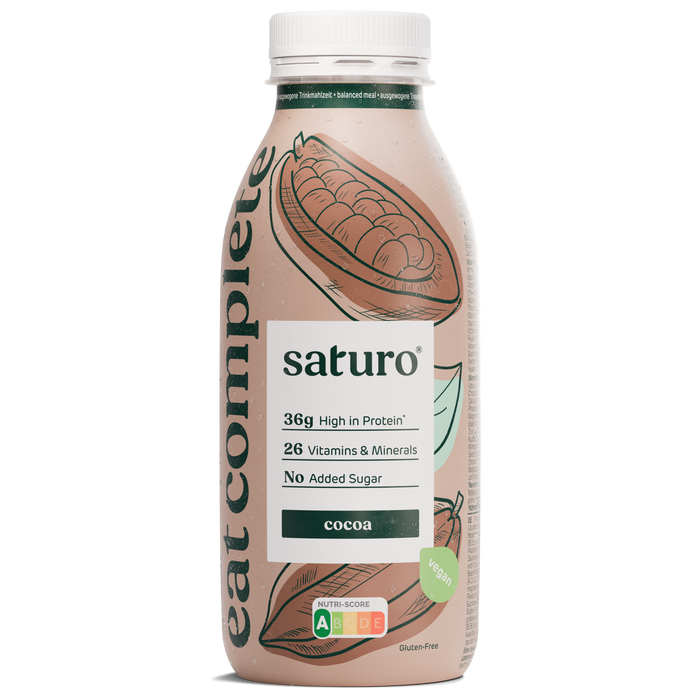
Drink Meals from Saturo are a simple and time-saving alternative to conventional food. They provide you with perfectly balanced nutrients for your training in liquid form. The balanced composition of complex carbohydrates, high-quality protein and healthy fats gives you long-lasting energy without putting a strain on your stomach. The different pack sizes are also practical. This allows you to consume exactly the amount of calories and nutrients you need. They are also quick to prepare and easy to transport on the go. This makes Saturo drinkable meals the ideal solution if you need a pre-workout meal in a hurry.
Frequently asked questions
What to eat 30 minutes before training?
For a quick energy boost before training, you can eat a snack that contains readily available carbohydrates and some protein as well as little fat and fibre. For example, a banana, wholemeal toast with jam, a smoothie or fruit muesli are all good options. This will ensure that your body is quickly supplied with energy without weighing you down.
How long before and after exercise should I not eat?
A good rule of thumb is to eat your last large meal 2-3 hours before exercising. You should only have a small snack immediately before exercising to avoid feeling full and unwell. After training, your body has a time window of around 30 minutes to be optimally supplied with nutrients. Take advantage of this by eating a meal with carbohydrates and protein as soon as possible.
What gives me energy before sport?
Your body primarily obtains energy from carbohydrates. Therefore, provide it with quickly available carbohydrates before exercise, for example from white bread, bananas or dried fruit. An energy bar or sports drink is also a good way of topping up your energy reserves and boosting your performance. However, don't consume too much to avoid digestive problems.