Does swallowing hurt, does food get stuck or does it feel like a lump in your throat? Three different complaints hide behind one word. Find out how to tell which one you have, when to get it checked and how to eat when every swallow is hard.
Gregor Aßlaber, Editor, Saturo
· ✓Fachlich geprüft von Joerg Hauke, Nutrition expert
Aktualisiert 30 September 2026 · 16 Min. Lesezeit · 87 Quellen
Pain when swallowing: usually it's an infection that's gone within a week. Sometimes there's more behind it, and a few signs will tell you.
The key points in 30 seconds
Painful swallowing with an infection: gone after
1week
According to the DEGAM guideline, a sore throat from a cold or tonsillitis lasts about a week; after seven days, 80 to 90% are symptom-free, with or without antibiotics. If you're suffering for longer, get it checked.
Muscle pairs per swallow
25and more
More than 25 pairs of muscles and five cranial nerves work together with every swallow, and the throat phase takes less than a second. That's why nerves, muscles, inflammation and tension can all disrupt swallowing.
Threshold for an ENT check-up
4weeks
According to the guideline, one-sided pain when swallowing, a feeling of a foreign body, hoarseness or an earache that lasts longer than four weeks should be checked at an ENT practice. It's usually harmless, but an examination gives you certainty.
What matters when you eat
Smooth & moist
For painful swallowing, go for cool, soft and mild; for swallowing disorders, the right consistency without crumbs, fibres and mixed textures. Yoghurt, purée, cream soup, smoothie, drinkable meal: anything that slides down without chewing keeps you nourished.
01 Recognise
Pain when swallowing or trouble swallowing? How to tell which one you have
“Swallowing problems” is a catch-all term for three different things: pain when swallowing (odynophagia), usually with a cold or tonsillitis; a swallowing disorder (dysphagia), where food gets stuck or you choke; and the lump in the throat (globus sensation), where eating and drinking work normally. Each has its own causes, warning signs and specialists. So the first question is: does it hurt, does it get stuck, or is it a feeling without a swallowing problem?
At a glance
Three types of swallowing problems
The columns overlap in everyday life, but the main direction decides where you look first.
Pain when swallowing
Food gets stuck
Lump in the throat
Medical term
Odynophagia
Dysphagia (swallowing disorder)
Globus sensation
Typical feeling
Burning, stabbing, soreness with every swallow
Food getting stuck, gagging, coughing when drinking, needing to swallow again
Pressure, tightness, a foreign body in the throat that won't go down
Where
Throat, tonsils, sideways into the ear
Throat (upper) or behind the breastbone (lower)
At voice box level, in the middle
When eating
Worse, especially with dry and sour foods
The problem occurs when eating or drinking
Usually better or gone, worse when swallowing on empty
Most common causes
Cold, throat infection, tonsillitis
Reflux, oesophagus, nerves and muscles, age
Muscle tension, stress, reflux, throat clearing
First port of call
GP surgery, ENT
GP surgery, then gastroenterology, ENT or neurology plus speech therapy
ENT (examination), then speech therapy or psychotherapy
When to get it checked
After 3 to 4 days without improvement, with fever, if one-sided, always after 4 weeks
Always, promptly; immediately if you lose weight or can no longer swallow saliva
If it lasts longer than a few weeks, is one-sided or pain is added
Classification based on the Rome IV criteria for globus sensation (Aziz et al. 2016), the MSD Manual on dysphagia (2026) and the DEGAM guideline on sore throats (2020). The 4-week rule comes from the S3 guideline on laryngeal cancer.
Sore throat when swallowing
By far the most common form: a cold irritates the lining of the throat, tonsillitis swells the tonsils, and both hurt when you swallow because the throat muscles squeeze the inflamed lining. According to the DEGAM guideline, these infections are mostly viral; bacteria are behind 20 to 30% of them, and streptococci in only 5 to 10% of adults. Typical signs: both sides hurt, plus a runny nose, cough, hoarseness and a mild fever. How to tell tonsillitis from a throat infection and when antibiotics help is covered in the tonsillitis article. This article is about everything that doesn't fit that pattern.
Does it hurt, does food get stuck, or is it just a lump in your throat? The answer decides whether you wait it out, see your GP or act straight away.
Sudden swallowing problems: harmless or an emergency?
Almost always harmless if they come with an infection. They're an emergency if breathing or swallowing saliva is affected: then the throat or larynx is so swollen that time matters. The list below sums up the signs that, according to the DEGAM guideline, the anaphylaxis guideline and the RKI, point to an abscess, inflammation of the epiglottis, an allergic swelling, meningitis or a stroke.
Warning signs
Emergency check: does any of these signs apply?
Tap whatever applies. If you haven't ticked anything, that just means it's not an emergency. You have time to take the normal route via your GP surgery (Chapter 4).
Signs based on the DEGAM sore throat guideline (peritonsillar abscess, epiglottitis), the S2k guideline on anaphylaxis 2021, the RKI guide on meningococcal disease and the MSD Manual (food bolus obstruction). Not a substitute for a diagnosis: if in doubt, better to call 112 once too often.
02 Causes
Swallowing difficulties: causes by location, from the tongue to the oesophagus
Swallowing takes food from your mouth through your throat and oesophagus into your stomach, and something can go wrong at every stop: an inflamed lining, a tense larynx, a narrow oesophagus, a nerve that triggers the reflex too late. Where you feel the problem already tells you a lot about the cause.
Swallowing problems on one side
One-sided pain when swallowing usually comes from lateral pharyngitis: the lymph channels along the side wall of your throat become inflamed, the pain spreads into the ear on that side, and it clears up by itself. It gets serious if that side swells up, your mouth barely opens and your voice sounds muffled: according to the DEGAM guideline, that's a peritonsillar abscess, which needs to be seen quickly at an ENT practice or hospital. The guideline takes one-sided symptoms that don't go away seriously because of laryngeal cancer: a feeling of something in your throat, pain when swallowing that spreads to the ear, hoarseness or neck swelling lasting longer than four weeks should be checked by a specialist, especially if you smoke.
Swallowing problems without a sore throat
If nothing is inflamed and something still bothers you, there are four typical explanations. Tension in your larynx and neck muscles after stress, screen work or teeth grinding (Chapter 5). Reflux: stomach acid irritates the lower oesophagus and can rise as far as the throat; whether this “silent reflux” really causes a lump in the throat, throat clearing and hoarseness is not sufficiently proven according to the DGVS guideline 2023, and acid blockers don't reliably help with it. Medicines that dry out your mouth or slow down your swallowing muscles (Chapter 7). And an oesophagus that is narrow or inflamed somewhere; the sign then is food getting stuck, not pain.
It hurts to swallow, but your throat isn't sore
Pain when swallowing without a red throat: then the cause is lower down or elsewhere. Laryngitis mainly makes you hoarse, but also hurts when you swallow. An ear infection hurts with every swallow, because the Eustachian tube opens as you swallow. Subacute thyroiditis (de Quervain) is easily overlooked: pain at the front of the neck that spreads into the jaw and ear, worse when swallowing and turning your head, usually after an infection, typical in women around 40. Pain behind the breastbone when swallowing points to an inflamed oesophagus caused by reflux, fungi or a tablet that dissolved there (Chapter 6).
Oesophagus swallowing problems: when food won't go down
If the bite gets stuck behind your breastbone, the problem is in your oesophagus. The DGVS counts dysphagia and pain when swallowing as alarm symptoms where a gastroscopy should be done straight away, without trying acid blockers first. The four most common diagnoses:
Oesophagus
Four reasons why food gets stuck
All four are told apart with a gastroscopy (with tissue samples) and, if needed, a pressure measurement of the oesophagus.
Reflux oesophagitis
Eosinophilic oesophagitis
Achalasia
Ring, scar, tumour
Typical sign
Heartburn, acid regurgitation, burning behind the breastbone, pain when swallowing
Solid food gets stuck, food bolus emergency, often with allergies or asthma
Solids and liquids get stuck, undigested food comes back up, chest pain, weight loss
First meat and bread, then more and more, steadily getting worse, weight loss
Who
Very common: 15 to 25% of the population in high-income countries
Mostly aged 20 to 40, men more often; 34 in 100,000, rising
Rare: around 1 to 2 in 100,000 per year, any age
Rare, risk rises with age, smoking, alcohol, long-term reflux
What helps
Acid blockers (PPIs), weight loss, avoiding late meals and alcohol; with dysphagia, have an endoscopy first
PPIs, swallowed budesonide or an elimination diet; at least 6 tissue samples for diagnosis
Stretching, muscle incision (POEM) or surgery; tablets don't help long term
Immediately with progressive dysphagia, weight loss, blood or anaemia
Based on the DGVS guideline 2023, the S3 guideline on oesophageal carcinoma, Lee 2024 and the MSD Manual. Alarm symptoms according to the DGVS: dysphagia, pain when swallowing, bleeding or anaemia, loss of appetite or weight, repeated vomiting, cancer in the family. An alarm symptom doesn't mean cancer: 1 in 1,000 people affected had a tumour (Rasmussen 2018), but getting it checked is a must.
Swallowing difficulties and the thyroid
An enlarged thyroid (goitre) is common. In the SHIP study, 36% of adults had one, and most of them felt nothing. Because the oesophagus lies behind the windpipe, a goitre only affects swallowing late, usually when it grows behind the breastbone. A lump-in-the-throat feeling is rarely down to the thyroid, and an ultrasound clears it up in minutes. A painful inflamed thyroid (de Quervain's, see above) causes pain instead of pressure, often with a fever and a racing heart, and heals by itself within weeks to months.
Neurological causes disrupt the reflex that the brain controls. According to the DGN guideline, at least one in two people have a swallowing disorder at first after a stroke, four in five people with Parkinson's, and up to three quarters of people with advanced dementia. Silent aspiration, where you don't cough, is the dangerous one. You'll find out how to spot it in chapter 7.
03 Understand
How a swallow works: one second that everything hangs on
Three stages that explain why swallowing is so easy to disrupt, why you can't breathe while you swallow and why the consistency of food decides how safe it is.
1
In the mouth: the bite is built
Teeth, jaw and tongue break down the food, saliva makes it slippery, and the tongue shapes it into a bolus and pushes it to the back. This is the only part you control consciously. According to the DGN guideline, more than 25 pairs of muscles and five cranial nerves are involved in the whole process; on average, a person swallows around 600 times a day, most of those times just saliva.
2
In the throat: breathing stops, the epiglottis folds
As soon as the bite touches the base of the tongue, the reflex takes over: the soft palate seals off the nose, the larynx rises, the epiglottis folds over the windpipe, the vocal cords close and breathing pauses. The upper oesophageal sphincter opens and the bite slides through. According to Matsuo and Palmer, the whole thing takes less than a second, and any delay in that second is a chance for something to go down the wrong way.
3
In the oesophagus: the wave downwards
The muscular tube of the oesophagus pushes the bite into the stomach with a wave of contractions, regardless of gravity. The lower sphincter opens and closes again so that no acid flows back. If the wall is inflamed or scarred, or the wave is disrupted, the bite gets stuck here; you feel it as pressure behind the breastbone.
04 Treatment
Pain when swallowing: what to do, how long it lasts, when to see a doctor
Nothing cures the painful swallowing that comes with an infection. It goes away by itself. According to the DEGAM guideline, the sore throat has gone in 30 to 40% of people after three days, and 80 to 90% are symptom-free after a week. According to Cochrane and IQWiG, antibiotics shorten it by only half a day to a day. What you can do: ease the pain, drink, eat what goes down easily, and know when waiting it out would be the wrong call.
Ibuprofen or paracetamol for a sore throat
The DEGAM guideline recommends ibuprofen or naproxen for short-term use: they ease a sore throat within 24 hours and over two to five days. The evidence for paracetamol isn't quite enough, but it remains the choice for stomach problems, in pregnancy and for babies. The rule for both: follow the patient information leaflet, take them regularly rather than only when the pain is unbearable, and stop as soon as you can. From 65, or if you're at risk of stomach problems, take stomach protection with ibuprofen. Cortisone works quickly according to Cochrane 2020, but the guideline advises against it anyway. According to DEGAM, you shouldn't take lozenges with antiseptics or antibiotics, as they damage the mucous membrane.
Home remedies for swallowing difficulties: what's proven
The lists of home remedies are long, but the evidence is short. Hot drinks ease a sore throat, cough and chills (Sanu and Eccles 2008), while lukewarm ones only help a runny nose. Honey demonstrably reduces coughing in children (Cochrane 2018), but there's no study on sore throats. It's a no-go for babies under twelve months. Sucking on anything stimulates saliva and, according to DEGAM, eases pain about as well as a medicated lozenge. Gargling with water helps prevent colds (Satomura 2005) but doesn't ease existing pain, and neither does salt water. Neck wraps, onion juice, sage: no studies, no harm. Proven to be harmful: smoking.
Which doctor to see for swallowing difficulties
Your first port of call is always your GP surgery. From there, three routes lead on. ENT for anything you feel in your throat (pain on one side or that won't go away, hoarseness, a lump, a foreign-body feeling). According to the laryngeal cancer guideline, a laryngoscopy is a must after four weeks. Gastroenterology for anything behind the breastbone (food getting stuck, heartburn, pain when swallowing food). According to DGVS, a gastroscopy with tissue samples is standard for dysphagia. Neurology plus speech and language therapy if you choke, cough when drinking, or your voice sounds wet after swallowing. Speech and language therapists are the swallowing therapists. With a referral and an urgency code, 116117 can arrange an appointment within four weeks.
Children and pregnancy
No aspirin for children and teenagers without a doctor's instructions (Reye's syndrome). Ibuprofen syrup only from around 6 months and 7 kilograms, with the dose based on weight. In pregnancy, paracetamol is the first choice. According to Embryotox, ibuprofen is only an option up to week 28 and after talking to your doctor.
05 Neck & mind
Neck pain when swallowing, lump in the throat, psychological swallowing difficulties
This chapter is about the complaints where the examination finds nothing and which are still miserable: neck pain with every swallow, a lump that stays for weeks, the feeling that you can't swallow as soon as things get stressful. The common root is the muscles around the larynx, hyoid bone and neck, which don't let go when they're tense.
Neck pain when swallowing
First, the infection: with a throat or tonsil infection, the lymph nodes at the angle of the jaw swell, and they hurt with every swallow, right up into the neck. Second, tension: the muscles that lift the larynx when you swallow attach to the hyoid bone, shoulder blade and breastbone. If your neck is stiff after a day at a screen, every swallow pulls on them. According to the RKI, 46% of adults get neck pain in a year. Third, and rarely, the cervical spine: bony growths on the front of the neck vertebrae (DISH) can narrow the oesophagus. This is typical in men over 65 and visible on an X-ray.
Your larynx is attached to your neck and shoulders: loosen both and you take the strain off swallowing too.
Neck pain with swallowing difficulties: what to do
First, the question that decides which way to go: fever plus a stiff neck? If you can't get your chin onto your chest, and you also have a fever, a severe headache, vomiting or small red spots on your skin, that's the picture of meningitis according to the RKI: call 112 straight away. Without a fever, after a day at a screen, a draught or stress: heat, movement instead of rest, the exercises below, and a painkiller for a day or two. If it doesn't get better after two weeks, or you get numbness, weakness in your arm or trouble swallowing food: see your GP.
Exercises
Four ways to loosen up your neck, larynx and breathing
For tension and a lump in the throat when your examination came back normal. Keep it gentle and use no force: one to two minutes per exercise, two to three times a day. If you've been diagnosed with a swallowing disorder, your speech and language therapist makes the plan, not this card.
1
Chin to chest, ear to shoulderNeck · 2 minutes
3 times a day
30 seconds per side
Sit upright, let your shoulders drop, look straight ahead.
Slowly pull your chin towards your chest until you feel a stretch at the back of your neck. Hold for 30 seconds and breathe calmly.
Return to the centre, then tilt your right ear towards your right shoulder, while your left hand gently pulls down. 30 seconds, then the other side.
Stop if you feel dizzy, numb or get pain spreading into your arm. Never throw your head back: it squeezes the larynx and makes the lump feeling worse.
2
Shoulder rolls and breastbone openerShoulders · 1 minute
3 times a day
10 circles backwards
Pull your shoulders up, roll them back, let them drop: ten times, slowly.
Clasp your hands behind your back, lift your breastbone, squeeze your shoulder blades together and hold for 20 seconds.
Finally, let your head nod gently forward, as if you were saying “yes”, five times.
If you sit at a screen all day, do this exercise once every hour. The front neck muscles that hold the larynx only relax when your chest and shoulders aren't pulling forward.
3
Yawning and sighingLarynx · 1 minute
as needed
5 repetitions
Open your mouth wide and yawn on purpose, even if it's fake; your larynx drops and your throat widens.
From the yawn, with your mouth still open, sigh a soft, long "haaa" downwards, as if relieved.
Then gently move your larynx from side to side with two fingers on the outside, with no pressure, for ten seconds.
The yawn-sigh comes from voice therapy, which Kang et al. used in their studies to treat patients with muscle tension dysphagia. It doesn't replace therapy, but it takes the tension out of your larynx for the moment.
4
Belly breathing, four to sixStress · 2 minutes
for a lump in the throat
10 breaths
Put one hand on your belly. Breathe in through your nose for four seconds so that your hand rises, not your shoulders.
Breathe out through slightly parted lips for six seconds, longer than the in-breath.
Ten breaths. Deliberately don't swallow or clear your throat; have a sip of water if you really need to.
Clearing your throat and dry swallowing irritate the larynx and make the lump feel worse. This is the cycle the exercise breaks. If you often have panic attacks with a feeling of tightness, mention it at your doctor's surgery.
Exercises from physiotherapy and speech and language therapy practice for tension and globus. Controlled studies only exist for voice therapy in muscle tension dysphagia (Kang 2016, 2021) and speech and language therapy for globus (Khalil 2003). Strengthening exercises such as the Shaker exercise are for diagnosed neurogenic dysphagia and should be guided by a professional.
Lump in the throat: the globus sensation
A feeling of something stuck in your throat that doesn't hurt, is there between meals and doesn't bother you while eating: this is how the Rome IV criteria define the globus sensation when an examination shows nothing abnormal. The best evidence points to constant tension in the laryngeal muscles: Kang et al. found it in 97% of affected people with a normal swallowing examination, and voice therapy for it resolved the symptoms. Reflux often gets the blame, but an acid blocker did no better than placebo (Dumper 2008), whereas psychoeducation clearly helped (Poovipirom 2023). What helps: don't clear your throat, take small sips of water instead of dry swallowing, loosen up your neck and larynx, and if the lump persists, try speech and language therapy or behavioural therapy.
Psychological swallowing difficulties: how they show up
Psychological doesn't mean imagined. It means your nervous system keeps the muscles of the swallowing pathway under constant tension, without any organ being diseased. Typical signs: the lump or the feeling that you can't swallow is there when you swallow dry and gone when you eat, and your examinations come back normal. A more severe form is fear of swallowing (phagophobia): the fear of choking or suffocating, with avoidance of solid food and weight loss. It's very treatable with gradual exposure. If you hear "psychological" straight away without having been examined, get a second opinion.
Swallowing difficulties and stress
Stress raises muscle tone in your larynx, throat and base of the tongue too, and makes you breathe more shallowly. Both make swallowing harder work and the lump more noticeable, without anything actually narrowing. A panic attack can start with tightness in the throat. The difference from an emergency: you can still speak and swallow, nothing swells, and it passes within minutes. In that case the breathing exercise above helps. If the stress lasts for weeks, the answer isn't your throat but whatever is tensing it.
06 Nutrition
What to eat with swallowing difficulties: cool and soft, or the right consistency
Two situations, two rules. With pain when swallowing, the swallowing mechanism itself works and only the mucous membrane is inflamed: keep food cool or lukewarm, soft, mild and free of sharp edges. With a swallowing disorder, texture decides whether a bite goes into the stomach or the windpipe: the right level, no mixed textures, no crumbs. The shared risk: if you live on tea for days, you get weak, and if you eat pureed food for weeks, you lose weight.
Puréed doesn't mean empty: porridge with nut butter, lentil purée with salmon and cottage cheese and avocado cream together provide over 1,400 kilocalories and 70 grams of protein, without a single bite to chew.
For pain when swallowing, the DGE guideline on diet forms recommends avoiding hard pieces, acidity and hot spices. Spiciness (capsaicin) and heat activate the same pain fibres (Caterina 1997), carbonation irritates via a second pain receptor (Wang 2010), and acid burns on raw mucous membrane. What's gentle: yoghurt, quark, smoothies, cream soup, mash, semolina pudding, scrambled eggs, ice cream without chunks, lukewarm tea with honey. Milk doesn't make mucus (Pinnock 1990), so dairy is the easiest protein source here. Drinking comes before eating: around 1.5 litres a day, more if you have a fever.
For a swallowing disorder, speech therapists and hospital kitchens describe textures using the IDDSI framework: eight levels from 0 (thin) to 7 (regular food), each with a test you can do at home with a fork, a spoon and a 10 ml syringe. Your speech therapist decides which level you need; the staircase helps you understand their instructions and check your food.
Texture
The texture staircase: IDDSI levels 0 to 7
Level, description, examples and the test at home. Drinks run from 0 to 4, foods from 3 to 7; levels 3 and 4 exist as both.
Drinks: levels 0 to 4Foods: levels 3 to 7
0Getränk
Thin
Flows like water, fast. Needs safe swallowing of all liquids; with neurogenic dysphagia, this is the level where it's easiest to swallow the wrong way.
Water
Tea, coffee
Juice
Milk
Drinkable meal
Test zuhause 10 ml syringe: after 10 seconds, less than 1 ml is left.
1Getränk
Slightly thick
Thicker than water, still flows through a straw. Used when thin liquids flow too fast to be swallowed safely.
Thickened tea
Buttermilk
Drinking yoghurt
Test zuhause Syringe: 1 to 4 ml are left after 10 seconds.
2Getränk
Moderately thick
Runs off the spoon, drinking through a straw takes effort. For slightly reduced tongue control: gives the swallow reflex more time.
Kefir, thin drinking yoghurt
Thin smoothie
Thickened juice
Test zuhause Syringe: 4 to 8 ml are left.
3Beides
Very thick / Liquidised
Can be drunk from a cup, can't be eaten with a fork, smooth with no lumps. According to IDDSI, also suitable for pain when swallowing.
Thick smoothie
Fruit sauce, nectar
Smooth cream soup
Runny porridge
Test zuhause Syringe: more than 8 ml are left. Drips slowly through the fork prongs and runs off a tilted spoon.
4Beides
Extremely thick / Pureed
Can be eaten with a spoon, can't be drunk, needs no chewing, no lumps, not sticky, liquid doesn't separate off. For pain when chewing or swallowing, and for dental problems.
Mashed potato
Semolina pudding, custard
Smooth apple sauce
Finely pureed meat
Test zuhause Falls off a tilted spoon in one piece and keeps its shape on the plate. If it sticks to the spoon, it's too thick.
5Speise
Minced & moist
Soft and moist, pieces no more than 4 mm wide and 1.5 cm long, can be squashed with the tongue, minimal chewing. For pain or tiredness when chewing.
Finely minced meat in sauce
Mashed fish
Mashed soft vegetables
Thick muesli with no free milk
Test zuhause Fork pressure test: can be squashed without your thumbnail turning white. Gap between two fork prongs = 4 mm.
6Speise
Soft & bite-sized
Needs chewing, pieces no larger than 1.5 cm, soft enough for a fork to squash them. No dry bread, no fibres, no seeds.
Tender meat in sauce
Fish without bones
Steamed vegetables
Soft fruit without skin
Test zuhause Press a 1.5 cm cube with the fork until your thumbnail turns white: it gets squashed and doesn't spring back.
7Speise
Easy to chew / Regular food
Normal foods with a soft texture and no hard, tough, fibrous, crispy or crumbly parts (EC7), or with no restrictions (regular food). Mixed textures only if thin liquids are safe for you.
Soft pasta
Rice in sauce
Cake without nuts
Anything, with regular food
Test zuhause Fork pressure test as for level 6; not needed for regular food.
Levels, descriptions and tests follow the German IDDSI framework 2.2 (April 2026) and the IDDSI testing methods 2.0; the syringe must be a 10 ml syringe with a 61.5 mm scale. Like any unthickened drink, the drinkable meal is thin and can be thickened if needed; its IDDSI level hasn't been tested.
Four rules for every level, from DGE practical guidance: No mixed textures (soup with bits in it, muesli with milk, yoghurt with fruit pieces), because the liquid runs ahead and the solid stays behind. Nothing crumbly, sticky or fibrous: rusks, biscuits, nuts, asparagus and pineapple are on the IDDSI choking list. Sit upright, head slightly forward, small bites, and stay seated for 20 minutes after eating. Puree each component separately, because we eat with our eyes too. According to the DGE, sippy cups with spouts are unsuitable.
Look it up
Will it go down? The food traffic light for swallowing difficulties
Type in a food or filter by group. Green goes down fine with painful swallowing and from IDDSI level 4, amber needs adjustments (puree, add sauce, check the level), and red is off the menu until swallowing is back to normal. With a swallowing disorder, your speech therapist's level always applies.
Yoghurt plain yoghurt, Greek yoghurt, soya yoghurtLevel 4Smooth, cool, 3.5 to 9 g protein per 100 g. No fruit pieces, muesli or nuts.
Quark, skyr, cottage cheeseLevel 4Blend cottage cheese smooth first, the curds are a mixed consistency. 10 to 11 g protein per 100 g.
Porridge, oatmealLevel 4Cooked soft and blended smooth; overcooked flakes turn sticky, so keep it thin enough and do the spoon tilt test.
Semolina pudding, rice puddingLevel 4Semolina pudding smooth; rice pudding only finely puréed, otherwise level 5 (grains in liquid).
Scrambled eggs, soft eggLevel 4 to 5Very soft and moist, with a little cream or butter; no hard-boiled egg (crumbly).
Smoothie banana, mango, berries with yoghurtLevel 3 to 4No seeds, blended thick. If swallowing hurts, skip citrus, pineapple and kiwi. Add nut butter and it becomes a meal.
Bread, rolls, toastFrom level 7Dry, crumbly, sticks to the palate; it's on the IDDSI choking list. If swallowing hurts, remove the crust and soak it in soup.
Muesli, cornflakes with milkFrom level 7Classic mixed consistency: the milk runs ahead, the flakes stay behind. Alternative: smooth porridge.
Peanut butter, almond butterLevel 4Sticky on its own, but ideal stirred into porridge or a smoothie: 600 kcal per 100 g, 22 g protein. Never by the spoonful on its own.
BananaLevel 4 to 5Ripe, mashed or blended; soft and mild, also good for a sore throat.
Apple sauce, pear puréeLevel 4Smooth and without pieces; raw fruit with skin is out (crunchy, skin).
AvocadoLevel 4Mashed or blended, 160 kcal per 100 g: the best booster that doesn't feel fatty.
Mango, melon, peachLevel 4 to 6Ripe and peeled, puréed or in soft pieces; watermelon drips (mixed consistency) and is tricky with a swallowing disorder.
BerriesLevel 4Only blended and pushed through a sieve; seeds are tripping hazards. Mild for a sore throat.
Orange, mandarin, grapefruit, kiwi, pineappleLaterAcid burns when swallowing hurts; membranes, fibres and escaping juice are a mixed consistency with a swallowing disorder.
Grapes, cherries, nuts, popcornLaterRound, smooth, hard or with a stone: the most common choking triggers according to IDDSI. Nuts only as butter.
Pudding, vanilla ice creamLevel 4Smooth pudding, ice cream without bits, wafer or brittle; cold briefly numbs a sore throat.
Ice lolly, sorbet, ice cubesCheck firstGood for a sore throat; with a swallowing disorder it's transitional food: it turns thin in the mouth, so only if level 0 is safe.
Mashed potatoesLevel 4Smooth with milk and butter; don't mix it too sticky. With cream and oil, 166 becomes more than 350 kcal per portion.
Sweet potato, pumpkin, carrot puréeLevel 4Cooked soft, blended, boosted with oil or cream; mild, also good for a sore throat.
Cream soup potato, pumpkin, leek, carrotLevel 3 to 4Finely puréed, through a sieve; no garnish, croutons or grains. Lukewarm for a sore throat, never boiling hot.
Broth, clear soupLevel 0Thin like water: with a swallowing disorder only if level 0 is safe. Gives you almost nothing: 6 kcal per 100 ml.
Stew, soup with bitsFrom level 7Mixed consistency. Fully puréed and thickened, it becomes level 4.
Lentils, chickpeas, hummusLevel 4Cooked soft and blended, 9 g protein per 100 g; hummus smooth with no bits. Season mildly for a sore throat.
Salmon, steamed fishLevel 5Tender, without skin or bones, mashed with a fork in plenty of sauce; 22 g protein per 100 g. For level 4, blend smooth with broth.
Chicken, beef, porkLevel 5Only well cooked, finely chopped or puréed in sauce; dry or in pieces it gets stuck (IDDSI: fibrous meat).
Sausage, frankfurters, steakFrom level 7Tough, fibrous, with skin; frankfurters are round and smooth, the classic choking shape.
Pasta, spätzleLevel 6Cooked soft, cut short, in plenty of sauce; no long spaghetti (complex consistency).
RiceLevel 5 to 6Only bound (risotto, rice pudding), never as loose grains; sticky rice is on the choking list.
Soft vegetables courgette, carrot, pumpkin, broccoli floretsLevel 5 to 6Steamed, without skin and stalk, mashable; not raw.
Salad, cucumber, raw vegFrom level 7Leaf salad is “floppy” and lies over the larynx, raw veg is hard; both are on the IDDSI list.
Asparagus, rhubarb, celery, green beansLaterStringy and fibrous; the strings remain even when puréed.
Tofu silken, soya quarkLevel 4Blended silken tofu: 7 g protein per 100 g, mild, can be served cool.
Cheese cream cheese, processed cheeseLevel 4Spreadable, stirred into purée or soup; hard cheese and chunks of cheese are out (tough).
Water, tea, coffeeLevel 0Thin: the level where it's easiest to choke. Lukewarm instead of hot for a sore throat, coffee mild.
Milk, cocoa, oat or soya drinkLevel 0Thin, but packed with nutrients; no extra mucus, that's been disproved. If thickening is prescribed, thicken it like any other drink.
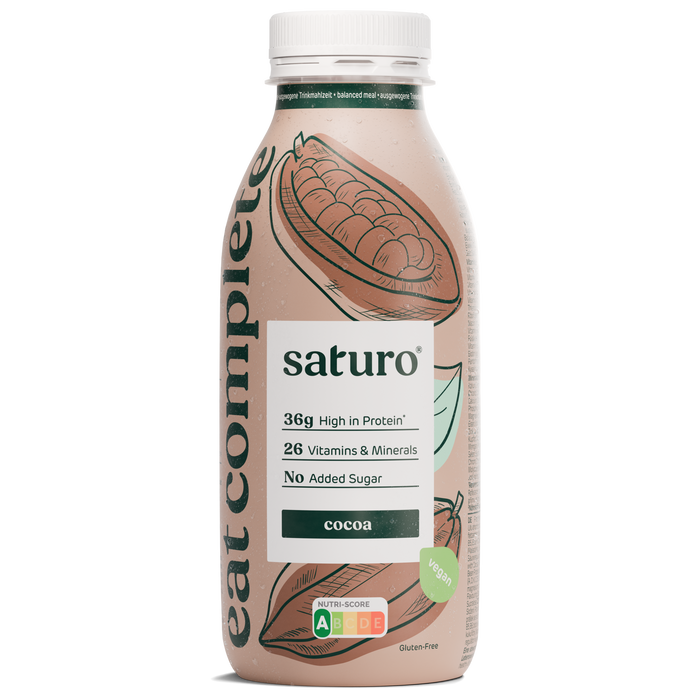
Drinkable meal SaturoLevel 0Thin, smooth, no bits, cold or lukewarm; 400 kcal and 36 g protein per bottle. If thickening is prescribed, thicken it like milk.
Drinking yoghurt, kefir, buttermilkLevel 1 to 2Naturally slightly thick; without fruit pieces.
Fruit juice, nectarLevel 0 to 3Acid burns when swallowing hurts; with a swallowing disorder, nectar is thicker than juice. No citrus.
Fizzy drinks, lemonade, colaCheck firstIrritates a sore throat. In neurogenic dysphagia, carbonation improved the swallowing reflex in small studies, but only after a speech therapy assessment.
AlcoholLaterDries you out, numbs the throat and worsens coordination with a swallowing disorder.
Very hot soup, boiling teaLaterHeat activates the same pain fibres as chilli; with a swallowing disorder, food that's too hot doesn't get chewed well.
Chilli, pepper, mustard, curryLaterCapsaicin irritates the pain fibres of inflamed mucous membranes; with a swallowing disorder it's just a question of taste.
Crisps, crackers, crispbread, biscuitsFrom level 7Hard, sharp-edged, crumbly: they scratch a sore throat and are on the choking list for swallowing disorders.
HoneyLevel 4In tea or porridge; backed by evidence for coughs, plausible for a sore throat. Not for children under 12 months.
Jelly dessert, wobbly jellyCheck firstTurns liquid in the mouth (transitional food); with a swallowing disorder only if level 0 is safe.
Cream, butter, oilAny levelThe booster: 30 g cream and 10 g oil turn 200 g pumpkin soup into 258 instead of 68 kcal. Fat doesn't separate once it's stirred in.
Protein powder, maltodextrinAny levelSuitable for boosting according to DGE and ESPEN when food alone isn't enough; stir into porridge, purée or soup.
TabletsCheck firstA whole tablet in a spoonful of smooth apple sauce is a common swallowing aid, but only if your pharmacy approves; never split or crush slow-release and gastro-resistant tablets.
Not found. Rule of thumb: if you can squash it with a fork without liquid leaking out, it's usually level 5 or 6; if it falls off the spoon smooth, it's level 4. If in doubt, ask your speech therapist.
Classification based on the IDDSI framework 2.2, the DGE practical guide on chewing and swallowing disorders (2025), the DGE guide to diet forms and patient information from Uniklinik Ulm, Brüderkrankenhaus Trier and Marienhospital Stuttgart; nutritional values from USDA. These are practical rules, not a clinical guideline; if you have a diagnosed swallowing disorder, follow your speech therapist's instructions.
Breakfast with swallowing difficulties
Breakfast is the meal that gets skipped most often, because neither bread nor muesli works. The fix is a smooth porridge or a thick smoothie with fat and protein. Porridge cooked in milk and blended smooth with a banana and a spoonful of peanut butter gives you around 550 kilocalories and 20 grams of protein, as much as two bread rolls with cheese. If you can't get anything down in the morning, drink a drinkable meal cold and have the porridge as a second breakfast.
Your needs stay the same: according to ESPEN, around 30 kilocalories and at least 1 gram of protein per kilogram of body weight, or 1.2 to 1.5 grams when you're ill. For 70 kilograms, that's 2,100 kilocalories and 70 to 100 grams of protein. That's why DGE, ESPEN and DGEM recommend fortifying food (oil, cream, nut butter, avocado, protein powder), snacks between meals and, if that isn't enough, oral nutritional supplements.
Drinking with swallowing difficulties
With a painful throat, drinking is the most important part. With a swallowing disorder, it's the riskiest, because thin liquids run into the windpipe fastest. That's why many people are told to thicken their drinks. Thickened drinks reduce how much enters the windpipe in a swallowing examination (Steele 2015), but they leave more residue behind, and there's no evidence that they prevent pneumonia (Robbins 2008). The second problem is proven: people who thicken their drinks drink too little, on average 455 to 780 millilitres a day (Whelan 2001, Murray 2014). So: only thicken on the advice of your speech and language therapist, use xanthan rather than starch (Vilardell 2016), and keep track of how much you drink.
With swallowing difficulties, I see two mistakes that mirror each other: if you have a sore throat, you live on tea and broth for three days; if you have a swallowing disorder, you eat the same thing for weeks because it feels safe, and you lose weight. Neither has to happen. A smooth purée with nut butter, a cream soup, a yoghurt, a cold drinkable meal: they go down just as easily, but they keep you on your feet.
Joerg Hauke, Nutrition expert, expert review of this article
Swallowing tablets with swallowing difficulties
37% of GP patients find tablets hard to swallow (Schiele 2013). Two techniques are proven to help: the bottle method for tablets (put the tablet on your tongue, close your lips tightly around a soft water bottle and swallow with a strong sucking pull) helped 60%, and the lean-forward method for capsules (put the capsule on your tongue, take a sip of water, chin to chest, swallow) helped 89% (Schiele 2014). Also: take them with plenty of water and sitting upright, never lying down, otherwise the tablet can burn your oesophagus (typical culprits: doxycycline, bisphosphonates, potassium). Never split or crush them without asking your pharmacy (ABDA).
From the Saturo range
Drinkable meal: a complete meal that goes down without chewing
36 g protein and 400 kcal per bottle, plus 26 vitamins and minerals, vegan. Protein contributes to the maintenance of muscle mass. Reference intake for protein: 50 g per day (NRV). Smooth, no chunks, not fizzy, cold or lukewarm; Vanilla and Natural are the mildest flavours. Thin like milk: if you need thickened drinks, thicken it as your speech and language therapist advises.
36 gProtein
400kcal
26Vitamins & minerals
SmoothNo chunksThin, no chewing, cold or lukewarm
Choose flavour
$5.17per meal
Choose flavour
Drinkable meal · Cocoa$5.17 per meal ·
07 Special cases
Swallowing difficulties in older age, after a stroke and in children
Swallowing changes in older age even without illness: weaker muscles, less saliva, a reflex that kicks in later. Doctors call this presbyphagia, and as long as the body compensates, it isn't a disease. Add a stroke, Parkinson's, dementia or medication, and it tips over. According to AkdÄ, around 14% of older people living independently are affected, and in care homes more than one in three. The list shows what family members can look out for.
Look out for
Swallowing disorder in older age: signs you notice at mealtimes
Tap what you notice. The signs come from the DGE practical guide on chewing and swallowing disorders and the leaflet from the German Federal Association for Speech and Language Therapy. They don't replace an examination, but they're a good reason to arrange one.
Signs based on DGE practical guide “Eating and drinking with chewing and swallowing disorders in older age” (3rd edition 2025), dbl dysphagia leaflet (2021) and DGN guideline on neurogenic dysphagia (2020). Not a substitute for a diagnosis.
Swallowing disorder after a stroke
At least one in two stroke patients has a swallowing disorder at first, which the DGN guideline calls the most dangerous consequence because of the risk of pneumonia. That's why the rule on stroke units is: no eating or drinking until the swallowing screening is done. If anything looks off, a swallowing endoscopy follows and, for the time being, a feeding tube. The speech and language therapist sets IDDSI levels, often level 4 and thickened drinks, practises positions such as the chin tuck, and from week two builds up the muscles that lift the larynx (Shaker exercise). After strokes in the cerebral hemispheres, the disorder usually improves within weeks. If you stay at level 4 or 5, you eat fortified food.
Outside the hospital, the assessment of dysphagia works the same way: screening, then FEES (an endoscope through the nose while you swallow water, purée and a biscuit) or the X-ray swallowing study as the gold standard. Speech and language therapists provide the treatment with compensation (positions, consistencies, techniques) and strengthening. “Can dysphagia be cured?” has no blanket answer: after a stroke, often yes; with progressive illnesses, the goal is eating safely for as long as possible.
Medications that cause swallowing difficulties
According to the DGN guideline, neuroleptics come first: they slow the swallowing muscles or make them overactive, and the higher the dose, the higher the risk of pneumonia. Benzodiazepines and sleeping pills dampen the reflex, and strong opiates make swallowing acutely worse. Anticholinergics (many bladder, allergy and Parkinson's medicines, some antidepressants) dry out the mouth, and without saliva nothing slides down. One in three people over 60 has a dry mouth. Some tablets damage the oesophagus if they get stuck there (chapter 6). That's why speech and language therapists ask for the medication list first.
Upright, chin slightly lowered, taking your time: with any swallowing disorder, posture is the first step and consistency the second.
In children, a sore throat when swallowing is usually an infection. According to DEGAM, the rapid strep test makes sense between the ages of 3 and 15 when fever, coating on the tonsils and swollen lymph nodes come together without a cough. Children should see a doctor sooner than adults: if they refuse to drink, go twelve hours without passing urine, struggle to breathe, drool, or sit leaning forward, as with epiglottitis. Genuine swallowing disorders in children are treated by specialist speech and language therapists and children's hospitals.
08 Look it up
Frequently asked questions about swallowing difficulties
Which illness starts with swallowing difficulties?
Usually a cold, or an inflamed throat or tonsils: pain when swallowing that goes away within a week. Persistent swallowing problems can be the first sign of reflux, eosinophilic oesophagitis, achalasia, a neurological condition or, rarely, a tumour. So: always get food getting stuck checked out, and see an ENT clinic for one-sided symptoms lasting more than four weeks.
Can swallowing difficulties also be harmless?
Yes, most of the time. Painful swallowing during an infection heals by itself, and in long-term studies the lump-in-the-throat feeling without any swallowing problem has never turned into a tumour. Harmless doesn't mean unchecked, though: symptoms that last longer than four weeks, affect only one side, come with weight loss, or involve food getting stuck should be investigated.
Why won't my swallowing difficulties go away?
There are three common reasons: untreated reflux that irritates the oesophagus; muscle tension in the larynx that keeps being fuelled by throat clearing and dry swallowing; and eosinophilic oesophagitis, which can go unnoticed for years. If all you've heard after four weeks is "drink some tea", ask for a laryngoscopy or a gastroscopy.
Is pantoprazole suitable for dysphagia?
Only if reflux is the cause, and with a swallowing disorder, only a gastroscopy can confirm that: the DGVS counts dysphagia among the alarm symptoms where you get examined rather than just trying something out. In eosinophilic oesophagitis, acid blockers are one form of treatment; for achalasia, a narrowing or muscle tension, they don't help.
Do people with COPD have swallowing difficulties?
More common than you might think: in one meta-analysis, around one in three COPD patients (33%) had a swallowing disorder, because breathing and swallowing compete for the same split second, and shortness of breath, reflux and a dry mouth add to the problem. Coughing when you drink or frequent infections are a good reason to bring in a speech and language therapist.
What do speech and language therapists do for swallowing disorders?
They assess your swallowing (screening, often an endoscopy together with doctors), determine the safe consistency according to IDDSI, and train you: postures such as the chin tuck, techniques such as the effortful swallow, and exercises for the tongue, throat and the muscles that lift the larynx. They also train family members and regularly check whether your diet can be stepped up.
Which sleeping position is best for neck pain and swallowing difficulties?
Lie on your back, or on your side with a pillow that keeps your head in line with your spine: it shouldn't push your head up at an angle or let it drop backwards. Sleeping on your stomach twists your neck for hours. If you have reflux, raising the head end of the bed helps, not a thicker pillow that squashes your larynx.
How can you tell if the oesophagus is narrowed?
Solid food gets stuck, first meat and bread, then more and more, with pressure behind the breastbone; people affected eat more slowly and drink more. According to MSD, food getting stuck only with solids points to a mechanical narrowing. If it gets worse or you lose weight, a gastroscopy with tissue samples is due.