
Heartburn: what helps right away, home remedies and diet
Burning behind the breastbone, acid regurgitation, worse at night? Almost everyone knows heartburn, and usually there's no drama behind it. Here's what helps in the next few minutes, which home remedies are backed by evidence, what you can eat and when to see a doctor.


Aktualisiert 30 September 2026 · 16 Min. Lesezeit · 96 Quellen

The key points in 30 seconds
That's how many people get heartburn or acid regurgitation again and again, according to the German Federal Ministry of Health. 18% of adults in Germany report moderate to severe reflux symptoms. Occasionally it's harmless; once it happens weekly, it's called reflux disease.
That's how much higher the risk of reflux disease was in a case-control study when less than three hours lay between dinner and going to bed. The evening clock in chapter 5 works out the timings for your evening.
In a measurement study, antacids raised stomach pH after two minutes and a glass of water after one minute, but only for three minutes. An acid blocker like omeprazole takes hours to days. What makes sense when is in chapters 4 and 6.
People who lay on their left side at night had less reflux in 44% of cases in a randomised study, versus 24% in the control group. Raising the head end of the bed by 20 centimetres cut long reflux episodes from 3.3 to 1.0 per night.
Recognising heartburn: symptoms, warning signs and how to tell it from a heart problem
Heartburn is a burning pain behind the breastbone: acidic stomach juice flows back into the oesophagus, whose lining has no protective layer. The culprit is almost never “too much acid”, but a valve that doesn't close properly: the lower oesophageal sphincter. This chapter shows you how to recognise heartburn, when it could be something else and which signs you should never sit out.
Heartburn symptoms: what it feels like
The 2023 DGVS guideline names three core symptoms: a burning behind the breastbone that can travel from the upper abdomen up to the throat, acid regurgitation and the feeling that stomach contents are coming back up, often with a sour taste in the mouth. Usually it happens after eating, when bending over, when lying down and at night. Throat clearing, hoarseness, cough, a lump in the throat and damaged tooth enamel can go with it, but don't have to: the guideline only calls them “associated”, and acid blockers often don't help with them. In a 2022 meta-analysis, one in two people with reflux disease had dental erosion, compared with one in five without.

Heartburn or heart: what you need to tell apart
A burning behind the breastbone can also come from the heart, and the German Heart Foundation explicitly warns against mixing the two up. The rule: pain that is stronger than anything you know, lasts longer than five minutes, or comes with shortness of breath, cold sweat and spreads to the arm, back or jaw is a case for 112, not for a glass of water.
Heartburn or heart?
Both burn behind the breastbone. These features tell them apart. If in doubt, the right-hand column always wins.
| More likely heartburn | More likely heart: call 112 now | |
|---|---|---|
| When | After eating, lying down, bending over, at night | Suddenly, even at rest or under exertion, longer than five minutes |
| What it feels like | Burning, rising, sour in the mouth | Pressure, tightness, “elephant on the chest”, feeling of impending doom |
| Where it spreads | From the upper abdomen behind the breastbone up to the throat | To the left arm, back, neck, jaw, shoulder blades, upper abdomen |
| What else comes with it | Belching, feeling of fullness, cough or throat clearing | Shortness of breath, cold sweat, nausea, pale skin, fear |
| What helps | Standing upright, water, antacid: relief within minutes | None of these, or it comes back in waves |
| Especially in women | Same | Often just tightness, nausea, upper abdominal or back pain, no classic chest pain scenario |
Warning signs according to the German Heart Foundation (World Heart Day 2024) and the DGK. A heart attack can also start with “just” upper abdominal pain. If you're unsure, call. That's never wrong.
Silent reflux: throat clearing, hoarseness, lump in the throat, but no burning
“Silent reflux” (laryngopharyngeal reflux) means throat complaints without typical heartburn: constant throat clearing, hoarseness, an urge to cough, a lump in the throat. Online it's often described dramatically, but the DGVS guideline is more sober: these symptoms are “often wrongly attributed to reflux disease as the cause”, studies with high-dose acid blockers showed “no clear results”, and a meta-analysis of 72 studies found only a small advantage over placebo. If you have these complaints, go to an ENT practice first, not automatically onto long-term tablets.
How often is too often? The Montreal definition draws the line at “troublesome symptoms”, in practice at least once a week. From there it's called reflux disease, which affects 13% of people worldwide. According to the guideline, if you have typical heartburn without warning signs, you don't need a gastroscopy and can start treatment first: 88% are free of symptoms after four weeks of acid blockers. The warning signs below are why you should still take a look.
Causes of heartburn: why the valve doesn't hold tight
The gullet (oesophagus) opens into the stomach through a gap in the diaphragm, closed off by the lower sphincter. According to the guideline, heartburn happens in three ways: the muscle is permanently too weak, it relaxes spontaneously too often (usually when a big meal stretches the stomach), or part of the stomach has slipped up through the gap (hiatal hernia). Anything that raises pressure in the abdomen or loosens the ring can turn into heartburn.
Overweight, smoking, alcohol: what the numbers say
In the German Federal Health Survey of 7,124 respondents, people with overweight were 1.8 times more likely to have reflux symptoms, and people with obesity 2.6 times more likely; belly fat pushes the stomach against the ring. Losing weight works: in the HUNT study, the chance of being symptom-free doubled when BMI dropped by more than 3.5 points, and after losing 13 kilograms, 65% of people in an intervention study were symptom-free. Smoking raises the risk by a quarter. Alcohol loosens the ring: 48% higher risk according to a meta-analysis, and every extra small glass a day adds another 16%.
Heartburn from stress: more sensitive, not more acidic
Stress doesn't make more acid, it lowers your threshold for feeling it: under acute stress (noise), 46 reflux patients felt the same amount of acid in the oesophagus as a much stronger burning. Lack of sleep has the same effect: according to the guideline, even one night with three hours of sleep or less increases sensitivity to acid. And when you're stressed, you eat faster, eat more, eat later and drink more coffee or alcohol, so the triggers arrive all at once. That's why chapter 4 covers belly breathing: in a randomised study, it halved the time acid spent in the oesophagus.
Medicines that can trigger heartburn: The Pharmazeutische Zeitung names cortisone, painkillers from the NSAID group (ibuprofen, diclofenac, naproxen, aspirin) and calcium channel blockers for high blood pressure such as amlodipine; bisphosphonates for osteoporosis can damage the oesophagus directly, which is why they're taken standing up with plenty of water. In the worldwide meta-analysis, people who took NSAIDs regularly had a 44% higher risk; the German Federal Ministry of Health also lists the contraceptive pill. Don't stop anything on your own, but talk to your doctor: there's often an alternative or a better time to take it.
Three things that explain every case of heartburn
Once you know these three stages, you'll understand why a glass of water helps, why milk only helps briefly and why your last meal should be three hours before bed.
The valve
The lower sphincter and the diaphragm together form the barrier. It holds as long as the ring is closed and the pressure in your abdomen isn't higher than in your chest. A stretched stomach, fat, alcohol, nicotine and certain medicines make the ring open more often; belly fat, pregnancy and tight clothing push against it from below.
The acid pocket
After eating, a layer of pure acid that the food hasn't yet diluted sits at the top of the stomach, right under the ring. The later and bigger the meal, the longer it stays there, and when you lie down it reaches right up to the ring. Alginates lay a foam lid directly on top of it, which is why they work differently from antacids.
The lining
The oesophagus has no protection against acid, but it does have a cleaning system: every swallow and your saliva wash the acid back into the stomach. When you sleep, both are missing, which is why the burning lasts longer at night. Chewing gum, standing upright and a sip of water speed up the cleaning; stress and lack of sleep lower your threshold, so the same acid burns more.
What helps with heartburn right away: the first minutes and home remedies put to the test
What helps against heartburn right away
Three things help within minutes. First, stay upright: standing, gravity pulls the acid down, while bending over and lying down keep it at the ring. Second, a glass of still water in small sips: in a measurement study, it raised the stomach pH above 4 within a minute in 10 of 12 people, but only for three minutes; it does rinse the oesophagus clear, though. Third, antacids or alginate: antacids worked after two minutes, while alginates lay a foam lid on the acid pocket within seconds. Afterwards, loosen your belt, chew sugar-free gum and don't lie down until it's gone.
Home remedies for heartburn: what really helps and what's just habit
There are hardly any topics with so many home remedies and so few studies; a 2019 review sees “a considerable gap” between what people say and what's proven. We checked every common home remedy: three are well supported (water, chewing gum, belly breathing), two are riskier than they sound (baking soda, apple cider vinegar), and the rest is based on experience. For oats, almonds, potato juice, linseed mucilage and healing clay, there isn't a single reflux study on PubMed: not ineffective, just never measured.
Twelve home remedies, ranked by evidence
What studies show, what's only experience and how to use each remedy properly.
| Evidence | What was measured | How to use it | |
|---|---|---|---|
| Still water | Proven, short-term | Stomach pH above 4 after 1 minute, for 3 minutes; flushes the oesophagus | One glass in small sips, staying upright |
| Sugar-free chewing gum | Proven | Saliva doubles, acid cleared in 2.3 instead of 6.9 minutes; less acid exposure time after eating | Chew for 30 minutes after the meal, not peppermint if you're sensitive |
| Belly breathing | Proven (RCT) | Four weeks of training halved acid exposure time in the oesophagus (9.1 to 4.7%) | 10 minutes daily, hand on your belly, breathe in deeply, out slowly |
| Head of bed raised, lying on your left | Proven (RCT) | 20 cm elevation: long reflux episodes down from 3.3 to 1.0 per night; left-side position 44% instead of 24% success | Blocks under the bed legs or a wedge, not just pillows; details in chapter 7 |
| Antacid, alginate | Proven | Antacid works after 2 minutes; alginate eliminates the acid pocket after late meals | After eating and before bed, leave 2 hours between this and other medication |
| Milk | Briefly yes, then no | Buffers briefly thanks to its pH; 240 ml then stimulated acid production to 20 to 35% of the maximum, even low-fat | At most one small glass of low-fat, not a go-to remedy |
| Baking soda | Works, risky | Neutralises immediately, releases carbon dioxide; case reports of stomach ruptures after baking soda on a full stomach; 1 teaspoon contains around 1.4 g sodium | Only in exceptional cases, half a teaspoon in water, never after a big meal, not with high blood pressure, not during pregnancy |
| Oats, rusks, almonds | Experience | No reflux study; porridge is low in fat and mild, almonds are half fat | Small amount, chew slowly; sensible for breakfast, unproven as a quick fix |
| Chamomile, fennel, ginger | Experience | No study on chamomile and fennel; ginger sped up stomach emptying without changing symptoms | Warm, unsweetened; ginger only in mild doses |
| Healing clay | Manufacturer data | Approved as an antacid; the only evaluation is a manufacturer-funded observational study | Use it like an antacid, leaving a gap between it and medication |
| Honey, turmeric | Not proven | Honey: one pilot study with 30 people; turmeric: study on irritable stomach without placebo, not on heartburn | Fine as a treat, not as a remedy |
| Apple cider vinegar | Not proven, acidic | No intervention study; pH 2.4 to 3.4 irritates the mucous membrane and tooth enamel | Skip it |
Sources: Karamanolis 2008, von Schönfeld 1997, Moazzez 2005, Eherer 2012, Khan 2012, Schuitenmaker 2022, Ippoliti 1976, Han 2022, Hu 2011, Ahuja 2019, Gośliński 2023, Kongkam 2023. PubMed search 22/09/2026.
Does milk help with heartburn?
For two minutes. Milk has a pH of around 6.5, dilutes and cools, which is why the first sip feels good. After that the effect flips: in a classic study, a glass of milk (240 millilitres) stimulated acid production to 20 to 35% of the maximum, whole, low-fat and fat-free alike; protein and calcium are the triggers, not the fat. So at breakfast, low-fat milk is no problem, but as a fire extinguisher, still water is the better choice.
Baking soda neutralises acid abruptly, the stomach hits back with more, and carbon dioxide is produced: of 36 spontaneous stomach ruptures in one review, 10 happened after baking soda on a big meal. The Pharmazeutische Zeitung calls baking soda “obsolete”; an antacid is just as fast and safer.
Tea for heartburn: which one, and which not
Black tea didn't trigger reflux in a measurement study, unlike coffee; only from six cups a day did the risk rise by a quarter in the Nurses' Health Study. Chamomile and fennel have no study behind them, but they're caffeine-free, warm and mild, the sensible evening drink. Peppermint tea is on every trigger list; the only measurement study found no effect on the sphincter, only irritation symptoms at a high dose: if you tolerate it, you can drink it. Skip sweetened ready-made iced tea: at pH 2.9 it's as acidic as cola.

What to eat with heartburn: food traffic light, evening clock and a day with no banned list
The most important thing first: the DGVS guideline states that there is "no specific anti-reflux diet" and that cutting out chocolate, coffee, spicy food, citrus or fat is "not conclusively and universally proven". What is well proven is the how: smaller (an 800 ml meal instead of a 500 ml one brought four times as much acid into the oesophagus), slower (eaten in five minutes instead of 30: 14 reflux episodes instead of 10), earlier (three hours before lying down) and lower in fat, higher in fibre. The food traffic light rates 70 foods.
Avocado and heartburn
With a pH of 6.3 to 6.6, avocado is almost neutral, so it doesn't irritate on the way down. What counts against it is the fat: 15 grams per 100 grams, and a whole fruit brings 25 to 30 grams. Fat keeps a meal in the stomach for longer; when lying down, a high-fat meal raised acid time from 0.7 to 7.6%. There's no avocado study. The answer comes down to quantity: half an avocado on wholegrain bread at lunchtime is fine, guacamole with crisps at 11pm is not, and there the avocado isn't the problem.
Cocoa and chocolate and heartburn
120 millilitres of chocolate syrup lowered sphincter pressure in healthy people from 14.6 to 7.9 mmHg, and in people with an inflamed lining, chocolate after a meal measurably brought more acid into the oesophagus. The culprits are methylxanthines (caffeine, theobromine) and fat; the serotonin explanation you see online isn't in any study. Whether cutting it out helps is an open question, as symptom studies are missing. Dark chocolate isn't proven to be easier to tolerate, and it has more fat. Cocoa powder has the least, at 14 grams of fat per 100 grams; a teaspoon in skimmed milk is the mildest form. Rule of thumb: 20 grams, not in the evening, see how you get on.
Cola and heartburn
Cola “settles the stomach”? The measurements say the opposite. Cola has a pH of 2.4, more acidic than any fruit juice, and its carbonation lowered sphincter pressure in healthy people by 30 to 50% for about 20 minutes, and in 62% of them down to the range where the ring no longer closes tightly. In a survey of 4,400 people with heartburn, soft drinks were the most frequently named drink trigger. A review article from 2010 found no evidence of lasting damage; it's just that “brief” is the wrong thing to have when your heartburn is acute. Cola Zero is just as acidic and just as fizzy.
Coffee and heartburn
Coffee has the most contradictory research. Two meta-analyses find little or only a small link (18% more reflux, “of unclear clinical significance”), and in the Nurses' Health Study the risk only rose from six cups. In the only measurement study, though, coffee triggered clearly more reflux than tea or water, decaffeinated clearly less, while caffeine in water did nothing: it's not the caffeine, it's other compounds in coffee that drive it. In practice: up to two cups, not on an empty stomach, not after 4pm, and if you have symptoms, try decaf first.

What to have for breakfast with heartburn: Have breakfast, first things first. People who skip it had a 2.7-fold higher risk of reflux disease in a Chinese cohort and a 2.5-fold higher risk in the UK Biobank. Then keep it low in fat and high in fibre: porridge with banana (367 kilocalories, 4 grams of fat), low-fat plain yoghurt with berries, wholegrain bread with cottage cheese. Not the hotel breakfast of croissant, coffee on an empty stomach and orange juice.
What to eat in the evening with reflux
In the evening, two rules matter more than any food list: timing (three hours before lying down) and portion size (small). Low-fat and high-protein works: skyr with pear and oats, clear vegetable soup with chicken, rice with vegetables and fish, a herb omelette. Wine, beer and chocolate to finish are the clearest reflux triggers in measurement studies. And if it's got late: better the small meal than the big plate, better nothing than the midnight snack.
Small meal instead of a big plate: There are evenings when the evening clock says 19:30 and you only get home at 19:15. Then it's not about the perfect dinner, but about what's small, low in fat and quick.

Three things speak for a small liquid meal: liquids leave the stomach without the lag phase of solid food, 400 millilitres stretch it less than a full plate with a drink, and without carbonation the sphincter is left in peace. Nobody has studied whether this measurably reduces heartburn, so we don't promise it. A Saturo drinkable meal is a complete meal with 400 kilocalories in a small, still volume, with the same rules as any other: three hours before bed, upright, no rush.
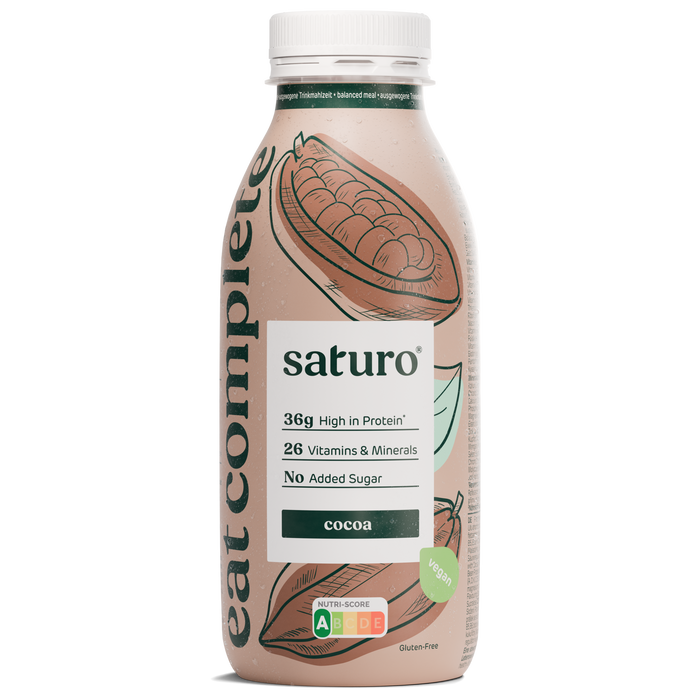
Drinkable meal: the small, still meal for late evenings
36 g protein and 400 kcal per bottle, 26 vitamins and minerals, vegan, no carbonation. Protein contributes to the maintenance of muscle mass. Reference intake for protein: 50 g per day (NRV). Cold and mild; Natural and Vanilla are the mildest flavours.
When home remedies aren't enough: heartburn medication and when to see a doctor
Which tablets help with heartburn
Four groups of active ingredients, differing in how fast and how long they work. Antacids (magaldrate, hydrotalcite) neutralise the acid in two minutes. Alginates form a foam raft on top of the acid pocket within seconds; according to the guideline, the only over-the-counter remedy that clears the acid pocket after a late meal, and over 14 days not inferior to an acid blocker. H2 blockers (famotidine) reduce acid production after 30 to 60 minutes for six to ten hours; ranitidine has been off the market since 2021. Proton pump inhibitors (PPIs: omeprazole, pantoprazole) switch off the acid pumps, take hours to days and are the treatment of choice for weekly heartburn or an inflamed lining.
Four groups of active ingredients compared
What works how fast, how long you can take it without a prescription, and what it's meant for.
| Antacids | Alginates | H2 blockers | PPIs | |
|---|---|---|---|---|
| Active ingredients | Magaldrate, hydrotalcite, calcium carbonate, magnesium hydroxide | Sodium alginate plus antacid | Famotidine | Omeprazole, pantoprazole, esomeprazole |
| Onset | 2 minutes | Seconds to minutes | 30 to 60 minutes | Hours, full effect after 2 to 3 days |
| Duration | 1 to 3 hours after eating | Several hours | 6 to 10 hours | Round the clock |
| Over the counter | Yes, max. 2 weeks without advice | Yes | Only 10 mg, max. 14 days | 20 mg, once daily, max. 14 days |
| Good for | Acute heartburn, occasional | After eating and before bed, acid pocket, pregnancy | Prevention in the evening | Weekly heartburn, inflamed lining |
| Points to note | Leave 2 hours between this and other medication | Contains sodium or calcium, check the pack | Less effective than PPIs | Morning before breakfast, taper off gradually when stopping |
Onset times according to Karamanolis 2008 (pH measurement), PTA-Forum 2007, Mandel 2000; over-the-counter rules according to the German Prescription Medicines Ordinance (AMVV), Annex 1 (as of 2026). No brand recommendation; your pharmacy knows the right form.
Pantoprazole and omeprazole: how long, how to take them, how to stop
Taking them: one 20 mg capsule in the morning before breakfast, swallowed whole, because the pellets are only released in the gut; the effect builds up over two to three days, and a PPI is not an emergency remedy. How long without a prescription: 14 days under the German Prescription Medicines Ordinance; after that, the question belongs with your doctor, not in the next pack.
Why you shouldn't just stop: Afterwards, your stomach temporarily produces more acid. Of 120 healthy people, 44% had acid-related symptoms after eight weeks of PPI once they stopped, compared with 15% on placebo. That's why the guideline recommends tapering off; antacids or alginate help on breakthrough days. Long-term: Since 2012, the prescribing information has warned about bone fractures and magnesium deficiency. The largest randomised trial (17,598 people, three years), however, found no difference in fractures, kidney disease, dementia or cancer, only slightly more intestinal infections. The guideline's verdict: the risk is low, but only take them for as long as there's a reason to. Omeprazole and pantoprazole are equally effective; pantoprazole has fewer interactions.
Tablets take away the acid, not the cause. If you stop your acid blocker and carry on eating late and big, you're back at square one after two weeks. The evening clock and the smaller portions are the part no capsule can replace.
Joerg Hauke, Nutrition expert, specialist review of this article
When to see a doctor about heartburn
Straight away if you notice the warning signs from chapter 1: difficulty swallowing, pain when swallowing, unintended weight loss, repeated vomiting, blood, iron deficiency. Call 112 for chest pain lasting more than five minutes with shortness of breath, cold sweats or pain spreading to other areas. Book an appointment if heartburn lasts longer than two weeks despite over-the-counter remedies, comes at least once a week, wakes you at night, or you take medication that can trigger it. Once in your life, get a gastroscopy if you've had heartburn on and off for years; that's how the guideline rules out Barrett's oesophagus, because 40% of people with oesophageal cancer had no severe symptoms beforehand.
What happens at the doctor's: The old "PPI test" (two weeks of tablets as a diagnosis) is considered "unusable" according to the guideline: it only identifies 71% of people who have reflux and gives a positive result in 44% of those who don't. The diagnosis is made reliably with a gastroscopy (inflammation, Barrett's, hiatus hernia) and, if that shows nothing unusual, with a 24-hour acid measurement: acidic for more than 6% of the time means reflux disease. Surgery (fundoplication) is only an option if the reflux is confirmed and tablets don't help.
Heartburn at night, in pregnancy, during the menopause and in children
Heartburn at night: why it gets worse when you lie down
During the day, your oesophagus clears acid away within minutes: you swallow about once a minute, saliva buffers the acid, and gravity helps. In your sleep, all of that is missing, and a pocket of acid from a late meal can reach the sphincter when you're lying down. That's why night-time reflux episodes last longer, and according to the guideline, people affected are more likely to develop inflammation of the lining and sleep worse; lack of sleep makes the lining more sensitive, a vicious circle. If it burns at night: sit up, take a few sips of still water, grab an alginate or antacid from your bedside table, and don't lie flat again.
For the night, the studies are clearest. First, the gap: the evening clock in chapter 5 works out the three hours for you. Second, the head end: when 20 patients raised the head of their bed by 20 centimetres, long reflux episodes fell from 3.3 to 1.0 per night. Tilt the whole bed (blocks under the feet, a wedge under the mattress), not just your head: a high pillow bends your belly. Third, the side you sleep on, with the best study on the whole topic: randomised, double-blind, 100 patients in Amsterdam.
of patients with night-time reflux had markedly fewer symptoms after two weeks (12 of 50). They wore the same device, but it didn't respond
succeeded when a sensor woke them as they lay on their right, raising time on the left side from 39 to 61% (22 of 50). Your stomach sits on the left, so the acid stays below the sphincter. Without a sensor, a pillow behind your back helps
Heartburn in pregnancy
Of 510 pregnant women in a German study, 26% had reflux symptoms in the first trimester, 36% in the second and 51% in the third. Progesterone loosens the sphincter and the growing womb pushes the stomach upwards; both go away after the birth. Until then, according to the guideline and Embryotox: start with small meals, a three-hour gap, sleeping on your left and a raised head end; then antacids and alginates, permitted "for a short time at the usual dose"; then prescribed sucralfate, H2 blockers or PPIs. Omeprazole is the best studied, with around 5,000 documented pregnancies, and according to Embryotox the "drug of choice". Not baking soda.
Heartburn during the menopause
Can heartburn be hormonal? There's no evidence that the menopause itself triggers heartburn. For hormone replacement therapy, there is: in the Nurses' Health Study (51,637 post-menopausal women), users of oestrogen alone had a 1.66 times higher risk of reflux, and a 2023 meta-analysis found 29% more reflux with hormone therapy. If your heartburn starts with hormone therapy, bring it up at your next appointment.
Heartburn in babies and children: Spitting up in infants isn't heartburn, it's normal: of 948 parents surveyed, half saw it every day in the first three months, and 5% still did at one year old. The paediatric guideline advises against acid blockers for thriving babies who spit up. Get it checked if there's poor weight gain, bilious or bloody vomit, refusal to feed or breathing problems. Older children with genuine heartburn get the same advice as adults, with medication only through a paediatrician.
Common questions about heartburn
What helps quickly against heartburn?
Stay upright, sip a glass of still water, then take an antacid or alginate: antacids work after two minutes, and water raised stomach pH after one minute. Afterwards, chew sugar-free gum; it flushes the acid away three times faster. Don't lie down, no fizzy drinks, and no milk to put out the fire.
Can heartburn cause heart rhythm problems?
There's a statistical link, but no proof of a cause. In a Swedish study of 118,000 reflux patients, 6.0% developed atrial fibrillation, compared with 6.9% without reflux; once adjusted, a 1.13 times higher risk remained, and a 2025 meta-analysis found 1.27 times. Heart palpitations should be checked out, not put down to heartburn.
Does drinking water help with heartburn?
Yes, briefly. A glass of water raised stomach pH above 4 in 10 of 12 healthy people within a minute, for about three minutes; above all, it flushes the acid back down out of the oesophagus. Still water, small sips, upright. Carbonation loosens the sphincter for 20 minutes.
Does magnesium help with heartburn?
As an antacid, yes: magnesium hydroxide is an active ingredient in antacids, but it has a laxative effect and is therefore combined with aluminium salts. As a food supplement, no: no study shows that magnesium capsules improve heartburn. Conversely, long-term PPI use can cause a magnesium deficiency, which the prescribing information has warned about since 2012.
Is turmeric good for heartburn?
Not proven. The much-cited 2023 study in which turmeric worked as well as omeprazole looked at irritable stomach, not reflux, and had no placebo group. A 2024 review calls the results for digestive complaints "inconsistent". Fine as a spice, but there's no data for it as a remedy for heartburn.
What is the 3-finger trick for heartburn?
A social media trend using acupressure: three finger-widths above the wrist crease sits the Neiguan point (PC 6), used in Chinese medicine against nausea. There's no study on it for heartburn; for needle acupuncture, there's only one small, unblinded study with 30 people. It won't hurt to try, but there's no evidence.
Why do I always get heartburn at night?
Because lying down means the natural cleaning stops: during the day, swallowing, saliva and gravity wash the acid back down, but not while you sleep. An acid pocket from a late meal can then reach all the way up to the sphincter. What's proven to help: have your last big meal three hours before bed, raise the head of your bed by 20 centimetres, and sleep on your left side (44% instead of 24% success).
Is alcohol-free beer good for heartburn?
Not studied, and the physiology argues against it: beer doesn't trigger reflux through the alcohol, but through fermentation compounds that strongly stimulate acid production. Alcohol-free beer has those too, plus carbonation. If you tolerate it, go ahead and drink it, but it's not a remedy.
Sources · 96 sources anzeigen
- Madisch A., Koop H., Miehlke S. et al.: S2k guideline on gastroesophageal reflux disease and eosinophilic esophagitis of the German Society of Gastroenterology, Digestive and Metabolic Diseases (DGVS), AWMF registry number 021-013, as of March 2023 (version 09/2023). Zeitschrift für Gastroenterologie 2023; 61: 862–933.
- Vakil N., van Zanten S. V., Kahrilas P., Dent J., Jones R.: The Montreal definition and classification of gastroesophageal reflux disease: a global evidence-based consensus. American Journal of Gastroenterology 2006; 101(8): 1900–1920.
- Gyawali C. P., Yadlapati R., Fass R. et al.: Updates to the modern diagnosis of GERD: Lyon consensus 2.0. Gut 2024; 73(2): 361–371.
- Federal Ministry of Health (Bundesministerium für Gesundheit), gesund.bund.de: Heartburn and reflux disease: symptoms and treatment. As of 04.04.2025.
- Eusebi L. H., Ratnakumaran R., Yuan Y. et al.: Global prevalence of, and risk factors for, gastro-oesophageal reflux symptoms: a meta-analysis. Gut 2018; 67(3): 430–440.
- Nocon M., Keil T., Willich S. N.: Prevalence and sociodemographics of reflux symptoms in Germany: results from a national survey. Alimentary Pharmacology and Therapeutics 2006; 23(11): 1601–1605.
- Nocon M., Labenz J., Willich S. N.: Lifestyle factors and symptoms of gastro-oesophageal reflux: a population-based study. Alimentary Pharmacology and Therapeutics 2006; 23(1): 169–174.
- Beaumont H., Bennink R. J., de Jong J., Boeckxstaens G. E.: The position of the acid pocket as a major risk factor for acidic reflux in healthy subjects and patients with GORD. Gut 2010; 59(4): 441–451.
- Holloway R. H., Hongo M., Berger K., McCallum R. W.: Gastric distention: a mechanism for postprandial gastroesophageal reflux. Gastroenterology 1985; 89(4): 779–784.
- Yanushevich O. O., Maev I. V., Krikheli N. I. et al.: Prevalence and Risk of Dental Erosion in Patients with Gastroesophageal Reflux Disease: A Meta-Analysis. Dentistry Journal 2022; 10(7): 126.
- Lechien J. R., Saussez S., Schindler A. et al.: Clinical outcomes of laryngopharyngeal reflux treatment: A systematic review and meta-analysis. Laryngoscope 2019; 129(5): 1174–1187.
- German Heart Foundation (Deutsche Herzstiftung e. V.): Heart attack, stroke, cardiac arrest: recognising warning signs and taking action. Press release for World Heart Day, 25.09.2024.
- German Heart Foundation (Deutsche Herzstiftung e. V.): How to spot a heart attack quickly. Advice page.
- Ness-Jensen E., Hveem K., El-Serag H., Lagergren J.: Lifestyle Intervention in Gastroesophageal Reflux Disease. Clinical Gastroenterology and Hepatology 2016; 14(2): 175–182.
- Ness-Jensen E., Lindam A., Lagergren J., Hveem K.: Weight loss and reduction in gastroesophageal reflux. A prospective population-based cohort study: the HUNT study. American Journal of Gastroenterology 2013; 108(3): 376–382.
- Ness-Jensen E., Lindam A., Lagergren J., Hveem K.: Tobacco smoking cessation and improved gastroesophageal reflux: a prospective population-based cohort study: the HUNT study. American Journal of Gastroenterology 2014; 109(2): 171–177.
- Singh M., Lee J., Gupta N. et al.: Weight loss can lead to resolution of gastroesophageal reflux disease symptoms: a prospective intervention trial. Obesity 2013; 21(2): 284–290.
- Pan J., Cen L., Chen W., Yu C., Li Y., Shen Z.: Alcohol Consumption and the Risk of Gastroesophageal Reflux Disease: A Systematic Review and Meta-analysis. Alcohol and Alcoholism 2019; 54(1): 62–69.
- Mehta R. S., Song M., Staller K., Chan A. T.: Association Between Beverage Intake and Incidence of Gastroesophageal Reflux Symptoms. Clinical Gastroenterology and Hepatology 2020; 18(10): 2226–2233.
- Mehta R. S., Nguyen L. H., Ma W., Staller K., Song M., Chan A. T.: Association of Diet and Lifestyle With the Risk of Gastroesophageal Reflux Disease Symptoms in US Women. JAMA Internal Medicine 2021; 181(4): 552–554.
- Fass R., Naliboff B. D., Fass S. S. et al.: The effect of auditory stress on perception of intraesophageal acid in patients with gastroesophageal reflux disease. Gastroenterology 2008; 134(3): 696–705.
- Lang C.: Selbstmedikation bei Sodbrennen. Pharmazeutische Zeitung, 24.12.2020.
- Fujiwara Y., Machida A., Watanabe Y. et al.: Association between dinner-to-bed time and gastro-esophageal reflux disease. American Journal of Gastroenterology 2005; 100(12): 2633–2636.
- Piesman M., Hwang I., Maydonovitch C., Wong R. K.: Nocturnal reflux episodes following the administration of a standardized meal. Does timing matter? American Journal of Gastroenterology 2007; 102(10): 2128–2134.
- Zhang M., Hou Z. K., Huang Z. B., Chen X. L., Liu F. B.: Dietary and Lifestyle Factors Related to Gastroesophageal Reflux Disease: A Systematic Review. Therapeutics and Clinical Risk Management 2021; 17: 305–323.
- Yamamichi N., Mochizuki S., Asada-Hirayama I. et al.: Lifestyle factors affecting gastroesophageal reflux disease symptoms: a cross-sectional study of healthy 19864 adults using FSSG scores. BMC Medicine 2012; 10: 45.
- Nilsson M., Johnsen R., Ye W., Hveem K., Lagergren J.: Lifestyle related risk factors in the aetiology of gastro-oesophageal reflux. Gut 2004; 53(12): 1730–1735.
- El-Serag H. B., Satia J. A., Rabeneck L.: Dietary intake and the risk of gastro-oesophageal reflux disease: a cross sectional study in volunteers. Gut 2005; 54(1): 11–17.
- Newberry C., Lynch K.: The role of diet in the development and management of gastroesophageal reflux disease: why we feel the burn. Journal of Thoracic Disease 2019; 11(Suppl 12): S1594–S1601.
- Kaltenbach T., Crockett S., Gerson L. B.: Are lifestyle measures effective in patients with gastroesophageal reflux disease? An evidence-based approach. Archives of Internal Medicine 2006; 166(9): 965–971.
- Morozov S., Isakov V., Konovalova M.: Fiber-enriched diet helps to control symptoms and improves esophageal motility in patients with non-erosive gastroesophageal reflux disease. World Journal of Gastroenterology 2018; 24(21): 2291–2299.
- Mone I., Kraja B., Bregu A. et al.: Adherence to a predominantly Mediterranean diet decreases the risk of gastroesophageal reflux disease: a cross-sectional study in a South Eastern European population. Diseases of the Esophagus 2016; 29(7): 794–800.
- Lei X., Wu Y.: Breakfast skipping and esophageal health: a Mendelian randomization study. Clinical Nutrition ESPEN 2025; 65: 86–92.
- Iwakiri K., Kobayashi M., Kotoyori M., Yamada H., Sugiura T., Nakagawa Y.: Relationship between postprandial esophageal acid exposure and meal volume and fat content. Digestive Diseases and Sciences 1996; 41(5): 926–930.
- Pehl C., Pfeiffer A., Waizenhoefer A., Wendl B., Schepp W.: Effect of caloric density of a meal on lower oesophageal sphincter motility and gastro-oesophageal reflux in healthy subjects. Alimentary Pharmacology and Therapeutics 2001; 15(2): 233–239.
- Wildi S. M., Tutuian R., Castell D. O.: The influence of rapid food intake on postprandial reflux: studies in healthy volunteers. American Journal of Gastroenterology 2004; 99(9): 1645–1651.
- Quach D. T., Vu K. T., Vu K. V.: Prevalence, clinical characteristics, and food triggers of gastroesophageal reflux disease in Vietnamese adults. Frontiers in Nutrition 2023; 10: 1280511.
- Wright L. E., Castell D. O.: The adverse effect of chocolate on lower esophageal sphincter pressure. American Journal of Digestive Diseases 1975; 20(8): 703–707.
- Murphy D. W., Castell D. O.: Chocolate and heartburn: evidence of increased esophageal acid exposure after chocolate ingestion. American Journal of Gastroenterology 1988; 83(6): 633–636.
- Johnson T., Gerson L., Hershcovici T., Stave C., Fass R.: Systematic review: the effects of carbonated beverages on gastro-oesophageal reflux disease. Alimentary Pharmacology and Therapeutics 2010; 31(6): 607–614.
- Hamoui N., Lord R. V., Hagen J. A., Theisen J., DeMeester T. R., Crookes P. F.: Response of the lower esophageal sphincter to gastric distention by carbonated beverages. Journal of Gastrointestinal Surgery 2006; 10(6): 870–877.
- Feldman M., Barnett C.: Relationships between the acidity and osmolality of popular beverages and reported postprandial heartburn. Gastroenterology 1995; 108(1): 125–131.
- Kim J., Oh S. W., Myung S. K. et al.: Association between coffee intake and gastroesophageal reflux disease: a meta-analysis. Diseases of the Esophagus 2014; 27(4): 311–317.
- Muftah M. et al.: Coffee consumption and gastroesophageal reflux disease: a systematic review and meta-analysis. Clinical and Translational Gastroenterology 2026; 17(4): e00996.
- Wendl B., Pfeiffer A., Pehl C., Schmidt T., Kaess H.: Effect of decaffeination of coffee or tea on gastro-oesophageal reflux. Alimentary Pharmacology and Therapeutics 1994; 8(3): 283–287.
- Bulat R., Fachnie E., Chauhan U., Chen Y., Tougas G.: Lack of effect of spearmint on lower oesophageal sphincter function and acid reflux in healthy volunteers. Alimentary Pharmacology and Therapeutics 1999; 13(6): 805–812.
- Ippoliti A. F., Maxwell V., Isenberg J. I.: The effect of various forms of milk on gastric-acid secretion. Annals of Internal Medicine 1976; 84(3): 286–289.
- Zhou J. et al.: Cheese intake and gastroesophageal reflux disease: a Mendelian randomization study. European Journal of Nutrition 2024; 64: 49.
- Pehl C., Wendl B., Pfeiffer A., Schmidt T., Kaess H.: Low-proof alcoholic beverages and gastroesophageal reflux. Digestive Diseases and Sciences 1993; 38(1): 93–96.
- Pehl C., Wendl B., Pfeiffer A.: White wine and beer induce gastro-oesophageal reflux in patients with reflux disease. Alimentary Pharmacology and Therapeutics 2006; 23(11): 1581–1586.
- Teyssen S., Lenzing T., González-Calero G., Korn A., Riepl R. L., Singer M. V.: Alcoholic beverages produced by alcoholic fermentation but not by distillation are powerful stimulants of gastric acid secretion in humans. Gut 1997; 40(1): 49–56.
- Serrano Falcón B., Megía Sánchez M., Ruiz de León A., Rey E.: Beer effects on postprandial digestive symptoms and gastroesophagic physiology. Neurogastroenterology and Motility 2018; 30(7): e13325.
- Allen M. L., Mellow M. H., Robinson M. G., Orr W. C.: The effect of raw onions on acid reflux and reflux symptoms. American Journal of Gastroenterology 1990; 85(4): 377–380.
- Milke P., Diaz A., Valdovinos M. A., Moran S.: Gastroesophageal reflux in healthy subjects induced by two different species of chilli (Capsicum annum). Digestive Diseases 2006; 24(1–2): 184–188.
- Rodriguez-Stanley S., Collings K. L., Robinson M., Owen W., Miner P. B.: The effects of capsaicin on reflux, gastric emptying and dyspepsia. Alimentary Pharmacology and Therapeutics 2000; 14(1): 129–134.
- Hu M. L., Rayner C. K., Wu K. L. et al.: Effect of ginger on gastric motility and symptoms of functional dyspepsia. World Journal of Gastroenterology 2011; 17(1): 105–110.
- Lohsiriwat S., Rukkiat M., Chaikomin R., Leelakusolvong S.: Effect of ginger on lower esophageal sphincter pressure. Journal of the Medical Association of Thailand 2010; 93(3): 366–372.
- Thavorn K. et al.: Efficacy and safety of turmeric (Curcuma longa) in digestive disorders: a systematic review. Phytotherapy Research 2024; 38(6): 2687–2706.
- Kongkam P., Khongkha W., Lopimpisuth C. et al.: Curcumin and proton pump inhibitors for functional dyspepsia: a randomised, double blind controlled trial. BMJ Evidence-Based Medicine 2023; 28(6): 399–406.
- Han J. et al.: Spontaneous gastric rupture: a review of cases with an emphasis on sodium bicarbonate ingestion. Journal of Eating Disorders 2022; 10: 157.
- Ahuja A., Ahuja N. K.: Popular Remedies for Esophageal Symptoms: a Critical Appraisal. Current Gastroenterology Reports 2019; 21(8): 39.
- Gośliński M., Nowak D., Szwengiel A. et al.: Application of Manuka honey in treatment patients with GERD. Food Science and Nutrition 2023; 12(1): 172–179.
- Dickman R., Schiff E., Holland A. et al.: Clinical trial: acupuncture vs. doubling the proton pump inhibitor dose in refractory heartburn. Alimentary Pharmacology and Therapeutics 2007; 26(10): 1333–1344.
- Karamanolis G., Theofanidou I., Yiasemidou M. et al.: A glass of water immediately increases gastric pH in healthy subjects. Digestive Diseases and Sciences 2008; 53(12): 3128–3132.
- von Schönfeld J., Hector M., Evans D. F., Wingate D. L.: Oesophageal acid and salivary secretion: is chewing gum a treatment option for gastro-oesophageal reflux? Digestion 1997; 58(2): 111–114.
- Moazzez R., Bartlett D., Anggiansah A.: The effect of chewing sugar-free gum on gastro-esophageal reflux. Journal of Dental Research 2005; 84(11): 1062–1065.
- Eherer A. J., Netolitzky F., Högenauer C. et al.: Positive effect of abdominal breathing exercise on gastroesophageal reflux disease: a randomized, controlled study. American Journal of Gastroenterology 2012; 107(3): 372–378.
- Khan B. A., Sodhi J. S., Zargar S. A. et al.: Effect of bed head elevation during sleep in symptomatic patients of nocturnal gastroesophageal reflux. Journal of Gastroenterology and Hepatology 2012; 27(6): 1078–1082.
- Schuitenmaker J. M., Kuipers T., Oude Nijhuis R. A. B. et al.: Sleep Positional Therapy for Nocturnal Gastroesophageal Reflux: A Double-Blind, Randomized, Sham-Controlled Trial. Clinical Gastroenterology and Hepatology 2022; 20(12): 2753–2762.
- PTA-Forum (Pharmazeutische Zeitung): Self-medication for heartburn: binding or blocking acid. Issue 07/2007, 25 July 2007.
- apotheken.de: Encyclopaedia entry on baking soda (sodium hydrogen carbonate).
- Federal Ministry of Justice (Bundesministerium der Justiz), gesetze-im-internet.de: Ordinance on the Prescription Requirement of Medicinal Products (AMVV), Annex 1, current version.
- Rote Liste Service GmbH, PatientenInfo-Service: Package leaflet for Omeprazol-1A Pharma 20 mg for heartburn, gastro-resistant hard capsules.
- Opella Healthcare (Sanofi): Maaloxan 25 mVal chewable tablets, product information, as of July 2022.
- Mandel K. G., Daggy B. P., Brodie D. A., Jacoby H. I.: Review article: alginate-raft formulations in the treatment of heartburn and acid reflux. Alimentary Pharmacology and Therapeutics 2000; 14(6): 669–690.
- Rohof W. O., Bennink R. J., Smout A. J., Thomas E., Boeckxstaens G. E.: An alginate-antacid formulation localizes to the acid pocket to reduce acid reflux in patients with gastroesophageal reflux disease. Clinical Gastroenterology and Hepatology 2013; 11(12): 1585–1591.
- Federal Institute for Drugs and Medical Devices (BfArM): Ranitidine: EMA reviews ranitidine-containing medicines following detection of N-nitrosodimethylamine (NDMA); notices of 7 January 2021 and 6 December 2024.
- Federal Institute for Drugs and Medical Devices (BfArM): Proton pump inhibitors: risk of bone fractures and hypomagnesaemia, request to amend product information, 26 July 2012.
- Reimer C., Søndergaard B., Hilsted L., Bytzer P.: Proton-pump inhibitor therapy induces acid-related symptoms in healthy volunteers after withdrawal of therapy. Gastroenterology 2009; 137(1): 80–87.
- Moayyedi P., Eikelboom J. W., Bosch J. et al.: Safety of Proton Pump Inhibitors Based on a Large, Multi-Year, Randomized Trial of Patients Receiving Rivaroxaban or Aspirin. Gastroenterology 2019; 157(3): 682–691.
- Malfertheiner S. F., Malfertheiner M. V., Kropf S., Costa S. D., Malfertheiner P.: A prospective longitudinal cohort study: evolution of GERD symptoms during the course of pregnancy. BMC Gastroenterology 2012; 12: 131.
- Embryotox, Pharmacovigilance and Advisory Centre for Embryonic Toxicology at Charité Berlin: Reflux disease in pregnancy.
- Embryotox (Charité Berlin): Omeprazole.
- Embryotox (Charité Berlin): Antacids.
- Jacobson B. C., Moy B., Colditz G. A., Fuchs C. S.: Postmenopausal hormone use and symptoms of gastroesophageal reflux. Archives of Internal Medicine 2008; 168(16): 1798–1804.
- Aldhaleei W. A., Bhagavathula A. S., Wallace M. B., DeVault K. R., Faubion S. S.: The association between menopausal hormone therapy and gastroesophageal reflux disease: a systematic review and meta-analysis. Menopause 2023; 30(8): 867–872.
- Rosen R., Vandenplas Y., Singendonk M. et al.: Pediatric Gastroesophageal Reflux Clinical Practice Guidelines: Joint Recommendations of NASPGHAN and ESPGHAN. Journal of Pediatric Gastroenterology and Nutrition 2018; 66(3): 516–554.
- Nelson S. P., Chen E. H., Syniar G. M., Christoffel K. K.: Prevalence of symptoms of gastroesophageal reflux during infancy. A pediatric practice-based survey. Archives of Pediatrics and Adolescent Medicine 1997; 151(6): 569–572.
- Sinha T. et al.: The Association Between Gastroesophageal Reflux Disease and Atrial Fibrillation: A Systematic Review and Meta-Analysis. Cureus 2025; 17(2): e78356.
- Maret-Ouda J. et al.: Objectively confirmed gastroesophageal reflux disease and risk of atrial fibrillation: a population-based cohort study in Sweden. European Journal of Gastroenterology and Hepatology 2022; 34(11): 1116–1120.
- Collins P. J., Horowitz M., Cook D. J., Harding P. E., Shearman D. J.: Gastric emptying in normal subjects: a reproducible technique using a single scintillation camera and computer system. Gut 1983; 24(12): 1117–1125.
- Tougas G., Eaker E. Y., Abell T. L. et al.: Assessment of gastric emptying using a low fat meal: establishment of international control values. American Journal of Gastroenterology 2000; 95(6): 1456–1462.
- Fachgesellschaft für Ernährungstherapie und Prävention (FETeV) [Professional Society for Nutrition Therapy and Prevention]: Refluxkrankheit: Essen gegen den Rückfluss [Reflux disease: eating against the backflow]. As of 29.07.2025.
- U.S. Food and Drug Administration, Center for Food Safety and Applied Nutrition: Approximate pH of Foods and Food Products. April 2007, archived copy.
- Reddy A., Norris D. F., Momeni S. S., Waldo B., Ruby J. D.: The pH of beverages in the United States. Journal of the American Dental Association 2016; 147(4): 255–263.
- U.S. Department of Agriculture, Agricultural Research Service: FoodData Central, SR Legacy Release (April 2018). Energy, protein, fat and fibre content per 100 g.
Has been writing for Saturo since 2019 about nutrition, nutrients and how to get properly nourished in everyday life.
Hat diesen Artikel am 23. September 2026 auf fachliche Richtigkeit geprüft. The content does not replace medical advice.
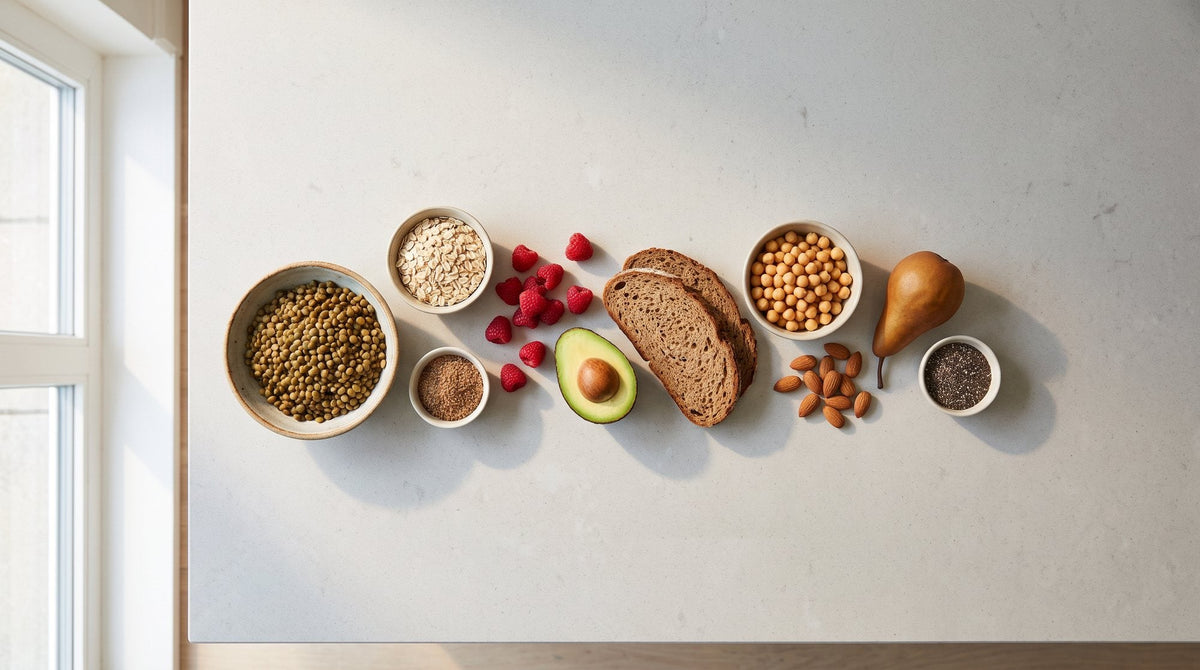
Fibre: how much you need and where to find it
Hardly anyone manages 30 grams a day. Find out which foods provide how much, how to plan your day, and why fibre matters with reflux too.
Weiterlesen · 15 Min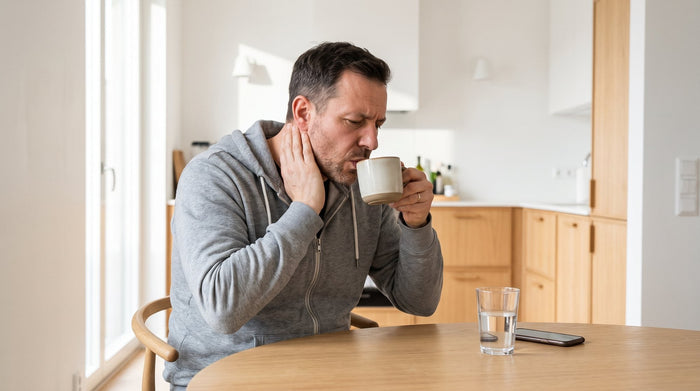

Latest from the guide
New articles, updates and tips straight to your inbox. Easy to understand, expert-checked, no spam.
Danke! Bitte bestätige die Anmeldung in deinem Postfach.