
Probiotics and prebiotics: effects and foods
Capsules from the chemist, yoghurt with cultures or simply more fibre? Probiotics are live bacteria, prebiotics are their food. Here's what the difference is, when a supplement really does something and which foods provide both.


Aktualisiert 29 October 2026 · 15 Min. Lesezeit · 51 Quellen

The key points in 30 seconds
With a probiotic, the risk falls from 19 to 8% (Cochrane 2019). It's the best-supported benefit, and it only applies during the course of treatment.
is what the average woman in Germany eats. The average man gets 19 g. The DGE recommends 30 g. Prebiotics are part of that, not an extra.
at least, measured raw. Garlic has 9 g, leek and onion 3 g. Most of the prebiotics in everyday diets come from vegetables and bread.
Whether a probiotic works depends on the exact strain and the dose, never on “probiotics” in general. “Probiotics help” isn't a reliable statement, and neither is the opposite.
Probiotics and prebiotics: what they are and how they work
Probiotics are live microorganisms. Prebiotics are indigestible food components that gut bacteria live on. One comes as a bacterium, the other as a fibre. Both have “biotic” in the name, and that's exactly what causes confusion, because in the supermarket, at the pharmacy and in research the terms mean different things.
What are probiotics?
According to the FAO and WHO definition, probiotics are live microorganisms that, in sufficient amounts, have a proven health benefit. Both conditions count: the bacteria have to arrive alive, and a benefit has to be shown in human studies for that exact strain. Most probiotics belong to the lactic acid bacteria (the Lactobacillus group) or the bifidobacteria, or are yeasts such as Saccharomyces boulardii. A strain is named with genus, species and a strain code, for example Lacticaseibacillus rhamnosus GG. If the code is missing, nobody knows which bacterium is really in there.
What are prebiotics?
Prebiotics are substances that gut bacteria specifically use and that bring a health benefit as a result, according to the 2017 consensus of the scientific society ISAPP. In practice, these are mainly certain fibres: inulin and oligofructose from chicory, Jerusalem artichoke, onion and garlic, galactooligosaccharides from pulses, and the resistant starch in cooled potatoes. They reach the large intestine undigested, where bacteria ferment them into short-chain fatty acids. Not every fibre is a prebiotic, but every prebiotic counts towards the 30 g of fibre the DGE recommends per day.
Pro-, pre-, syn- and postbiotics compared
Four terms, four definitions from the scientific society ISAPP. The evidence column refers to human studies.
| What it is | Example food | Example supplement | Evidence | |
|---|---|---|---|---|
| Probiotics | Live bacteria or yeasts with a proven benefit | Yoghurt with an added strain, raw fermented vegetables | Capsules with L. rhamnosus GG, S. boulardii | Good for antibiotic-associated diarrhoea, IBS depending on the strain |
| Prebiotics | Food for gut bacteria, mostly fibre | Jerusalem artichoke, onion, leek, pulses | Inulin or oligofructose powder | More bifidobacteria, better gut function from 12 g of inulin |
| Synbiotics | A probiotic plus a matching prebiotic | Kefir with oats, not a product in itself | Combined capsules or powders | Few studies, hardly better than the individual parts |
| Postbiotics | Inactivated bacteria or their components | None, only made in the lab | Heat-inactivated bifidobacteria | First studies, no guideline yet |
Definitions: Hill 2014 (probiotics), Gibson 2017 (prebiotics), Swanson 2020 (synbiotics), Salminen 2021 (postbiotics). Inulin effect: approved EU claim from 12 g of chicory inulin per day.
Synbiotics and postbiotics
Synbiotics combine both: a probiotic plus the prebiotic it lives on. Sounds logical, but it's rarely better supported than the individual parts, because most combinations have only been tested in a single study. Postbiotics are the newest term: killed bacteria or their components that are still supposed to work, for example through cell wall building blocks. The advantage is shelf life, because nothing is alive any more. The data is thin, and no guideline recommends them so far.
How probiotics work: strain-specific and temporary
The effect of a probiotic depends on the exact strain, the dose and the duration. The World Gastroenterology Organisation (WGO) states this as a basic rule: recommendations should be tied to specific strains with human studies, not to “probiotics” in general. There's also a second finding: in healthy people, the bacteria settle in only temporarily, and differently from person to person. In a study using colonoscopy, some participants stayed “resistant” to colonisation, and in others it was gone again after stopping. So a probiotic works for as long as you take it.
What a probiotic does in the gut comes down to three mechanisms: it competes with unwanted germs for space and nutrients, it produces lactic acid and other metabolic products that change the gut environment, and it communicates with the gut lining and the immune system behind it. Which mechanism matters differs from strain to strain. The timeline shows the journey from the first mouthful to stopping.

A probiotic's journey through your body
Three stages decide whether a probiotic arrives at all, what it does in your gut and why the effect disappears after you stop.
Stomach: the acid test
Stomach acid kills some of the bacteria. In a lab model, more of them survived when the capsule was taken with or shortly before a meal. Spore-forming strains and yeasts cope better with the acid, and gastro-resistant capsules bypass it.
Gut: passing through, not moving in
In the large and small intestine, the bacteria compete for space and nutrients, produce lactic acid and messenger substances, and meet the gut lining with the immune system behind it. In healthy people they rarely settle permanently, and the effect varies from person to person.
After stopping: gone again
A few days to weeks after the last dose, the strains usually can't be detected any more. Your own gut flora returns. That's why the benefit only lasts while you're taking them, and why it's worth looking at what feeds your own bacteria in the long term.
Are probiotics worth it? What the studies show
For healthy people without symptoms, probiotics are generally not necessary, and for a few situations they're well supported. That's the short version of the guidelines and Cochrane reviews. The consumer advice centre goes even further: for foods with bacterial cultures, there's no evidence of a benefit for healthy people. Both are true, because they're about different groups: patients with a specific diagnosis and a specific strain on one side, healthy people with yoghurt on the other.
Probiotics for diarrhoea
Best supported is the prevention of diarrhoea during antibiotics: in children the risk falls from 19 to 8%, with nine children needing treatment for one to avoid diarrhoea; in adults the risk falls by 37%. For acute stomach bugs the picture is mixed: the European paediatric society allows two strains, the Cochrane analysis of low-bias studies finds no effect, and US gastroenterologists advise against them. For travellers' diarrhoea, a yeast preparation (S. boulardii) is approved as a medicine. If you have acute diarrhoea, you need fluids and salt first, not a probiotic.
Probiotics for irritable bowel syndrome
The German S3 guideline recommends: “Selected probiotics should be used in the treatment of irritable bowel syndrome”, with a grade B recommendation. The key word is “selected”: the effect depends on the strain, the dose and the duration, and every attempt counts as a trial that is only continued if symptoms clearly ease. In the large meta-analysis, IBS symptoms persisted less often with probiotics (relative risk 0.79), and bloating and a feeling of fullness improved most reliably. The US professional societies are more cautious: the AGA recommends probiotics for IBS only within clinical trials, because 76 studies tested 44 different products and hardly any result was repeated. There is no recommendation for prebiotics in IBS; inulin and oligofructose are FODMAPs and often make bloating worse.
In functional constipation, probiotics shortened gut transit time by 12 hours in one meta-analysis and brought 1.3 more bowel movements per week, but this was only significant for Bifidobacterium lactis. For children with constipation, the European professional society advises against probiotics because they don't work.
A probiotic isn't a cure-all, it's a tool for a specific situation: the right strain, the right dose, the right timing. For everything else, your plate is the better place to look.
Joerg Hauke, Nutrition expert, technical review of this article
Probiotics for the immune system, skin and weight loss
This is where the evidence gets thin, and to be honest, thinner than the advertising makes it sound. Immune system: In the Cochrane review, people taking a probiotic got a respiratory infection less often (relative risk 0.76) and were ill for 1.2 days less on average, with low-certainty evidence and with use over more than three months. That's prevention, not a remedy for a cold you already have. Skin: According to Cochrane, there is no evidence that probiotics work as a treatment for atopic eczema, and the German guideline on allergy prevention advises pregnant women and infants against pro- and prebiotics for prevention, with a grade A recommendation. Weight loss: In 15 studies with overweight people, probiotics brought 0.6 kg less weight in three months. If you want to lose weight, the article Losing weight covers the levers that really make a difference.
Probiotics and antibiotics: yes during, usually not after
Antibiotics are the most common reason people look for probiotics, and the case where the order makes all the difference. During the course, the benefit is proven; afterwards, it isn't.
Probiotics during antibiotics
Taken at the same time, certain strains clearly lower the risk of antibiotic-associated diarrhoea: from 19 to 8% in children, by 37% in adults. The ones that worked were mainly Lacticaseibacillus rhamnosus GG and the yeast Saccharomyces boulardii, and only from about 5 billion CFU a day. You start on the first day of the course, not only once your stomach starts rumbling: in an analysis of hospital patients, the risk of a Clostridioides difficile infection only dropped if the probiotic was started within two days of the first antibiotic. There's no proven minimum gap between probiotic and tablet; the yeast doesn't interfere with the antibiotic anyway, and for bacterial products, follow the instructions in the package leaflet.
Probiotics after antibiotics
After the course has ended, a benefit is not proven. No guideline recommends probiotics to “rebuild” your gut flora afterwards, and a small Israeli study using colonoscopy found the opposite: in participants who took a multi-strain product after the antibiotic, their own gut flora recovered more slowly and stayed less complete than in those who did nothing. The study is small and only measures the microbiome, not symptoms, so it doesn't prove harm. But it shows that “it can't hurt” isn't a safe assumption.
What really helps after a course is food for your own bacteria: Rebuilding your gut flora explains step by step what happens in the weeks afterwards and which foods support recovery. The short version: plenty of vegetables, pulses and wholegrains, plus yoghurt or kefir if you tolerate them.
Watery diarrhoea more than three times a day during or up to eight weeks after a course of antibiotics, fever, blood in your stool or cramping stomach pain: get it checked out. It could be an infection with Clostridioides difficile, which needs treatment.
Prebiotics: inulin, resistant starch and which foods provide them
You don't need to buy prebiotics. You're probably already eating them, just not enough. Average fibre intake in Germany is 18 g (women) and 19 g (men) a day, and 75% of women and 66% of men fall short of the recommended 30 g. Prebiotic fibres are the part of that fibre which gut bacteria ferment fastest.
Prebiotic foods
The most important prebiotics in everyday eating are inulin and oligofructose (fructans) from onion, garlic, leek, artichoke, Jerusalem artichoke and wheat, galactooligosaccharides from lentils, beans and chickpeas, and resistant starch, which forms when cooked potatoes, rice or pasta cool down. In the Western diet, around 70% of inulin comes from wheat and 25% from onions, simply because both are on our plates every day. Beta-glucan from oats and barley is also fermented, but its authorised benefit relates to cholesterol, not the gut. The WGO still lists resistant starch as a candidate, not an established prebiotic. Cooked and cooled potatoes contain measurably more of it than hot ones.
Inulin and oligofructose: per 100 g and per portion
Bars = lower end of the range in the literature per 100 g raw, full range in brackets (Canazza 2025, after Van Loo 1995). Inulin isn't listed in standard nutrition tables: the USDA lists Jerusalem artichoke with 1.6 g of fibre because the standard method doesn't pick up inulin.
Which foods contain inulin?
Most inulin is found in Jerusalem artichoke and chicory root, with 15 to 20 g per 100 g, followed by garlic with 9 to 16 g, leek with 3 to 10 g, artichoke with 2 to 7 g and onion with 3 to 5 g. Wheat has 1.5 to 2.3 g, while banana and rye have less than 1 g. These values are for raw foods. Inulin stays stable when cooked up to 100 °C, but it's broken down when acid and heat combine, and pickling and preserving reduce the content the most. Industrial inulin is extracted from chicory root and appears as “fibre (chicory)” in many foods, including the Saturo drinkable meal with 7.3 to 7.7 g of fibre per bottle.
Prebiotics: side effects
The typical side effects are bloating and wind, because that's exactly what fermentation produces. In a study with healthy adults, 10 g of chicory inulin and 5 g of oligofructose a day were well tolerated, while 10 g of oligofructose caused clearly more discomfort. The German Nutrition Society (DGE) advises increasing your fibre intake slowly and drinking enough fluids. If you're sensitive to FODMAPs or have irritable bowel syndrome, you may often tolerate inulin, oligofructose and GOS poorly. That's why the irritable bowel syndrome guideline makes no recommendation for prebiotics. Our article on fibre shows how to reach 30 g without discomfort.

Probiotic foods: where to find live cultures
Yoghurt, kefir, sauerkraut, kimchi, kombucha: they're all fermented, but not all of them contain live cultures, and none is automatically a probiotic. The difference lies in how it's made and what's on the label.
Natural probiotics
Strictly speaking, there's no such thing as “natural probiotics”. Under the ISAPP consensus, a fermented food only counts as probiotic if it contains a characterised strain in an effective amount until the end of its shelf life and its benefit has been proven. Hardly any supermarket product meets that. Legally, the term is off-limits anyway: in the EU, “probiotic” counts as a health claim, and of more than 300 applications reviewed, EFSA hasn't approved a single one. In 2014, Germany's Federal Court of Justice confirmed this for “probiotic” on baby food too. What fermented foods can still do was shown by a Stanford study: six portions a day increased gut flora diversity over ten weeks and lowered 19 inflammation markers in the blood. There's also an authorised claim for yoghurt with live cultures: it improves the digestion of the lactose it contains in people with lactose intolerance.
Probiotic yoghurt: skyr, Greek yoghurt, kefir
Every yoghurt that hasn't been heat-treated contains live cultures, at least 10 million starter bacteria per gram up to the best-before date. That goes for natural yoghurt, Greek yoghurt and skyr alike, because they're all soured with the same cultures. Skyr and Greek yoghurt are just strained more, so they give you more protein. Kefir also brings yeasts, with up to a billion microbes per gram. "Probiotic yoghurt" in the strict sense is only one with an added, named strain, and even then the added strains often drop sharply by the best-before date. Fermented foods are also rich in histamine. If you react to it, you'll probably struggle with sauerkraut, mature cheese and kombucha.
Between foods with cultures and capsules there's a third group: meals with a bacterial strain added as an ingredient. According to the WGO, spore-forming strains such as Bacillus coagulans are more resistant to heat and storage, but the evidence for them is weaker than for lactobacilli and bifidobacteria. The same applies here: a strain in the ingredients list is an ingredient, not a promise of results.
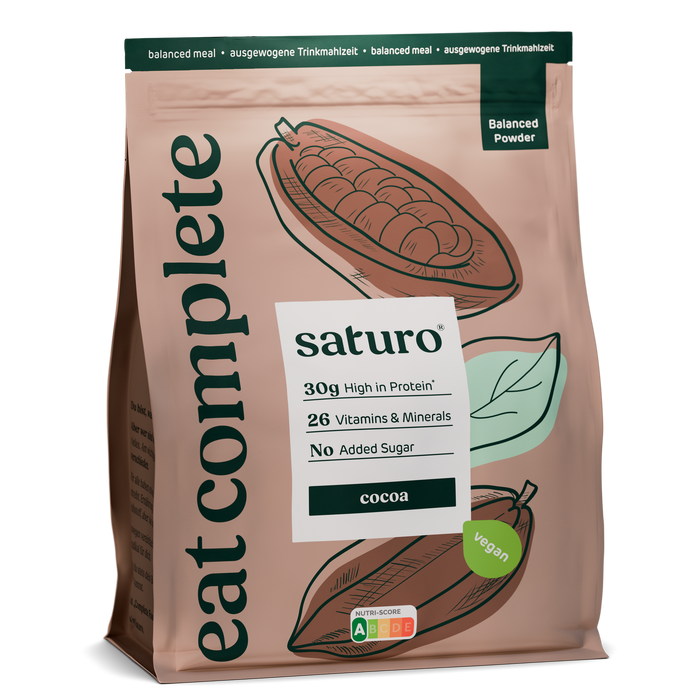
Balanced Powder: drinkable meal to mix, with acacia fibre
100 g of powder makes one meal with 400 kcal, 30 g of plant protein from pea and rice, and 26 vitamins and minerals. The fibre comes from acacia fibre, and the spore-forming bacterial strain Bacillus coagulans is included as an additional ingredient. Vegan, soya-free. Percentage based on the DGE reference value of 30 g of fibre a day.
If you want to combine probiotics and prebiotics from food, you don't need a special product: natural yoghurt or kefir with oats and banana, raw sauerkraut with lentils, kimchi with yesterday's rice. The cultures come from the fermented food, the fuel from grains, pulses and veg. Which ten foods do the most for your gut is covered in the gut overview.

Taking probiotics: timing, duration, choice and side effects
Once you've decided on a supplement, three things determine how much you get out of it: the strain, the dose and the duration. The time of day matters less than the leaflets suggest.
Taking probiotics: morning or evening?
The time of day isn't what counts, but the meal is. There are no human studies on "morning or evening". In a lab model of the stomach, the bacteria from a capsule survived best when taken with a meal or 30 minutes before, and worst 30 minutes after. A little fat in the food helped, while apple juice and water alone helped less. Yeast supplements didn't depend on timing. In practice that means: with breakfast or dinner, as long as you take them regularly. There's no ban on coffee, but you shouldn't stir them into drinks hotter than 50 °C.
How long should you take probiotics?
As long as the use the strain has been shown for. For a course of antibiotics, for the length of the course. For acute diarrhoea, 5 to 7 days. For irritable bowel, 4 to 8 weeks as a trial, followed by an honest review. For preventing infections, the studies ran for more than three months. Taking them long term "for your gut flora" hasn't been shown to help healthy people, and after you stop, the strains disappear within days to weeks anyway.
Probiotics from the chemist or pharmacy
The difference isn't on the shelf but in the legal status: most probiotics are food supplements, whether they're sold at dm, Rossmann or a pharmacy. They aren't allowed to name a disease and aren't tested for effectiveness. A few products are licensed medicines with a defined use, such as the yeast Saccharomyces boulardii for acute diarrhoea, or the strain E. coli Nissle 1917 for ulcerative colitis in remission and chronic constipation. Those are only available in pharmacies, with professional information, contraindications and a tested microbe count. Capsule or powder is a matter of taste, as long as the microbe count is guaranteed until the end of shelf life. The list shows how to recognise a decent product.
Is there a probiotics test winner?
No, there is no current test of probiotic capsules by Stiftung Warentest or Öko-Test. The closest thing is the test of over-the-counter remedies for irritable bowel syndrome (issue 01/2022): the reviewers rated 13 of 19 products, including several with bacterial cultures, as “not very suitable” and none as suitable. The Verbraucherzentrale (consumer advice centre) sums up the 2026 position like this: advertising claims for foods with bacterial cultures are not scientifically proven, and therapeutic use belongs in a doctor's hands. Online rankings mostly compare prices and bacteria counts, not studies, and are often paid for by shops. The only “test winner” that counts is the strain that has been studied for your question.
Probiotics side effects
For healthy people, common probiotics are considered safe; in the Cochrane reviews, side effects were no more common than with placebo. What does happen is bloating, stomach cramps, loose stools and nausea, usually mild. One medicine manufacturer advises spreading the daily dose across your meals if you get bloating. Unlike with prebiotics, there's no specific evidence for “initial bloating” that fades after a few days. Serious side effects almost exclusively affect people with a severe pre-existing illness.

Who shouldn't take probiotics?
People with a severely weakened immune system, the seriously ill and patients with a central venous catheter should not take probiotics, according to the contraindication in the product information for the yeast preparation and the WGO recommendation. The reason: the bacteria or yeasts can get into the blood. In a review of 117 cases of yeast bloodstream infection, two thirds started with an S. boulardii product, almost always in intensive care patients or people on artificial feeding. For premature babies, the US medicines regulator issued a warning about probiotics in 2023 after a death. For an acute stomach bug, the Verbraucherzentrale advises against them, and for short bowel syndrome the decision belongs in hospital.
Pregnant and breastfeeding women: according to a review of 100 studies, probiotics and prebiotics are considered safe, individual medicines are not approved due to a lack of data, and the German guideline clearly advises against them for preventing allergies. Babies and toddlers: in 2026, the German Federal Institute for Risk Assessment saw neither harm nor proven benefit in infant formula with added bacteria for healthy babies; only use products after talking to a paediatrician.
Microbiome stool tests from the internet can't tell you whether you need a probiotic. The irritable bowel guideline knows of no validated approach for this, Stiftung Warentest calls the analyses “expensive and meaningless”, and almost half of the providers sell you the matching capsules as well.
Common questions about probiotics and prebiotics
Which probiotic is the best?
The one whose strain has been studied for your question. For antibiotic-associated diarrhoea, L. rhamnosus GG and S. boulardii at 5 billion CFU a day or more have the best evidence; for irritable bowel, several strains, tried over 4 to 8 weeks. There is no single best probiotic for everyone.
Can you take probiotics and prebiotics together?
Yes, together they're called a synbiotic. An added benefit over the individual parts is rarely shown. In everyday life, the combination on your plate is enough: yoghurt or kefir with oats and banana, raw sauerkraut with pulses.
Is Greek yoghurt probiotic?
It contains live cultures like any unheated yoghurt, at least 10 million per gram until the best-before date. In the strict sense, it would only be probiotic with an added, named strain and a proven benefit. On the pack: not “heat-treated”.
Are oats prebiotic?
Oats provide beta-glucan and about 4 g of fibre per 40 g, which gut bacteria ferment. Beta-glucan isn't classed as a prebiotic in the narrow sense; its approved benefit relates to cholesterol. Oats contain hardly any fructans, just 0.1 g per portion.
Which drink is good for your gut flora?
Kefir and buttermilk from the chiller aisle bring live cultures with them, and kombucha usually does too. For none of them is a benefit proven in healthy people. Water matters most, especially if you're increasing your fibre, otherwise constipation and bloating are likely.
How long should you avoid coffee after probiotics?
You don't need to wait at all. No guideline or product information has a rule on this. All that's proven is that bacteria survive the journey through the stomach better with or shortly before a meal. Don't use hot drinks above 50 °C to stir in powder.
How can I test whether my gut flora is OK?
You can't, not reliably. Commercial microbiome stool tests aren't standardised or validated, and there's no agreement on what a healthy gut flora is. If you have symptoms, what counts is a medical check-up, not a list of bacteria.
What effect does Brottrunk have?
Brottrunk is a bread drink fermented with lactic acid bacteria; fresh, it contains live cultures, pasteurised it doesn't. A health benefit hasn't been proven in human studies. If you like it, drink it as a sour drink, not as a therapy.
Sources · 51 sources anzeigen
- Hill C. et al.: The International Scientific Association for Probiotics and Prebiotics consensus statement on the scope and appropriate use of the term probiotic. Nature Reviews Gastroenterology & Hepatology 2014; 11(8): 506–514.
- Gibson G. R. et al.: The International Scientific Association for Probiotics and Prebiotics (ISAPP) consensus statement on the definition and scope of prebiotics. Nature Reviews Gastroenterology & Hepatology 2017; 14(8): 491–502.
- Swanson K. S. et al.: The ISAPP consensus statement on the definition and scope of synbiotics. Nature Reviews Gastroenterology & Hepatology 2020; 17(11): 687–701.
- Salminen S. et al.: The ISAPP consensus statement on the definition and scope of postbiotics. Nature Reviews Gastroenterology & Hepatology 2021; 18(9): 649–667.
- Marco M. L. et al.: The ISAPP consensus statement on fermented foods. Nature Reviews Gastroenterology & Hepatology 2021; 18(3): 196–208.
- World Gastroenterology Organisation: WGO Global Guidelines Probiotics and Prebiotics. February 2023.
- Zmora N. et al.: Personalized Gut Mucosal Colonization Resistance to Empiric Probiotics Is Associated with Unique Host and Microbiome Features. Cell 2018; 174(6): 1388–1405.
- Guo Q. et al.: Probiotics for the prevention of pediatric antibiotic-associated diarrhea. Cochrane Database of Systematic Reviews 2019; 4: CD004827.
- Goodman C. et al.: Probiotics for the prevention of antibiotic-associated diarrhoea: a systematic review and meta-analysis. BMJ Open 2021; 11(8): e043054.
- Esmaeilinezhad Z. et al.: Probiotics for the prevention of Clostridioides difficile-associated diarrhea in adults and children. Cochrane Database of Systematic Reviews 2025; 9: CD006095.
- Shen N. T. et al.: Timely Use of Probiotics in Hospitalized Adults Prevents Clostridium difficile Infection: A Systematic Review With Meta-Regression Analysis. Gastroenterology 2017; 152(8): 1889–1900.
- Suez J. et al.: Post-Antibiotic Gut Mucosal Microbiome Reconstitution Is Impaired by Probiotics and Improved by Autologous FMT. Cell 2018; 174(6): 1406–1423.
- Szajewska H. et al.: Probiotics for the Management of Pediatric Gastrointestinal Disorders: Position Paper of the ESPGHAN Special Interest Group on Gut Microbiota and Modifications. Journal of Pediatric Gastroenterology and Nutrition 2023; 76(2): 232–247.
- Collinson S. et al.: Probiotics for treating acute infectious diarrhoea. Cochrane Database of Systematic Reviews 2020; 12: CD003048.
- Layer P. et al.: Update S3 guideline on irritable bowel syndrome. Joint guideline of the DGVS and DGNM, AWMF registration number 021-016, as of June 2021. Zeitschrift für Gastroenterologie 2021; 59(12): 1323–1415.
- Su G. L. et al.: AGA Clinical Practice Guidelines on the Role of Probiotics in the Management of Gastrointestinal Disorders. Gastroenterology 2020; 159(2): 697–705.
- Ford A. C. et al.: Efficacy of prebiotics, probiotics, and synbiotics in irritable bowel syndrome and chronic idiopathic constipation: systematic review and meta-analysis. American Journal of Gastroenterology 2014; 109(10): 1547–1561.
- Dimidi E. et al.: The effect of probiotics on functional constipation in adults: a systematic review and meta-analysis of randomized controlled trials. American Journal of Clinical Nutrition 2014; 100(4): 1075–1084.
- Zhao Y., Dong B. R., Hao Q.: Probiotics for preventing acute upper respiratory tract infections. Cochrane Database of Systematic Reviews 2022; 8: CD006895.
- Makrgeorgou A. et al.: Probiotics for treating eczema. Cochrane Database of Systematic Reviews 2018; 11: CD006135.
- Kopp M. V. et al.: S3 guideline on allergy prevention. AWMF registration number 061-016, update November 2022. Allergologie 2022; 45(3): 153–194.
- Borgeraas H. et al.: Effects of probiotics on body weight, body mass index, fat mass and fat percentage in subjects with overweight or obesity: a systematic review and meta-analysis of randomized controlled trials. Obesity Reviews 2018; 19(2): 219–232.
- Doron S., Snydman D. R.: Risk and safety of probiotics. Clinical Infectious Diseases 2015; 60 (Suppl 2): S129–S134.
- Vinayagamoorthy K., Pentapati K. C., Prakash H.: Epidemiology of Saccharomyces fungemia: A systematic review. Medical Mycology 2023; 61(2): myad014.
- U.S. Food and Drug Administration: Warning Regarding Use of Probiotics in Preterm Infants. Letter to Healthcare Providers, 29 September 2023.
- Sheyholislami H., Connor K. L.: Are Probiotics and Prebiotics Safe for Use during Pregnancy and Lactation? A Systematic Review and Meta-Analysis. Nutrients 2021; 13(7): 2382.
- German Federal Institute for Risk Assessment (BfR): Health benefit of infant formula with added “probiotics” still not scientifically proven. Statement No. 005/2026 of 3 February 2026.
- Prescribing information for Perenterol forte 250 mg capsules (Saccharomyces boulardii), as of August 2024.
- Prescribing information for Mutaflor (Escherichia coli strain Nissle 1917), as of May 2025.
- Tompkins T. A., Mainville I., Arcand Y.: The impact of meals on a probiotic during transit through a model of the human upper gastrointestinal tract. Beneficial Microbes 2011; 2(4): 295–303.
- Bonnema A. L. et al.: Gastrointestinal tolerance of chicory inulin products. Journal of the American Dietetic Association 2010; 110(6): 865–868.
- German Nutrition Society (DGE): Selected questions and answers on dietary fibre. November 2021.
- Bechthold A., Brönstrup A.: Carbohydrate intake in Germany. Chapter 1 of the DGE guideline on carbohydrate intake and the prevention of selected diet-related diseases.
- Canazza E. et al.: Techno-Functional Properties and Applications of Inulin in Food Systems. Gels 2025; 11(10): 829, Table 1.
- Van Loo J. et al.: On the presence of inulin and oligofructose as natural ingredients in the western diet. Critical Reviews in Food Science and Nutrition 1995; 35(6): 525–552.
- Moshfegh A. J. et al.: Presence of inulin and oligofructose in the diets of Americans. Journal of Nutrition 1999; 129(7S): 1407S–1411S.
- Biesiekierski J. R. et al.: Quantification of fructans, galacto-oligosacharides and other short-chain carbohydrates in processed grains and cereals. Journal of Human Nutrition and Dietetics 2011; 24(2): 154–176.
- Raatz S. K. et al.: Resistant starch analysis of commonly consumed potatoes: Content varies by cooking method and service temperature but not by variety. Food Chemistry 2016; 208: 297–300.
- Hussain S. et al.: Ultrasound-assisted extraction, quantification and characterization of inulin from agave, chicory and Jerusalem artichoke. Scientific Reports 2026.
- U.S. Department of Agriculture: FoodData Central, SR Legacy (2018). Fibre values and portion weights.
- Rezac S. et al.: Fermented Foods as a Dietary Source of Live Organisms. Frontiers in Microbiology 2018; 9: 1785.
- Codex Alimentarius: Standard for Fermented Milks, CODEX STAN 243-2003.
- Wastyk H. C. et al.: Gut-microbiota-targeted diets modulate human immune status. Cell 2021; 184(16): 4137–4153.
- Monash University: Where FODMAPs are found in foods.
- Regulation (EC) No 1924/2006 on nutrition and health claims made on foods.
- Regulation (EU) No 432/2012 establishing a list of permitted health claims made on foods (live cultures in yoghurt, fibre).
- Regulation (EU) 2015/2314 authorising a health claim made on foods concerning chicory inulin.
- European Ombudsman: Decision on how the European Commission deals with the labelling of foodstuff that contain probiotics as health claims. Case 2273/2023/MIK, 20 December 2024.
- Verbraucherzentrale (German consumer advice centre): Foods with special bacterial cultures (formerly “probiotics”). As of 20 May 2026.
- Stiftung Warentest: Irritable bowel syndrome: These remedies help with IBS. test 01/2022, 15 December 2021.
- Stiftung Warentest: Microbiome self-tests: Expensive analyses with no real informative value. 6 May 2024.
Has been writing for Saturo since 2019 about nutrition, nutrients and how to get good nutrition in practice in everyday life.
Hat diesen Artikel am 29. Oktober 2026 auf fachliche Richtigkeit geprüft. This content is not a substitute for medical advice.

Gut health: 10 foods for a healthy gut
Which ten foods do the most for your gut, how to rebuild your gut flora after antibiotics, and what's really behind gut cleanses and microbiome tests.
Weiterlesen · 15 Min

Latest from the guide
New articles, updates and tips straight to your inbox. Easy to understand, expert-checked, no spam.
Danke! Bitte bestätige die Anmeldung in deinem Postfach.