
Iron deficiency: symptoms, causes and treatment
Tired, pale, hair falling out? Iron deficiency is the most common nutrient deficiency in the world and affects women in particular. Which symptoms are typical, which blood value matters, what helps quickly, and what you should eat.


Aktualisiert 10 September 2026 · 13 Min. Lesezeit · 12 Quellen

The essentials in 30 seconds
Men 11 mg, pregnant women 27 mg (DGE 2023). The stores empty over months, not overnight.
According to the WHO, the most common nutrient deficiency worldwide. Every third woman of childbearing age has too little iron.
Vitamin C with a meal can triple the absorption of plant-based iron. Coffee and tea alongside it halve it.
Below 30 µg/l, your stores are considered empty, long before your blood count shows anything. Test first, then take tablets.
Iron deficiency symptoms: how to spot them
Iron deficiency creeps up on you. Your stores empty over months, and you put the first signs down to everyday life: too little sleep, too much stress, the weather. It's not a single symptom that's typical, but the combination of exhaustion, paleness and changes to your skin, hair and nails. The more of these come together, the more likely it's worth checking your ferritin level. The overview shows how other minerals make themselves noticed.
Early signs: tiredness, paleness, poor concentration
Iron is found in haemoglobin, the red blood pigment that transports oxygen through the body. Without enough iron, your muscles and brain get less oxygen. This explains the early symptoms: leaden tiredness despite enough sleep, reduced performance during exercise, difficulty concentrating, headaches, dizziness on standing up and heart palpitations during minor exertion. Many people feel the cold more than they used to, as the body conserves heat.
Paleness is most noticeable on the inside of the lower eyelids, the gums and the nail beds. On darker skin it's harder to spot, so check the eyelids and palms instead.
Iron deficiency symptoms in women
Women between puberty and menopause are the biggest risk group, because iron is lost with every period. Heavy or prolonged bleeding, a hormone-free coil, closely spaced pregnancies and breastfeeding drain the stores further. Common signs include hair loss, brittle nails and cracked corners of the mouth, along with exhaustion that doesn't improve with sleep. During menopause, iron deficiency can even increase due to irregular, heavy bleeding, after which the requirement drops to 14 mg per day.
Iron deficiency symptoms in men
Men lose very little iron and usually cover their 11 mg requirement with a normal mixed diet. Iron deficiency is therefore rarer in men, but an important warning sign: it's often caused by unnoticed blood loss in the gastrointestinal tract, for example from a stomach ulcer, polyps, inflammatory bowel disease or haemorrhoids. Men with confirmed iron deficiency should always have the cause checked by a doctor, even without symptoms.

Neurological symptoms of iron deficiency
Iron is also needed to produce the messenger substances dopamine and serotonin. Chronic deficiency can therefore trigger neurological symptoms:
- Restless legs syndrome: restless, tingling legs, especially in the evening and at night
- Headaches and migraine attacks
- Dizziness and light-headedness
- Difficulty concentrating and memory problems
- Ringing in the ears and burning tongue
Restless legs syndrome is particularly closely linked to low ferritin. That's why the level is routinely checked in cases of restless legs.
Iron deficiency symptoms: mental health
Because iron plays a role in producing serotonin and dopamine, a deficiency affects mood: lack of drive, irritability, inner restlessness, anxiety and low mood have all been reported. These symptoms are rarely linked to iron. Studies show that mood and mental performance improve once the stores are replenished. That's why ferritin should be checked in cases of persistent mental exhaustion.
If you have persistent tiredness, a racing heart, shortness of breath during exertion, dizziness or visible paleness, get your ferritin level checked. In men and women past menopause, iron deficiency should always be followed up with a search for the source of bleeding.
Skin, hair and nails
Hair follicles are among the fastest-dividing cells and react early to a lack of oxygen. Diffuse hair loss, thinning hair and less shine are typical effects, as is dry, itchy scalp. Nails can develop ridges, become brittle, and in pronounced cases curve inwards to form spoon nails. Cracked corners of the mouth and a smooth, burning tongue are other classic signs.
Iron deficiency in children
Children and teenagers need a lot of iron during growth (7 to 16 mg per day depending on age). Premature babies, toddlers who drink a lot of cow's milk and eat little solid food, and girls from their first period onwards are at risk. Signs include paleness, susceptibility to infections, poor concentration and loss of appetite. In children, this should always be checked by a paediatrician - never give iron supplements on your own initiative.
Causes of iron deficiency: where the deficiency comes from
Iron deficiency develops when less iron arrives over a longer period than the body uses or loses. Four mechanisms are behind this, often in combination.
Too little intake
The most common cause is a diet that provides too little readily available iron: unplanned vegan or vegetarian diets, one-sided diets, frequently skipping meals, or drinking a lot of coffee and tea with food. Plant-based iron isn't worse, it's just absorbed less well. Knowing this lets you counteract it (chapter 6).
Increased need
Pregnancy (27 mg per day), breastfeeding, growth during childhood and puberty, and intensive endurance sport all significantly increase your iron needs. Runners also lose additional iron through sweat, tiny amounts of bleeding in the gut and the breakdown of red blood cells caused by the impact of running.
Blood loss
Every loss of blood means a loss of iron. In women, menstruation is the main cause, especially with heavy bleeding. Other sources include stomach ulcers, haemorrhoids, bowel polyps, chronic inflammatory bowel disease, regular blood donation and, in rare cases, tumours in the gastrointestinal tract. That's why unexplained iron deficiency is followed up with a check for hidden blood in the stool.
Impaired absorption
Some people eat enough iron but still become deficient because the small intestine doesn't absorb it: in coeliac disease, Crohn's disease, after stomach surgery or gastric bypass, in chronic gastritis, and with medications such as stomach acid blockers (proton pump inhibitors), which reduce the acid needed for absorption. Anti-inflammatory painkillers and certain antibiotics can also interfere with iron uptake.
Stomach acid blockers (pantoprazole, omeprazole) are among the most commonly prescribed medicines. If you take them for months, get your ferritin checked once a year.
Risk groups at a glance
- Women with heavy periods, pregnant and breastfeeding women
- Children and teenagers who are still growing
- Vegans, vegetarians and people with a one-sided diet
- Endurance athletes, especially female runners
- People with coeliac disease, Crohn's disease, ulcerative colitis or after stomach surgery
- Regular blood donors
- Older people with low appetite or on stomach acid blockers
- People with chronic inflammation, kidney or heart disease, and cancer
How iron works in your body
Three stages where the deficiency develops and becomes noticeable. Knowing them helps you understand why fatigue is the first sign and why ferritin is the more important value.
Absorption in the small intestine
Only a fraction of the iron in food gets absorbed: haem iron from meat and fish at 15 to 35%, plant-based iron at 2 to 20%. Vitamin C and stomach acid open the door, while coffee, tea, calcium and phytate close it.
Storage: Ferritin
Your body builds up reserves, mainly in the liver, spleen and bone marrow. The ferritin level in your blood shows how full these stores are. It drops long before your blood count becomes noticeably abnormal – that's called storage iron deficiency.
Transport: Haemoglobin
Red blood cells bind oxygen via iron. When stores run empty, fewer and smaller cells are produced: iron deficiency anaemia. Your muscles and brain get less oxygen, so you feel tired.
Ferritin too low? How iron deficiency is diagnosed
You can't tell iron deficiency by how you feel, only from your blood. A small blood count alone isn't enough, because your red blood pigment only drops once your stores are already empty. The key value is ferritin, your stored iron.
Ferritin too low: what the value means
Ferritin shows how much iron is sitting in your stores. In healthy adults, a value below 30 µg/l counts as an empty store, even if haemoglobin is still normal. With inflammation, infections or chronic conditions, ferritin rises independently of iron levels, so doctors also check the inflammation marker CRP and set the threshold higher. In addition, doctors measure transferrin saturation (how much iron is currently being transported) and, if needed, the soluble transferrin receptor.
Iron deficiency develops in three stages, and each has its own lab value:
The three stages of iron deficiency
-
1
Iron store depletionFerritin < 30 µg/l
Blood count still normal. Often already tiredness, hair loss, trouble concentrating.
-
2
Functional iron deficiencyTransferrin saturation < 20%
Blood formation is running on reserves, haemoglobin still just about normal.
-
3
Iron deficiency anaemiaHb < 12 g/dl (women) · < 13 g/dl (men)
Small, pale red blood cells. Breathlessness, racing heart and dizziness are typical.
Threshold values for healthy adults without inflammation (WHO 2020, DGHO). If CRP is elevated, doctors set the ferritin threshold higher.
Any GP practice can take a blood sample, and health insurance covers the cost if you have symptoms. If you want to check the values yourself, pharmacies and labs offer ferritin self-tests; but if the result is unusual, get it checked by a doctor anyway.

Iron deficiency self-test: coin, nail and what they're worth
Self-tests circulating online claim to show iron deficiency without a blood draw. The best known is the coin taste test for iron deficiency: place a coin on your tongue, and if it tastes intensely metallic, this is said to indicate a deficiency, because taste nerves supposedly react more sensitively when undersupplied. In the nail test, you press on a fingernail until it turns white and watch how quickly the colour returns. If it comes back slowly, this is seen as a possible sign of poor circulation and anaemia.
Both tests are home remedies, not diagnostics. A metallic taste has many causes, from gum problems to medication, and the nail test mainly reacts to cold hands. They can be a reason to get your ferritin checked, but nothing more. Never rely on a self-test if you're taking iron supplements or have symptoms.
Ferritin is an acute-phase protein: an infection in the week before your blood test can make the value look normal even though your stores are empty. If you have a cold, it's better to postpone the test or have CRP measured at the same time.
What to do about iron deficiency: what helps quickly
Treatment follows the cause: if you're not eating enough iron, you change your diet. If you're losing a lot or absorbing poorly, you usually need a supplement, and the cause of the loss has to be treated. Doing both together works best.
What helps quickly against iron deficiency?
The honest answer: nothing works within days. Your body can only absorb a few milligrams of iron per day, so your stores fill up week by week. The fastest route is a doctor-prescribed iron supplement: tiredness usually improves after two to four weeks, haemoglobin rises noticeably in the first weeks, and stores are full again after three to six months. With a mild deficiency, a consistently iron-rich diet with vitamin C is often enough, though it then takes correspondingly longer. With severe anaemia, intolerance to tablets or impaired absorption in the gut, iron can be given as an infusion, filling the stores within a few weeks.
A racing heart at rest, breathlessness climbing stairs, feeling faint, or black stools without taking iron tablets: get this checked immediately. These are signs of pronounced anaemia or bleeding.
Iron tablets: how to take them and side effects
Iron supplements are available over the counter as tablets, capsules, drops and syrups, usually with 50 to 100 mg of iron per dose. To make sure they work and stay tolerable:
- Take on an empty stomach, half an hour to an hour before eating, with a glass of water or orange juice.
- Every other day instead of daily: studies show that taking iron at 48-hour intervals means the body absorbs proportionally more iron and has fewer side effects.
- Don't combine with coffee, tea, milk, calcium supplements, stomach acid blockers or certain antibiotics; leave at least two hours in between.
Plant-based iron needs company: vitamin C yes, coffee no. Get that right and you often won't need a supplement at all.
Joerg Hauke, Nutrition expert, technical review of this article
Typical side effects of iron tablets are nausea, stomach pressure, constipation or diarrhoea, and black-coloured stools, which are harmless. If you can't tolerate the tablets, you can switch to a lower dose, take them with food or try a different iron salt. Weight gain is not a side effect; if your weight goes up, it's usually down to your appetite and energy coming back. Important: never take iron without a confirmed deficiency. Your body can't excrete excess iron, and too much puts strain on the liver and heart. After three months, your ferritin level is checked and the treatment adjusted. If the anaemia persists despite iron, a copper deficiency may be behind it.
Here's how to go about it
The typical path from the first blood test to full stores:
-
Week 1–2
Measure and identify the cause
Get ferritin, haemoglobin and CRP checked. In men and after menopause: look for the source of the bleeding.
-
Week 3–12
Refilling stores
Take the supplement as agreed, on an empty stomach with vitamin C, every other day. Iron-rich meals, coffee only an hour later.
-
After 3 months
Check-up
Check values, adjust dose. Tiredness is usually noticeably better after 2 to 4 weeks already.
-
After 6 months
Full stores
Ferritin stable above 50 µg/l, stop the supplement, keep up the diet. With heavy periods, check yearly.
Iron deficiency: what to eat? The best sources of iron
There are plenty of iron-rich foods out there. What matters isn't the figure per 100 grams, but how much of it actually reaches your bloodstream and what you eat it with. The body absorbs 15 to 35% of the haem iron from meat, fish and offal, but only 2 to 20% of plant-based non-haem iron, depending on what it's paired with. Here are the ten most iron-rich plant-based and animal foods compared, values from the USDA database:
Iron content per 100 g: top 10 plant-based and animal
Values per 100 g as served: legumes cooked, seeds and kernels dry, USDA FoodData Central SR Legacy. Plant-based iron is absorbed at 2 to 20%. Calculated per portion: 30 g pumpkin seeds 2.6 mg, 200 g cooked lentils 6.7 mg (3.3 per 100 g), 200 g cooked spinach 7.1 mg (3.6 per 100 g), 20 g dark chocolate 2.4 mg, 50 g oats 2.1 mg.
The vitamin C trick
Vitamin C converts poorly available trivalent iron from plants into readily available divalent iron. Even 50 to 100 mg with a meal – that's half a pepper, a glass of orange juice or a portion of broccoli – can double or triple the absorption from that same meal.
of the plant-based iron is absorbed
up to three times as much reaches your bloodstream
That's why lentils, millet or oats should always be paired with something fresh on your plate.

What helps absorption and what slows it down
What ends up on the same plate and in the same glass matters just as much as the iron content. Even manganese competes with iron for absorption in the gut. Rule of thumb: have coffee, tea and milk an hour before or after the iron-rich meal, not with it.
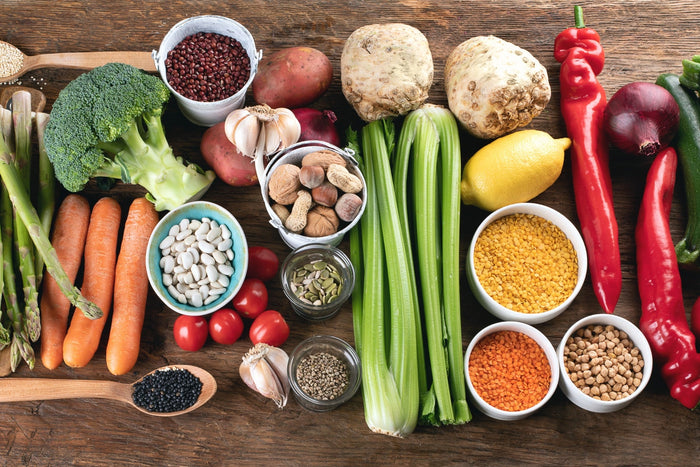
- +Vitamin C: peppers, orange, broccoli, blackcurrants with your meal
- +Meat and fish: heme iron also improves the absorption of plant-based iron alongside it
- +Fermented foods: sourdough, sauerkraut, kimchi break down phytate
- +Soaking and sprouting: soak pulses and grains beforehand
- +Cast-iron pan: releases iron into acidic dishes
- −Coffee and black tea: polyphenols halve absorption, green tea too
- −Dairy products and calcium tablets: calcium competes for the same pathway
- −Phytate: wholegrain, bran and raw pulses bind iron
- −Antacids: without stomach acid, iron barely dissolves
- −Fibre supplements and cola: extra inhibitors with food
Sources: Hurrell & Egli 2010; Hallberg et al. 1989.
Drinks for iron deficiency
No drink covers your iron needs on its own, but your choice does affect how much iron from your food actually gets absorbed. Orange juice, blackcurrant juice and sea buckthorn juice deliver vitamin C and are the best companion to a meal. Beetroot juice provides around 0.8 mg of iron per 100 ml plus folic acid, and nettle tea around 1.5 mg per cup. Pomegranate juice has little iron but plenty of vitamin C. Coffee, black tea, green tea, cola and milk slow absorption and belong between meals, not with them.
A cast-iron pan releases a measurable amount of iron when frying acidic foods like tomato sauce. Sauerkraut, kimchi and sourdough bread improve availability, because fermentation breaks down phytate.
Drinkable meals with iron
If you can't cook every day, you can replace individual meals with complete drinkable meals that contain all vitamins and minerals, including iron and vitamin C, in a balanced amount. Iron contributes to normal formation of red blood cells and haemoglobin. They don't replace treatment, but they make nutrition manageable on busy days.
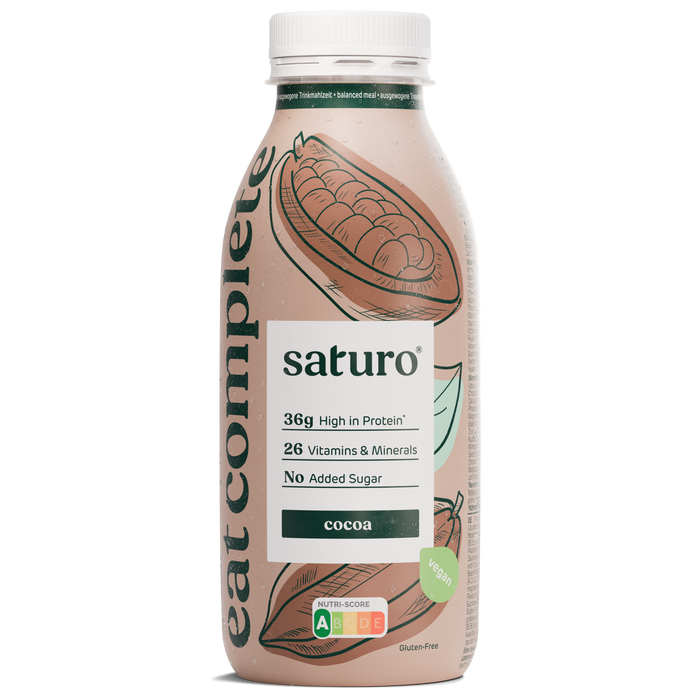
Drinkable meal: a complete meal from the bottle
26 vitamins and minerals, including iron and vitamin C. Iron contributes to the reduction of tiredness and fatigue. Reference intake for iron: 14 mg per day (NRV). For days when cooking isn't on the agenda.
Pregnancy, sport, vegan: who needs to be especially careful
Iron deficiency during pregnancy
During pregnancy, your need rises to 27 mg per day, because blood volume increases by up to 40% and your baby builds up its own stores. Being undersupplied raises the risk of premature birth, low birth weight and exhaustion after delivery. That's why ferritin is checked during antenatal care, and many pregnant women are prescribed a supplement. Only take iron during pregnancy after talking to your gynaecologist or midwife, but then stick with it consistently. Liver shouldn't be on the menu because of its vitamin A content; iron-rich alternatives include legumes, millet, pumpkin seeds and lean beef.

Vegan and vegetarian
A plant-based diet can cover your iron needs, but it takes planning: legumes every day (soybeans, white beans, kidney beans, lentils), sesame, pumpkin seeds, hemp and chia seeds, whole grains or pseudo-grains, always with a vitamin C source and kept apart from coffee and tea. Because plant-based iron is absorbed less well, experts estimate a need up to 1.8 times higher. Vegan women with heavy periods should have their ferritin checked once a year.
Sport
Endurance athletes are often affected: more loss through sweat and the gut, more blood formation due to training, and often a calorie-reduced diet. Empty stores cost you performance before haemoglobin even drops. If you do endurance sport and feel inexplicably worn out, get your ferritin checked; in sport, the threshold is usually set at 30 to 50 µg/l.
Consequences of iron deficiency: weight, hair, concentration
Left untreated, iron deficiency has consequences beyond tiredness. When it comes to weight, it works both ways: some people lose weight because their appetite disappears, others gain weight because exhaustion slows down movement and cravings for quick food grow. Hair loss gets worse, nails become brittle, and infections become more frequent because the immune system needs iron too. In children, concentration and learning suffer; in pregnant women, the risk of complications rises; in older people, heart and lung conditions get worse. The good news: all these effects reverse once the stores are full again.
Frequently asked questions about iron deficiency
What helps best against iron deficiency?
Fix the cause and refill your stores. With a confirmed deficiency, a doctor-prescribed iron supplement works most reliably, taken on an empty stomach, ideally every other day with vitamin C. With a mild deficiency, an iron-rich diet is often enough: legumes, pumpkin seeds, millet, meat or fish, along with peppers or orange juice, and coffee only an hour later.
What conditions does iron deficiency point to?
In women before menopause, the cause is usually menstruation. In men, children and women after menopause, the source has to be tracked down: stomach ulcer, coeliac disease, Crohn's disease, ulcerative colitis, bowel polyps, haemorrhoids, and rarely tumours in the gastrointestinal tract. Chronic kidney and heart disease often go hand in hand with iron deficiency too.
Can iron deficiency cause dizziness and heart palpitations?
Yes. If iron is lacking, your blood carries less oxygen, your heart beats faster and your circulation reacts more sensitively, especially when standing up or under exertion. Dizziness, heart palpitations and breathlessness are typical signs of advanced iron deficiency anaemia.
Does iron deficiency make you hungrier or less hungry?
Usually less. Iron deficiency often comes with a loss of appetite. Some people, however, develop cravings for unusual things like ice cubes, raw food or starch, known as pica syndrome, which disappears once the stores are refilled.
Can iron deficiency cause sleep problems?
Indirectly, yes. Low ferritin is closely linked to restless legs syndrome, which causes restless legs especially in the evening and at night and disrupts sleep. Exhaustion combined with inner restlessness is also commonly reported.
Is exercise good for iron deficiency?
Moderate exercise, yes, it keeps your circulation and mood stable. Intense endurance sport, on the other hand, increases iron loss and should only be stepped up again once your values improve. If you feel dizzy or short of breath during exertion, take a break and get your values checked.
When should you not take iron tablets?
Without a confirmed deficiency, with iron storage disease (haemochromatosis), during acute infections, and without medical advice if you have a chronic condition. The body doesn't excrete excess iron, and too much harms the liver and heart. For children, only on a paediatrician's instructions.
Which drink has the most iron?
No drink covers your needs on its own. Beetroot juice (around 0.8 mg per 100 ml) and nettle tea (around 1.5 mg per cup) contain the most. More important is what you drink with your food: orange juice or blackcurrant juice boost absorption, while coffee, black tea and milk slow it down.
Sources · 12 sources anzeigen
- German Nutrition Society (DGE): Reference values for nutrient intake, iron. Revised values, published 2024 (derived 2023).
- World Health Organization (WHO): Guideline on use of ferritin concentrations to assess iron status in individuals and populations. Geneva 2020.
- Hastka J., Metzgeroth G., Gattermann N.: Iron deficiency and iron deficiency anaemia. Onkopedia guideline of the DGHO, as of April 2025.
- Camaschella C.: Iron deficiency. Blood 2019; 133(1): 30–39.
- Hurrell R., Egli I.: Iron bioavailability and dietary reference values. American Journal of Clinical Nutrition 2010; 91(5): 1461S–1467S.
- Hallberg L., Brune M., Rossander L.: Iron absorption in man: ascorbic acid and dose-dependent inhibition by phytate. American Journal of Clinical Nutrition 1989; 49(1): 140–144.
- Stoffel N. U. et al.: Iron absorption from oral iron supplements given on consecutive versus alternate days and as single morning doses versus twice-daily split dosing in iron-depleted women. Lancet Haematology 2017; 4(11): e524–e533.
- Allen R. P. et al.: Evidence-based and consensus clinical practice guidelines for the iron treatment of restless legs syndrome/Willis-Ekbom disease in adults and children: an IRLSSG task force report. Sleep Medicine 2018; 41: 27–44.
- U.S. Department of Agriculture, Agricultural Research Service: FoodData Central, SR Legacy Release (2018). Iron content per 100 g.
- Pasricha S.-R., Tye-Din J., Muckenthaler M. U., Swinkels D. W.: Iron deficiency. Lancet 2021; 397(10270): 233–248.
- Halfdanarson T. R. et al.: Hematological manifestations of copper deficiency: a retrospective review. European Journal of Haematology 2008; 80(6): 523–531.
- Rossander-Hultén L. et al.: Competitive inhibition of iron absorption by manganese and zinc in humans. American Journal of Clinical Nutrition 1991; 54(1): 152–156.
Writing for Saturo since 2019 about nutrition, nutrients and how good nourishment actually works in everyday life.
Hat diesen Artikel am 10. September 2026 auf fachliche Richtigkeit geprüft. This content doesn't replace medical advice.

Vitamin B12 deficiency: symptoms and causes
Tingling, forgetfulness, exhaustion: why B12 is the most critical vitamin for vegans and older people.
Weiterlesen · 16 Min
New from the guide
New articles, updates and tips straight to your inbox. Easy to understand, expert-checked, no spam.
Danke! Bitte bestätige die Anmeldung in deinem Postfach.