
Mineral deficiency: symptoms, causes and tests
Constantly tired, calf cramps, thinning hair? Signs like these fit almost any mineral, but a true deficiency is rare in healthy people. Find out which symptom fits which mineral, who is at risk and which test really counts.


Aktualisiert 2 October 2026 · 16 Min. Lesezeit · 46 Quellen

The key points in 30 seconds
Six major minerals from sodium to phosphorus and eight trace elements from iron to molybdenum have a reference value and their own article on our site. Every row of the table takes you there.
That's how many women in the National Food Consumption Survey didn't reach the recommended iron intake, compared with 14 % of men. Below the recommendation doesn't automatically mean deficiency, but iron is the one nutrient that really is often lacking.
According to the Robert Koch Institute, around a third of adults fall below their estimated iodine requirement. The consumer advice centre calls iodine the only exception to the rule that mineral deficiency is extremely rare here.
Tiredness, cramps and hair loss fit many nutrients, and just as well lack of sleep, stress or infections. Which value counts differs for each mineral: ferritin for iron, TSH for iodine, serum level for potassium, magnesium and sodium.
Mineral deficiency symptoms: the table for all 14 minerals
Tired, cramps, thinner hair, and somewhere it says a mineral is missing. The honest answer first: in healthy people who eat normally, a true mineral deficiency is rare. In Germany, what's most common is too little iodine and, in women, too little iron. For all 14 minerals, the table shows which signs are documented, who is affected and which test tells you something; vitamins have their own overview.
Mineral deficiency: symptoms, risk groups and the test that counts
One row per mineral, with only the signs backed up in the individual articles. The name takes you to the article with all the details.
| Documented signs | Who is at risk | Meaningful test | |
|---|---|---|---|
| Iron deficiency | Tiredness, pallor, hair loss, brittle nails, restless legs | Women with heavy periods, pregnant women, vegans, endurance sport, stomach surgery | Ferritin with CRP, plus haemoglobin |
| Zinc deficiency | Frequent infections, slow wound healing, skin eczema, bland taste | Vegans eating lots of wholegrain, bowel disease, alcohol, older people | Fasting serum zinc with CRP (weak marker) |
| Magnesium deficiency | Tingling, twitching, night-time calf cramps, palpitations | Acid blockers, water tablets, alcohol, diarrhoea, diabetes | Serum magnesium with potassium and calcium |
| Calcium deficiency | A dietary shortfall stays silent; blood level too low: tingling around the mouth, cramps | Vegans without a calcium source, over 65, thyroid surgery, vitamin D deficiency | Serum calcium with albumin, vitamin D, parathyroid hormone |
| Potassium deficiency | Muscle weakness, heavy legs, constipation, palpitations | Water tablets, laxatives, vomiting, diarrhoea | Serum potassium with magnesium, ECG if you have palpitations |
| Sodium deficiency | Headache, nausea, confusion, unsteady walking | Over 65, thiazides, antidepressants, marathon with lots of drinking | Serum sodium with urine osmolality |
| Chloride deficiency | No distinct picture; signs of alkalosis and potassium deficiency | Persistent vomiting, loop diuretics, feeding tube | Serum chloride with sodium, potassium, blood gas |
| Phosphate deficiency | Mild: silent; severe: muscle weakness, bone pain, shortness of breath | Alcohol, iron infusion, refeeding after a period of starvation, antacids | Serum phosphate with calcium and vitamin D |
| Iodine deficiency | Goitre, lump-in-the-throat feeling; tiredness and feeling cold only with an underactive thyroid | Vegans, pregnant and breastfeeding women, anyone who doesn't use iodised salt | TSH and ultrasound (urine value only for groups) |
| Selenium deficiency | No distinct picture; muscle and heart weakness only with long-term infusion or dialysis | Vegans, dialysis, gastric bypass, bowel disease | Serum selenium, request separately |
| Copper deficiency | Anaemia despite iron, infections, tingling, unsteady walking | Stomach surgery, zinc supplements over several weeks, bowel disease | Serum copper with caeruloplasmin, blood count |
| Manganese deficiency | Not described in healthy people; too much is the risk | Only genetic defect or intravenous nutrition | No recognised marker (whole blood only for excess) |
| Chromium deficiency | Never described in healthy people; five cases under intravenous nutrition | Only parenteral nutrition over years | No validated test |
| Molybdenum deficiency | Not observed in healthy people; one case under infusion nutrition | Only parenteral nutrition, rare genetic defects | No valid biomarker |
Classification based on the 14 individual articles and their sources, as of 2 October 2026. No sign is specific: only the combination with your situation makes a mineral likely, and only the right test value proves it.
Which symptoms are typical of a mineral deficiency
Not a single one that belongs to just one mineral. Tiredness, headache, cramps, dry skin and hair loss appear on almost every list, and they come just as easily from lack of sleep, stress, infections or a thyroid that isn't running properly. What really helps is the combination: pallor plus tiredness plus heavy periods points to iron; calf cramps plus tingling plus acid blockers to magnesium; headache plus confusion plus a new tablet to sodium. The finder sorts your signs by exactly this pattern, including the myths you can cross off.
Always tired: which mineral is missing?
Most likely iron, and even then only in some people. In women before the menopause, empty iron stores (ferritin) are the most common mineral-related cause of leaden tiredness. In a study of 198 tired women without anaemia, the fatigue score fell by 48% with iron and by 29% with placebo; the GP guideline only expects a benefit when stores are clearly empty. Next come the thyroid (check iodine via the TSH level, don't guess), magnesium and potassium only where there's a loss situation, and sodium after new medication. For selenium, manganese, chromium, chloride and molybdenum, tiredness isn't proven as a sign of deficiency. If you're tired, get your blood count, ferritin, TSH and vitamin B12 checked.
Muscle cramps and twitching: magnesium, calcium or potassium?
All three can cause cramps, but only if the blood level is really too low, and that's rarely the case with ordinary calf cramps. The 2020 Cochrane review (11 studies, 735 people) considers it unlikely that magnesium relieves night-time cramps in older people. What sets them apart in practice: magnesium for tingling, twitching and losses through acid blockers, water tablets or alcohol; potassium for heavy legs and weakness after vomiting, diarrhoea or laxatives; calcium for cramped hands with tingling around the mouth, for example after thyroid surgery. A twitching eyelid is usually down to lack of sleep, screens or caffeine. All three levels are measured together.

Hair loss: which mineral is missing?
Two are proven: iron and zinc, and for them too the rule is: measure first, then act. Diffuse hair loss with tiredness and paleness fits empty iron stores; hair loss with skin eczema, diarrhoea or a dulled sense of taste fits a pronounced zinc deficiency. With iodine, hair only falls out via an underactive thyroid. With selenium, hair loss is a sign of too much, not too little; for magnesium, calcium, copper, manganese and chromium there's no evidence. According to the BfR, no mineral supplement stops hereditary hair loss as long as no deficiency has been proven, and zinc tablets without a deficiency won't give you fuller hair.
Causes of mineral deficiency: who is really at risk
A mineral deficiency rarely comes from your plate alone. Usually there are also losses (diarrhoea, vomiting, medication), impaired absorption (bowel disease, stomach surgery) or higher needs (pregnancy, breastfeeding, growth). If you don't fall into any of these groups and eat a varied diet, you're very likely well supplied. Pick your situation and you'll see which minerals the medical societies keep an eye on there.
Vegan and vegetarian: iron, zinc, iodine, selenium?
Yes, exactly these four, plus calcium if you don't eat fortified products. The DGE counts them among the potentially critical nutrients on a vegan diet: iron from plants is absorbed less well, phytate from wholegrain slows down zinc, and iodine is almost entirely missing without fish, milk and iodised salt. In a Berlin study, only 8% of the vegan participants reached the WHO value for iodine in urine. Phosphate, copper, manganese and molybdenum aren't an issue on a plant-based diet. If you eat vegan, use iodised salt, combine iron sources with vitamin C and have your ferritin measured once a year. More in the article Vegan diet.
Pregnancy and breastfeeding
Your needs go up for iron (27 mg instead of 16), iodine (220 or 230 µg instead of 150), zinc and selenium; calcium stays at 1,000 mg because the gut doubles absorption. Top up iodine from the time you want to conceive with a supplement of 100 to 150 µg, as advised by the DGE, the BfR and the Gesund ins Leben network; iron only based on your ferritin level, not as a blanket measure. A sodium level that is naturally 3 to 5 mmol/l lower in pregnancy is normal and not a deficiency. With persistent pregnancy sickness, potassium, magnesium and chloride are lost, and that belongs in medical hands.

Medicines that rob you of minerals
Three groups are well documented. Acid blockers (proton pump inhibitors) lower magnesium after months, even to the point of cramps and heart rhythm disturbances. Water tablets of the thiazide type very often cause potassium loss and often sodium and magnesium loss, and loop diuretics additionally cause calcium loss. Laxatives cost potassium: barely when used as directed, noticeably with long-term high-dose use. Then there are cortisone, certain antidepressants and antiepileptics (sodium) and zinc supplements taken over weeks (copper). Conversely, ACE inhibitors, sartans and potassium-sparing diuretics raise potassium, so a potassium supplement is dangerous there. Metformin doesn't rob a mineral but vitamin B12. If you take medication long term, ask for check-ups, not powders.
Mineral deficiency in older age: what to watch for?
Sodium, thirst and medication, not trace elements. More than one in five people over 65 has a sodium level that is too low, mostly because of water tablets, antidepressants or too much fluid with too little salt; the consequences are unsteadiness, falls and new confusion that easily passes for dementia. In one study, 21% of people with chronically low sodium were admitted to hospital because of falls, compared with 5% in the comparison group. On top of that comes a weaker sense of thirst, which the guideline on nutrition in older age names as the main reason for dehydration, and with a small appetite, too little calcium, zinc and magnesium. If you hardly eat any more in older age, it's more likely an energy and protein problem: Malnutrition is a topic of its own.
Which minerals are there? Major minerals and trace elements
Three groups, one cut-off: 50 mg a day. Once you know it, you'll see why sodium and potassium are measured in grams, iodine and selenium in micrograms, why electrolytes are not the same as trace elements, and why a lack of sulphur or vanadium is not a diagnosis.
Major minerals: over 50 mg a day
According to the German Nutrition Society (DGE), your body needs sodium, chloride, potassium, calcium, phosphorus and magnesium in amounts above 50 mg a day: 4 g for potassium, 1 g for calcium. Four of them, plus magnesium, are also electrolytes: they carry a charge in your blood and control water balance, nerves and muscles. That's why your kidneys keep their blood levels tightly regulated, largely regardless of what's on your plate. The DGE also counts sulphur here, without a reference value of its own: your protein intake covers the need.
Trace elements: under 50 mg a day
Iron, zinc, iodine, selenium, copper, manganese, chromium and molybdenum occur in tissue only in traces and are measured in milligrams or micrograms: 11 to 16 mg of iron, 150 µg of iodine, 60 to 70 µg of selenium. They sit in enzymes, hormones and transport proteins. For chromium, it isn't even certain that it's essential: the DGE says yes, EFSA and the NIH see no proof. Fluoride has only a guideline value for your teeth, and cobalt is part of vitamin B12 and gets no value of its own.
No described deficiency: sulphur, vanadium, silicon, boron
For these substances there is neither a reference value nor a deficiency described in humans. Sulphur comes with every protein (methionine, cysteine). According to the US National Academy of Sciences, vanadium has no identified function in humans, and EFSA classes silicon and boron as non-essential. The symptom lists for sulphur or vanadium deficiency you'll find online have no study behind them; vanadium supplements contain a hundred times the usual intake.
How common is a mineral deficiency, really?
Rarer than the symptom lists suggest, and more common than zero: depending on whether you measure intake or blood, you end up with completely different figures. The biggest German survey counted amounts, not deficiencies. So first, the sentence the Max Rubner-Institut itself writes about its data.
Below the recommendation doesn't mean deficiency
If you don't reach the reference values, you don't necessarily have a deficiency, in the DGE's own words. The recommended intake covers the needs of 98% of the population and includes a 20 to 30% margin on top of the average requirement; if you're below it, you usually still have reserves. Whether something is really missing is shown only by a blood or urine value, not a food diary, write the authors of the National Consumption Study. The bars therefore show the share of adults below the recommendation, measured against the reference values of the time; for iodine and iron, different values apply today.
Share of adults below the recommended intake (not: with a deficiency)
National Consumption Study II (Max Rubner-Institut 2008), intake from food without supplements, ages 14 to 80, measured against the 2000 reference values. Iodine in the calculation model with iodised salt in all recipes; without iodised salt, 97% of women would be below. Below the recommendation does not mean deficiency.
Trace elements: iron and iodine are common, the rest rare
Two trace elements are measurably lacking in Germany, the other six practically never. Iodine: the median urine value in the RKI monitoring was 69 µg/l for men and 54 µg/l for women, while the WHO requires over 100 for an adequate supply; around a third of adults are below the estimated requirement, and Germany is once again considered a mild iodine-deficiency area. Iron: 5 to 10% of the population in Europe, and around 20% of women of childbearing age. Zinc and selenium only run short in risk groups; for copper, manganese, chromium and molybdenum, a diet-related deficiency hasn't been described in healthy people. The often-cited “70% of Germans with a selenium deficiency” has no study behind it.
Which mineral deficiency is the most common?
Iodine, followed by iron in women. Among the bulk minerals, calcium is the only one many people consistently take in below the recommendation: among over-65s that's 61% of men and 65% of women. In its overall assessment, the BfR names only four nutrients that fall below recommendations in some groups: vitamin D, calcium, folic acid and iodine. We tend to get too much sodium, with men eating a median of 10 g of salt a day and women 8.4 g. According to the DGE and BfR, a potassium or phosphate deficiency from food is rare to non-existent. The consumer advice centre (Verbraucherzentrale) sums it up in one sentence: mineral deficiency and the illnesses it causes are extremely rare in Germany, with iodine the exception.
Electrolyte deficiency: symptoms, causes and what helps
Electrolytes are the minerals that carry an electrical charge in your blood: sodium, potassium, chloride, plus calcium, magnesium and phosphate. In everyday life, an electrolyte deficiency is almost never a dietary shortfall. It's either a loss (diarrhoea, vomiting, sweating, medication) or a dilution from drinking too much water. So a powder rarely helps, the right drink often does, and sometimes only a doctor can.
Low electrolytes: symptoms
Cramps, weakness, dizziness, headache, nausea and heart palpitations, in a different mix depending on the electrolyte. With too little sodium, the brain suffers first: headache, nausea, poor concentration, confusion, and seizures if levels drop quickly. Too little potassium makes your muscles weak, your gut sluggish and your heart restless, and a moderate deficiency can lead to paralysis. Too little magnesium shows up as tingling, trembling, cramps and heart rhythm problems, often together with low potassium and calcium. Chloride has no symptoms of its own; it follows sodium and potassium. Mild deviations usually cause no symptoms. How fast the level drops matters more than the number.

Electrolyte loss through diarrhoea, vomiting and sweating
Diarrhoea and vomiting are the most common triggers in everyday life. Stool carries away sodium, potassium, magnesium and chloride, vomit takes stomach acid, meaning chloride, and the kidneys then lose potassium. Sweat contains 10 to 90 mmol of sodium per litre, around 36 on average in athletes, which is roughly 2 g of salt per litre (calculated). You hardly lose any potassium or magnesium that way. For exertion under an hour, water is therefore just as good as an electrolyte drink, says the sports medicine society ACSM.
Too much water: when sodium gets diluted
The most common electrolyte disorder is low sodium, and it almost never comes from too little salt. It comes from too much water relative to salt. In hospitals it affects 15 to 20% of patients, mostly because of medication or heart, liver and kidney disease. At the 2002 Boston Marathon, 13% of the runners tested had a sodium level below 135 mmol/l at the finish, and the risk was highest in those who had gained weight during the race, meaning they'd drunk beyond thirst. Headache, nausea and confusion after a long run are no reason to drink even more water.
Replacing electrolytes: what you can drink
For diarrhoea or vomiting, get an oral rehydration solution made to the WHO formula from the pharmacy: 75 mmol of sodium per litre, a little glucose, 245 mOsm/l, so your gut absorbs salt and water at the same time. The guidelines explicitly advise against cola, apple juice and lemonade: cola contains 1.3 mmol of sodium per litre, almost 100 g of sugar and around 750 mOsm/l, which makes diarrhoea worse. For sport lasting over an hour or in the heat, a drink with 20 to 50 mmol of sodium per litre is enough, so a sports drink or salty food plus water. In a normal office day, nobody needs electrolyte powder: a normal diet supplies plenty of sodium.
When an electrolyte deficiency becomes dangerous
As soon as your brain or heart reacts. Confusion, unusual drowsiness, seizures, repeated vomiting with headache, shortness of breath, heart rhythm problems or paralysis that creeps up from the legs are reasons to call emergency services, not to reach for a powder. In older people, new confusion after a new medication is a suspected sodium problem until proven otherwise. Even chronically mildly low sodium isn't harmless: it raises the risk of falls and fractures, and it's often overlooked because it just feels like tiredness.
If there's confusion, a seizure, severe drowsiness, shortness of breath or a feeling of paralysis: call 112. For diarrhoea or vomiting that lasts more than two days, fever, blood in the stool, or if someone is barely drinking: see a doctor the same day, and sooner for babies and the very elderly.
Mineral deficiency test: which blood values actually tell you something
There's no test that checks all minerals, and the full blood count doesn't measure a single one of them. Every mineral has its own reference value, and some tell you very little: serum magnesium reflects only around 1% of the body's stock, ferritin rises with any infection, and a urinary iodine value only applies to populations. Here's what your GP surgery can sensibly measure.
How do I find out which minerals I'm missing?
In three steps: situation, signs, then the right value. First check your risk profile (diet type, medication, pregnancy, age, bowel disease, sport), then the signs in the table above, then get the right tests done: ferritin with CRP for iron, TSH for iodine, serum values for sodium, potassium, magnesium, calcium and phosphate, fasting serum zinc with CRP, serum copper with caeruloplasmin, and selenium in serum. For manganese, chromium and molybdenum there's no validated deficiency marker. The German GP guideline on fatigue recommends a blood count, blood sugar, inflammation markers, liver values and TSH as a baseline; further tests only if there's a specific indication. According to the consumer advice centre, all-round test packages usually make little sense.
GP or home test: what the insurer pays for
If there are signs of a deficiency, your GP surgery orders the tests and your health insurer pays. Without suspicion, mineral tests are a private service you pay for yourself: individual serum values such as magnesium, potassium or iron cost just a few euros under the fee schedule, ferritin a bit more, selenium and manganese considerably more. The check-up from age 35 includes none of them. Home tests from the chemist or online (finger prick, mail-in lab) sometimes measure the same thing as the surgery, but the consumer advice centre warns about fluctuating results, handling errors and evaluations that lead straight to a purchase recommendation. For calcium, potassium and sodium there's no home test at all.

Whole blood and hair analysis: what they're worth
For the question ‘Am I missing something?’, not much. Whole blood mineral analysis, which private labs promote as more accurate, hasn't been shown to be better for any mineral: the international expert group BOND recommends serum levels for zinc, and according to the DGE (German Nutrition Society) there's no suitable biomarker for magnesium at all. We haven't found a guideline that recommends whole blood analysis. Hair analysis is suited to detecting drugs and poisons, not to checking mineral status: in a test by the Austrian consumer magazine Konsument, providers' reference values differed by up to 300 times, and supplements were recommended despite normal results. The consumer advice centre advises against it.
Fixing a mineral deficiency: food, water, supplements
A confirmed deficiency is fixed in a targeted way: with the mineral that's missing, in the dose your surgery sets, over weeks to months. Without confirmation, the order is reversed: plate first, then water, supplements last. What the 14 individual articles explain in detail is summarised here; the basics on all micronutrients are in a separate article.
What should I eat with a mineral deficiency?
The food that supplies the missing nutrient, and regularly: pulses, pumpkin seeds and red meat for iron; dairy, sesame and kale for calcium; nuts, wholegrain and pulses for magnesium; sea fish, milk and iodised salt for iodine; meat, cheese and pumpkin seeds for zinc. Each individual article has a ranking of the ten best plant and animal sources per 100 g, cooked. Three rules apply to all of them: iodised salt instead of sea salt, use the cooking water too (minerals leach out, they aren't destroyed), and have iron with vitamin C rather than coffee. And eat a varied diet: if every food group is on your plate, you'll hit the 14 nutrients without doing any sums.
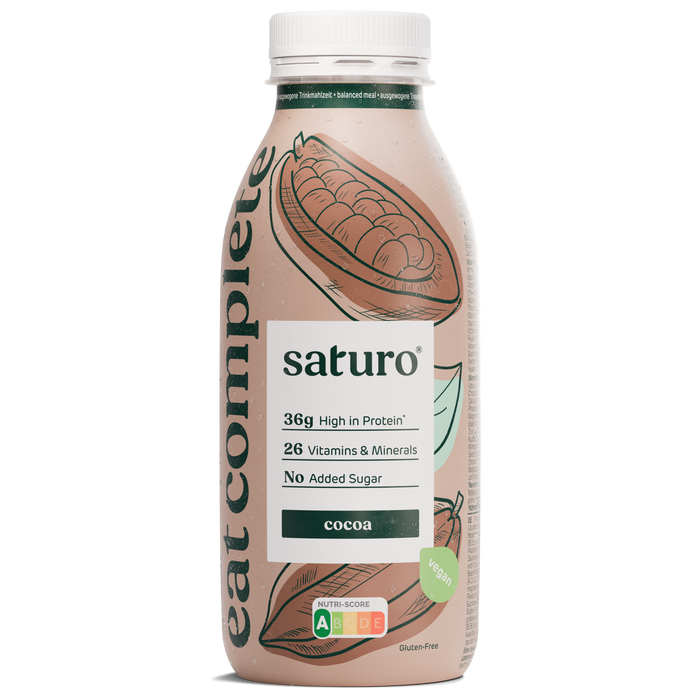
Drinkable meal: a complete meal in a bottle
13 minerals and 13 vitamins in every bottle, for example 37 µg iodine (25% of the reference intake) and, depending on flavour, 87 to 92 mg magnesium, according to the nutrition table. Plus 400 kcal and 36 g protein. Not a substitute for medical treatment.
Mineral water: how much it really delivers
Anywhere between almost nothing and a quarter of your daily needs, depending on the source. A mineral water can only be called ‘contains calcium’ from 150 mg per litre, ‘contains magnesium’ from 50 mg, and ‘suitable for a low-sodium diet’ under 20 mg; the regulation doesn't set a minimum content. Two litres of a calcium-rich water give you around 300 mg of calcium, a soft water almost none; according to the WHO, hard tap water contributes up to 180 mg of calcium a day. Osmosis or tap water won't make anyone deficient if they eat normally. According to the BfR, only people who avoid dairy or sweat for more than 1.5 hours at a stretch need to look for water with more minerals.
In my consultations, almost nobody comes in with a genuine mineral deficiency, but plenty come in with three supplements for a suspected one. My approach is always the same: first the situation, then the one right blood value, then the one right measure. For iodine, that's usually an iodised salt shaker; for iron, a ferritin value before any tablet; for magnesium, the question about acid blockers.
Joerg Hauke, Nutrition expert, expert review of this article
Mineral supplements: when they make sense, and when it's too much
They make sense if you have a confirmed deficiency, during pregnancy and breastfeeding (iodine, and iron depending on your levels), on a vegan diet (iodine, and iron and zinc if needed, depending on your levels) and with certain medications under medical supervision. Too much is reached faster than you'd think: the BfR (German Federal Institute for Risk Assessment) has proposed a maximum amount per daily dose for each mineral, and common tablets often exceed it. Magnesium above 250 mg causes diarrhoea, zinc in high doses over several weeks causes a copper deficiency with anaemia, iodine with undetected thyroid nodules causes an overactive thyroid, and potassium with weak kidneys or on blood pressure medication causes a dangerous excess. Men and women after the menopause should only take iron after a diagnosis. More in the article dietary supplements.
This is how much of each mineral the BfR considers acceptable in a dietary supplement
Proposals from the German Federal Institute for Risk Assessment per daily dose of a supplement, derived from the EU upper limits minus the usual intake from food.
| Maximum per day | Why not more | |
|---|---|---|
| Magnesium | 250 mg (split across two servings) | More causes diarrhoea; intake from food is usually enough |
| Calcium | 500 mg | Inhibits iron absorption; evidence on heart risk from supplements is inconsistent |
| Potassium | 500 mg | Dangerous with weak kidneys and on ACE inhibitors or sartans |
| Iron | 6 mg | Men and women after the menopause only after a diagnosis |
| Zinc | 6.5 mg | Intake from food is already high; high doses displace copper |
| Iodine | 100 µg (150 in pregnancy and breastfeeding) | Overactive thyroid with undetected thyroid nodules |
| Selenium | 40 µg | Too much: hair loss, brittle nails, garlic breath |
| Copper | 1 mg | Not for children and teenagers |
| Manganese | 0.5 mg | Too much damages the nervous system |
| Chromium | 60 µg | Deficiency has never been described in healthy people |
| Molybdenum | 80 µg | Deficiency not observed in healthy people |
| Sodium, phosphorus, fluoride | no supplementation | Intake from food is enough or higher |
BfR opinions 2021, updated 2024 (selenium) and 2025 (iodine); magnesium according to BfR 2017. These are proposals for risk management, not EU-wide legal limits. If you combine several products (a multi-supplement plus a single supplement), add the amounts together.
Frequently asked questions about mineral deficiency
What symptoms does a mineral deficiency cause?
None that belong to just one mineral. What's proven: tiredness and paleness with iron, goitre with iodine, cramps and tingling with too little magnesium, calcium or potassium, headache and confusion with sodium. What counts is how the signs fit your situation; the table above sorts all 14 substances.
How can I top up minerals in my body?
With the right foods, every day and over several weeks: stores like ferritin don't fill up in a few days. With a confirmed deficiency, your doctor sets the dose; if you've lost minerals through diarrhoea, a WHO oral rehydration solution replaces salt and water. According to the BfR, supplements taken on a hunch bring no benefit.
Can you take in too many minerals?
Yes, but in practice only through supplements or fortified products, not through normal food. Examples: diarrhoea from an extra 250 mg of magnesium, copper deficiency from high zinc doses, an overactive thyroid from iodine with thyroid nodules, hair loss and brittle nails from too much selenium, dangerously high potassium with weak kidneys.
Which minerals shouldn't you take together?
Calcium and iron: 300 to 600 mg of calcium at the same meal halves iron absorption. Zinc and copper: high zinc displaces copper. Iron, calcium and aluminium reduce the absorption of thyroid hormone, so leave a gap of two hours from levothyroxine. In food, these substances don't noticeably get in each other's way.
Which mineral water is particularly rich in minerals?
One with more than 1,500 mg of dissolved minerals per litre can be labelled ‘high in minerals’; for calcium, the label value that counts is above 150 mg/l, for magnesium above 50 mg/l. Brands differ by a factor of ten, so a look at the label beats any ranking.
Can I get a mineral test from my GP?
Yes. If there are signs of a deficiency (symptoms, risk group, medication), your doctor orders the relevant tests, covered by statutory health insurance. Without any suspicion, you pay yourself, and individual values cost a few euros under the fee schedule. According to the consumer advice centre (Verbraucherzentrale), an all-round package usually doesn't make sense.
How long does it take to fix a mineral deficiency?
Electrolytes like sodium and potassium are corrected within hours to days, slowly and under supervision. Stores take months: for iron, expect around three to six months of tablets until ferritin is stable above 50 µg/l; a goitre only partly shrinks with iodine. You'll find details in the individual article for each mineral.
Is there such a thing as a sulphur deficiency or a vanadium deficiency?
No, not as a diagnosis. Your sulphur needs are covered by the amino acids methionine and cysteine in any protein, and the DGE (German Nutrition Society) sets no value of its own. According to the US National Academy of Sciences, vanadium has no proven function in humans; symptom lists for it come from animal studies and retailer websites.
Sources · 46 sources anzeigen
- German Nutrition Society (DGE): Selected questions and answers on the reference values for nutrient intake (questions 7, 10, 11: supplement, falling below recommended intake, major and trace elements).
- Max Rubner-Institut: National Nutrition Survey II, Results Report Part 2. Karlsruhe 2008, Chapter 5.7 (sodium, potassium, calcium, magnesium, iron, iodine, zinc).
- Max Rubner-Institut: National Nutrition Survey II, Food consumption and nutrient intake based on 24-hour recalls. Karlsruhe 2013, pp. 6-7.
- German Nutrition Society (DGE): 13th Nutrition Report 2016, Chapter 1.3.6 Iodine supply (DEGS1).
- German Federal Institute for Risk Assessment (BfR): Update (2025): Proposed maximum levels for iodine in foods, including food supplements. Opinion 065/2025 dated 19 December 2025.
- German Federal Institute for Risk Assessment (BfR): Updated proposed maximum levels for vitamins and minerals in food supplements and fortified foods. Opinion 006/2024 dated 22 February 2024.
- German Federal Institute for Risk Assessment (BfR): BfR assesses the recommended daily maximum intake of magnesium from food supplements. Opinion 034/2017 dated 12 December 2017.
- German Nutrition Society (DGE): Questions and answers on iodine (2025 reference values; urine levels not suitable for individuals).
- German Nutrition Society (DGE): DGE publishes revised reference values for iron, phosphorus and fluoride. Press release 2024.
- German Nutrition Society (DGE): Reference values for nutrient intake, potassium (deficiency from low intake is rare).
- Klug A., Richter M., Schäfer A. C. et al.: Re-evaluation of the DGE position on vegan diets. Ernährungs Umschau 2024; 71(7): 60-84.
- Weikert C., Trefflich I., Menzel J. et al.: Vitamin and Mineral Status in a Vegan Diet. Deutsches Ärzteblatt International 2020; 117: 575-582.
- Hastka J., Metzgeroth G., Gattermann N.: Iron deficiency and iron deficiency anaemia. Onkopedia guideline of the DGHO, as of April 2025.
- World Health Organization (WHO): Guideline on use of ferritin concentrations to assess iron status in individuals and populations. Geneva 2020.
- Vaucher P., Druais P.-L., Waldvogel S., Favrat B.: Effect of iron supplementation on fatigue in nonanemic menstruating women with low ferritin: a randomized controlled trial. CMAJ 2012; 184(11): 1247-1254.
- DEGAM: S3 guideline on tiredness. AWMF register 053-002, full version, updated December 2022.
- Garrison S. R., Korownyk C. S., Kolber M. R. et al.: Magnesium for skeletal muscle cramps. Cochrane Database of Systematic Reviews 2020; 9: CD009402.
- German Federal Institute for Risk Assessment (BfR): Can a special diet stop hereditary hair loss? Opinion 012/2025 dated 15 April 2025.
- Federal Institute for Drugs and Medical Devices (BfArM): Proton pump inhibitors: risk of bone fractures and hypomagnesaemia, Annex 2 with the prescribing information texts. Risk information dated 26 July 2012.
- Park C. H., Kim E. H., Roh Y. H., Kim H. Y., Lee S. K.: The Association between the Use of Proton Pump Inhibitors and the Risk of Hypomagnesemia: A Systematic Review and Meta-Analysis. PLoS ONE 2014; 9(11): e112558.
- Summary of Product Characteristics: Hydrochlorothiazide 12.5 mg tablets (089 Pharm), as of February 2025, sections 4.4 and 4.8.
- Spasovski G., Vanholder R., Allolio B. et al.: Clinical practice guideline on diagnosis and treatment of hyponatraemia. Intensive Care Medicine 2014; 40: 320-331.
- Renneboog B., Musch W., Vandemergel X., Manto M. U., Decaux G.: Mild chronic hyponatremia is associated with falls, unsteadiness, and attention deficits. American Journal of Medicine 2006; 119(1): 71.e1-71.e8.
- Almond C. S. D., Shin A. Y., Fortescue E. B. et al.: Hyponatremia among Runners in the Boston Marathon. New England Journal of Medicine 2005; 352: 1550-1556.
- Baker L. B., Barnes K. A., Anderson M. L., Passe D. H., Stofan J. R.: Normative data for regional sweat sodium concentration and whole-body sweating rate in athletes. Journal of Sports Sciences 2016; 34(4): 358-368.
- Sawka M. N., Burke L. M., Eichner E. R. et al.: American College of Sports Medicine position stand: Exercise and fluid replacement. Medicine & Science in Sports & Exercise 2007; 39(2): 377-390.
- World Health Organization (WHO), UNICEF: Oral Rehydration Salts: Production of the new ORS. Geneva 2006.
- AWMF: S2k guideline on acute infectious gastroenteritis in infants, children and adolescents. Register 068-003, version 4.1, June 2024, table II.1.
- AWMF, DGVS: S2k guideline on gastrointestinal infections. Register 021-024, 2023.
- DGEM, AWMF: S3 guideline on clinical nutrition and hydration in older age. Register 073-019, version 2.1 of 3 February 2025.
- Johner S. A., Thamm M., Schmitz R., Remer T.: Current daily salt intake in Germany: biomarker-based analysis of the representative DEGS study. European Journal of Nutrition 2015; 54: 1109-1115.
- Verbraucherzentrale: Vitamins and minerals: How can you tell if you have a nutrient deficiency? As of 6 January 2026.
- Verbraucherzentrale: Mineral products: What you should know.
- King J. C., Brown K. H., Gibson R. S. et al.: Biomarkers of Nutrition for Development (BOND), Zinc Review. Journal of Nutrition 2016; 146(4): 858S-885S.
- Verein für Konsumenteninformation (VKI), Konsument: Hair mineral analysis put to the test.
- Verein für Konsumenteninformation (VKI), Konsument: Minerals: Are they lost during cooking?
- Mineral and Table Water Ordinance (Mineral- und Tafelwasser-Verordnung), Annex 6 (to § 9 paragraph 3): Requirements for information on mineral composition.
- Federal Institute for Risk Assessment (BfR): Health assessment of very low-mineral water. Opinion 041/2020.
- World Health Organization (WHO): Nutrients in Drinking Water. Geneva 2005.
- Hallberg L., Brune M., Erlandsson M., Sandberg A. S., Rossander-Hultén L.: Calcium: effect of different amounts on nonheme- and heme-iron absorption in humans. American Journal of Clinical Nutrition 1991; 53(1): 112-119.
- Fosmire G. J.: Zinc toxicity. American Journal of Clinical Nutrition 1990; 51(2): 225-227.
- Summary of Product Characteristics: Euthyrox (levothyroxine), section on interactions (aluminium, iron, calcium salts). Federal Office for Safety in Health Care (BASG), Austria.
- European Food Safety Authority (EFSA): Dietary Reference Values for nutrients, Summary report. EFSA Supporting Publication 2017 (no reference value for chromium, fluoride not essential).
- Institute of Medicine (IOM): Dietary Reference Intakes for Vitamin A, Vitamin K, Arsenic, Boron, Chromium, Copper, Iodine, Iron, Manganese, Molybdenum, Nickel, Silicon, Vanadium, and Zinc. Washington 2001, chapter 13 (vanadium, silicon, boron).
- Federal Institute for Risk Assessment (BfR): Proposed maximum levels for boron in foods, including food supplements (EFSA: boron not essential). Opinion 2021.
- Federal Institute for Risk Assessment (BfR): Proposed maximum levels for silicon in foods, including food supplements (EFSA: silicon not essential). Opinion 2021.
Has been writing for Saturo since 2019 about nutrition, nutrients and how good nutrient supply works in practice in everyday life.
Hat diesen Artikel am 2. Oktober 2026 auf fachliche Richtigkeit geprüft. The content does not replace medical advice.

Vitamin deficiency: symptoms of all 13 vitamins at a glance
This page's sister: which symptom matches which vitamin, who is at risk and which blood test actually tells you something. With a table and symptom finder.
Weiterlesen · 13 Min

Latest from the guide
New articles, updates and tips straight to your inbox. Easy to understand, expert-checked, no spam.
Danke! Bitte bestätige die Anmeldung in deinem Postfach.