
Selenium deficiency: symptoms, causes and treatment
Constantly tired, hair thinner, weight up? Selenium deficiency is rare in Germany, even though our soils are low in it. Which symptoms really belong to it, which blood value counts and where you'll find selenium.


Aktualisiert 30 September 2026 · 16 Min. Lesezeit · 69 Quellen

The key points in 30 seconds
DGE estimated value: 60 µg for women, 70 µg for men, 75 µg while breastfeeding. Two eggs provide 24 µg, a tuna steak over 100 µg.
According to EFSA, this much selenium a day from all sources has been considered safe since 2023. Above that, hair loss and brittle nails, the classic signs of overdose, are a risk.
That's how much the selenium content of a single nut varies depending on where it comes from. Nuts sold in Germany average 11 µg, while nuts from the Amazon contain many times that.
Selenium deficiency doesn't make you put on weight, and selenium doesn't help you lose it: 65 studies found no difference in blood selenium between overweight and normal-weight people.
Selenium deficiency symptoms: how to spot it
Selenium deficiency has no distinctive look. What the specialist literature really supports is muscle weakness, a weakened heart muscle and more vulnerable immune defences, and almost only in people who get no selenium for months: on long-term infusion, on dialysis, in low-selenium regions of China. Tiredness, hair loss, weight, sleep and the menopause, which Google links to selenium most often, are not supported. The table below sorts this out, and the checklist shows you beforehand whether your risk even fits a deficiency.
How do you notice a selenium deficiency?
Unspecifically, and that's the problem. If you really don't get enough selenium, the first thing you notice is muscle weakness and muscle pain, as described in patients on long-term artificial nutrition who responded to selenium. You also get more frequent infections, because selenium sits in the enzymes of your immune cells, and in children, light hair and skin. The most severe form is Keshan disease, a weakening of the heart muscle seen in Chinese regions with 10 to 15 µg of selenium a day. According to the BfR, all of this is rare in Germany, and a blood test settles the question.
Selenium and weight: does selenium deficiency make you put on weight?
No. There's no proof that selenium deficiency makes you gain weight or that selenium helps you lose it. The largest analysis (Fontenelle 2022, 65 studies) found no difference in blood selenium between overweight and normal-weight people. Two small studies with zinc plus selenium didn't change body composition, and a 2025 genetic analysis suggests that more selenium is linked to more body weight and a higher risk of diabetes. The only plausible link runs via the thyroid (chapter 4), and that works fine with normal intake, no extra selenium needed. There's no study backing claims like “flushes out water” or “fights belly fat”.

Selenium deficiency symptoms in women
There are no symptoms that only affect women, but there are three things that hit women more often. First, mix-ups with iron deficiency: tiredness, paleness and thinning hair are far more often a ferritin issue than a selenium one in women of childbearing age, see iron deficiency. Second, Hashimoto's, which mostly affects women and for which selenium is constantly advertised (chapter 4). Third, breastfeeding: the estimated requirement rises from 60 to 75 µg because selenium passes into breast milk; during pregnancy it stays at 60 µg.
Selenium deficiency during the menopause: is there anything in it?
No study shows that selenium deficiency triggers menopause symptoms or that selenium eases them. What actually becomes more common at that age is thyroid disorders, and they cause similar symptoms: tiredness, low moods, weight fluctuations, hot flushes. If you notice these from your mid-40s, get your TSH checked rather than taking selenium just in case. A selenium supplement does nothing about falling oestrogen levels; measuring selenium makes sense if a risk factor from the checklist applies to you as well.
Selenium deficiency and sleep problems
A link hasn't been proven. There's a Chinese observational study with 17,176 participants in which people with higher selenium intake slept 7 to 9 hours slightly more often, and only the overweight ones among them. That's a correlation in a country with a different selenium situation, not an effect. The chain via melatonin that's doing the rounds online has no study behind it. If you sleep badly, it's better to check your thyroid, iron and sleep habits.
What really fits with selenium deficiency
The 14 most-searched complaints and what the studies say: supported (specialist reference, case series, guideline), possible (mechanism or observation) or unsupported (no primary source).
| What the studies say | Rating | |
|---|---|---|
| Heart muscle weakness | Keshan disease in Chinese regions with 10 to 15 µg a day, cardiomyopathy on long-term infusion without selenium | Supported |
| Muscle weakness, muscle pain | Myopathy on long-term artificial nutrition, improved with selenium (MSD Manual) | Supported |
| Joint damage in children | Kashin-Beck disease in China, Tibet, Siberia; selenium lowers the risk, low study quality | Supported, only there |
| Pale hair and skin | Loss of pigment in children on long-term infusion, returned with selenium | Supported, special case |
| Enlarged red blood cells | Macrocytosis in the same case series, MCV from 115 to 88 fl | Supported, special case |
| Goitre, underactive thyroid | Only together with iodine deficiency, endemic area in central Africa; selenium alone doesn't cause an underactive thyroid | Supported, with iodine deficiency |
| Frequent infections | Selenium is part of enzymes in immune cells; in healthy people, extra selenium does nothing (BfR) | Possible |
| White nail beds | One case report after three years of infusion nutrition, receded with selenium | Possible |
| Poorer sperm quality | Selenium is a building block of sperm; supplements with normal supply have no proven benefit | Possible |
| Tiredness | Non-specific, also a sign of too much selenium; no study shows it as a consequence of deficiency | Unsupported |
| Weight gain | Meta-analysis of 65 studies: no difference in blood selenium in overweight people | Unsupported |
| Sleep problems | Only one observation from China, no intervention study | Unsupported |
| Depression, mental health | Meta-analysis 2022: selenium levels in depression no different from healthy people | Unsupported |
| Hair loss | Well-documented sign of too much selenium (SELECT, EFSA 2023), not of deficiency | Sign of excess |
Rating based on the sources in chapter 8 (MSD Manual 2025, NIH ODS, EFSA 2023, BfR 2025, Vinton 1987, Fontenelle 2022, Sajjadi 2022, Zhao 2023). As of 30 September 2026.
Selenium deficiency and hair loss
The twist you'll find in hardly any guide: hair loss is a sign of too much selenium, not too little. In 2023, EFSA based its upper limit on exactly this, because in the SELECT study on selenium and vitamin E, with 35,533 men, more hair fell out at 200 µg of selenium a day (28% higher risk). With deficiency, it has only been described in children on long-term infusion that hair became paler. If you're losing hair, check iron, zinc and thyroid, see zinc deficiency, and look at the pack of the combination supplement ‘Biotin Zinc Selenium’: it may supply too much.
Muscle weakness, heart weakness or frequent infections together with dialysis, bowel disease, stomach surgery or artificial nutrition: see your doctor soon and have your serum selenium tested. Go straight away if you have shortness of breath, chest pain or a racing heart. Don't take a selenium supplement just in case, as the symptoms of overdose look almost the same.
Causes of selenium deficiency: who's really at risk
According to the BfR and DGE, too little selenium in your food is rarely the reason on a mixed diet. If you slip into deficiency, it's almost always down to one of three routes: your body gets no selenium at all (drip nutrition without supplements), it doesn't absorb it or loses it (bowel disease, stomach surgery, dialysis), or your diet leaves out the reliable sources (strictly vegan without Brazil nuts). Soil plays a smaller role than the internet claims.
Is Germany a selenium-deficient country?
The soil, yes; the plate, no. European soils contain little selenium, which is why bread, grains and vegetables deliver only fractions of the US values. But in the EU, selenium may be added to animal feed, so meat, eggs and milk contain a fairly consistent amount. The often-quoted “70% of Germans with selenium deficiency” has no study behind it; there simply is no current intake data, because the National Consumption Survey didn't record selenium. The EFSA estimates adults in Europe at 31 to 66 µg a day, and German blood values averaged 82 µg/l across 37 studies: tight, but not a deficiency.
Selenium on a vegan diet: is it enough without fish and meat?
Just about, and usually not without Brazil nuts. The DGE counts selenium among the potentially critical nutrients on a vegan diet, and the numbers back that up: in the Jena NuEva study, vegans' serum selenium was 52.8 µg/l compared with 62.9 on a mixed diet, 40% were below 50 µg/l, versus 2.5% on a mixed diet. The BfR study found no difference in serum, but it did for the transport protein selenoprotein P (3.3 instead of 5.0 mg/l). A vegan sample day from our table gives you around 40 µg without a Brazil nut, 51 with one nut, and 61 µg with 100 g of seitan (chapter 7).

At-risk groups: dialysis, stomach surgery, bowel disease
This is where the real deficiency sits. In people on haemodialysis, selenium levels were low before supplementation in all nine studies examined. In chronic inflammatory bowel disease, a meta-analysis of 1,792 people found clearly lower levels, most of all in Crohn's disease. After a gastric bypass, the obesity guideline recommends a check if you have unexplained anaemia, diarrhoea or heart weakness; without a supplement, 43% of those who had the surgery in a Belgian study had too little selenoprotein P. Other risk factors include parenteral nutrition without additives, cystic fibrosis, the low-protein PKU diet, HIV and smoking. Alcohol as a cause has not been proven.
Selenium deficiency in children
It's rare in Germany, but historically this is the group with the most severe consequences: Keshan disease and Kashin-Beck disease mainly affected children in China. According to the EsKiMo study, German children take in a median of 33 to 40 µg a day, which is within the range of the estimated values. In the VeChi Youth study, children on a vegetarian or vegan diet had 63 to 64 µg/l in their serum, lower than the mixed-diet group (71 µg/l), but with no signs of deficiency. The EFSA advises giving children selenium supplements only if they have an individual need; as for Brazil nuts, because of the radium, it's best to avoid them altogether (chapter 7).
Daily selenium requirement: how much you need
60 µg for women, 70 µg for men, according to the DGE's estimated values, unchanged since 2015. They're called estimated values because the requirement was derived from the saturation of selenoprotein P in the blood, not from deficiency experiments. The EFSA gives 70 µg for all adults. Labels use a reference amount of 55 µg, which is why 17 µg shows as “31%”. The calculator shows your value by age and life stage.
Selenium effects: what your body needs selenium for
Selenium is a trace element that the body builds into around 25 selenoproteins: enzymes for the thyroid, cell protection, the immune system and sperm. Three stops from plate to cell.
Absorption in the small intestine
Selenium arrives on your plate as selenomethionine (plants) or selenocysteine (meat, fish), and 50 to 90% of it is absorbed in the small intestine, regardless of how well supplied you are. The body absorbs about 80% from wheat and garlic, and around 56% from fish. Cooking costs little: under 10% loss for cereals, 10 to 20% for seafood. What matters isn't absorption but how much selenium the food contains, and that depends on the soil and the animal feed.
The liver distributes
The liver builds selenium into selenoprotein P, the transport protein that carries selenium to the brain, testes, thyroid and muscles. Its blood level is the best marker: from around 100 to 125 µg/l total selenium it is saturated, and more selenium doesn't produce any additional enzymes. The DGE based its 2015 estimated values on exactly this saturation. During inflammation the liver produces less of it, which is why selenium levels fall during infections and after operations without there being a deficiency.
Effect in the selenoproteins
In the thyroid, liver and muscle, the deiodinases turn the storage hormone T4 into active T3. The glutathione peroxidases intercept oxygen radicals and protect cell membranes, hence the approved claim on protecting cells from oxidative stress. Other selenoproteins sit in the immune cells and in sperm production. If they are missing, heart muscle, skeletal muscle and immune defences suffer first; with too much selenium, hair falls out and nails break. With selenium, the window between too little and too much is narrower than for almost any other nutrient.
Selenium and the thyroid: what it really does
The thyroid is the organ with the highest selenium content per gram of tissue, and selenium does two things there: it activates the hormone (T4 becomes T3) and it protects the tissue from the hydrogen peroxide produced during hormone production. Online, this turns into “selenium heals the thyroid”. The studies show what actually comes of it in Hashimoto's, and why iodine plays the bigger role.
Selenium for Hashimoto's: what the studies show
Selenium lowers antibodies, but not symptoms. The 2024 meta-analysis by Huwiler with 35 studies found clearly lower TPO antibodies with selenium; TSH only fell slightly, and only in people not on hormone replacement; fT3 and fT4 stayed the same. The largest single trial (412 patients on L-thyroxine, 200 µg over twelve months) showed in 2024 that symptoms and quality of life improved just as much with a placebo as with selenium. Selenium doesn't replace L-thyroxine, and there's no professional recommendation for a gap between taking the two. The only guideline indication is a different condition: mild endocrine orbitopathy in Graves' disease (200 µg over six months, EUGOGO 2021).
Selenium and iodine: why they belong together
Iodine is the raw material for thyroid hormone, selenium is the tool that activates it and protects the gland. When both are missing, as in endemic areas of Central Africa, goitre and an underactive thyroid develop; selenium alone doesn't cause this. The order matters: according to a study from Zaire, if you're iodine-deficient and only supplement selenium, you can even make your thyroid worse. In Germany, iodine is the bigger issue; there's more in the article on iodine deficiency. For an overactive thyroid, studies show selenium does nothing, and for pregnant women with thyroid antibodies, the American Thyroid Association advises against it.
Selenium deficiency test: which blood value counts
Selenium isn't part of a standard blood count, it has to be requested separately: selenium in serum, measured by mass spectrometry. If deficiency is suspected (a risk group from chapter 2 plus matching symptoms), your health insurer pays; according to the consumer advice centre, a pure status check is something you pay for yourself. The test is worthwhile for dialysis, bowel disease, after stomach surgery, on parenteral nutrition, on a strictly vegan diet and if you have unexplained muscle or heart weakness.
Selenium blood level: normal values and what they mean
There's no single normal value, and that's the most important thing to know. German labs give serum ranges of 39 to 118, 50 to 120 or 55 to 103 µg/l; one lab also assesses functionally and calls anything under 80 µg/l a deficiency and 101 to 139 optimal. The medicine's prescribing information sets the treatment target at 80 to 120 µg/l in plasma and 100 to 140 in whole blood. For the scale, we use one lab's zones; the range on your own result is what counts. Conversion: µg/l times 0.0127 gives µmol/l.
Home tests using capillary blood measure the same value, but the Verbraucherzentrale (German consumer advice centre) warns: results vary from provider to provider, a purchase recommendation is often attached, and no study has tested a home selenium test against a lab. The Verbraucherzentrale and Stiftung Warentest advise against hair analyses: values vary from lab to lab, and shampoo distorts them. If you want to know your status, have your doctor's practice measure serum or whole blood and, for risk groups, selenoprotein P as well (deficiency below 3 to 4 mg/l).

What else could be behind your symptoms
Almost everything Google blames on selenium has a more common culprit. Tiredness, paleness, hair loss: check ferritin, see iron deficiency. Muscle weakness, mood, winter infections: vitamin D. Goitre, feeling cold, weight: TSH and iodine intake. Tingling, forgetfulness: vitamin B12. Wounds, taste, skin: zinc. If you ask the practice for the whole package, you save yourself a second blood draw.
Tell them what can shift your value: a current infection, surgery in the last few weeks, smoking, Brazil nuts, combination supplements containing selenium. Ask for serum or whole blood, not a hair analysis, and for the full package: selenium, full blood count, ferritin, vitamin D, TSH.
Correcting selenium deficiency: what really helps
A confirmed selenium deficiency is very treatable, and the rule is simple: remove the cause, then top up selenium, then check your value. With nutrition by infusion, that means selenium in the solution; with dialysis and bowel disease, your doctor sets the dose; with a vegan diet, start with your plate. Your blood value rises within weeks and reaches its plateau after about ten weeks; hair and skin changes took six to twelve months in case series.
Taking selenium: when it makes sense
Without a diagnosis: don't. The BfR (German Federal Institute for Risk Assessment) considers selenium supplements unnecessary for healthy people on a mixed diet and caps them at 40 µg per daily dose from age 15. If a deficiency is confirmed and can't be fixed through food, the practice prescribes sodium selenite, according to the prescribing information 100 µg a day, short-term up to 300 µg, until your value is in the target range, with follow-up checks. Don't mix selenite with vitamin C; leave at least an hour between them. There is no expert recommendation on time of day, zinc, magnesium or vitamin D; what matters is the total amount from all supplements.
Selenium helps exactly where it's missing, and nowhere else. If your blood level is 90 µg/l and you take capsules, you won't build extra enzymes, you'll just move closer to hair loss and brittle nails. Measure first, then decide, and count the Brazil nuts in your sums.
Joerg Hauke, Nutrition expert, technical review of this article
Selenium when trying for a baby and during pregnancy
For men, selenium is a building block of sperm, and the EU claim “contributes to normal spermatogenesis” is approved. Whether supplements improve fertility is an open question: the 2022 Cochrane review (90 studies, 10,303 men) calls the evidence on antioxidants “inconclusive”; a 2022 meta-analysis found slightly better sperm values, but no higher pregnancy rate. For pregnant women the estimated requirement is 60 µg, for breastfeeding women 75 µg; selenium to prevent pre-eclampsia or premature birth is unproven, and the ATA advises against it if thyroid antibodies are present. Leave out Brazil nuts during pregnancy and breastfeeding; what really matters is covered under folic acid.
Selenium overdose: when is it too much?
From 255 µg a day from all sources, the upper limit set by EFSA since 2023, derived from the hair loss seen at around 330 µg in the SELECT trial. The signs of selenosis: garlic breath, metallic taste, hair loss, brittle nails with white streaks, rash, nausea, diarrhoea, tiredness, tingling. In 2008, 201 people in the US fell ill from a supplement containing 200 times the stated amount; after three months, 52% still had nail damage. After you stop, the signs usually go away. Selenium to prevent heart disease or cancer has been disproved, and studies point more towards a slightly higher risk of diabetes.
Selenium is dosed in micrograms (µg), one thousandth of a milligram. “200 mg of selenium” doesn't exist; what's meant is 200 µg. If you add up a supplement, a multivitamin, a combination product like “biotin zinc selenium” and Brazil nuts, you quickly end up above 255 µg. The packaging gives the amount per daily dose, and the BfR recommends 40 µg at most.
The steps show where your day lands: the DGE estimated value is 60 to 70 µg, the reference value on labels is 55 µg, the BfR allows supplements 40 µg, medical doses are 100 to 200 µg, and from 255 µg the range begins where EFSA can no longer guarantee safety. Brazil nuts are the only food that gets you to this limit without a supplement.
From what you need to too much: selenium in numbers
-
1
Requirement60–70 µg
DGE estimated values for women and men, 75 µg for breastfeeding women. On labels, the reference value of 55 µg applies; one bottle of drinkable meal provides 16 to 17 µg, so 29 to 31%.
-
2
Supplement40 µg
Maximum amount the BfR (German Federal Institute for Risk Assessment) has proposed per daily dose of food supplements since 2024 (previously 45 µg). A German Brazil nut averages 11 µg; one from the Amazon can have up to 200 µg.
-
3
Medical100–200 µg
Sodium selenite 100 µg a day for proven deficiency, up to 300 µg in the short term, with blood level monitoring. 200 µg for six months for mild endocrine orbitopathy; the same dose showed no benefit for wellbeing in the Hashimoto studies.
-
4
Upper limit255 µg
EFSA's safe upper limit from all sources (2023, previously 300 µg). From around 330 µg a day, more hair fell out in the SELECT trial; in 2008, 201 people fell ill from a supplement containing around 41,000 µg a day.
DGE reference values (D-A-CH 2015), LMIV Annex XIII, BfR opinion 010/2024, selenase prescribing information 2024, Marcocci 2011, EFSA 2023, Lippman 2009, MacFarquhar 2010.
Selenium foods: where you'll find the most selenium
The reliable selenium sources in Germany are fish, seafood, eggs and meat, because animal feed is allowed to contain selenium; with plants, it depends on the soil, and the soil here is poor. That's why the chart bars don't show US tables, but values from the German market and the Swiss food composition database: wholemeal bread has 3 µg here instead of 26, rolled oats 9 instead of 29. There's one exception, in the stat tile below: the Brazil nut.
Selenium per 100 g: plant-based and animal foods, as served on the plate
German market (BVL monitoring, Liaskos 2023) and Swiss Food Composition Database V7.1. In portions: 200 g pasta 48 µg, 100 g mushrooms 8 µg, 1 tbsp sesame 4 µg. Brazil nuts (average 277 µg, 8 to 200 µg per nut) are deliberately shown below as a tile; peanuts are missing because the sources contradict each other by a factor of 8.
Brazil nuts: how many a day make sense?
One or two at most, and none at all for pregnant or breastfeeding women, children and teenagers. The reason isn't just selenium, but radium: Brazil nuts absorb it from the soil, and according to the Federal Office for Radiation Protection, two nuts a day add up to around 160 microsieverts a year. When it comes to selenium, the nut is a gamble: German market produce averages 11 µg per nut, Amazon produce up to 200 µg; the DGE table lists 103 µg per 100 g, the BVL monitoring 277. Eat ten or twenty nuts once and nothing acute happens; eat that many every day and it's enough for an overdose.
Fish, eggs, meat: the everyday sources
An egg reliably delivers 12 µg, two eggs a good third of your daily requirement; that answers the question “Do eggs have a lot of selenium?”. 150 g of tuna gives you over 100 µg, a portion of mussels 84, a pork chop 39, a chicken leg 47 µg. Rolled oats, on the other hand, give only 4 µg per 50 g, wholemeal bread 3 µg per two slices; the internet often uses US values, which can be up to ten times higher. Offal is the strongest group: 125 g of pork liver 70 µg, kidney over 250 µg, and once a week is enough. At 12 µg per 100 g, mushrooms are the only notable vegetable source.
Selenium-rich foods for vegetarians and vegans
Vegetarian is easy: eggs and cheese, plus pasta, mushrooms and seeds, cover your day. Vegan gets tight, because no plant-based staple in Germany reliably contains more than 25 µg per 100 g. What gives you the most: a portion of durum wheat pasta (48 µg, depending on where the wheat was grown), seitan (21 µg per 100 g), mushrooms, sesame, sunflower seeds, flaxseed. Cabbage, onions and pulses, which the BfR mentions, come in at one to four µg per portion. If you eat vegan, get your selenium levels measured every one to two years and supplement based on the result; a Brazil nut a day is the shortcut with a radium catch.

Selenium in everyday life: drinkable meals
On days without fish, eggs and mushrooms, a drinkable meal with defined nutrient amounts is a plannable contribution: depending on the flavour, one bottle of Saturo provides 16 to 17 µg of selenium, 29 to 31% of the reference amount, plus iodine, zinc, iron and 23 other vitamins and minerals. Approved EU claims: selenium contributes to normal thyroid function, to the normal function of the immune system and to the protection of cells from oxidative stress. If you have a proven deficiency, this doesn't replace treatment.
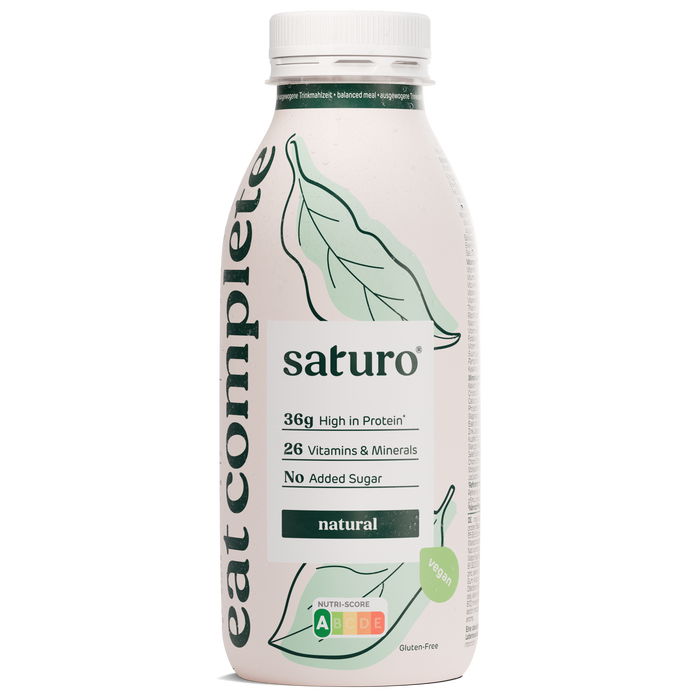
Drinkable meal: a complete meal in a bottle
26 vitamins and minerals, including selenium, iodine and zinc. Selenium contributes to normal thyroid function and to the normal function of the immune system. Reference intake for selenium: 55 µg per day (NRV). Not a substitute for treatment of a proven deficiency.
Frequently asked questions about selenium deficiency
Can you take zinc and selenium together?
Yes. There's no proven interaction affecting absorption, and studies gave both together. What matters is the total: no more than 40 µg of selenium per supplement according to the BfR, and 25 mg of zinc from all sources. If you take a combination product and Brazil nuts, you can easily add up to too much selenium.
Can I take selenium and vitamin D at the same time?
Yes, nothing speaks against it; the prescribing information for the selenium supplement lists only vitamin C as an interaction, as it precipitates sodium selenite. Leave a gap of at least an hour. Vitamin D, magnesium or zinc can go with the same meal. Selenium only makes sense after a measured deficiency, though.
When should you take selenium, morning or evening?
There's no expert recommendation; neither the DGE, the BfR nor the prescribing information names a time of day. Absorption is 50 to 90% and doesn't depend on the time. All that matters is the total daily amount and, with sodium selenite, the gap to vitamin C.
Can you take selenium long term?
Only with blood level monitoring. The prescribing information provides for treatment until levels normalise, while the BfR considers supplements unnecessary for healthy people. In a German breast cancer cohort, 9 to 29% of women using supplements were overdosed. Long term without a diagnosis: no.
How does selenium affect mental health?
Barely measurable. A 2022 meta-analysis found no different selenium levels in people with depression compared with healthy people; supplements only lowered depression scores slightly, and in small studies. There's no approved claim on mood. If you have persistent low moods, it's better to check your thyroid, iron and vitamin D.
Is selenium important for breast cancer?
Not as prevention: the 2018 Cochrane review with 27,232 participants found no protection from selenium supplements. During therapy, a deficiency was rare in a German study, while overdosing through supplements was more common. The Krebsinformationsdienst (German Cancer Information Service) advises avoiding high doses of antioxidants during chemotherapy or radiotherapy; always talk to your treatment team first.
Is selenium good for people with diabetes?
Better to be cautious. Selenium doesn't prevent diabetes; in the SELECT trial with 200 µg daily and in the Cochrane review on heart disease prevention, a slightly increased diabetes risk showed up, and EFSA assessed the data similarly in 2023. A proven deficiency is still treated, but supplements without a diagnosis aren't recommended.
Is 200 micrograms of selenium too much?
For healthy people, yes. 200 µg is five times the BfR maximum for supplements and, together with food, close to the EFSA upper limit of 255 µg; this exact dose increased hair loss in the SELECT trial. 200 µg belongs in a doctor's hands, for example for mild endocrine orbitopathy.
Sources · 69 sources anzeigen
- German Nutrition Society (DGE): Reference values for nutrient intake, selenium. D-A-CH reference values, derivation as of 2015, 3rd edition 2025.
- German Nutrition Society (DGE): Selected questions and answers on selenium. As of 10 September 2025.
- German Nutrition Society (DGE): Selected questions and answers on selenium, PDF version 03/2021 with sample calculation based on Souci-Fachmann-Kraut.
- EFSA NDA Panel: Scientific Opinion on Dietary Reference Values for selenium. EFSA Journal 2014; 12(10): 3846.
- EFSA NDA Panel: Scientific opinion on the tolerable upper intake level for selenium. EFSA Journal 2023; 21(1): 7704.
- German Federal Institute for Risk Assessment (BfR): Update (2023): Proposed maximum levels for selenium in foods, including food supplements. Opinion 010/2024 of 22 February 2024.
- German Federal Institute for Risk Assessment (BfR): Selenium: The content in plant-based foods varies from region to region. Questions and answers, as of 4 August 2025.
- Regulation (EU) No 1169/2011 (Food Information Regulation), Annex XIII: Reference intakes for daily intake (selenium 55 µg).
- Commission Regulation (EU) No 432/2012 establishing a list of permitted health claims, German version, Official Journal L 136 (selenium: six authorised claims).
- MSD Manual, Professional Edition: Selenium deficiency. Full review May 2025.
- National Institutes of Health, Office of Dietary Supplements: Selenium. Fact Sheet for Health Professionals.
- Stoffaneller R., Morse N. L.: A review of dietary selenium intake and selenium status in Europe and the Middle East. Nutrients 2015; 7(3): 1494–1537.
- Liaskos M. et al.: First review on the selenium status in Germany covering the last 50 years and on the selenium content of selected food items. European Journal of Nutrition 2023; 62(1): 71–82.
- Alfthan G. et al.: Effects of nationwide addition of selenium to fertilizers on foods, and animal and human health in Finland. Journal of Trace Elements in Medicine and Biology 2015; 31: 142–147.
- Commission Implementing Regulation (EU) 2019/804: Authorisation of selenium yeast and selenomethionine as feed additives (maximum content 0.50 mg selenium per kg of complete feed).
- Vinton N. E. et al.: Macrocytosis and pseudoalbinism: manifestations of selenium deficiency. Journal of Pediatrics 1987; 111(5): 711–717.
- Abrams C. K. et al.: Selenium deficiency in long-term total parenteral nutrition. Nutrition in Clinical Practice 1992; 7(4): 175–178.
- Li S. J. et al.: Recent Advances on Selenium Nutrition and Keshan Disease. International Heart Journal 2024; 65(2): 173–179.
- Zou K. et al.: Selenium for preventing Kashin-Beck osteoarthropathy in children: a meta-analysis. Osteoarthritis and Cartilage 2009; 17(2): 144–151.
- Vanderpas J. B. et al.: Iodine and selenium deficiency associated with cretinism in northern Zaire. American Journal of Clinical Nutrition 1990; 52(6): 1087–1093.
- Winther K. H. et al.: Selenium in thyroid disorders: essential knowledge for clinicians. Nature Reviews Endocrinology 2020; 16: 165–176.
- Avery J. C., Hoffmann P. R.: Selenium, Selenoproteins, and Immunity. Nutrients 2018; 10(9): 1203.
- Almohanna H. M. et al.: The Role of Vitamins and Minerals in Hair Loss: A Review. Dermatology and Therapy 2019; 9(1): 51–70.
- Sajjadi S. S. et al.: The role of selenium in depression: a systematic review and meta-analysis of human observational and interventional studies. Scientific Reports 2022; 12: 1045.
- Zhao L. et al.: Association between Selenium Intake and Optimal Sleep Duration: A National Longitudinal Study. Nutrients 2023; 15(2): 397.
- Fontenelle L. C. et al.: Nutritional status of selenium in overweight and obesity: A systematic review and meta-analysis. Clinical Nutrition 2022; 41(4): 862–884.
- Cheng L. et al.: Association of selenium with type 2 diabetes and obesity: A univariate and multivariate Mendelian randomization study. Medicine 2025; e45338.
- Zavros A. et al.: The Effects of Zinc and Selenium Co-Supplementation on Resting Metabolic Rate, Thyroid Function, Physical Fitness, and Functional Capacity in Overweight and Obese People under a Hypocaloric Diet. Nutrients 2023; 15(14): 3133.
- Laurberg P. et al.: Thyroid function and obesity. European Thyroid Journal 2012; 1(3): 159–167.
- Trigueira P. C. et al.: Selenium supplementation in chronic kidney disease patients undergoing haemodialysis: a systematic review. Nutrition Research Reviews 2025.
- Liu S. et al.: Selenium deficiency in inflammatory bowel disease: A comprehensive meta-analysis. Heliyon 2024; e40139.
- Mechanick J. I. et al.: Clinical practice guidelines for the perioperative nutritional, metabolic, and nonsurgical support of the bariatric surgery patient (AACE/TOS/ASMBS). Obesity 2013.
- Eksteen G. et al.: From suboptimal to supersaturation: Selenium status after bariatric surgery is modulated by supplementation. Journal of Nutritional Biochemistry 2026; 110121.
- Klein L. et al.: Selenium, Zinc, and Copper Status of Vegetarians and Vegans in Comparison to Omnivores in the Nutritional Evaluation (NuEva) Study. Nutrients 2023; 15(16): 3538.
- Weikert C. et al.: Vitamin and Mineral Status in a Vegan Diet (RBVD study by the BfR). Deutsches Ärzteblatt International 2020; 117(35-36): 575–582.
- Simon R. et al.: Selenium, zinc, and copper intake and status of vegetarian, vegan, and omnivore children and adolescents: results of the VeChi Youth Study. European Journal of Nutrition 2025; 64: 247.
- Bloos F. et al.: Effect of Sodium Selenite Administration and Procalcitonin-Guided Therapy on Mortality in Patients With Severe Sepsis or Septic Shock (SISPCT). JAMA Internal Medicine 2016; 176(9): 1266–1276.
- van Zuuren E. J. et al.: Selenium supplementation for Hashimoto's thyroiditis. Cochrane Database of Systematic Reviews 2013; CD010223.
- Huwiler V. V. et al.: Selenium Supplementation in Patients with Hashimoto Thyroiditis: A Systematic Review and Meta-Analysis of Randomized Clinical Trials. Thyroid 2024; 34(3): 295–313.
- Larsen C. et al.: Selenium supplementation and placebo are equally effective in improving quality of life in patients with hypothyroidism. European Thyroid Journal 2024; 13(1): ETJ-23-0175.
- Marcocci C. et al.: Selenium and the course of mild Graves' orbitopathy. New England Journal of Medicine 2011; 364: 1920–1931.
- Bartalena L. et al.: The 2021 European Group on Graves' orbitopathy (EUGOGO) clinical practice guidelines for the medical management of Graves' orbitopathy. European Journal of Endocrinology 2021; 185(4): G43–G67.
- de Ligny W. et al.: Antioxidants for male subfertility. Cochrane Database of Systematic Reviews 2022; CD007411.pub5.
- Sharma A. P. et al.: Systematic Review and Meta-analysis on Effect of Carnitine, Coenzyme Q10 and Selenium on Pregnancy and Semen Parameters in Couples With Idiopathic Male Infertility. Urology 2022; 161: 4–11.
- McDougall A. R. et al.: The effect of selenium supplementation in pregnant women on maternal, fetal, and newborn outcomes: a systematic review and meta-analysis. American Journal of Obstetrics and Gynecology MFM 2023; 101160.
- Medizinische Laboratorien Düsseldorf: Test directory selenium (Se), reference ranges for serum and whole blood. As of 22 July 2026.
- Labor Becker: Test directory selenium, reference ranges for serum, EDTA blood and urine.
- Endokrinologikum Labore Hamburg (AescuLabor): Selenium in serum, reference range and conversion. As of 11 September 2024.
- Ganzimmun Diagnostics: Technical information on selenoprotein P.
- Verbraucherzentrale: Which vitamin deficiency tests are worthwhile? As of 6 January 2026.
- biosyn Arzneimittel GmbH: Product information selenase 100 µg / T (sodium selenite pentahydrate). As of February 2024.
- Hurst R. et al.: Establishing optimal selenium status: results of a randomized, double-blind, placebo-controlled trial. American Journal of Clinical Nutrition 2010; 91(4): 923–931.
- MacFarquhar J. K. et al.: Acute selenium toxicity associated with a dietary supplement. Archives of Internal Medicine 2010; 170(3): 256–261.
- Lippman S. M. et al.: Effect of selenium and vitamin E on risk of prostate cancer and other cancers: the Selenium and Vitamin E Cancer Prevention Trial (SELECT). JAMA 2009; 301(1): 39–51.
- Rees K. et al.: Selenium supplementation for the primary prevention of cardiovascular disease. Cochrane Database of Systematic Reviews 2013; CD009671.
- Rayman M. P.: Selenium and human health. Lancet 2012; 379(9822): 1256–1268.
- Vinceti M. et al.: Selenium for preventing cancer. Cochrane Database of Systematic Reviews 2018; CD005195.
- Altmayer L. A. et al.: A Plea for Monitoring Serum Selenium Levels in Breast Cancer Patients: Selenium Deficiency Is Rare during the First Year of Therapy, and Selenium Supplementation Is Associated with Hair Loss. Nutrients 2024; 16(13): 2134.
- Deutsches Krebsforschungszentrum, Krebsinformationsdienst: Be careful with dietary supplements during breast cancer treatment.
- Bundesamt für Strahlenschutz (BfS): Brazil nuts: a snack with natural radioactivity. As of 20 October 2025.
- Bundeszentrum für Ernährung (BZfE): Brazil nuts as a source of selenium. Press release, 21 January 2026.
- Thomson C. D. et al.: Brazil nuts: an effective way to improve selenium status. American Journal of Clinical Nutrition 2008; 87(2): 379–384.
- Silva Junior E. C. et al.: Natural variation of selenium in Brazil nuts and soils from the Amazon region. Chemosphere 2017; 188: 650–658.
- Fox T. E. et al.: Absorption of selenium from wheat, garlic, and cod intrinsically labeled with Se-77 and Se-82 stable isotopes. International Journal for Vitamin and Nutrition Research 2005; 75(3): 179–186.
- Lu X. et al.: Effects of Chinese Cooking Methods on the Content and Speciation of Selenium in Selenium Bio-Fortified Cereals and Soybeans. Nutrients 2018; 10(3): 317.
- Rueangsri N. et al.: Influence of Various Cooking Methods on Selenium Concentrations in Commonly Consumed Seafood Species in Thailand. Foods 2025; 14(15): 2700.
- Swiss food composition database, Generic foods, Version 7.1 (1 July 2026).
- U.S. Department of Agriculture, Agricultural Research Service: FoodData Central, SR Legacy Release (2018). Selenium (nutrient 1103) per 100 g.
- Max Rubner-Institut: Bundeslebensmittelschlüssel (BLS) 4.0, version 2025 (contains no selenium values).
Has been writing for Saturo since 2019 about nutrition, nutrients and how to get a good supply of them in everyday life.
Hat diesen Artikel am 30. September 2026 auf fachliche Richtigkeit geprüft. This content doesn't replace medical advice.

Zinc deficiency: symptoms, causes and treatment
The usual partner in combination supplements: how much zinc you really need, why the blood test tells you little, and what belongs on your plate.
Weiterlesen · 16 Min

Latest from our guides
New articles, updates and tips straight to your inbox. Easy to follow, expert-checked, no spam.
Danke! Bitte bestätige die Anmeldung in deinem Postfach.