
Chromium deficiency: symptoms, effects and tablets
Craving sweets, feeling tired, gaining weight, and chromium is supposedly to blame? A genuine chromium deficiency is so rare that it's almost only described with artificial nutrition. Which symptoms really fit, what tablets actually do, and where chromium is found.


Aktualisiert 1 October 2026 · 16 Min. Lesezeit · 60 Quellen

The essentials in 30 seconds
This much chromium per day is considered adequate for teenagers and adults, derived in 2000 and unchanged since. It's a range, not a requirement: nobody knows the threshold below which something's actually missing.
That's as much chromium from food as the gut lets through. What gets through attaches to transferrin, ends up in the liver, spleen and bones, and leaves again via the kidneys.
This is how many people with suspected chromium deficiency are known in the scientific literature, all after years of intravenous feeding, between 1977 and 1998. None has ever been found in healthy people.
According to the German Federal Food Code, a handful of walnuts provides around 40 µg, while meat, milk and eggs provide almost none. Adults in Germany eat an average of 61 to 84 µg a day, right in the middle of the estimated range.
Chromium deficiency symptoms: how to spot it
Chromium (Cr), like manganese, is a trace element found in tiny amounts in nuts, wholegrains and legumes. A genuine chromium deficiency has never been described in a healthy person. The scientific literature knows about five cases, all after years of intravenous feeding. The symptom lists online stem from these isolated cases or from studies using chromium supplements in people without a deficiency. Here's what's actually backed up.
Chromium deficiency symptoms in women
There are no symptoms that only affect women. The reference values just differ in amount: the US sets 25 µg for women and 35 µg for men, while the DGE makes no distinction. What women search for more often, hair loss, cycle, weight, isn't documented anywhere as a sign of chromium deficiency. In PCOS, chromium supplements have been tested in studies; fasting insulin dropped slightly, but the authors call the effects small and uncertain, and no participant had a confirmed deficiency. If you're tired and losing hair, check ferritin and TSH first.

Craving sweets: is it the chromium?
Not proven. No case report names cravings as a sign of deficiency. What does exist are two small studies with chromium picolinate in people without a deficiency: 113 patients with atypical depression received 600 µg a day; their depression scores didn't change, only individual questions about appetite and carb cravings improved. 42 overweight women ate slightly less over eight weeks while taking chromium. The NIH calls this "preliminary research". There's no EU claim for cravings. Cravings usually have other causes: lack of sleep, long gaps between meals, stress, blood sugar swings.
Chromium deficiency and weight gain: what's true?
There's no evidence in humans that a chromium deficiency causes weight gain. In the case reports, the opposite happened: patients lost weight, up to 15% of their body weight. The idea comes from animal studies, and they contradict each other: rats on a strictly chromium-poor diet stayed unchanged in one study, while in another they put on more fat on a high-fat, high-sugar diet. If you're gaining weight without eating differently, get your thyroid checked and look at sleep, medication and exercise, not chromium.
Chromium and mental health: what's behind it?
A link between chromium deficiency and depression is not proven. The largest study, 113 patients with atypical depression, found no difference from placebo on depression scales under 600 µg of chromium picolinate. A 2025 review calls chromium "interesting for future research", nothing more. For concentration and memory, there's one pilot study with 26 older adults that showed less susceptibility to distraction while learning, but no better recall. If you're thinking about nutrients during a mood slump, you're better off looking at vitamin B12, vitamin D and iron.
For persistent fatigue, hair loss or cravings, a blood test checking ferritin, TSH, vitamin B12, vitamin D and fasting glucose is worthwhile, not chromium. A chromium test only makes sense with intravenous feeding or after high-dose supplements, and then it's the treatment team's call.
Chromium deficiency and skin and hair
There is not a single human study linking hair loss, dry skin or acne to chromium deficiency. Neither the NIH nor MSD lists skin or hair as deficiency signs, and the cosmetics sites that recommend chromium "for the hair root" cite no source. Skin only reacts to chromium in one direction: as a contact allergy to chromium(VI) from leather and cement, and in isolated cases as a rash after chromium tablets (chapter 7). For hair loss, iron, zinc, the thyroid and genetics matter more. The table below sums up all the search terms.
What actually fits chromium deficiency
Twelve complaints people search for most often, and what the sources say: proven (case reports under intravenous feeding), weakly supported (only as a supplement effect in small studies), unproven (no human data).
| What the studies say | Classification | |
|---|---|---|
| Raised blood sugar, glucose intolerance | In all case reports under parenteral nutrition, reversed by chromium; causality unclear according to the EFSA | Proven (case reports only) |
| Weight loss | Up to 15% of body weight in the case reports | Proven (case reports only) |
| Tingling, numbness, unsteady gait | Peripheral neuropathy in three cases, even with elevated serum chromium | Proven (case reports only) |
| Confusion | One case after bowel resection, resolved under 150 µg of chromium | Proven (case report only) |
| Raised blood fats | Free fatty acids elevated in the first case; supplements don't lower blood fats in meta-analyses | Proven (case report only) |
| Craving sweets | Two small supplement studies without deficiency, primary endpoints missed | Weakly supported |
| Concentration, memory | One pilot study with 26 older adults, learning rate unchanged | Weakly supported |
| Mood, depression | 113 patients, no difference from placebo | Weakly supported |
| Fatigue, exhaustion | No deficiency source; EU claim "reduces fatigue" rejected | Unproven |
| Weight gain | No human data; case reports show weight loss | Unproven |
| Skin, hair loss | No human study found | Unproven |
| Thyroid | No link described; only proven effect is that chromium picolinate slows down levothyroxine | Unproven |
Classification based on the sources in chapter 8 (Jeejeebhoy 1977, Freund 1979, Brown 1986, Verhage 1996, EFSA 2014, NIH ODS, Docherty 2005, Anton 2008, Krikorian 2010, Bertinato 2023, John-Kalarickal 2007, EU register). As of 1 October 2026.
Chromium deficiency causes: who's actually affected
The honest answer: almost nobody. Neither the EFSA, nor the NIH, nor German consumer advice centres name a risk group for dietary chromium deficiency; according to the Verbraucherzentrale, there's no evidence of undersupply in Germany. The one documented cause occurs in the clinic, and the question "how much do I need?" has a surprisingly vague answer.
Artificial feeding: the only documented trigger
All case reports follow the same pattern: intravenous feeding (parenteral nutrition) over months to years, usually after major bowel surgery or bowel failure, with solutions that contained no chromium. Blood sugar then rose, weight fell, nerves tingled, and 150 to 250 µg of chromium in the infusion reversed this within two weeks. Today's trace element solutions contain 10 to 15 µg of chromium per day, which is why the ESPEN guideline calls the problem "rare, except when chromium is missing from the formulation". It also names severe burns, trauma and infections as additional risk situations, because the body excretes more chromium then; but a resulting deficiency isn't documented.

Sugar, stress and sport: does your need increase?
All three increase chromium excretion in urine, but a resulting deficiency isn't proven. In a 1986 study, 37 people ate a diet with 35% of calories from simple sugars for six weeks; in 27 of them, chromium loss in urine rose by 10 to 300%. After a ten-kilometre run, daily excretion doubled in nine runners, and cortisone tablets also raised it in a small study. Only urine was ever measured, never a deficiency; the authors speak of a "possible marginal deficiency", which is as much as the data can support.
Chromium and diabetes: are diabetics short on chromium?
No, chromium deficiency isn't proven in type 2 diabetes, and there's no test that could show it. The idea comes from the case reports (blood sugar rose without chromium) and from supplement studies: in a Chinese study with 180 diabetics, 1,000 µg of chromium picolinate significantly lowered HbA1c, but later studies could only partly replicate this. Meta-analyses find small effects with extreme variability, and none at all in people without diabetes. The diabetes associations ADA (2026) and DDG (2024) advise against chromium for blood sugar control, as does the ESPEN. More on this in chapter 5.
How much chromium per day?
The DGE sets an estimated value of 30 to 100 µg a day for teenagers and adults, derived in 2000 and unchanged in the 2025 edition; children aged 7 to 15 get 20 to 100 µg, and pregnant and breastfeeding women get no increase. The US sets 35 µg for men and 25 µg for women, rising to 45 µg while breastfeeding. The EFSA set no value at all in 2014, because it sees no evidence of a role for chromium in metabolism. The nutrient reference value on labels is 40 µg. The range applies equally to all adults and is easily met with nuts, wholegrains and legumes without any extra thought.
Chromium effect: what chromium does in the body
Three stops from the walnut to the kidney. Anyone who knows them understands why so little chromium reaches the blood, why the insulin story is a hypothesis, and why experts still argue over whether chromium is essential to life at all. Upfront: we always mean chromium(III) from food, not the toxic chromium(VI) from industry (chapter 7).
Absorption: The gut lets almost nothing through
Of the 30 to 100 µg in food, only 0.4 to 2.5% makes it into the blood; from supplements, depending on the compound, it's 0.1 to 5%. With a low intake the rate rises slightly, with a generous intake it falls. Vitamin C with a meal boosts absorption, while antacids and phytate from bran slow it down. In the blood, chromium attaches to transferrin, the same protein that transports iron, and is deposited in the liver, spleen, soft tissue and bones. There's no measurable store.
Effect: an insulin helper, but only as a hypothesis
The textbook explanation goes like this: chromium binds to a small protein called chromodulin, which activates the insulin receptor and gets sugar into the cell faster. In 2014, the EFSA rated the existence and function of chromodulin as "unclear"; the mechanism remains unconfirmed to this day. Still, two EU health claims are approved: chromium contributes to normal macronutrient metabolism and to the maintenance of normal blood glucose levels. And the big question remains open: the DGE calls chromium essential, the EFSA sees "no evidence", and the NIH explicitly calls it non-essential, because its absence doesn't cause a disorder that chromium then fixes.
Excretion: via the kidneys, more with sugar and sport
What's absorbed leaves the body almost entirely via urine, with small amounts via sweat and bile. A sugar-rich diet, endurance sport, cortisone, infections and burns measurably increase excretion. That's exactly why the urine value works as a measure of intake over the last few days, but not of your stores. And that's why no marker, whether blood, urine or hair, shows how much chromium someone has in their body. In everyday terms: chromium from food doesn't run short, and an excess from food is just as undescribed.
Diagnosing chromium deficiency: what a test shows
Chromium can be measured in the blood, but the value doesn't answer the deficiency question. The EFSA, NIH and ESPEN nutrition specialists agree: there's no validated marker for chromium status. The diagnosis of chromium deficiency does have a code (ICD-10 E61.4), but no test that can confirm it.
Chromium in the blood: why the value says little
It's measured in serum (German labs: below 0.5 µg/l) or whole blood (below 1.0 µg/l). Three problems: the amounts are so tiny that even the stainless-steel needle can contaminate the sample, so labs require a special tube. The value reflects intake over the last few days, not your stores. And it doesn't match the clinical picture: in a 1996 case report, a patient with neuropathy and high blood sugar had elevated serum chromium, yet still improved within four days under chromium infusion. The ESPEN advises against routine checks: "Serum chromium can be measured, but is rarely needed."
Chromium deficiency test and hair analysis
A urine test shows how much chromium was absorbed over the last few days, and spikes with sugar, sport or stress without anything actually being deficient. A hair analysis sounds tempting because hair stores past intake, but it's not a recognised method: the Verbraucherzentrale advises against it, after Stiftung Warentest got completely different results for the same person depending on the lab. If you're worried about fatigue, cravings or weight, get the values measured that actually explain something: fasting glucose and HbA1c, ferritin, TSH, vitamin B12 and vitamin D. A chromium value only belongs in the lab with intravenous feeding, and then it's the treatment team that orders it.
Fixing a chromium deficiency: what actually helps
For healthy people, there's no such thing as chromium therapy, because there's no deficiency to treat. The real questions are different: What do the tablets from the drugstore and pharmacy actually do, do they help with weight loss, and at what point does chromium become too much? Here are the answers, with numbers.
Chromium tablets: who they actually make sense for
Almost no one. Standard products usually contain 200 µg of chromium as picolinate or chloride, three times the 60 µg that the BfR considers acceptable per daily dose. In people without diabetes, a meta-analysis of 15 studies shows no effect on blood sugar or insulin. In type 2 diabetes, meta-analyses find small reductions in fasting glucose and HbA1c, but with such wide variation that only 5 of 20 studies reached the treatment target; the ADA, DDG and ESPEN advise against it. Chromium only makes sense in medical hands: in the trace element solution for intravenous feeding, and as a trial for severely ill people with extreme insulin resistance. The decision tool below sorts your situation.
Chromium for weight loss: what the studies show
Statistically measurable, practically meaningless. The 2013 Cochrane review (9 studies, 622 overweight people) found chromium picolinate led to about 1.1 kg less weight than placebo after 12 to 16 weeks, with low-quality evidence and three serious adverse events at doses of 400 to 1,000 µg. A 2019 meta-analysis with 1,316 participants arrives at 0.75 kg. Over more than ten years of studies, chromium had no effect on the body composition of healthy people, even with strength training; the EU has rejected all health claims relating to weight and fat loss. If you want to lose weight, you need a calorie deficit, protein and sleep, not a trace element.

Too much chromium in the body: symptoms of overdose
Overdose from food has never been described; neither the EU nor the US could derive an upper limit, because nothing happened in studies even at up to 1,000 µg a day. The EFSA considers additional intake of up to 250 µg a day safe. Things turned dangerous in individual cases at ten to forty times that amount: a 33-year-old took 1,200 to 2,400 µg of chromium picolinate for five months to lose weight and developed kidney failure, liver damage, anaemia and weight loss; a bodybuilder suffered muscle breakdown after 1,200 µg in 48 hours. Both recovered. Other case reports mention skin rash and hypoglycaemia. The steps below show where each number sits.
From estimated value to too much: chromium in numbers
-
1
Estimated value30 to 100 µg
DGE range for teenagers and adults, as of 2000, unchanged in 2025. A handful of walnuts provides a calculated 40 µg, a bottle of drinkable meal 18 µg. The reference value on labels is 40 µg.
-
2
Maximum level in a product60 µg
BfR's proposed figure per daily dose of a food supplement, derived in 2021, confirmed in 2024. Standard chromium tablets with 200 µg are three times this.
-
3
No concerns250 µg
Up to this point, the EFSA saw no safety concerns in 2010 regarding additional chromium(III) from supplements; there is no actual upper limit in either the EU or the US.
-
4
Case reports1,200 µg
From this daily dose of chromium picolinate upwards, individual case reports describe kidney failure, liver damage and muscle breakdown, at 1,200 to 2,400 µg over months or 1,200 µg within two days.
DGE/ÖGE 2025; BfR proposed maximum levels 2021 and 2024; EFSA ANS 2010; SCF 2003 and NIH ODS (no UL); Cerulli 1998, Martin 1998.
When is the best time to take chromium?
For healthy people, not at all, and there's no study on time of day. If you're prescribed a product by a doctor, take it with a meal alongside a bit of vitamin C, which improves absorption, and not together with antacids, which slow it down. Leave several hours' gap with levothyroxine, because chromium picolinate reduces the absorption of thyroid hormone. With insulin or sulfonylureas, monitor blood sugar closely. And importantly: chromium slows iron absorption, because both compete for transferrin; if you already have low iron stores, chromium tablets are more likely to make them worse.
Chromium is the trace element where advertising and science diverge the most. In practice, I've never come across anyone who was actually deficient in chromium, but I have met several people who tried to kill their sugar cravings with 200-microgram tablets and ended up only poorer. My advice: put nuts on the table, cut back on sugar, and if you take diabetes medication, keep your hands off chromium without asking first.
Joerg Hauke, Nutrition expert, technical review of this article
That leaves the question of form. Chromium picolinate is absorbed slightly better (around 1.2%) than chromium chloride (0.4%), both within the range of absorption from food. Chromium researcher John Vincent has warned since 2003 of possible DNA damage from picolinate in cell and animal studies, while the EFSA saw no concerns up to 250 µg in 2010. Brewer's yeast supplements advertise the "glucose tolerance factor", a substance postulated since 1959 and never chemically identified. If you take chromium, the main thing is to add up the milligrams across all your products: multivitamins, blood sugar capsules and weight-loss supplements often contain it at the same time.
If you take insulin, sulfonylureas or other blood-sugar-lowering medication, don't start a chromium supplement without checking with your doctor first: the combination can lower blood sugar too much. The MSD Manual advises people with diabetes against chromium altogether, unless a diabetes specialist is overseeing its use.
Chromium in food: where you'll find the most
Chromium is found in nuts, seeds and cocoa, by a clear margin. Wholegrain, legumes, mushrooms and spinach contribute small amounts, while meat, milk and eggs contribute almost nothing. The bars show both worlds according to the Bundeslebensmittelschlüssel 4.0, the only German database with chromium values. An honest note up front: chromium is hard to measure, values vary widely depending on soil, processing and lab, and only a small portion of the figures come from original analyses. They show the order of magnitude, not the decimal point.
Chromium per 100 g: top 10 plant-based and top 10 animal-based
Bundeslebensmittelschlüssel 4.0 (2025), rounded. Per portion: 30 g walnuts 44 µg, 30 g hazelnuts 20 µg, 20 g pumpkin seeds 12 µg, 150 g cooked spinach 18 µg. Baking cocoa (195) and dark chocolate (173) are deliberately excluded: these values are converted or carried over, not measured. Cooked legumes sit at 2 to 4 µg, wholegrain bread at 3 µg, porridge oats at 2.5 µg.
Nuts, seeds and cocoa: the foods richest in chromium
Walnuts, cashews, Brazil nuts, pine nuts, chia, hazelnuts and pumpkin seeds come in at 60 to 145 µg per 100 g, and a study of five types of nut found 94 to 202 µg. A handful of walnuts (30 g) works out at a good 40 µg, which is more than the lower end of the DGE estimated range. After that, there's a long gap: vegetables, fruit, grains and pulses are almost all under 20 µg per 100 g, meat sits at 4 to 13, and milk and eggs are under 1. According to the BfR food study, cocoa also belongs in the top group; because the database values there are converted, it doesn't appear in the bar. Two squares of dark chocolate are still a better source of chromium than a steak, but that's not a recommendation.
Is there chromium in oats?
Yes, but not much: 2.5 µg per 100 g. A 50 g portion provides a good 1 µg, which is 4% of the 30 µg. The value comes from the Danish FRIDA database and matches oats as a whole grain (2.6 µg). So oats aren't a source of chromium, but they're a good base: add 20 g of hazelnuts and a tablespoon of chia seeds on top, and your bowl reaches around 25 µg. With rice, the database shows the only provable wholegrain effect: raw brown rice has 9 µg, polished rice 4 µg. There's no value at all for wheat flour, wholemeal flour and wheat germ, so we can't give a percentage for how much poorer white flour is.

Broccoli, brewer's yeast, liver: what's behind the chromium tips
Not much. Broccoli is seen as the top performer in US tables, but the Bundeslebensmittelschlüssel lists it at 1 µg per 100 g; 200 g cooked gives you 2 µg. Brewer's yeast has no entry of its own, while nutritional yeast flakes are listed at 29.5 µg, and a teaspoon provides 1.5 µg. The "glucose tolerance factor" from brewer's yeast was postulated in 1959 and has never been chemically identified. For liver, there's no chromium value at all in the German database, while chicken liver sits at 4 µg. According to analysis, coffee contains no measurable chromium, and there's no figure at all for tea. And acidic foods take up chromium from new stainless steel pots, up to 86 µg per portion of tomato sauce after hours of cooking: that explains the scattered measurements, but it's not a tip.
Chromium deficiency: what should you eat?
Anyone asking this almost certainly isn't deficient, but eating so that you reliably hit the range is easy: a daily handful of nuts or seeds, wholegrain instead of white flour, pulses two to three times a week, plus mushrooms and leafy greens. Cut back on sugar, because sugary diets are low in chromium and increase excretion; vitamin C with your meal improves absorption. Meat, fish, milk and eggs are welcome on the table, just not for the chromium. On days when that doesn't work out, a drinkable meal with defined nutrient amounts can step in: one bottle of Saturo (400 ml) provides 18 µg of chromium, 45% of the reference value, plus 25 other vitamins and minerals, 36 g of protein and 400 kcal. Chromium contributes to normal macronutrient metabolism. That's a nutrition claim, not a promise.

Drinkable meal: a complete meal from a bottle
26 vitamins and minerals, including chromium, iron, zinc and selenium, plus 36 g protein and 400 kcal per bottle. Chromium contributes to normal macronutrient metabolism. Reference intake chromium: 40 µg per day (NRV).
Chromium 6 and chromium allergy: when chromium really does harm
Google "chromium" and you'll quickly land on workplace safety, leather shoes and cancer. That's a different chromium. Here's the distinction that hardly any guide makes, plus the question of whether people with a chromium allergy need to watch what they eat.
Chromium 3 and chromium 6: what's the difference?
Chromium(III) is the form found in food and supplements: poorly absorbed, barely toxic, with no upper limit set. Chromium(VI), "chromium 6" or chromate, is created in industry, when welding stainless steel, in cement, pigments and tanneries, and gets into drinking water through contamination. It penetrates cell membranes, is classed as carcinogenic to humans by the cancer research agency IARC (lung cancer when inhaled, Group 1) and is the reason for the limits: drinking water in Germany 25 µg/l, from 2030 only 5 µg/l, leather below 3 mg/kg since 2015. In the stomach, swallowed chromium(VI) is largely reduced to chromium(III). The table compares the two.
Chromium(III) in food vs. chromium(VI) from industry
Two oxidation states of the same element with completely different properties. What one does tells you nothing about the other.
| Chromium(III) | Chromium(VI) | |
|---|---|---|
| Where it occurs | Nuts, wholegrain, cocoa, supplements | Industry, welding fumes, cement, leather, contaminated water |
| Absorption | 0.4 to 2.5% in the gut, doesn't readily enter cells | Penetrates cell membranes, partly reduced to chromium(III) in the stomach |
| Toxicity | Low, no upper limit set | Carcinogenic when inhaled, IARC Group 1 |
| Limits | BfR proposal 60 µg per supplement dose | Drinking water 25 µg/l (from 2030: 5), leather 3 mg/kg |
| Allergy | Isolated cases: rash after chromium tablets | Contact allergy in 0.8% of the population, mostly from leather |
| Search term | Chromium deficiency, chromium tablets, chromium effects | Chromium 6, chromium poisoning, occupational disease |
EFSA CONTAM 2014, IARC 100C (2012), TrinkwV 2023 Annex 2, Regulation (EU) 301/2014, Geier 2016 (IVDK), BfR 2021. Not an occupational safety guide.
Chromium allergy: do I need to avoid chromium in food?
Usually not. Chromium allergy is a contact allergy to chromium(VI), triggered mainly by leather shoes and, in the past, by cement; around 0.8% of the population are sensitised, and in skin clinics roughly 2 to 3% of those tested react. No guideline recommends a low-chromium diet. The only documented cases are isolated ones in which people with a chromium allergy developed a full-body rash after taking chromium tablets or multivitamin supplements containing chromium, which cleared up once they stopped. For them the rule is: no chromium supplements, but nuts and wholegrain are still fine. If you want to avoid chromium in everyday life, look for chromium-free tanned leather, not at your plate.
Common questions about chromium deficiency
How do you notice a chromium deficiency?
You don't, as long as you eat normally: it has never been described in healthy people, and there's no test for it. In the five case reports under intravenous nutrition, blood sugar and blood fats rose, weight fell and nerves tingled. Cravings and tiredness aren't part of it.
Can you take chromium and magnesium together?
Yes, the two don't interfere with each other, and a shared benefit isn't proven either. The more important question is whether you're lacking either at all: with magnesium that happens, with chromium practically never. Don't combine chromium with antacids or iron tablets.
Who shouldn't take chromium?
People with kidney or liver disease, people on diabetes medication without medical supervision (low blood sugar), anyone taking levothyroxine without leaving several hours between doses, people with a chromium allergy and people with iron deficiency. There's no safety data for pregnant women. For everyone else: not forbidden, just not necessary.
Which food has the most chromium?
According to the Bundeslebensmittelschlüssel, walnuts with around 145 µg per 100 g, followed by cashews, Brazil nuts, pine nuts, chia seeds, hazelnuts and pumpkin seeds. Baking cocoa and dark chocolate are similarly high, but those values are converted. Meat, milk and eggs provide almost nothing.
How does chromium deficiency affect the thyroid?
Is brewer's yeast a good source of chromium?
Not demonstrably. The German database only lists nutritional yeast flakes at 29.5 µg per 100 g, a carried-over value; a teaspoon provides 1.5 µg. The much-advertised "glucose tolerance factor" has never been chemically identified. A handful of nuts gives you twenty times as much.
Do I need more chromium during pregnancy?
According to the DGE, no; the range of 30 to 100 µg applies unchanged, while the US sets 30 µg for pregnancy and 45 µg while breastfeeding. You don't need a supplement, and there's no safety data for pregnant women. Nuts, wholegrain and pulses cover the amount along the way.
Which vitamin are you missing when you crave sweet things?
Usually none. Cravings come from lack of sleep, long gaps between meals, stress or blood sugar swings after sugary meals. If you're tired all the time, it's worth getting checked: iron, vitamin B12, vitamin D and fasting blood sugar. Chromium for cravings has only been studied in pilot studies.
Sources · 62 sources anzeigen
- German Nutrition Society (Deutsche Gesellschaft für Ernährung, DGE): Reference values for nutrient intake, copper, manganese, chromium, molybdenum. Estimated value for chromium 30 to 100 µg/day for adolescents and adults (derivation as of 2000, 3rd edition 2025).
- EFSA NDA Panel: Scientific Opinion on Dietary Reference Values for chromium. EFSA Journal 2014; 12(10): 3845 (no reference value, “no proof that chromium is an essential trace element”, biomarkers, intake in Europe).
- EFSA CONTAM Panel: Scientific Opinion on the risks to public health related to the presence of chromium in food and drinking water. EFSA Journal 2014; 12(3): 3595 (Cr(III)/Cr(VI), TDI).
- EFSA ANS Panel: Scientific Opinion on the safety of trivalent chromium as a nutrient added for nutritional purposes. EFSA Journal 2010; 8(12): 1882 (no safety concerns up to 250 µg/day).
- National Institutes of Health, Office of Dietary Supplements: Chromium, Fact Sheet for Health Professionals (AI values, “not an essential mineral”, case reports, interactions).
- Berger M. M. et al.: ESPEN micronutrient guideline. Clinical Nutrition 2022; 41(6): 1357–1424, Chapter 3 Chromium (parenteral dose, no routine monitoring, recommendation against chromium in diabetes).
- German Federal Institute for Risk Assessment (Bundesinstitut für Risikobewertung, BfR): Proposed maximum levels for chromium in foods, including food supplements, 15 March 2021 (60 µg per daily dose, intake in Germany 61 and 84 µg).
- BfR: Updated proposed maximum levels for vitamins and minerals in food supplements and fortified foods. Opinion 006/2024 of 22 February 2024.
- Consumer Advice Centre (Verbraucherzentrale): Chromium as chromium picolinate. As of 24 October 2025 (no indications of insufficient intake in Germany, claims about weight loss and muscle building unsubstantiated).
- Verbraucherzentrale: Which vitamin deficiency tests are worthwhile? As of 6 January 2026 (hair analyses).
- MSD Manual Professional Edition: Chromium Deficiency (reviewed May 2025) and Chromium (Dietary Supplements) (reviewed July 2025).
- Regulation (EU) No 1169/2011 (Food Information Regulation), Annex XIII: nutrient reference value for chromium 40 µg, significant amount 7.5% for drinks.
- Commission Regulation (EU) No 432/2012: authorised health claims on chromium (macronutrient metabolism, normal blood glucose levels).
- European Commission: EU Register on nutrition and health claims, printout of 15 May 2014 (rejected chromium claims on tiredness ID 261 and weight ID 339, 4665, 4666).
- German Federal Institute for Drugs and Medical Devices (Bundesinstitut für Arzneimittel und Medizinprodukte, BfArM): ICD-10-GM 2024, Block E50–E64 (E61.4 chromium deficiency).
- Vincent J. B.: New Evidence against Chromium as an Essential Trace Element. Journal of Nutrition 2017; 147(12): 2212–2219.
- Vincent J. B.: Chromium: A Decade as a Nonessential Trace Element. Journal of Nutrition 2026; 101751.
- Vincent J. B., Lukaski H. C.: Chromium. Advances in Nutrition 2018; 9(4): 505–506 (no biomarker, glucose tolerance factor never identified).
- Di Bona K. R. et al.: Chromium is not an essential trace element for mammals: effects of a “low-chromium” diet. Journal of Biological Inorganic Chemistry 2011; 16(3): 381–390.
- Henriksen C., Bügel S.: Chromium, a scoping review for Nordic Nutrition Recommendations 2023. Food and Nutrition Research 2023; 67: 10325 (intake, sugar, analytical methods before 1980).
- Jeejeebhoy K. N. et al.: Chromium deficiency, glucose intolerance, and neuropathy reversed by chromium supplementation, in a patient receiving long-term total parenteral nutrition. American Journal of Clinical Nutrition 1977; 30(4): 531–538.
- Freund H., Atamian S., Fischer J. E.: Chromium deficiency during total parenteral nutrition. JAMA 1979; 241(5): 496–498.
- Brown R. O. et al.: Chromium deficiency after long-term total parenteral nutrition. Digestive Diseases and Sciences 1986; 31(6): 661–664.
- Verhage A. H., Cheong W. K., Jeejeebhoy K. N.: Neurologic symptoms due to possible chromium deficiency in long-term parenteral nutrition that closely mimic metronidazole-induced syndromes. JPEN 1996; 20(2): 123–127 (elevated serum chromium despite symptoms).
- Tsuda K. et al.: Selenium and chromium deficiency during long-term home total parenteral nutrition in chronic idiopathic intestinal pseudoobstruction. Nutrition 1998; 14(3): 291–295.
- Moukarzel A.: Chromium in parenteral nutrition: too little or too much? Gastroenterology 2009; 137(5 Suppl): S18–S28.
- Docherty J. P. et al.: A double-blind, placebo-controlled, exploratory trial of chromium picolinate in atypical depression: effect on carbohydrate craving. Journal of Psychiatric Practice 2005; 11(5): 302–314 (113 patients).
- Anton S. D. et al.: Effects of chromium picolinate on food intake and satiety. Diabetes Technology and Therapeutics 2008; 10(5): 405–412 (42 women).
- Krikorian R. et al.: Improved cognitive-cerebral function in older adults with chromium supplementation. Nutritional Neuroscience 2010; 13(3): 116–122 (26 older adults).
- Di Lisi A. et al.: The Potential Benefits of Chromium and Selenium Supplementation Across Psychiatric Disorders and Symptoms. Journal of Clinical Psychopharmacology 2025; 45(4): 376–387.
- Bertinato J., Griffin P.: A low chromium diet increases body fat, energy intake and circulating triglycerides and insulin in male and female rats. PLoS One 2023; 18(1): e0281019.
- John-Kalarickal J., Pearlman G., Carlson H. E.: New medications which decrease levothyroxine absorption. Thyroid 2007; 17(8): 763–765 (chromium picolinate).
- Effects of Chromium Supplementation on Lipid Profile: an Umbrella of Systematic Review and Meta-analysis. Biological Trace Element Research 2023; 201(8): 3658–3669.
- Ye J. et al.: Effectiveness of mineral supplements (magnesium, chromium, zinc, selenium, chromium picolinate) in reducing insulin resistance in polycystic ovary syndrome: a meta-analysis. BMC Endocrine Disorders 2026; 26(1): 74.
- Balk E. M. et al.: Effect of chromium supplementation on glucose metabolism and lipids: a systematic review of randomized controlled trials. Diabetes Care 2007; 30(8): 2154–2163.
- Althuis M. D. et al.: Glucose and insulin responses to dietary chromium supplements: a meta-analysis. American Journal of Clinical Nutrition 2002; 76(1): 148–155 (no effect without diabetes).
- Costello R. B., Dwyer J. T., Bailey R. L.: Chromium supplements for glycemic control in type 2 diabetes: limited evidence of effectiveness. Nutrition Reviews 2016; 74(7): 455–468 (5 of 20 studies reach the target).
- Anderson R. A. et al.: Elevated intakes of supplemental chromium improve glucose and insulin variables in individuals with type 2 diabetes. Diabetes 1997; 46(11): 1786–1791 (180 people, 1,000 µg).
- American Diabetes Association: Standards of Care in Diabetes 2026, Section 5 (chromium not recommended). Diabetes Care 2026; 49(Suppl 1): S89–S131.
- Skurk T. et al.: Recommendations on nutrition for people with type 2 diabetes mellitus. Practical recommendations of the German Diabetes Association, updated version 2024.
- Tian H. et al.: Chromium picolinate supplementation for overweight or obese adults. Cochrane Database of Systematic Reviews 2013; (11): CD010063 (1.1 kg, no reliable evidence).
- Tsang C. et al.: A meta-analysis of the effect of chromium supplementation on anthropometric indices of subjects with overweight or obesity. Clinical Obesity 2019; 9(4): e12313 (0.75 kg).
- Vincent J. B.: The potential value and toxicity of chromium picolinate as a nutritional supplement, weight loss agent and muscle development agent. Sports Medicine 2003; 33(3): 213–230.
- Cerulli J. et al.: Chromium picolinate toxicity. Annals of Pharmacotherapy 1998; 32(4): 428–431 (1,200 to 2,400 µg, kidney failure).
- Martin W. R., Fuller R. E.: Suspected chromium picolinate-induced rhabdomyolysis. Pharmacotherapy 1998; 18(4): 860–862.
- Kozlovsky A. S. et al.: Effects of diets high in simple sugars on urinary chromium losses. Metabolism 1986; 35(6): 515–518 (37 people, +10 to 300%).
- Anderson R. A. et al.: Effect of exercise (running) on serum glucose, insulin, glucagon, and chromium excretion. Diabetes 1982; 31(3): 212–216.
- Ravina A. et al.: Reversal of corticosteroid-induced diabetes mellitus with supplemental chromium. Diabetic Medicine 1999; 16(2): 164–167.
- Medizinische Laboratorien Düsseldorf: Test for chromium in blood (reference range serum under 0.5 µg/l, whole blood under 1.0 µg/l, sample taken without a stainless steel cannula).
- IARC: Chromium (VI) compounds. IARC Monographs on the Evaluation of Carcinogenic Risks to Humans, Volume 100C, 2012 (Group 1).
- German Drinking Water Ordinance 2023 (TrinkwV), Annex 2 Part I: chromium 0.025 mg/l until 11 January 2030, then 0.005 mg/l.
- Commission Regulation (EU) No 301/2014 amending Annex XVII to the REACH Regulation: chromium(VI) in leather below 3 mg/kg, applicable from 1 May 2015.
- Geier J. et al.: Impact of occupational contact allergy to chromium(VI) compounds in occupational disease case BK 5101. Dermatologie in Beruf und Umwelt 2016; 64(4): 175–182 (0.8% of the population, IVDK around 3%, cement 43 to 15%).
- Kursawe Larsen C. et al.: Trends in Contact Allergy to Chromium Following the 2015 European Union Leather Regulation. Contact Dermatitis 2026; 94(1): 67–72 (2.1%, leather shoes).
- Systemic contact dermatitis caused by oral chromium picolinate. Cutis 2000; 65(2): 116.
- De Marchi S., Cecchin E., De Marchi S. U.: Systemic allergic dermatitis resulting from oral administration of chromium with a food supplement. Contact Dermatitis 2014; 70(2): 123–125.
- Kamerud K. L., Hobbie K. A., Anderson K. A.: Stainless steel leaches nickel and chromium into foods during cooking. Journal of Agricultural and Food Chemistry 2013; 61(39): 9495–9501.
- Schwarz K., Mertz W.: Chromium(III) and the glucose tolerance factor. Archives of Biochemistry and Biophysics 1959; 85: 292–295.
- Moodley R. et al.: Elemental composition and chemical characteristics of five edible nuts consumed in Southern Africa. Journal of Environmental Science and Health Part B 2007; 42(5): 585–591 (chromium 94 to 202 µg/100 g).
- Ernährungs Umschau 10/2024: Underestimated trace elements? Content data for chromium, manganese, molybdenum and selenium in foods from the BfR MEAL Study (cocoa, nuts and legumes at the top).
- Institute of Medicine: Dietary Reference Intakes for Vitamin A, Vitamin K, Arsenic, Boron, Chromium, Copper, Iodine, Iron, Manganese, Molybdenum, Nickel, Silicon, Vanadium, and Zinc. National Academies Press 2001, Chapter 8 Chromium (analysis, contamination).
- Max Rubner-Institut: Bundeslebensmittelschlüssel (BLS), Version 4.0, German nutrient database, Karlsruhe 2025, chromium (µg per 100 g), documentation January 2026.
Has been writing for Saturo since 2019 about nutrition, nutrients and how to get good nutrition to work in everyday life.
Hat diesen Artikel am 1. Oktober 2026 auf fachliche Richtigkeit geprüft. This content is not a substitute for medical advice.
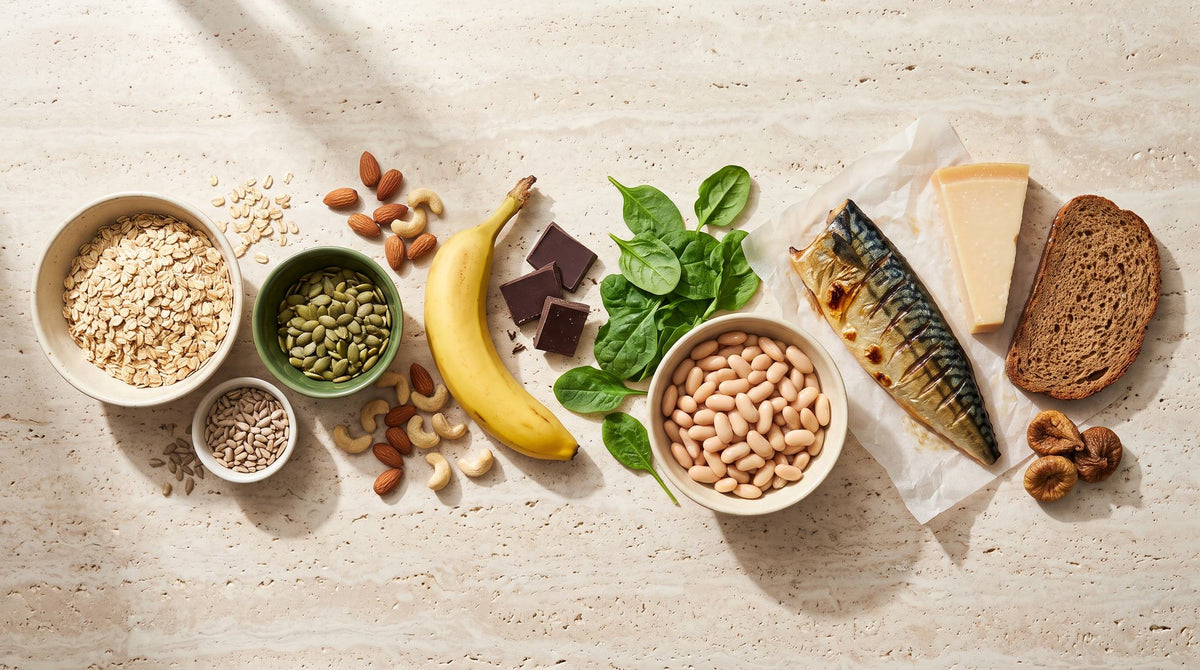
Magnesium deficiency: symptoms, causes and treatment
The mineral that can really be missing when you have cravings and tiredness: which symptoms are typical, why the blood value only tells half the story, and how to top up through the day with food.
Weiterlesen · 16 Min

New in the guide
New articles, updates and tips straight to your inbox. Easy to understand, expert-checked, no spam.
Danke! Bitte bestätige die Anmeldung in deinem Postfach.