
Nedostatek vápníku: příznaky, příčiny a léčba
Brnění kolem úst, křeče v rukou, lámavé nehty? Nedostatek vápníku v jídle tělo léta tiše vyrovnává z kostí. Jaké příznaky k tomu patří, proč neexistuje domácí test a jak se dostat na 1 000 mg.


Aktualisiert 30. září 2026 · 16 Min. Lesezeit · 69 Quellen

To nejdůležitější za 30 sekund
Referenční hodnota DGE pro dospělé, platí i v těhotenství a při kojení. Dospívající od 13 do 18 let potřebují 1 200 mg, protože kost se právě buduje.
Z přibližně jednoho kilogramu vápníku v těle sedí téměř vše ve skeletu. Chybí-li vápník v jídle, tělo si ho odtud vezme, aniž bys cokoli poznal(a).
Pod touto hodnotou lékaři mluví o hypokalcémii. Krevní hodnota je regulována tak přísně, že zůstává normální i při výživovém nedostatku. Klesne-li, obvykle za tím stojí hormon.
Vitamín D řídí, kolik vápníku střevo vstřebá. Chybí-li, ani nejlepší jídlo se do kosti nedostane. Proto je nedostatek vitamínu D nejčastější příčinou skutečného nedostatku vápníku.
Příznaky nedostatku vápníku: Jak ho poznáš
Nedostatek vápníku v medicínském smyslu, hypokalcémie, nastává, když vápník v krvi klesne pod 2,2 mmol/l: nervy a svaly se stávají přecitlivělými, brní kolem úst, ruce se křečovitě stahují. Kdo jen jí málo vápníku, tyto příznaky nedostane, tělo drží krevní hodnotu stabilní z kostí i po léta. Klesne-li přesto, je téměř vždy narušena samotná regulace.
První příznaky: brnění, křeče, únava
Na začátku stojí téměř vždy brnění kolem rtů, na konečcích prstů a na chodidlech, kde jsou nervy nejhustší. Pak následují svalové křeče v rukou a nohou, déle trvající a špatně rozcvičitelné. Spolehlivý test v ordinaci: tři minuty nafouknutá manžeta na měření tlaku přivede ruku do tzv. porodnické polohy. Záškuby koutků úst při poklepu na obličejový nerv má naopak až 10 % zdravých lidí také. Únava k tomu patří, ale kdo je jen unavený, málokdy má nedostatek vápníku.
Příznaky nedostatku vápníku – oči
Oči při nedostatku vápníku reagují jako poslední, ne jako první. Doloženýje šedý zákal: U lidí, jejichž příštítná tělíska dlouhodobě tvoří příliš málo hormonu, bylo v dánské registrové studii riziko katarakty čtyřnásobně vyšší, v turecké studii tím silnější, čím déle onemocnění trvalo. Vápník a fosfát se ukládají v čočce, když je jejich poměr dlouhodobě posunutý, ne kvůli málu mléka. K tomu se přidává záškuby víček. Pro suché oči nebo rozmazané vidění jako raný příznak neexistují důkazy.

Neurologické příznaky nedostatku vápníku
Protože vápník tlumí nervy, jsou téměř všechny příznaky skutečného nedostatku neurologické, v tomto pořadí: parestezie (mravenčení, necitlivost) na rtech, jazyku, rukou a nohou, pak tetanie až po tzv. porodnickou ruku, křeče hrtanu s dušností, při těžkém nedostatku křečové záchvaty (v dánské registrové studii desetkrát častěji). Zůstane-li hodnota léta nízká, vápenatí bazální ganglia v mozku. Zvláštní případ panika: Rychlé dýchání zásaditě mění krev, volný vápník klesá a kolem úst mravenčí, přestože celková hodnota je normální.
Příznaky nedostatku vápníku u žen
Příznaky jsou u žen a mužů stejné, liší se cesty k nedostatku. 55 % žen podle spotřební studie nedosahuje doporučené dávky, u dívek mezi 14 a 18 lety je to 74 %. V menopauze s poklesem estrogenu klesá i vstřebávání ve střevě (kapitola 7). Po operaci štítné žlázy, u žen častější, hodnota u každé čtvrté osoby dočasně klesne. Vypadávání vlasů, přibírání na váze nebo zadržování vody nejsou příznaky nedostatku vápníku; pak je třeba zkontrolovat štítnou žlázu a železo.
Příznaky nedostatku vápníku – psychika
Podrážděnost, vnitřní neklid, úzkostné stavy a depresivní nálada jsou u chronické hypokalcémie dobře doloženy: Po operaci štítné žlázy s poškozenými příštítnými tělísky bylo riziko deprese v dánské registrové studii dvojnásobné. Ale: Psychické potíže jsou prakticky nikdy jediným příznakem a souvislost často funguje obráceně: úzkost vyvolá hyperventilaci, hyperventilace mravenčení, mravenčení další úzkost. Bez tělesných příznaků je nedostatek vápníku nepravděpodobný a doplněk stravy náladu nezlepší. Při podezření přesto nechat vyšetřit vápník, spolu se štítnou žlázou, vitaminem D a B12.
Brnění kolem úst plus křeče v rukou, zejména po operaci štítné žlázy, při onemocnění ledvin nebo při užívání léků na osteoporózu: navštiv co nejdřív lékaře, s vyšetřením vápníku, albuminu, hořčíku, vitamínu D a EKG. Tísňová linka 112 při záchvatu křečí, dušnosti nebo přetrvávajících poruchách srdečního rytmu.
Kůže, vlasy, nehty a zuby
Suchá, šupinatá kůže, křehké nehty a hrubé vlasy jsou v odborné literatuře popisovány jen při chronické hypokalcémii, nikoli jako časné varování; u jinak zdravých lidí za tím téměř vždy stojí železo, štítná žláza nebo zinek. U zubů přetrvává mýtus: tělo si při nedostatku bere vápník ze zubů. Zubní sklovina se ale po prořezání už nepřestavuje, tělo se obsluhuje ze skeletu. Jen dětem, jejichž zuby se ještě tvoří, mohou při hypoparatyreóze vzniknout defekty skloviny.
Domácí test na nedostatek vápníku: Jde to?
Ne. Žádný testovací proužek, žádná aplikace ani lékárenská sada neměří hodnotu vápníku; domácí testy obvykle měří vitamín D nebo hořčík. Vápník se stanovuje z krevního séra, v každé praktické ordinaci, spolu s albuminem (kapitola 4). Co si můžeš zkontrolovat doma: Dostáváš se svým jídlem na 1 000 mg denně? To ukáže denní konfigurátor v kapitole 6. Kdo tam pravidelně skončí pod 500 mg, má nedostatek vápníku ve smyslu výživy, bez jakýchkoli příznaků, a to jde na úkor kostí.
Příčiny nedostatku vápníku: Odkud pochází
Tělo obsahuje přibližně jeden kilogram vápníku, 99 % z toho ve skeletu. Proto existují dva druhy nedostatku. Nutriční nedostatek je častý, 46 % mužů a 55 % žen nedosahuje doporučené dávky, a zůstává tichý: Tělo si bere z kostí. Hypokalcémie je vzácná a vzniká, když selže regulace. První otázka: Kolik potřebuješ?
Příliš málo vápníku ve stravě
Hlavními zdroji jsou mléko, mléčné výrobky a sýr, na druhém místě minerální voda. Kdo vynechá obojí, ztrácí většinu svého příjmu: při nesnášenlivosti laktózy, veganské stravě bez obohacených produktů, dietách nebo malé chuti k jídlu ve stáří. Tělo to tiše kompenzuje z kostí, účet přichází o desítky let později jako osteoporóza. EPIC-Oxford, 17 let, 55 000 lidí: Vegani měli 2,3krát vyšší riziko zlomeniny kyčle a rozdíl se zmenšil, jakmile se odečetl příjem vápníku. Veganství není problém, málo vápníku ano.
Nedostatek vitaminu D: nejčastější důvod, proč se vápník nevstřebá
Bez vitaminu D vstřebá střevo jen zlomek vápníku. Vitamin D si tvoří kůže na slunci, a to v Německu chybí většině lidí. Hluboký nedostatek snižuje vápník dvojím způsobem: méně vstřebávání ve střevě a více parathormonu, který odbourává kost; u dětí se to nazývá křivice, u dospělých osteomalacie. Proto u každé nízké hodnoty vápníku stojí na laboratorním výsledku na prvním místě vitamin D, a proto ho guideline pro osteoporózu předepisuje společně s vápníkem.
Příštítná tělíska, hořčík, ledviny
Nízká hodnota v krvi má téměř vždy hormonální příčinu. Čtyři příštítná tělíska za štítnou žlázou tvoří parathormon, který zvyšuje hladinu vápníku; selžou-li, obvykle po operaci štítné žlázy, nazývá se to hypoparatyreóza. Hořčík je tichý partner: Bez hořčíku se nevyplavuje parathormon, proto těžký nedostatek hořčíku (alkohol, průjem, blokátory kyseliny) snižuje vápník. Ledviny aktivují vitamin D a zadržují vápník; při selhání ledvin odpadá obojí. Další spouštěče: zánět slinivky, sepse, velké krevní transfuze, celiakie, Crohnova choroba.
Nedostatek vápníku způsobený léky
- Blokátory kyseliny (inhibitory protonové pumpy): snižují žaludeční kyselinu, kterou uhličitan vápenatý potřebuje k rozpuštění, a při dlouhodobém užívání způsobují v 19 % případů nedostatek hořčíku (bez blokátorů kyseliny 13,5 %).
- Bisfosfonáty a denosumab proti osteoporóze: zastavují odbourávání kosti, a tím i zdroj vápníku v krvi; u pacientek na dialýze hodnota při denosumabu nebezpečně klesla ve 41 % případů.
- Kličková diuretika (furosemid): vyplavují vápník přes ledviny.
- Antiepileptika, rifampicin a dlouhodobě kortizon: urychlují odbourávání vitaminu D nebo brzdí vstřebávání.
Jak tělo udržuje vápník v rovnováze
Tři stanice od talíře po kost. Kdo je zná, pochopí, proč zůstává krevní hodnota v normě i při výživovém nedostatku, proč je vitamín D důležitější než množství mléka a proč je nízká hodnota téměř vždy hormonální problém.
Vstřebávání ve střevě
Z 1 000 mg vápníku z jídla přijme tenké střevo u dospělých asi čtvrtinu, zbytek střevo opět vyloučí. Kolik to bude, rozhoduje vitamín D: buduje transportéry, které protahují vápník stěnou střeva. U menších porcí je výtěžnost nejlepší, od 500 mg najednou klesá. Kyselina šťavelová a kyselina fytová ze stejného jídla část váží.
Kost jako konto
99 % vápníku je uloženo ve skeletu, zhruba jeden kilogram. Kost není kámen, ale staveniště: každý rok se část odbourává a znovu buduje, přibližně do 30 let s přírůstkem, poté se ztrátou. Chybí-li vápník v jídle, tělo si ho vybere z konta, aby udrželo krevní hodnotu. To nikdo nepozná, dokud po desetiletích konto nevyprázdní: osteoporóza.
Příštitná tělíska a ledviny regulují krevní hodnotu
Jen jeden gram vápníku plave v krvi, a tento gram je řízen na minutu přesně. Klesne-li, čtyři příštitná tělíska vyplaví parathormon: uvolní vápník z kosti, sníží vylučování ledvinami a zvýší tvorbu aktivního vitamínu D, který zase zvýší vstřebávání ve střevě. Bez hořčíku tento řetězec nefunguje. Proto nízká krevní hodnota téměř nikdy nepochází z talíře, ale z řízení.
Nízká hodnota vápníku: jak se zjišťuje nedostatek vápníku
Hodnota vápníku se stanovuje z krevního séra, v milimolech na litr (2,2 mmol/l odpovídá 8,8 mg/dl). Normální jsou 2,2 až 2,6 mmol/l.
Tři stupně nedostatku vápníku
-
1
Mírný1,9–2,2 mmol/l
Většinou bez potíží, často náhodný nález. Korigovat albumin, stanovit vitamin D, hořčík a parathormon, objasnit příčinu. Léčba vápníkem a vitaminem D k užívání ústy, kontrola po jednom až dvou týdnech.
-
2
Střední1,75–1,9 mmol/l
Mravenčení a křeče se stávají pravděpodobnými, na EKG se může prodloužit QT interval. Léčit lékařsky, při příznacích i v tomto rozmezí podávat vápník nitrožilně; hořčík vyrovnat nejdřív, pokud chybí.
-
3
Těžký< 1,75 mmol/l
Hrozí tetanie, křeč hrtanu, křečové záchvaty a poruchy srdečního rytmu. Nouzový stav: kalcium glukonát nitrožilně pod kontrolou EKG v nemocnici, poté trvalá infuze, dokud není léčena příčina.
Rozdělení podle nouzového guidelinu britské Society for Endocrinology (2016) a manuálu MSD: Pod 1,9 mmol/l nebo při potížích platí jakákoli hypokalcémie za nouzový stav, tetanie se typicky objevuje pod 1,75 mmol/l. Hodnoty při normálním albuminu; laboratoře mají někdy vlastní normální hranice, pak platí ty laboratoře.
Surová hodnota má háček: téměř polovina vápníku je vázána na bílkovinu albumin a je neúčinná. Kdo má málo albuminu, například při onemocnění jater nebo podvýživě, tomu vyjde příliš nízká hodnota, přestože vápník nechybí. Lékaři/lékařky to buď přepočítají, nebo změří ionizovaný vápník, tedy volnou část (normál 1,15 až 1,3 mmol/l). Laboratoř tak neověřuje hodnotu orgánu, ale regulační okruh.
Co ještě laboratoř zjišťuje: albumin, vitamín D, parathormon, hořčík
Odpovídá hodnota realitě? K tomu slouží albumin nebo ionizovaný vápník. Chybí vitamín D? Hodnota pod 30 nmol/l vysvětluje většinu mírných případů. Co dělá parathormon? Nízký znamená: příštítná tělíska nepracují; vysoký znamená: pracují, problém je u vitamínu D, ledvin nebo střev. K tomu hořčík, fosfát, kreatinin a EKG (QT interval). Pro zásobu v kostech žádná krevní hodnota neexistuje, jen měření hustoty kostí a otázka na stravu.

Test na nedostatek vápníku: Kdo by si měl nechat hodnotu zjistit
Ne každý. U zdravých lidí bez konkrétního důvodu je hodnota téměř vždy normální. Měření má smysl, když se mravenčení a křeče potkají s rizikovou situací: operace štítné žlázy, onemocnění ledvin, celiakie nebo Crohnova choroba, léky na osteoporózu, antiepileptika, dlouholeté užívání blokátorů kyselin, těžký nedostatek vitamínu D, závislost na alkoholu. Kdo chce vědět, jestli dostávají kosti dostatek, nepotřebuje krev, ale hodnotu vitamínu D a bilanci z denního stavebnicového plánu v kapitole 6.
Pár dní předem žádné přípravky s vápníkem nebo vitamínem D naslepo, zakrývaly by příčinu. Vezmi si s sebou seznam léků, včetně blokátorů kyselin a doplňků stravy. Při odběru krve se nenechej dlouho škrtit, jinak vyjde hodnota falešně vysoká.
Náprava nedostatku vápníku: co skutečně pomáhá
Léčba má dvě roviny. Při nutričním nedostatku bez příznaků je léčbou samotné jídlo: 1 000 mg denně plus dostatek vitaminu D, preparáty podle DGE a doporučení pro osteoporózu jen tehdy, když příjem jinak nelze dosáhnout. U hypokalcemie záleží na příčině: doplnit vitamin D, vyrovnat hořčík, prověřit léky, při selhaných příštítných tělískách trvale vápník plus kalcitriol. Kdo doplňuje jen vápník, zatímco chybí vitamin D nebo hořčík, plní sud bez dna.
Co rychle pomáhá při nedostatku vápníku?
Podle typu nedostatku. Při akutní nízké hodnotě v krvi s příznaky pomůže rychle jen jedno: kalcium glukonát nitrožilně, v nemocnici, pod kontrolou EKG, poté trvalá infuze, dokud se neléčí příčina. Při mírném nedostatku bez příznaků zabere vápník a vitamin D v tabletách během dnů až týdnů. U nutričního nedostatku žádné „rychle“ neexistuje: kost se doplní jen v průběhu let, s denně 1 000 mg, vitaminem D a pohybem. Co jde hned: mléko nebo sójový nápoj k snídani, sýr na chleba, vápníkem bohatá voda.
Kdo má brnění a křeče, nepotřebuje tabletku vápníku z drogerie, ale čtyři krevní hodnoty: vápník, albumin, vitamin D a hořčík. A kdo prostě jí málo vápníku, necítí vůbec nic. V tom je ten háček: nedostatek, který ucítíš, nepochází z jídla, a ten, co pochází z jídla, neucítíš.
Joerg Hauke, Odborník na výživu, odborná kontrola tohoto článku
Tablety s vápníkem: kdy ano, kdy ne
Přípravky dávají smysl, když strava nestačí: při intoleranci laktózy bez sýra, veganské stravě bez obohacených produktů, nižší chuti k jídlu ve stáří, při užívání léků na osteoporózu a vždy při hypoparatyreóze. Metaanalýza z roku 2010 zjistila u vápníku bez vitamínu D o 31 % více infarktů, pozdější studie s 63 000 ženami žádný efekt nenašla. Spolehlivé doporučení přidávat k tomu vitamín K2 podle spotřebitelského centra neexistuje. Vedlejší účinky: ledvinové kameny (plus 17 % ve studii s 36 000 ženami) a zácpa (13 místo 9 %). Pro potraviny žádné z těchto varování neplatí: nejdřív talíř, pak minerálka, pak teprve přípravek.
Jak správně užívat vápník: dávka, čas, odstupy
Čtyři pravidla dostanou z preparátu maximum. Za prvé maximálně 500 mg na dávku: dvakrát 500 mg přinese víc než jednou 1 000 mg.
Za druhé forma: uhličitan vápenatý je levný, ale potřebuje žaludeční kyselinu a patří k jídlu; kdo bere inhibitory kyseliny nebo je starší, je na tom lépe s citrátem vápenatým. Za třetí vitamin D k tomu, doporučení uvádí 800 jednotek denně. Za čtvrté odstupy: vápník ve střevě váže hormon štítné žlázy, železo, tetracykliny, chinolony a bisfosfonáty; ve studii výrazně stoupla hodnota TSH, když se L-thyroxin a vápník užívaly současně. Odstup několik hodin, bisfosfonáty vždy nalačno a samostatně.
Kdo měl ledvinové kameny, nadměrnou funkci příštítných tělísek, sarkoidózu nebo chronické selhávání ledvin, bere preparáty jen po konzultaci; vápník z jídla zůstává povolený. Totéž platí pro vysoce dávkovaný vitamin D. Hodně uhličitanu vápenatého proti pálení žáhy může vést k syndromu mléko-alkálie se selháním ledvin.
Potraviny s vápníkem: co obsahuje hodně vápníku
Mléčné výrobky a sýry dodávají v Německu asi 40 % příjmu vápníku, minerální voda a jiné nápoje zhruba čtvrtinu, vše ostatní podle spotřební studie skoro nic. Žebříček ukazuje nejhutnější zdroje na 100 g, tak jak se jedí (databáze USDA). Výjimka špenát: hodně vápníku, ale využitelných jen asi 5 %, protože kyselina šťavelová ho ve střevě váže.
Vápník na 100 g: top 10 rostlinných a živočišných zdrojů
Hodnoty na 100 g sušeného, resp. vařeného produktu, USDA FoodData Central SR Legacy. Semínka vedou, protože obsahují málo vody; v porcích: 10 g máku 144 mg, 1 PL sezamu 98 mg, 100 g pevného tofu 683 mg (jen se síranem vápenatým, s nigari 282 mg), 150 g kadeřávku 225 mg, 3 sušené fíky 65 mg. Špenát dodává 136 mg, z toho je kvůli kyselině šťavelové využitelných jen asi 5 %.
K 1 000 mg se dojde snáz, než číslo napovídá: čtvrt litru mléka a dva plátky ementálu podle DGE dodají už víc.
Kdo nepije mléko, kombinuje jogurt, sýr, kadeřávek, vápníkem bohatou minerálku a lžíci sezamu. Dvě věci zvyšují výtěžnost: rozložení do dne, protože střevo z malých porcí vstřebá poměrně víc, a vitamin D, který ve studii zvýšil vstřebávání o 65 %. Klepni na to, co jíš v běžný den.
Kolik vápníku je v ovesných vločkách, vejcích, ovoci?
Méně, než by se čekalo. Ovesné vločky dodávají 52 mg na 100 g, tedy porce jen 26 mg; vápník v müsli pochází z mléka. Vejce přinese 30 mg, vápník je ve skořápce. Rajčata (10 mg), jablka (6 mg) a banány (5 mg) jsou prakticky bez vápníku. U ovoce vyčnívají jen sušené fíky (162 mg, tři kusy 65 mg).
Co vstřebávání podporuje a co brzdí
U vápníku nerozhoduje jen množství na talíři, ale to, co je vedle. Izotopové studie ukazují velké rozdíly.
- +Vitamin D: při hodnotě v krvi 86 místo 50 nmol/l vstřebalo střevo ze stejné porce o 65 % více vápníku
- +Malé porce během dne: z velmi malých množství se vstřebá až 64 %, z 500 mg najednou jen 29 %
- +Kadeřávek, brokolice, pak choi: nízký obsah kyseliny šťavelové, 41 až 53 % vstřebání, lépe než mléko (27 až 32 %)
- +Minerální voda bohatá na vápník od 150 mg na litr: vstřebávání stejně dobré jako z mléka nebo lepší, bez kalorií
- +Tofu se síranem vápenatým a sójové nápoje s uhličitanem vápenatým: vstřebávání jako z kravského mléka (21 %), trikalciumfosfát vychází hůř (18 %)
- −Kyselina šťavelová ve špenátu, mangoldu a rebarboře: váže vápník ve střevě, ze špenátu se vstřebá jen 5 %
- −Kyselina fytová v pšeničných otrubách a syrovém celozrnném obilí: snižuje vstřebávání, i toho vápníku z mléka vedle; kvásek a droždí ji odbourávají, proto je chléb bez problémů
- −Hodně soli: každé 2,3 g sodíku (asi 6 g kuchyňské soli) vyloučí ledviny přibližně 40 mg vápníku navíc
- −Inhibitory kyseliny po léta: bez žaludeční kyseliny se uhličitan vápenatý sotva rozpustí; po roce užívání bylo v britské studii riziko zlomeniny kyčle o 44 % vyšší
- −Vápník sám brzdí železo: 300 až 600 mg k jídlu sníží vstřebávání železa na polovinu. Kdo potřebuje obojí, odděluje preparát se železem a mléčné výrobky
Zdroje: Heaney 1988 až 2003, Weaver 1991, Zhao 2005, Böhmer 2000, Greupner 2017, Nordin 1993, Yang 2006, Hallberg 1991 (seznam zdrojů na konci). Káva stojí na šálek tak málo vápníku, že to vyrovná trocha mléka; cola škodí kostem hlavně tím, že mléko nahrazuje.
Vegan potraviny bohaté na vápník
Veganská strava sama o sobě není pro kosti problém, nedostatek vápníku ano: ve studii EPIC-Oxford zvýšené riziko zlomenin zmizelo, jakmile vegani přijímali alespoň 525 mg vápníku denně. DGE proto řadí vápník mezi kritické živiny a uvádí čtyři cesty: obohacené rostlinné nápoje (120 mg na 100 ml jako mléko, s uhličitanem vápenatým stejně dobře vstřebatelné), tofu se síranem vápenatým (na obalu: E 516), zelenina s nízkým obsahem kyseliny šťavelové (kadeřávek, brokolice, pak choi, rukola) a minerální voda bohatá na vápník. Co nestačí: ovesný nápoj bez přídavku, špenát, ořechy samotné.

Intolerance laktózy: Zrající sýry jako ementál, parmezán a gouda prakticky neobsahují laktózu a se 700 až 1 200 mg na 100 g jsou nejhutnějším zdrojem vápníku vůbec; jogurt bývá podle DGE většinou snášen, mléko bez laktózy dodává stejné množství vápníku. Při úplném vynechání: zelenina bohatá na vápník a minerální voda, ne ořechy.
Od 150 mg na litr smí voda nést označení „obsahuje vápník“, mnohé druhy mají 300 až přes 500 mg. Tělo ho vstřebává stejně dobře jako z mléka; litr denně pokryje třetinu až polovinu denní potřeby.
Vápník v běžném dni: tekuté jídlo
Ve dnech bez snídaně, vaření a chleba se sýrem hlavní zdroj prostě chybí. Tekuté jídlo doplní část plánovatelně: jedna láhev Saturo dodá podle příchutě 200 až 208 mg vápníku, 25 až 26 % referenční hodnoty 800 mg, plus vitamin D. Tolik jako malá sklenice mléka, ne léčba prokázaného nedostatku, ale spolehlivý příspěvek ve dnech s kávou a rohlíkem. Schválené tvrzení podle EU: vápník je potřebný pro udržení normálních kostí a přispívá k normální funkci svalů.
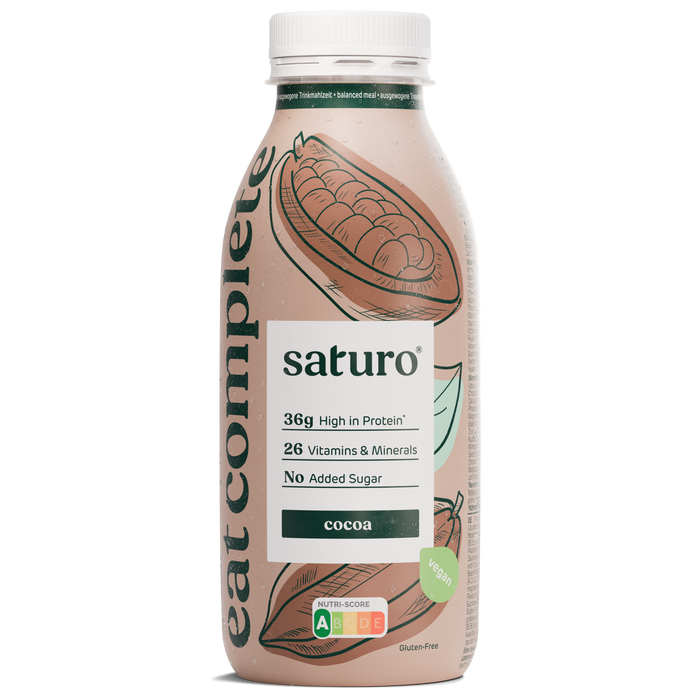
Tekuté jídlo: plnohodnotné jídlo z lahve
26 vitamínů a minerálů, mimo jiné vápník, vitamin D a hořčík. Vápník je potřebný pro udržení normálních kostí a přispívá k normální funkci svalů. Referenční hodnota pro vápník: 800 mg denně (NRV). Pro dny, kdy vaření není na programu.
Menopauza, těhotenství, děti, od 65 let: kdo si musí dávat obzvlášť pozor
Potřeba vápníku je během života téměř stejná, příjem ne. Křivka ukazuje, co dívky a ženy v Německu skutečně přijímají (Robert Koch-Institut, Max Rubner-Institut). Mezery jsou tam, kde je to pro kost nejhorší: v pubertě, kdy se buduje, a ve stáří, kdy ubývá.
Nedostatek vápníku v menopauze
Estrogen drží kosti pohromadě: brzdí buňky, které je odbourávají, a pomáhá střevu vstřebávat vápník. Podle studie SWAN na téměř 2 000 ženách začíná úbytek zhruba rok před poslední menstruací a během deseti let kolem menopauzy ztrácí bederní páteř 10,6 % své hustoty. Co pomáhá, je nespektakulární a doložené: 1 000 mg vápníku denně, vitamin D po celý rok, silový trénink, od 50 let při rizikových faktorech vyšetření hustoty kostí. Vápník plus vitamin D snížily v osmi studiích zlomeniny kyčle o 30 %, samotný vápník téměř nic nebrzdí.

Nedostatek vápníku v těhotenství a při kojení
Dítě přichází na svět s asi 30 g vápníku v kostře. Přesto podle DGE a EFSA platí stejných 1 000 mg jako jindy: v těhotenství střevo zdvojnásobí svou vstřebávací schopnost, při kojení si tělo dočasně vypůjčuje z matčiny kostry. Příznaky nedostatku vápníku při kojení proto při normální stravě neexistují; únava, vypadávání vlasů a křeče mají jiné příčiny. Jen při velmi nízkém příjmu snižují přípravky s vápníkem od 1 g podle Cochrane riziko preeklampsie na polovinu.
Děti a dospívající: Kostní hmota, kterou má člověk ve 30 letech, se buduje v dětství a v pubertě. Proto je nejvyšší potřeba mezi 13 a 18 lety, a to 1 200 mg, a právě tam je mezera největší: podle EsKiMo II dosahuje doporučení jen 12,7 % dívek ve věku 12 až 17 let. U malých dětí způsobuje těžký nedostatek vápníku nebo vitaminu D křivici, čemuž předchází kapky vitaminu D v prvním roce života.
Od 65 let se sejdou tři věci: střevo hůř vstřebává vápník, chuť k jídlu klesá a seznam léků roste: blokátory kyseliny, kortizon, odvodňovací tablety. Kdo potřebuje přípravek, sáhne po citrátu, pokud chybí žaludeční kyselina, jinak po karbonátu k jídlu, vždy s vitaminem D. Bez tablet: sýr na chleba, voda bohatá na vápník místo třetí kávy.
Od 2,6 mmol/l mluvíme o hyperkalcémii. Prakticky nikdy nevzniká z jídla, ale z nadměrné funkce příštítných tělísek, nádorových onemocnění nebo přemíry vitaminu D; příznaky: žízeň, hodně moči, zácpa, ledvinové kameny. Horní hranice EU 2 500 mg platí pro potraviny a přípravky dohromady.
Časté dotazy k nedostatku vápníku
Jak se projevuje nedostatek vápníku?
Příliš nízká hodnota v krvi (pod 2,2 mmol/l) zvyšuje dráždivost nervů: brnění kolem úst, svalové křeče, při silném nedostatku typické stažení ruky (tzv. porodnická ruka), bušení srdce a záchvaty křečí. Kdo jen jí málo vápníku, nic si nevšimne: tělo drží hodnotu v krvi stabilní z kostí, následek se objeví o desítky let později jako osteoporóza.
Co tělu krade vápník?
Nejlépe doloženo je sůl: na každé 2,3 g sodíku vyloučí ledviny navíc asi 40 mg vápníku. Kyselina šťavelová a kyselina fytová váží vápník ve střevě, ale jen ze stejného jídla. Blokátory kyseliny, kortizon a kličková diuretika stojí tělo vápník. Káva stojí tak málo, že to vyrovná troška mléka.
Jak dlouho trvá, než se nedostatek vápníku vyřeší?
Hodnota v krvi se při léčbě normalizuje během dnů až dvou týdnů, pokud se léčí i příčina; zásoby vitaminu D potřebují dva až tři měsíce. Pokud jsou příštítná tělíska trvale vyřazená, spravuje se nedostatek celoživotně. Kost potřebuje roky a měřitelné přírůstky zůstávají malé.
Je dobré brát vápník každý den?
Z potravin ano. Jako přípravek jen tehdy, pokud příjem jinak nelze zajistit: při intoleranci laktózy bez sýra, u veganské stravy bez obohacených produktů, při užívání léků na osteoporózu nebo při vyřazených příštítných tělíscích. BfR doporučuje pro doplňky stravy maximálně 500 mg denně.
Kdy by se vápník neměl užívat?
Přípravky ne bez konzultace při ledvinových kamenech, chronické ledvinové nedostatečnosti, nadměrné funkci příštítných tělísek, sarkoidóze nebo zvýšené hladině vápníku. Neužívat současně s hormonem štítné žlázy, přípravky se železem, tetracyklinovými nebo chinolonovými antibiotiky a bisfosfonáty, protože vápník je ve střevě váže: dodržet odstup několika hodin. A nikdy víc než 500 mg najednou.
Co má vápník společného s cholesterolem?
Málo. Ve studii s 223 ženami po menopauze stoupl při 1 g citrátu vápníku HDL cholesterol o 7 %, LDL kleslo nevýznamně. Debata, zda přípravky s vápníkem zvápenatí cévy, se týká vysoce dávkovaných tablet bez vitaminu D, nikdy vápníku z potravin.
Jakou roli hraje vápník při diabetu?
Vápník se podílí na vylučování inzulinu a v observačních studiích měli lidé s vysokým příjmem vápníku a vitaminu D o 18 % nižší riziko diabetu 2. typu. Jde o souvislost, ne o důkaz. Pro diabetiky platí normální doporučení 1 000 mg.
V jakém ovoci je hodně vápníku?
Ovoce není zdrojem vápníku, s jednou výjimkou: sušené fíky s 162 mg na 100 g (tři kusy asi 65 mg). Následují datle (64 mg), rozinky (62 mg) a pomeranč (40 mg). Banán, jablko a bobulovité ovoce přispívají prakticky nulou.
Zdroje · 69 zdrojů anzeigen
- Deutsche Gesellschaft für Ernährung (DGE): Referenční hodnoty pro příjem živin, vápník. D-A-CH referenční hodnoty, odvození 2013.
- Deutsche Gesellschaft für Ernährung (DGE): Vybrané otázky a odpovědi k vápníku. Bonn, červen 2013.
- German Nutrition Society: New Reference Values for Calcium. Annals of Nutrition and Metabolism 2013; 63(3): 186–192.
- Klug A. et al., Deutsche Gesellschaft für Ernährung: Přehodnocení postoje DGE k veganské stravě. Poziční dokument, Ernährungs Umschau 2024; 71(7): 60–84.
- EFSA NDA Panel: Scientific Opinion on Dietary Reference Values for calcium. EFSA Journal 2015; 13(5): 4101.
- EFSA NDA Panel: Scientific Opinion on the Tolerable Upper Intake Level of calcium. EFSA Journal 2012; 10(7): 2814.
- Bundesinstitut für Risikobewertung (BfR): Návrhy maximálních množství vápníku v potravinách včetně doplňků stravy. Stanovisko 2021, potvrzeno 2024.
- Max Rubner-Institut: Národní studie spotřeby potravin II, závěrečná zpráva, část 2. Karlsruhe 2008, kapitola 5.7.3 Vápník a tabulka A.48.
- Mensink G. B. M. et al.: EsKiMo II, výživová studie jako modul KiGGS. Zpráva o projektu, Robert Koch-Institut, Berlín 2020.
- Rabenberg M. et al.: Vitamin D status among adults in Germany: results from DEGS1. BMC Public Health 2015; 15: 641.
- Mineral- und Tafelwasser-Verordnung (MTVO), příloha 6: Údaje o minerálních vodách („s obsahem vápníku“ od více než 150 mg/l).
- Nařízení Komise (EU) č. 432/2012: Seznam schválených zdravotních tvrzení, příloha (vápník).
- Dachverband Osteologie (DVO): Směrnice pro diagnostiku a terapii osteoporózy u postmenopauzálních žen a mužů od 50 let, verze 2.2, 2023, zkrácené znění.
- Lewis J. L.: Hypokalcemie. MSD Manual, vydání pro odbornou veřejnost.
- Lewis J. L.: Hyperkalcemie. MSD Manual, vydání pro odbornou veřejnost.
- Turner J., Gittoes N., Selby P.; Society for Endocrinology: Emergency management of acute hypocalcaemia in adult patients. Endocrine Connections 2016; 5(5): G7–G8.
- Pepe J. et al.: Diagnosis and management of hypocalcemia. Endocrine 2020; 69(3): 485–495.
- Bollerslev J. et al.; European Society of Endocrinology: Clinical Guideline: Treatment of chronic hypoparathyroidism in adults. European Journal of Endocrinology 2015; 173(2): G1–G20.
- Khan A. A. et al.: Evaluation and Management of Hypoparathyroidism: Summary Statement and Guidelines from the Second International Workshop. Journal of Bone and Mineral Research 2022; 37(12): 2568–2585.
- Zivin J. R. et al.: Hypocalcemia: a pervasive metabolic abnormality in the critically ill. American Journal of Kidney Diseases 2001; 37(4): 689–698.
- Edafe O. et al.: Systematic review and meta-analysis of predictors of post-thyroidectomy hypocalcaemia. British Journal of Surgery 2014; 101(4): 307–320.
- Armstrong C. M., Cota G.: Calcium block of Na+ channels and its effect on closing rate. PNAS 1999; 96(7): 4154–4157.
- Macefield G., Burke D.: Paraesthesiae and tetany induced by voluntary hyperventilation. Brain 1991; 114(1B): 527–540.
- Hujoel I. A.: The association between serum calcium levels and Chvostek sign: a population-based study. Neurology: Clinical Practice 2016; 6(4): 321–328.
- Underbjerg L. et al.: The Epidemiology of Nonsurgical Hypoparathyroidism in Denmark: A Nationwide Case Finding Study. Journal of Bone and Mineral Research 2015; 30(9): 1738–1744.
- Underbjerg L. et al.: Postsurgical hypoparathyroidism: risk of fractures, psychiatric diseases, cancer, cataract, and infections. Journal of Bone and Mineral Research 2014; 29(11): 2504–2510.
- Koçer A. M. et al.: Quantitative investigation of the effect of surgically induced hypoparathyroidism on cataract development. Journal of Bone and Mineral Metabolism 2022; 40(1): 92–100.
- Goswami R. et al.: Prevalence and progression of basal ganglia calcification and its pathogenic mechanism in patients with idiopathic hypoparathyroidism. Clinical Endocrinology 2012; 77(2): 200–206.
- Cusano N. E. et al.: The effect of PTH(1-84) on quality of life in hypoparathyroidism. Journal of Clinical Endocrinology and Metabolism 2013; 98(6): 2356–2361.
- Gallacher A. A., Pemberton M. N., Waring D. T.: The dental manifestations and orthodontic implications of hypoparathyroidism in childhood. Journal of Orthodontics 2018; 45(1): 46–50.
- Srinutta T. et al.: Proton pump inhibitors and hypomagnesemia: a meta-analysis of observational studies. Medicine 2019; 98(44): e17788.
- Bird S. T. et al.: Severe Hypocalcemia With Denosumab Among Older Female Dialysis-Dependent Patients. JAMA 2024; 331(6): 491–499.
- Tong T. Y. N. et al.: Vegetarian and vegan diets and risks of total and site-specific fractures: results from the prospective EPIC-Oxford study. BMC Medicine 2020; 18: 353.
- Appleby P. et al.: Comparative fracture risk in vegetarians and nonvegetarians in EPIC-Oxford. European Journal of Clinical Nutrition 2007; 61(12): 1400–1406.
- Heaney R. P., Weaver C. M., Recker R. R.: Calcium absorbability from spinach. American Journal of Clinical Nutrition 1988; 47(4): 707–709.
- Heaney R. P., Weaver C. M.: Calcium absorption from kale. American Journal of Clinical Nutrition 1990; 51(4): 656–657.
- Heaney R. P. et al.: Absorbability of calcium from Brassica vegetables: broccoli, bok choy, and kale. Journal of Food Science 1993; 58(6): 1378–1380.
- Heaney R. P., Weaver C. M., Fitzsimmons M. L.: Influence of calcium load on absorption fraction. Journal of Bone and Mineral Research 1990; 5(11): 1135–1138.
- Heaney R. P., Dowell M. S., Hale C. A., Bendich A.: Calcium absorption varies within the reference range for serum 25-hydroxyvitamin D. Journal of the American College of Nutrition 2003; 22(2): 142–146.
- Heaney R. P., Recker R. R., Stegman M. R., Moy A. J.: Calcium absorption in women: relationships to calcium intake, estrogen status, and age. Journal of Bone and Mineral Research 1989; 4(4): 469–475.
- Weaver C. M., Heaney R. P., Martin B. R., Fitzsimmons M. L.: Human calcium absorption from whole-wheat products. Journal of Nutrition 1991; 121(11): 1769–1775.
- Weaver C. M. et al.: Bioavailability of calcium from tofu as compared with milk in premenopausal women. Journal of Food Science 2002; 67(8): 3144–3147.
- Zhao Y., Martin B. R., Weaver C. M.: Calcium bioavailability of calcium carbonate fortified soymilk is equivalent to cow's milk in young women. Journal of Nutrition 2005; 135(10): 2379–2382.
- Böhmer H., Müller H., Resch K. L.: Calcium supplementation with calcium-rich mineral waters: a systematic review and meta-analysis of its bioavailability. Osteoporosis International 2000; 11(11): 938–943.
- Greupner T., Schneider I., Hahn A.: Calcium bioavailability from mineral waters with different mineralization in comparison to milk and a supplement. Journal of the American College of Nutrition 2017; 36(5): 386–390.
- Heaney R. P.: Effects of caffeine on bone and the calcium economy. Food and Chemical Toxicology 2002; 40(9): 1263–1270.
- Heaney R. P., Rafferty K.: Carbonated beverages and urinary calcium excretion. American Journal of Clinical Nutrition 2001; 74(3): 343–347.
- Nordin B. E. et al.: The nature and significance of the relationship between urinary sodium and urinary calcium in women. Journal of Nutrition 1993; 123(9): 1615–1622.
- Yang Y. X., Lewis J. D., Epstein S., Metz D. C.: Long-term proton pump inhibitor therapy and risk of hip fracture. JAMA 2006; 296(24): 2947–2953.
- Hallberg L. et al.: Calcium: effect of different amounts on nonheme- and heme-iron absorption in humans. American Journal of Clinical Nutrition 1991; 53(1): 112–119.
- Recker R. R.: Calcium absorption and achlorhydria. New England Journal of Medicine 1985; 313(2): 70–73.
- Straub D. A.: Calcium supplementation in clinical practice: a review of forms, doses, and indications. Nutrition in Clinical Practice 2007; 22(3): 286–296.
- Singh N., Singh P. N., Hershman J. M.: Effect of calcium carbonate on the absorption of levothyroxine. JAMA 2000; 283(21): 2822–2825.
- Bolland M. J. et al.: Effect of calcium supplements on risk of myocardial infarction and cardiovascular events: meta-analysis. BMJ 2010; 341: c3691.
- Lewis J. R. et al.: The effects of calcium supplementation on verified coronary heart disease hospitalization and death in postmenopausal women: a collaborative meta-analysis of randomized controlled trials. Journal of Bone and Mineral Research 2015; 30(1): 165–175.
- Jackson R. D. et al.; Women's Health Initiative Investigators: Calcium plus vitamin D supplementation and the risk of fractures. New England Journal of Medicine 2006; 354(7): 669–683.
- Prince R. L., Devine A., Dhaliwal S. S., Dick I. M.: Effects of calcium supplementation on clinical fracture and bone structure: results of a 5-year, double-blind, placebo-controlled trial in elderly women. Archives of Internal Medicine 2006; 166(8): 869–875.
- Tai V., Leung W., Grey A., Reid I. R., Bolland M. J.: Calcium intake and bone mineral density: systematic review and meta-analysis. BMJ 2015; 351: h4183.
- Weaver C. M. et al.: Calcium plus vitamin D supplementation and risk of fractures: an updated meta-analysis from the National Osteoporosis Foundation. Osteoporosis International 2016; 27(1): 367–376.
- Greendale G. A. et al.: Bone mineral density loss in relation to the final menstrual period in a multiethnic cohort: results from SWAN. Journal of Bone and Mineral Research 2012; 27(1): 111–118.
- Hadji P., Esterberg E., Obermüller D., Bartsch R.: Bone evaluation study-2: update on the epidemiology of osteoporosis in Germany. Archives of Osteoporosis 2024; 19(1): 26.
- Kovacs C. S.: Maternal Mineral and Bone Metabolism During Pregnancy, Lactation, and Post-Weaning Recovery. Physiological Reviews 2016; 96(2): 449–547.
- Hofmeyr G. J., Lawrie T. A., Atallah Á. N., Torloni M. R.: Calcium supplementation during pregnancy for preventing hypertensive disorders and related problems. Cochrane Database of Systematic Reviews 2018; 10: CD001059.
- Munns C. F. et al.: Global Consensus Recommendations on Prevention and Management of Nutritional Rickets. Journal of Clinical Endocrinology and Metabolism 2016; 101(2): 394–415.
- Pittas A. G., Lau J., Hu F. B., Dawson-Hughes B.: The role of vitamin D and calcium in type 2 diabetes: a systematic review and meta-analysis. Journal of Clinical Endocrinology and Metabolism 2007; 92(6): 2017–2029.
- Reid I. R. et al.: Effects of calcium supplementation on serum lipid concentrations in normal older women: a randomized controlled trial. American Journal of Medicine 2002; 112(5): 343–347.
- Patel A. M., Goldfarb S.: Got calcium? Welcome to the calcium-alkali syndrome. Journal of the American Society of Nephrology 2010; 21(9): 1440–1443.
- U.S. Department of Agriculture, Agricultural Research Service: FoodData Central, SR Legacy Release (2018). Obsah vápníku na 100 g.
- Verbraucherzentrale: Je vitamin D lepší s vitaminem K2? FAQ, stav k 15. červenci 2026.
Pro Saturo píše od roku 2019 o výživě, živinách a o tom, jak dobré zásobení tělu funguje v praxi každý den.
Hat diesen Artikel am 23. September 2026 auf fachliche Richtigkeit geprüft. Obsah nenahrazuje lékařskou konzultaci.
Nedostatek vitaminu D: příznaky, příčiny a léčba
Otvírač dveří pro vápník: Proč v zimě téměř všem chybí vitamin D, jaké symptomy se za tím skrývají a kolik ho opravdu potřebuješ.
Weiterlesen · 15 Min

Novinky z poradny
Nové články, novinky a tipy přímo do schránky. Srozumitelně, odborně ověřeno, bez spamu.
Danke! Bitte bestätige die Anmeldung in deinem Postfach.